 Whatcom County
 Metal Roofing Built for How Sunnyland Actually Weathers
Sunnyland sits close enough to Bellingham Bay that the air itself works against a roof year-round. Salt-laden moisture off the water, wind-driven rain that comes in sideways off a southwesterly, and a moss season that can run eight or nine months out of twelve all combine to shorten the life of roofing materials that aren't specified and installed with this exact climate in mind. A metal roof done right handles all three of those stressors better than almost any other roofing material available — but "done right" is doing a lot of work in that sentence. Metal roofing rewards good installation and punishes shortcuts more visibly, and more expensively, than asphalt shingles do.
This page is about metal roofing specifically for Sunnyland homes — what the neighborhood's microclimate demands, what a correct installation actually involves, and how we approach the job when we're up on a Sunnyland roof.
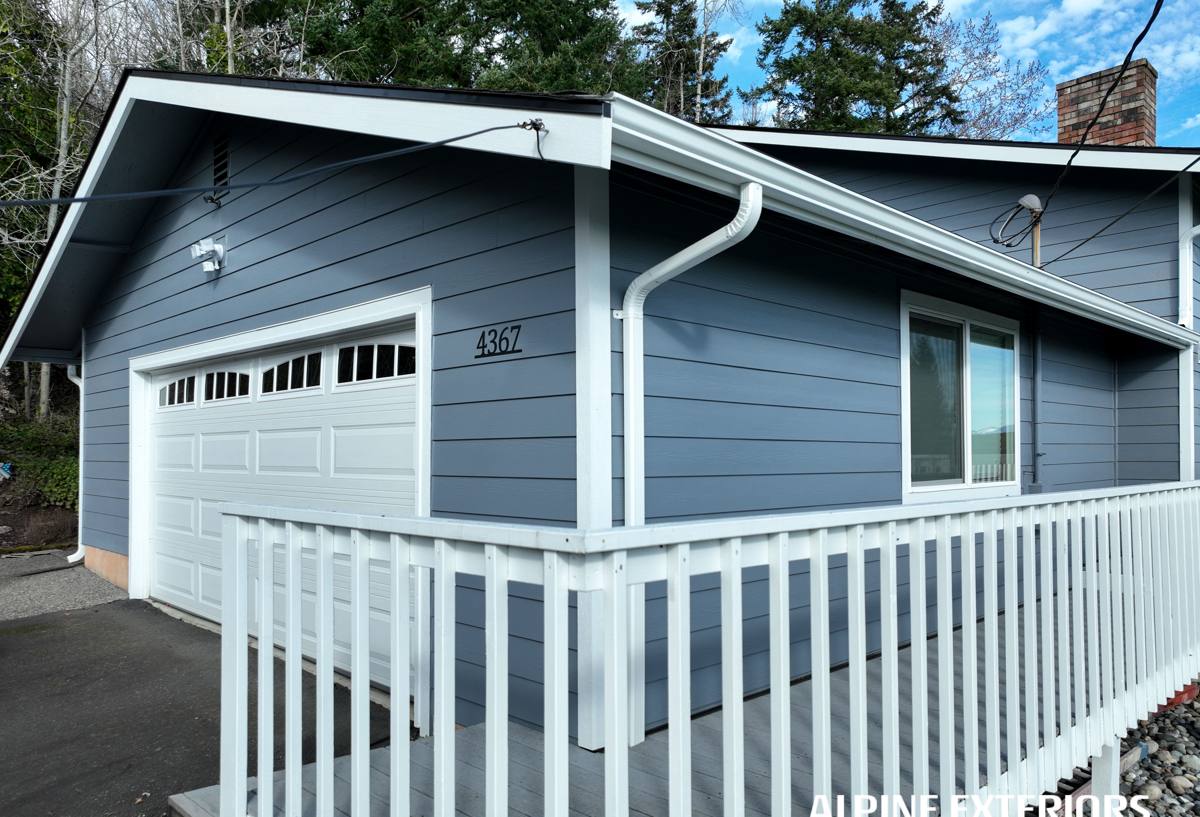
What Whatcom County's Climate Does to a Roof Over Time
Salt Air and Corrosion
Proximity to Bellingham Bay means airborne salt is a real factor for Sunnyland roofs, even blocks back from the water. Salt accelerates corrosion at any point where metal is exposed, cut, or fastened — exposed screw heads, cut panel edges, and dissimilar-metal contact points are where problems start first. This is one of the main reasons coating quality and fastener selection matter more here than they would on a roof twenty miles inland.
Driving Rain
Storms coming off the Strait of Georgia and Puget Sound don't just drop rain straight down — they push it sideways under laps, around penetrations, and into any flashing detail that was cut corners on. A metal roof's watertightness depends almost entirely on how the seams, flashing, and penetrations are handled, since the field panels themselves are rarely where a leak actually starts.
Moss and Organic Growth
Whatcom County's long wet season and heavy tree cover in and around Sunnyland create ideal conditions for moss, lichen, and algae to establish themselves on a roof surface. On asphalt shingles, moss roots into the granules and lifts them. On metal, moss can't root into the surface the same way, but it can still hold moisture against seams and fasteners long enough to promote corrosion if the roof wasn't detailed to shed water and debris cleanly.
Standing Seam vs. Exposed-Fastener Metal: Which Fits a Sunnyland Home
There are two broad categories of metal roofing, and the choice matters more here than in a drier climate.
Standing Seam
Standing seam panels are joined with raised, interlocking seams and hidden fasteners or concealed clips. There are no exposed screw heads on the field of the roof, which removes the single most common point of long-term corrosion and leak risk. It costs more up front but is our default recommendation for homes exposed to direct salt air and driving rain, which describes a good share of Sunnyland.
Exposed-Fastener (Corrugated or Ribbed) Panels
These panels are fastened directly through the face of the metal with gasketed screws. They cost less and install faster, but every one of those thousands of screw penetrations is a spot where the gasket can eventually degrade, especially with UV exposure and freeze-thaw cycling. This style can still be a sound, honest choice for outbuildings, shops, or budget-conscious projects — we just make sure homeowners understand the maintenance trade-off going in, particularly the need to check and replace fastener gaskets on a schedule rather than waiting for a leak to show up.
Coatings and Corrosion Protection That Actually Matter Near the Bay
The steel or aluminum substrate is only half the story — the factory coating is what actually faces the weather. Two coating families dominate the market:
- PVDF (Kynar 500-type) coatings — resin-based finishes with strong resistance to UV fading, chalking, and coastal corrosion. This is what we specify for most Sunnyland projects given the salt exposure.
- SMP (polyester) coatings — a lower-cost finish that performs fine in milder inland conditions but tends to chalk and fade faster under sustained coastal moisture and UV.
We also pay close attention to substrate choice. Aluminum doesn't rust, which makes it attractive in a salt-air environment, but it's softer and more prone to denting. Coated steel is stiffer and more impact-resistant but relies entirely on an intact coating and properly sealed cut edges to resist corrosion. There's no universally "right" answer — it depends on the home, the roof pitch, tree cover, and budget, which is exactly what we walk through on-site rather than defaulting to one product for every house.
What a Correct Metal Roof Installation Actually Involves
Most metal roof failures we get called to inspect trace back to installation shortcuts, not the material itself. A correct job includes:
Deck and Structure First
Before any panel goes on, the roof deck gets inspected for rot, soft spots, and proper ventilation. Metal amplifies whatever is underneath it — a poorly ventilated attic under a metal roof in our climate can trap condensation just as easily as it traps heat.
Underlayment Matters More Here Than Almost Anywhere
We use synthetic underlayment rated for the panel type, with self-adhered ice-and-water membrane at eaves, valleys, and penetrations — the exact spots where wind-driven rain from a Whatcom County storm is most likely to force water backward under a lap. This is the layer that saves a roof when, not if, wind pushes rain somewhere it "shouldn't" go.
Flashing and Penetration Detail
Chimneys, vents, skylights, and wall transitions are where the vast majority of real-world leaks originate. Correct step flashing, counterflashing, and sealed penetration boots — sized and installed for the specific panel profile — are non-negotiable, not an upsell.
Fastener and Edge Treatment
Every cut panel edge exposes bare metal underneath the factory coating. We seal cut edges and use corrosion-resistant fasteners matched to the panel material to avoid galvanic corrosion between dissimilar metals — a detail that matters far more in salt air than it does inland.
Our Process, Start to Finish
- On-site inspection — we walk the existing roof, check the deck and ventilation where accessible, and talk through panel type and coating options for your specific exposure.
- Written estimate — a clear scope covering tear-off or overlay, underlayment, flashing detail, panel and coating spec, and timeline.
- Tear-off and deck prep — old material removed, deck repaired as needed, before anything new goes down.
- Underlayment and ice-and-water membrane — installed at all eaves, valleys, and penetrations.
- Panel installation — laid and fastened to manufacturer spec for the chosen profile, with attention to expansion and contraction allowances metal roofing requires.
- Flashing, trim, and penetration sealing — the detail work that determines whether the roof actually stays dry through a coastal storm.
- Final walkthrough and cleanup — magnetic sweep for stray fasteners, site cleanup, and a review of what was done.
Cost Factors for a Sunnyland Metal Roof
Every roof is different, but these are the variables that move the price most:
| Factor | Why It Matters |
|---|---|
| Panel type (exposed-fastener vs. standing seam) | Standing seam costs more but removes exposed fastener penetrations, the top long-term leak and corrosion risk in salt air |
| Substrate (steel vs. aluminum) | Aluminum resists corrosion better near the bay but costs more and dents more easily |
| Coating grade (PVDF vs. SMP) | PVDF holds color and resists coastal chalking longer, at a higher material cost |
| Roof complexity | Valleys, dormers, and multiple penetrations add flashing labor regardless of panel type |
| Tear-off vs. overlay | Overlay can save cost but isn't appropriate if the deck needs inspection or repair, which we recommend for most reroofs in this climate |
| Deck condition | Rot or soft sheathing found during tear-off adds repair cost but is not optional to address |
Maintaining a Metal Roof in Whatcom County's Climate
Metal roofing is low-maintenance compared to most materials, but "low" isn't "none," especially with our moss season and tree cover. A simple annual routine goes a long way:
- Clear gutters and valleys of needles and debris before fall storm season, since clogged drainage forces water to find other paths
- Rinse off accumulated moss, pollen, or organic debris rather than letting it sit against seams and fasteners
- Trim back overhanging branches that keep the roof surface shaded and damp longer than it should be
- Check exposed-fastener roofs for gasket wear every few years, since gaskets are the wear item on that panel type
- Inspect flashing around chimneys, vents, and skylights after major windstorms
- Never pressure-wash a metal roof — it can strip coating and force water under laps
Why Hiring a Crew That Already Works Sunnyland Matters
A lot of what makes a metal roof succeed or fail here isn't in a manufacturer's install manual — it's knowing which elevations in Sunnyland take the worst of the wind-driven rain, how close to the bay a given block is for corrosion planning purposes, and how long moss season really runs on shaded, tree-covered lots typical of this part of Bellingham. A crew that's installed and later inspected metal roofs across Whatcom County brings that judgment to the estimate, not just a generic spec sheet. It also means we're a known, reachable local business if a warranty question or storm-related concern comes up years down the road, not a crew that worked the area once and moved on.
We also coordinate roofing and siding work together where it makes sense, since flashing at wall-roof transitions is a shared responsibility between the two trades — a detail that gets missed when those jobs are handled by unrelated companies working from separate plans.
If you're weighing a metal roof for a Sunnyland home, we're happy to come take a look and give you a straightforward, no-pressure estimate — including an honest read on whether metal is the right fit for your roof, or whether another approach makes more sense for your budget and timeline. Use the form below to get started.