 Whatcom County
 Metal Roofing for Edgemoor Homes
Edgemoor sits close enough to Bellingham Bay that the air itself works against a roof. Salt-laden moisture, wind-driven rain off the water, and the deep shade thrown by mature evergreens all combine to create conditions that are harder on a roof than most inland Whatcom County neighborhoods see. A metal roof, installed correctly for this specific exposure, handles that combination better than most alternatives — but "installed correctly" is doing a lot of work in that sentence, and it's worth understanding why before you commit to a roof that's supposed to last 40-plus years.
This page focuses specifically on metal roofing for homes in and around Edgemoor. We're not going to give you a generic rundown of metal roofing in general — you can find that anywhere. What we want to cover is what this particular setting demands, what a correct installation actually involves, and why local experience matters more here than the sales brochures suggest.
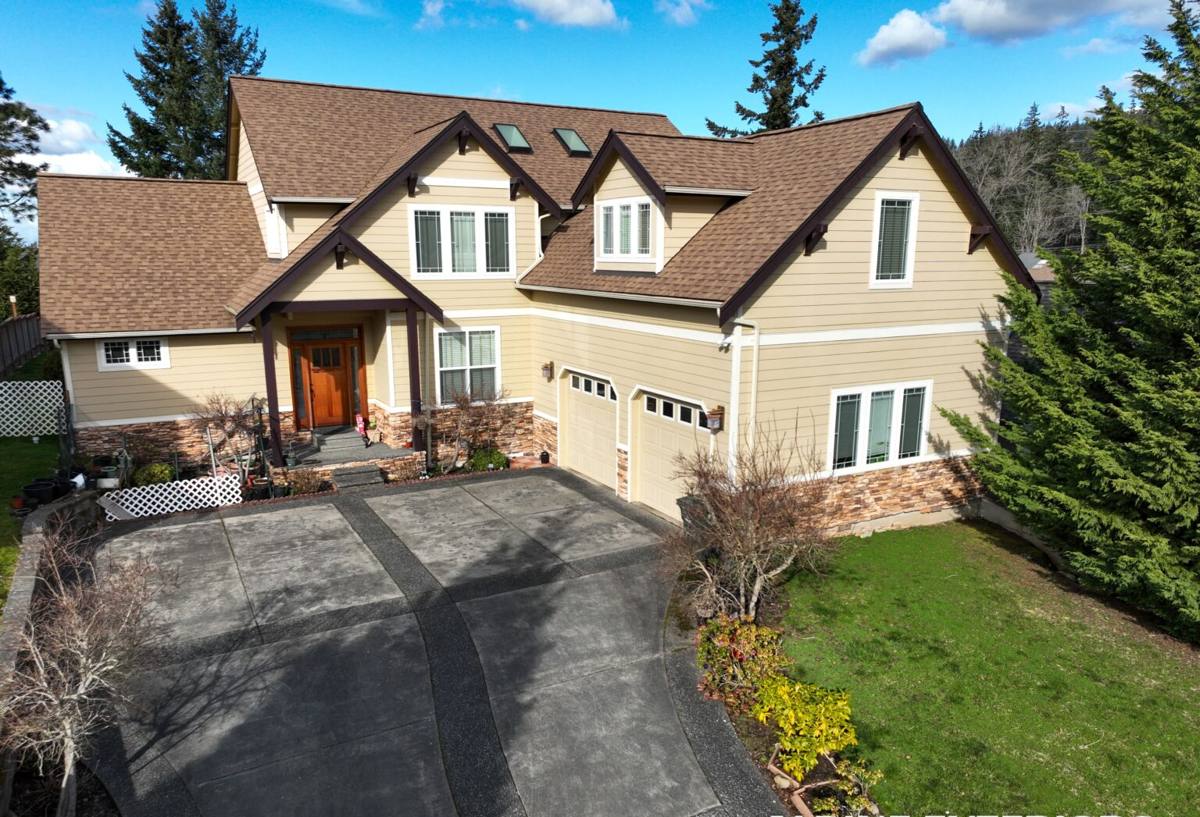
Why Edgemoor's Climate Is Tougher on a Roof Than It Looks
Salt Air and Corrosion
Proximity to saltwater changes the chemistry a roofing material has to survive. Airborne salt accelerates corrosion on fasteners, flashing, and any exposed metal edge that isn't properly coated or protected. This doesn't mean metal roofing is a bad choice near the water — quite the opposite, when the right alloy, coating, and fastener package are used. It does mean that a roofer who normally works inland, without accounting for salt exposure, can spec the wrong materials without realizing it until years later when fasteners start weeping rust streaks down a panel.
Driving Rain Off the Water
Whatcom County gets plenty of rain generally, but wind-driven rain near the bay behaves differently than a straight-down soaking. It gets pushed sideways and upward under laps, around penetrations, and into any gap that a calmer climate would never test. Underlayment choice, panel overlap, and fastener sealing all matter more here than they would on a roof a few miles inland.
Moss and Shade
Edgemoor's tree cover is part of what makes the neighborhood attractive, but shade plus moisture is exactly what moss needs. On asphalt shingles, moss lifts tabs and holds water against the surface for months at a time. Metal sheds moss far better because there's no granulated surface for spores to grip and no soft mat to hold moisture — but a roof with poor slope transitions or valleys that don't shed debris can still collect organic buildup that traps moisture against seams over time.
What a Correct Metal Roof Installation Actually Involves
A metal roof is only as good as the details underneath and around the panels. Here's what we consider non-negotiable on a job in this area:
- Corrosion-appropriate fasteners and flashing — matched to the panel material so dissimilar metals don't set up galvanic corrosion, which is a real risk in a salt-air environment.
- A synthetic or high-quality underlayment rated for the wind-driven rain conditions common near the water, not a bargain felt product.
- Proper panel overlap and seam direction oriented against the prevailing wind and rain direction for the specific roof slopes on the house.
- Ice-and-water shield or equivalent protection at valleys, eaves, and penetrations — the spots where driving rain finds its way in first.
- Ventilation that actually works — trapped moisture under a metal roof in a shaded, humid setting can cause condensation issues if intake and exhaust venting aren't balanced.
- Clean valley and transition design so moss, needles, and debris from overhead trees don't collect and hold moisture against seams.
Skipping any one of these doesn't necessarily cause an immediate problem — it causes a slow one, which is worse, because by the time it shows up as a leak or a rust stain, the underlying issue has usually been building for years.
Panel Types and Finishes: What We Consider for This Setting
Not every metal roofing product performs the same way in a coastal-influenced, tree-shaded neighborhood. The table below lays out the general trade-offs we walk homeowners through.
| Panel Type | Salt Air Performance | Typical Trade-Offs |
|---|---|---|
| Standing seam steel (properly coated) | Strong, when finish and fasteners are matched correctly | Higher upfront cost; installation quality matters more than with simpler systems |
| Aluminum panels | Naturally resistant to salt corrosion | Softer material, more careful handling needed during install; higher material cost |
| Exposed-fastener steel panels | Workable, but fastener seals need more frequent attention | Lower cost, but exposed fasteners are the first thing salt air and rain go after |
| Uncoated or minimally coated steel | Poor — not something we recommend this close to the bay | Lower cost up front, but shortened lifespan and early corrosion risk make it a false economy here |
We won't install a bare or minimally coated steel product in a setting like Edgemoor. It's not that the product is defective — it's that our standard for this specific exposure calls for a coating and fastener package that holds up to the environment, and cutting that corner just moves the cost from the invoice to a future repair.
Color, Coatings, and Finish Life
Finish quality matters as much as the base metal in a salt-air setting. A well-applied paint or coating system does two jobs: it protects the metal from corrosion, and it resists fading and chalking from UV exposure. In a shaded neighborhood like Edgemoor, UV fade is less of a concern than it would be on a south-facing roof with no tree cover, but coating integrity against moisture and salt still matters just as much. We talk homeowners through coating warranties separately from structural or weathertightness warranties, because they cover different failure modes and it's easy to assume one covers the other.
Our Process for an Edgemoor Metal Roof
- On-site assessment — we look at slope, tree exposure, existing ventilation, and how close the home is to prevailing wind and rain off the bay.
- Material selection — panel type, gauge, and finish chosen for the specific exposure of that roof, not a one-size answer for the whole neighborhood.
- Tear-off and deck inspection — we check the sheathing for any moisture damage from the old roof before anything new goes down, since covering a compromised deck just hides the problem.
- Underlayment and flashing installation — done to the standard the site's exposure calls for, with particular attention to valleys and penetrations.
- Panel installation — correct overlap, fastening, and seam sealing for the roof's specific geometry and wind exposure.
- Ventilation check — confirming intake and exhaust venting are balanced before we call the job done.
- Final walkthrough — we go over what was done, what to expect from the finish over time, and what maintenance (if any) the specific product needs.
Maintenance: What Edgemoor Homeowners Should Actually Expect
One of the honest selling points of metal roofing is how little routine maintenance it needs compared to shingles — but "little" isn't "none," especially under tree cover near the bay.
- Clear needles, leaves, and debris from valleys and gutters at least once or twice a year — more often if overhanging trees are heavy.
- Check gutters and downspouts for proper flow so rain isn't backing up under the roof edge during heavy weather.
- Look (or have us look) at fastener heads and flashing after the first few winters, since that's where early wear shows up first in a salt-air setting.
- Watch for any organic buildup — moss and algae can still grow on debris sitting on a metal roof even though they can't grip the metal itself.
- Avoid pressure washing directly on seams and fasteners; a soft wash or manual clearing is safer for the coating and seals.
Cost Factors Specific to This Job
We don't quote prices without seeing the roof, but the factors that move the number for a metal roof in Edgemoor specifically are usually these:
| Factor | Why It Matters Here |
|---|---|
| Roof complexity (valleys, dormers, penetrations) | More transitions mean more flashing detail work, which is where wind-driven rain gets in if it's rushed |
| Tree cover and access | Mature trees near the roofline can mean more careful staging and cleanup, and sometimes limb trimming coordination |
| Existing deck condition | Moss and trapped moisture from a prior roof can mean sheathing repair before the new roof goes on |
| Panel and coating choice | Salt-air-appropriate materials cost more than the base-grade options, but reduce the risk of early corrosion |
| Ventilation upgrades | Older homes near the bay sometimes need intake or exhaust venting corrected as part of the reroof |
Why Local Experience Matters for This Job
A roofing crew that mostly works drier, inland parts of Whatcom County can install a technically sound metal roof that still underperforms near Bellingham Bay, simply because the material and detail choices that work fine elsewhere aren't matched to salt air and wind-driven rain. Knowing which fastener finishes hold up, how to route valleys under heavy tree cover so they actually shed debris, and where wind-driven rain typically finds a way in on this kind of exposure isn't something you get from a manufacturer's install manual — it's something you learn by working roofs in this specific setting over time. That's the difference between a metal roof that looks right on day one and one that's still performing the way it should ten and twenty years in.
If you're weighing a metal roof for a home in Edgemoor, we're happy to take a look and walk you through what your specific roof needs — no pressure, no obligation. Use the form below to request a free estimate.