 Whatcom County
 Roof Repair Built for Lynden's Weather, Not a Generic Climate
Lynden sits inland from the Salish Sea, but it doesn't escape what makes Whatcom County roofs age faster than roofs in drier parts of the state. Marine air pushes moisture and a fine salt load into the region, rain falls steadily and often for days at a stretch, and the cool, wet stretches between fall and spring give moss and algae months to take hold on anything with north-facing shade or overhanging trees. Add in Lynden's agricultural surroundings — open fields, windbreaks, mature trees along property lines — and you get roofs that collect organic debris in valleys and behind chimneys faster than a roof in a dry, treeless subdivision would.
None of that means a Lynden roof needs constant babying. It means a repair has to account for how water actually moves and sits on a roof in this climate, not just patch the spot that's visibly leaking. A shingle that's lifted from wind, a valley that's collecting moss and slowing drainage, or a flashing seam that's failed after years of freeze-thaw cycling all fail for climate-specific reasons, and the repair should address that reason — not just the symptom.
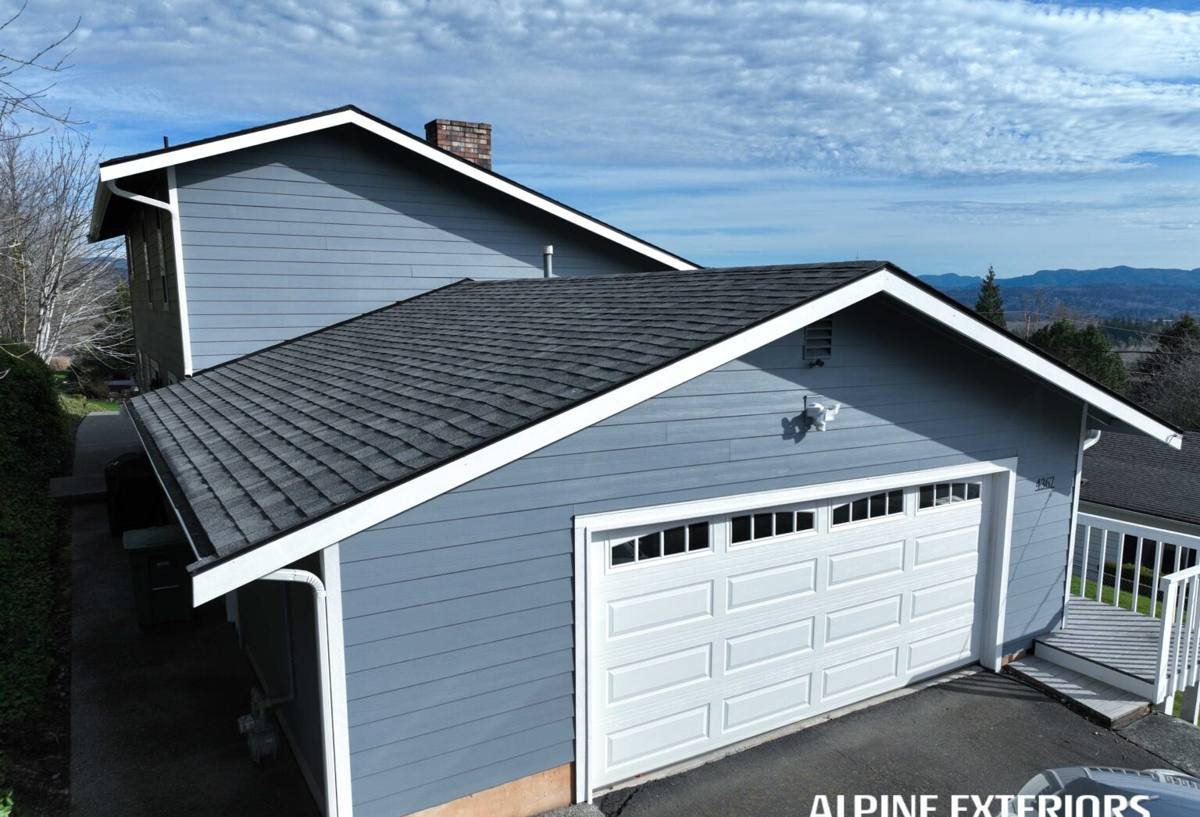
Signs a Lynden Roof Needs Repair Now
Most roof damage doesn't show up as an obvious hole. It shows up as small, easy-to-miss signs that get worse every wet season they're ignored. Here's what we tell Lynden homeowners to watch for between our visits:
- Dark streaking or green-black growth on shingles, especially on north- or shade-facing slopes
- Granules collecting in gutters or at downspout outlets — a sign shingles are wearing thin
- Soft or discolored ceiling patches after a heavy rain, even if they dry out afterward
- Moss visibly bridging shingle tabs or building up in valleys and around chimneys
- Curling, cracked, or missing shingles after a windy storm
- Rust streaks or gaps at flashing around chimneys, skylights, and roof-to-wall transitions
- Sagging in the roofline or visible dips when viewed from the ground
- Daylight visible through the attic roof deck, or damp insulation near the eaves
Any one of these on its own might be minor. Two or three together usually means water has already found a path in, even if it hasn't reached the ceiling yet.
Why Small Leaks Turn Into Big Repairs Here
In a drier climate, a small roof leak might sit for a season without much consequence. In Whatcom County's rain pattern, a small breach stays wet for weeks at a time, which is long enough for water to travel along roof decking, wick into insulation, and start feeding rot in framing before it ever shows up as a ceiling stain. That's the main reason we push for repair sooner rather than later on Lynden roofs — the climate doesn't give a small problem time to dry out and stay small.
What a Correct Roof Repair Actually Involves
A roof repair done right is more than swapping a shingle or squirting sealant at a leak. It starts with figuring out why that spot failed in the first place, because the same conditions will cause the same failure again if the underlying cause isn't addressed.
- Find the actual entry point. Water often travels along the underside of the roof deck before it drips somewhere visible, so the stain on your ceiling isn't always directly below the leak.
- Check the roof deck and underlayment. If water has been getting in for a while, the plywood or felt underneath the shingles may be soft, delaminated, or rotted, and needs to be addressed, not just covered over.
- Address moss and debris at the source. Treating the surface and clearing valleys and gutters so water can actually drain matters as much as the patch itself, especially given how long Lynden's moss season runs.
- Match materials correctly. Shingle repairs need matching profile, weight, and where possible color; flashing repairs need the right metal and fastening method for the transition being repaired.
- Reseal and integrate properly. New material needs to tie into the existing roof system — proper shingle lap, correct flashing overlap, compatible sealant — so it sheds water the way the rest of the roof does, not as a patch sitting on top of it.
Common Roof Problems We See Around Lynden
Moss and Algae Buildup
This is the most common issue we're called out for in this area. Moss holds moisture against the shingle surface, which accelerates granule loss and, over years, can lift shingle edges enough for wind and rain to get underneath. On older roofs, moss removal has to be done carefully — aggressive pressure washing does more damage than the moss itself by stripping granules or forcing water under shingles.
Valley and Flashing Failures
Valleys carry the most water volume on any roof, and they're where debris collects fastest under trees. Flashing at chimneys, skylights, and wall transitions is a common failure point because it's a mechanical seal, not a continuous surface — years of thermal movement and freeze-thaw cycling can work fasteners loose or crack old sealant.
Wind and Storm Damage
Winter windstorms that move through the county can lift or tear shingles, especially on roofs that are already past mid-life or were installed with poor nailing patterns. A few missing or lifted shingles after a storm should get looked at quickly — the exposed underlayment underneath isn't built to handle sustained weather on its own for long.
Gutter and Drainage Backups
When gutters clog with moss, needles, or leaf debris, water backs up under the roof edge instead of draining away. This is a slow, easy-to-overlook cause of fascia and roof-edge rot that we see often on homes with mature trees nearby.
Repair or Replace? How We Help You Decide
Not every roof problem calls for a full replacement, and not every roof is a good candidate for another round of patching. We look at the roof as a whole system before recommending either path.
| Factor | Repair usually makes sense | Replacement usually makes sense |
|---|---|---|
| Roof age | Under 15-20 years, otherwise sound | Nearing or past the material's expected service life |
| Extent of damage | Isolated area (one slope, one valley, one flashing point) | Multiple slopes or widespread granule loss |
| Roof deck condition | Solid, dry decking under the damaged area | Soft, rotted, or delaminated decking in several spots |
| Leak history | First occurrence or a clearly isolated cause | Recurring leaks in different locations over time |
| Overall shingle condition | Rest of the roof still flexible and well-adhered | Widespread curling, brittleness, or cracking |
We'll walk you through what we find and why we're recommending one path over the other — including when a repair is genuinely the better financial call, not just the cheaper one in the moment.
Our Roof Repair Process
We keep this straightforward because homeowners deserve to know what's happening to their roof and why:
- Inspection. We get on the roof (weather permitting) and check the deck, flashing, valleys, and shingle condition around the reported issue and beyond it.
- Honest assessment. We explain what's actually wrong, what caused it, and what your realistic options are — including if the honest answer is "this doesn't need repair yet."
- Written estimate. Clear scope of work and materials, no vague line items.
- The repair itself. Deck repair if needed, correct underlayment integration, matched materials, and proper flashing and sealing.
- Cleanup and check. Debris cleared from the roof and gutters, and a final check that water sheds correctly off the repaired area.
What We Use and Why
| Approach | Best for | Trade-off to know |
|---|---|---|
| Spot shingle replacement | Isolated wind or impact damage on an otherwise sound roof | Exact color match can be difficult on faded, older roofs |
| Flashing repair/replacement | Leaks at chimneys, skylights, and wall transitions | Often requires removing surrounding shingles to integrate properly |
| Moss treatment and removal | Preventive maintenance, early-stage buildup | Needs to be repeated on a regular cycle in this climate, not a one-time fix |
| Deck/underlayment repair | Any leak that's been active long enough to soften the roof deck | More labor-intensive; skipping this step is why patches fail early |
Why Hiring a Crew That Already Works in Lynden Matters
A roof repair crew that regularly works Whatcom County knows what "normal wear" looks like on a Lynden roof versus a roof somewhere drier — and just as importantly, knows what's an early warning sign specific to this climate versus cosmetic. That familiarity affects how quickly problems get correctly diagnosed, and it affects material choices, since not every product performs the same in sustained damp conditions.
It also matters for scheduling around the weather. Roof repairs need a reasonable dry window to be done correctly, and a crew that works this region regularly knows how to plan around Whatcom County's rain patterns rather than rushing a repair between downpours and compromising the seal.
Maintenance That Extends the Life of a Repair
A good repair holds up longer with basic upkeep between visits. This is the short list we give Lynden homeowners:
- Clear gutters and downspouts at least twice a year, more often if you're under conifers
- Keep tree branches trimmed back from the roofline to reduce shade, debris, and moss growth
- Have moss treated before it visibly bridges shingle tabs, not after
- Walk the exterior after major windstorms and look for lifted or missing shingles from the ground
- Address attic ventilation issues — poor airflow traps moisture and accelerates deck and shingle wear from underneath
- Don't ignore a small ceiling stain; get it checked before the next heavy rain
Get an Honest Look at Your Roof
If you're seeing moss buildup, a stain on the ceiling, or shingles that came loose in the last storm, it's worth getting a straight answer on what's actually going on before it turns into a bigger repair. We'll take a look, tell you what we find, and give you a clear, no-pressure estimate — fill out the form below and we'll get back to you.