 Whatcom County
 Why Lynden Homes Need a Different Window Approach
Lynden sits inland from the coast, but that doesn't mean the house is spared from what makes Whatcom County tough on windows. The same weather pattern that hits the rest of the county — long stretches of driving rain in the fall and winter, humid air that lingers close to the ground, and a moss season that seems to run nine or ten months out of the year — works on window frames and seals just as hard as it works on roofs and siding. Add in the salt-tinged air that rolls in off Bellingham Bay and the Strait of Georgia on a west wind, and you've got a climate that's genuinely rough on anything with a seam, a seal, or a moving part.
Windows are one of the few building components that combine a mechanical assembly (sashes, hardware, weatherstripping) with a sealed unit (the insulated glass) and a structural opening in the wall. When any one of those three fails in this climate, the others usually follow. That's the lens we bring to every window job in Lynden: not just "does it look good and open smoothly," but "will the seal, the frame, and the flashing all still be doing their job in fifteen years of Whatcom County weather."
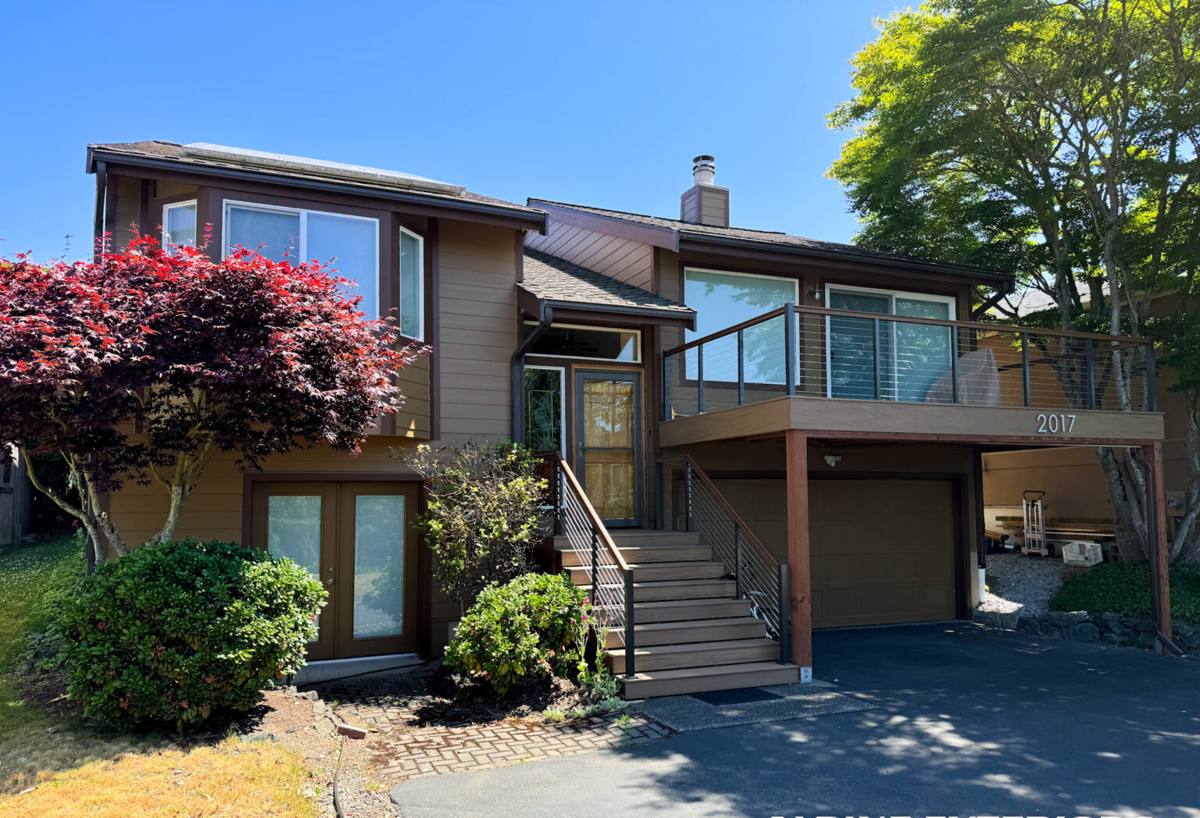
What "Energy-Efficient" Actually Means for This Climate
Energy-efficient windows get marketed everywhere, but what matters for a Lynden home is fairly specific. This is a marine climate — mild temperatures, but a lot of moisture and a lot of wind-driven rain. The window's job here isn't just keeping heat in during the two or three genuinely cold months. It's managing condensation, resisting water intrusion during storms, and holding its seal through constant expansion and contraction from damp mornings and drier afternoons.
The Numbers That Matter Locally
- U-factor: Measures heat loss through the window. Lower is better. For this climate zone, a U-factor in the 0.27–0.30 range or lower is a reasonable target for most double-pane, low-E units.
- Solar Heat Gain Coefficient (SHGC): Less critical here than in sunnier climates, but still worth understanding — Whatcom County doesn't get the intense solar load that drives SHGC decisions in the desert Southwest, so this spec matters less than U-factor for most Lynden homes.
- Air leakage rating: Lower numbers mean a tighter seal against wind-driven rain and drafts — genuinely important here given how much wind-driven precipitation this area sees.
- Condensation resistance: Often overlooked, but in a humid marine climate with cool nights, a window that resists interior condensation on the glass and frame will hold up better and cause fewer moisture problems around the opening.
A window with strong paper specs but a sloppy installation will still fail here. We've said it before to Lynden homeowners: the product label matters less than what happens at the rough opening.
What a Correct Installation Involves
This is where most of the difference between a window job that lasts and one that doesn't actually gets decided — and it happens before the new window is ever set in place.
Step by Step
- Remove the old unit carefully. This is the point where we get our first real look at the wall assembly — sheathing, framing, and any existing moisture damage that's been hidden behind the old trim.
- Inspect and repair the rough opening. Any soft or water-stained sheathing gets addressed here, not covered over. This is non-negotiable in a climate where the previous window may have been leaking slowly for years without an obvious sign inside.
- Flash the opening correctly. Proper flashing follows a specific water-shedding sequence — sill pan first, then side flashing, then head flashing lapped over the top, integrated with the home's existing weather-resistive barrier. Done out of order, flashing can trap water instead of shedding it.
- Set the window level, plumb, and square. A unit that's slightly out of square will bind, won't seal evenly, and will wear its weatherstripping unevenly over time.
- Insulate the gap correctly. Low-expansion foam or backer rod and sealant around the frame — never packed so tight it bows the frame, never left so loose that it's a thermal and air gap.
- Seal and trim. Exterior caulking at the right joints (and only the right joints — some drainage points need to stay open), then interior trim and finish work.
Skip or rush any one of these steps and you can end up with a window that looks fine for a year or two before staining, drafts, or soft trim show up.
Product Choices: What We Recommend and Why
We install vinyl and fiberglass window lines with a track record in wet marine climates, generally favoring:
- Fusion-welded vinyl or fiberglass frames over mechanically joined corners, since welded corners have fewer seams for water to find.
- Dual-pane, low-E, argon-filled glass as the baseline for this climate — it's a good balance of performance and cost, and triple-pane is rarely necessary here given our mild winters.
- Manufacturers with a strong regional dealer network and a real warranty claims process, since a warranty is only as good as the ability to actually use it.
We're generally cautious about wood-clad windows in this specific climate. Wood-clad units can look excellent, but they carry a higher maintenance burden — the cladding and any exposed wood detailing need more consistent upkeep in an environment with this much sustained moisture and moss growth. That's not a knock on any manufacturer; it's a trade-off we walk homeowners through honestly, because the right choice depends on how much upkeep you want to sign up for.
Frame Material Comparison for Lynden's Climate
| Frame Type | Moisture Tolerance | Maintenance | Typical Lifespan Here |
|---|---|---|---|
| Vinyl | Excellent — won't rot or corrode | Low — occasional cleaning | 20–30+ years |
| Fiberglass | Excellent — very stable in moisture and temperature swings | Low | 30+ years |
| Wood-clad | Good if maintained; vulnerable at cladding seams and cut edges | Moderate to high — needs regular inspection | Varies widely with upkeep |
| Aluminum | Fair — prone to condensation without thermal breaks | Low | 20–25 years, shorter if uninsulated |
Signs Your Lynden Home's Windows Are Underperforming
Homeowners often live with a slowly failing window for years before deciding to act, mostly because the symptoms show up gradually. Here's what we look for and what you can check yourself:
- Condensation forming between the panes (not just on the surface) — this means the seal on the insulated glass unit has failed.
- Visible fogging or a hazy look to the glass that doesn't wipe away.
- Drafts you can feel with a hand near the frame on a windy day.
- Soft or discolored trim and sill material, especially on walls that face prevailing weather.
- Moss or dark streaking on the exterior sill or frame — a sign moisture is sitting there longer than it should.
- Windows that are hard to open, close, or lock, which often points to a frame that's shifted or swollen.
- Noticeably higher heating bills compared to similar homes nearby.
Any one of these on its own isn't necessarily an emergency, but they're worth having looked at before they become a bigger repair.
Cost Factors for Lynden Window Projects
Every home is different, and we'd rather give you a real number after a walkthrough than a broad estimate that doesn't hold up. That said, here are the main factors that move the price:
| Factor | Why It Matters |
|---|---|
| Number and size of openings | More and larger windows mean more material and labor |
| Frame material | Vinyl is typically the most budget-friendly; fiberglass and wood-clad cost more upfront |
| Rough opening condition | Water or rot damage found during removal adds repair time before the new window can go in |
| Access and story height | Second-story or hard-to-reach windows take longer and may need staging |
| Trim and finish work | Matching existing interior trim or exterior siding detail adds labor |
| Full-frame vs. insert replacement | Full-frame replacement (removing down to the studs) costs more than an insert but corrects underlying flashing issues an insert can't reach |
We'll walk you through which approach — full-frame or insert — actually makes sense for your specific windows, since that decision has a real effect on both cost and long-term performance.
Why a Crew That Already Works Whatcom County Matters
Window installation isn't exotic work, but doing it right in this specific climate takes a feel for what this weather does to a building over time. A crew that works Lynden and the surrounding Whatcom County area regularly has already seen how flashing details hold up (or don't) after a decade of this rain pattern, knows which trim materials handle the moss and moisture season without breaking down, and isn't guessing at how a given product line performs here versus how it performs in a drier climate three states away.
That local pattern-recognition shows up in small decisions — how tight to run a bead of sealant, which joints need to stay open for drainage, how much clearance to leave for a swelling wood sill — that don't show up on a spec sheet but make a real difference to how long the job lasts.
What to Ask Any Contractor Before Hiring
- Do you inspect and repair the rough opening, or just swap the window and re-trim?
- What's your flashing sequence, and can you explain why it's done in that order?
- Full-frame or insert replacement — and why do you recommend one over the other for my windows?
- What warranty covers the product, and what warranty covers your installation labor separately?
- Can you show me examples of similar window work in Whatcom County?
Getting a Straight Answer for Your Home
Every Lynden home is a little different — age, orientation, exposure to weather, and what's already going on behind the trim all affect what the right window plan looks like. Rather than guess from a distance, we'd rather come look at what you've actually got.
If you're noticing drafts, fogged glass, or windows that just don't feel right anymore, or you're planning ahead for a full replacement, we're happy to take a look and give you an honest read on what's needed. Reach out for a free, no-pressure estimate using the form below.