 Whatcom County
 Why Samish Homes Need More Than Standard Siding
Samish sits close enough to the water and the wet Whatcom County weather pattern that siding here works harder than siding fifty miles inland. Salt-laden air off the bay corrodes fasteners and finishes that weren't built to resist it. Driving rain, pushed sideways by wind off the water, finds every gap in flashing and trim that a calmer climate would never test. And the long, damp moss season that runs from fall through spring keeps north-facing walls and shaded siding wet for weeks at a stretch, which is exactly the environment moss, algae, and rot need to take hold.
A lot of siding failures we get called out for in this part of Whatcom County aren't failures of the material itself — they're failures of a product or an installation that wasn't matched to this specific mix of salt, rain, and moisture retention. That's the lens we use for every Samish project: what does this wall actually face, and what does it need to hold up for decades instead of years.
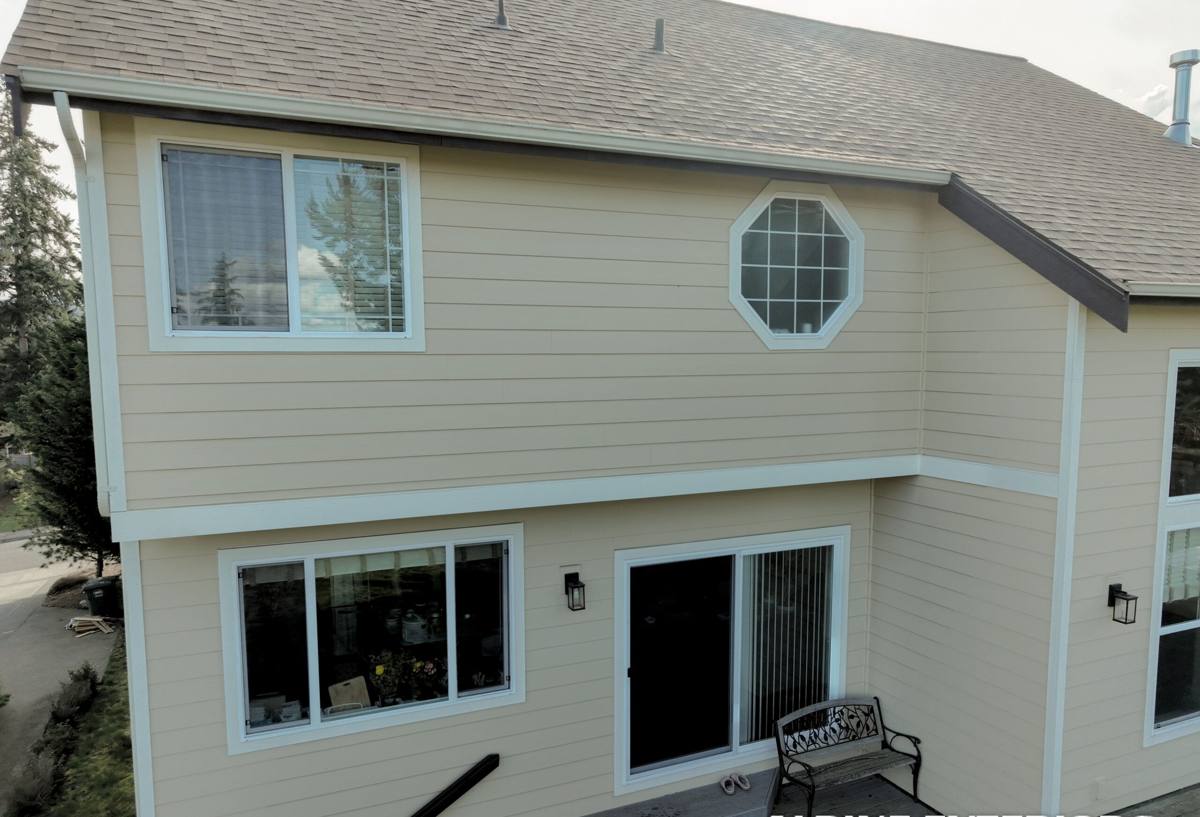
Why We Install Only James Hardie
We standardized on James Hardie fiber cement siding company-wide, and Samish is a good example of why. Hardie's HZ product lines are engineered for specific climate zones — HZ5, built for cold and wet regions, is the right specification for Whatcom County's rain and moisture exposure. The material itself is fiber cement: sand, cement, and cellulose fiber, non-combustible, and dimensionally stable in a way that wood-based and foam-core products aren't when they're cycling wet and dry all winter.
Two things matter most for a property this close to salt air:
- ColorPlus factory finish — baked on in a controlled environment rather than field-applied, so it resists the fading and chalking that salt air and UV accelerate on site-painted siding.
- Moisture behavior — fiber cement doesn't swell, delaminate, or wick water through its core the way engineered wood products can once a seam or cut edge takes on moisture. In a climate where wall assemblies stay damp for months, that difference compounds year over year.
We don't install vinyl, LP SmartSide, Cemplank, Allura, primed spruce, or cedar. Each of those has legitimate uses elsewhere, but for a Samish exterior facing salt air, sustained rain, and heavy moss pressure, we've made Hardie our standard because it's the product we're willing to warranty our workmanship against for the long haul.
Signs Your Current Siding Is Losing the Battle
Before we talk about installation, it helps to know what to look for on an existing wall. These are the early indicators we see most often on Samish-area homes:
- Dark green or black streaking on north- or shade-facing walls, especially under eaves or near landscaping that blocks airflow
- Soft or spongy spots when you press on siding near the bottom courses or around window trim
- Paint that's chalking, peeling, or bubbling faster on the water-facing side of the house than elsewhere
- Visible gaps at butt joints, corners, or trim where caulking has shrunk or failed
- Fastener corrosion — rust streaks bleeding down from nail or screw heads
- Warping, cupping, or lap lines that aren't straight anymore
Any one of these on its own might be minor. Several together, especially on a wall that's been holding moisture through multiple moss seasons, usually means the assembly behind the siding is also compromised and needs a look, not just a surface fix.
What a Correct James Hardie Installation Involves
Wall Prep and Moisture Management
The siding is only as good as what's behind it. A correct install starts with checking the water-resistive barrier, confirming flashing is properly lapped at windows, doors, and penetrations, and addressing any rot or trapped moisture in the sheathing before a single board goes up. Skipping this step is the single most common reason siding — any siding — fails early in a climate like this one.
Fastening and Clearances
Hardie specifies fastener type, spacing, and penetration depth, and those specs exist for a reason: under-driven or over-driven fasteners crack boards or let water in around the shank. We also hold the manufacturer's minimum clearances from grade, roofing, and decks — a clearance gap that's too tight is a slow, invisible way to trap moisture against the bottom of a wall.
Joints, Caulking, and Trim
Butt joints, corners, and trim intersections are where most siding leaks actually start. We follow Hardie's joint treatment guidance and use compatible sealants rather than whatever's on the truck, because the wrong caulk fails faster in salt air and constant damp than it would somewhere drier.
Finish and Touch-Up
Factory-finished ColorPlus boards need field touch-up only at cut edges and fastener heads, using Hardie's matched touch-up products — not generic exterior paint, which weathers differently and leaves visible mismatched patches over time.
Hardie Compared to the Alternatives, for This Climate
| Factor | James Hardie Fiber Cement | Vinyl | LP SmartSide / Engineered Wood | Cedar |
|---|---|---|---|---|
| Salt air resistance | Strong — inert material, factory finish | Can become brittle and discolor faster | Vulnerable if moisture reaches cut edges | Needs regular refinishing to hold up |
| Moss/moisture exposure | Doesn't rot; surface cleans without damaging material | Doesn't rot, but seams trap moisture behind panels | Higher risk of swelling and delamination | Prone to rot without diligent maintenance |
| Driving rain performance | Depends on correct install, but material is stable wet or dry | Panels can flex and gap under wind-driven rain | Sensitive to sustained water exposure | Requires sealed, maintained finish to resist water |
| Fire resistance | Non-combustible | Combustible | Combustible | Combustible |
| Typical maintenance | Occasional wash; touch-up paint at cuts only | Low, but limited repair options if damaged | Regular inspection and sealing of edges | Refinishing every few years |
Our Process for Samish Projects
We work Samish and the surrounding Whatcom County area regularly, and our process reflects what actually happens here:
- On-site assessment — we walk the exterior, check the sides of the house that face prevailing wind and rain, and look for existing moisture damage before quoting anything.
- Scope and product selection — we confirm the right Hardie panel or lap profile and HZ specification for your exposure, and flag any rot or flashing repair the job needs.
- Prep and tear-off — old siding comes off, sheathing and barrier are inspected and repaired as needed, and flashing details are corrected before new siding starts.
- Installation to spec — fastening, clearances, and joint treatment follow Hardie's published installation guidelines, not shortcuts.
- Final walkthrough — we check caulking, touch-up, and clearances with you before calling the job done.
Living With Hardie Siding Through a Whatcom County Moss Season
Fiber cement doesn't feed moss and algae the way wood fiber can, but any exterior surface in this climate will pick up growth over time, especially on shaded north walls. The difference with a correctly installed Hardie exterior is that a routine soft wash or garden-hose rinse restores it — you're not fighting rot or delamination underneath, just surface growth on a stable material. We recommend an annual look at gutters, downspouts, and grade clearance too, since keeping water moving away from the wall does more for long-term performance than any product choice alone.
Cost Factors to Expect
Every Samish home is different, but these are the main variables that move a project's cost. We'll only speak in broad ranges without a walkthrough — exact numbers come from seeing the house.
| Factor | Why It Matters |
|---|---|
| Tear-off and disposal | Removing failed siding, especially with hidden rot, adds labor and disposal cost |
| Sheathing/framing repair | Moisture damage found during tear-off is priced separately once it's visible |
| Panel vs. lap profile | Different Hardie profiles and trim packages carry different material and labor costs |
| Wall complexity | Dormers, multiple stories, and cut-up wall lines take more labor per square foot |
| Trim and flashing detail | Correct flashing at windows, doors, and roof lines is where most of the long-term performance is won |
Why a Crew That Already Works Samish Matters
Installation quality is what determines whether Hardie siding delivers the 30+ years it's capable of or fails early from a bad detail. A crew that already works this stretch of Whatcom County has seen how the salt air, wind-driven rain, and shaded, moss-prone walls actually behave here — not in a manual, but on real houses through real winters. That's the difference between a generic install and one that's specified for the wall it's going on.
If your siding is showing moss, soft spots, or failing paint, or you're planning ahead for a replacement, we're happy to take a look and give you a straight read on what your home needs. Reach out for a free, no-pressure estimate — there's a simple form below to get started.