 Whatcom County
 Why Happy Valley Homes Wear Out Siding Faster Than You'd Expect
Happy Valley sits close enough to the water and the tree canopy that its homes take on a specific combination of punishment: salt-laden air drifting in off the Sound, long stretches of driving rain that come in sideways during winter storms, and shaded, moisture-holding yards that grow moss on anything that sits still long enough. Individually, none of these is unusual for Whatcom County. Together, on a home with aging or poorly installed siding, they add up fast.
Salt air is corrosive to fasteners and finishes. Driving rain finds every gap, seam, and under-caulked joint and pushes water behind the cladding rather than off of it. And moss — which loves the shade and dampness this area provides most of the year — holds moisture against the siding surface long after a storm has passed, extending the amount of time your walls stay wet. If you've noticed streaking, soft spots, bubbling paint, or a greenish cast creeping up your north-facing walls, that's this combination at work.
What This Looks Like on Older Siding
On homes with original wood, older vinyl, or aging composite siding, the failure pattern in Happy Valley is fairly consistent: moisture damage starts low (near grade and around downspouts), spreads at horizontal joints and butt seams, and shows up worst on the shaded sides of the house where things dry out slowest. By the time paint is visibly failing or boards are soft to the touch, there's a good chance moisture has already been working behind the surface for a season or two.
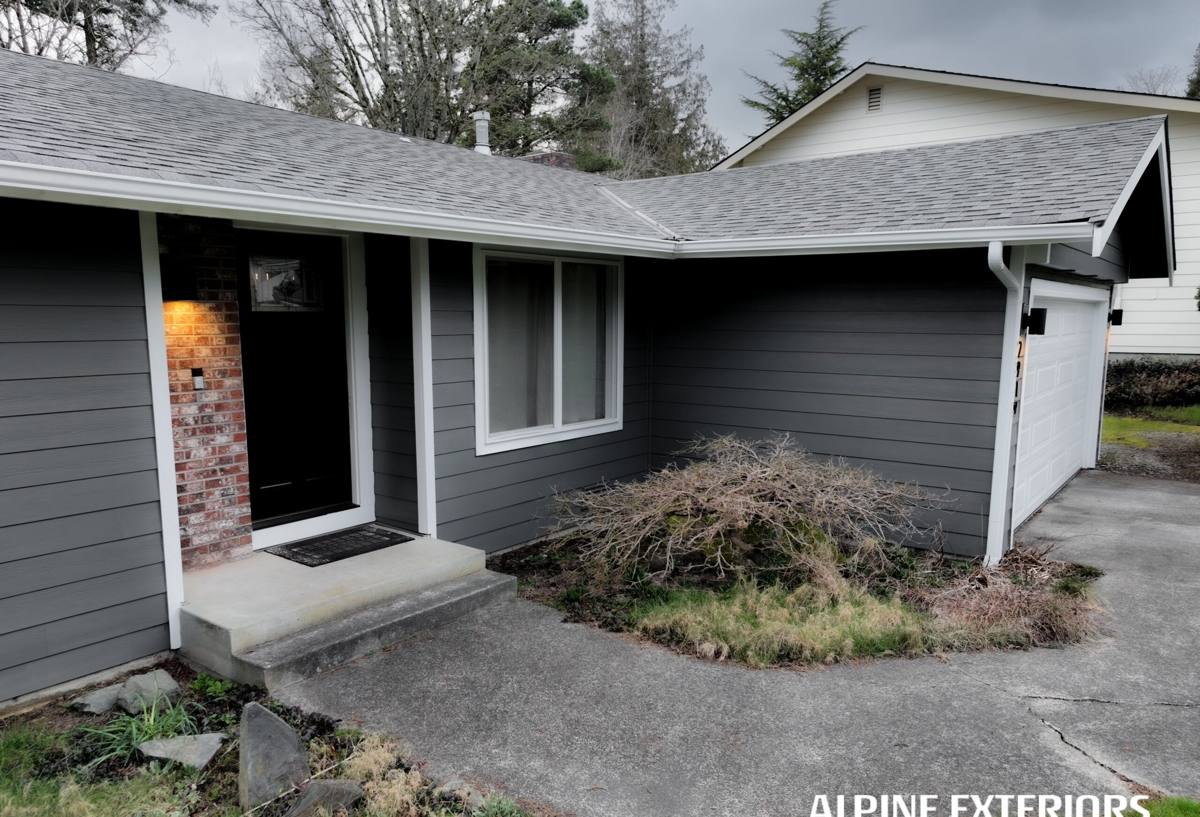
What a Correct Siding Replacement Actually Involves
Replacing siding is not just swapping old boards for new ones. Done right, it's a system — and skipping steps is exactly how a brand-new siding job ends up with the same moisture problems five years later. A proper replacement in this climate includes:
- Full tear-off and inspection of the sheathing underneath, not just the visible siding — this is where hidden rot and past water intrusion get caught before they're covered up again
- Repair or replacement of damaged sheathing and framing found during tear-off, not patched over
- A correctly lapped weather-resistive barrier installed shingle-style so water is always directed outward and down, never trapped behind the cladding
- Proper flashing at every window, door, roofline intersection, and penetration — the majority of siding failures we see trace back to a flashing detail that was skipped or done wrong
- Correct fastening per the manufacturer's specification for this climate zone, including fastener spacing and depth
- Rain-screen or drainage gap detailing where appropriate, so incidental moisture behind the siding has somewhere to go
- Factory-finished cladding installed with the manufacturer's specified gaps, caulking, and touch-up process
Any one of these steps done poorly can undermine the whole job, regardless of how good the siding product itself is.
Why We Only Install James Hardie Fiber Cement
We standardized on James Hardie fiber cement siding for every home we work on, including in Happy Valley, and we don't install vinyl, LP SmartSide, Cemplank, Allura, primed spruce, or cedar. That's not a marketing position — it's a decision based on what holds up under repeated wet-dry cycling, salt exposure, and moss-prone shade over decades, not just years.
Fiber cement is non-combustible, which matters increasingly for insurance and building code considerations. Hardie's HZ5 product line is engineered specifically for climates with prolonged moisture exposure, including freeze-thaw cycling that this region sees in winter. The ColorPlus factory finish is baked on under controlled conditions, which gives more consistent, longer-lasting color than field-applied paint on wood or composite siding — and it means fewer repaint cycles over the life of the siding.
Being Fair About Trade-offs
Fiber cement isn't the lightest or easiest material to install, and it costs more upfront than vinyl. It requires correct cutting and fastening practices, and installers who don't respect those specs can cause problems that have nothing to do with the product itself. We think that trade-off — a more demanding install in exchange for a material that genuinely resists what this climate throws at it — is the right one for homes here, and it's why we've built our entire process around doing that installation correctly rather than cutting corners to make a cheaper product work.
Siding Material Comparison for This Climate
| Material | Moisture Resistance in Wet Climates | Maintenance | Longevity Considerations |
|---|---|---|---|
| James Hardie Fiber Cement | Engineered for high-moisture regions (HZ5); doesn't absorb water like wood | Occasional wash; factory finish reduces repainting | Strong transferable warranty; performs well when installed to spec |
| Vinyl | Water-resistant but can trap moisture behind panels if installed poorly; can warp in heat | Low, but color fades over time and can't be repainted easily | Shorter practical lifespan in harsh coastal exposure |
| Cedar | Naturally rot-resistant when new, but absorbs moisture over time, especially in shade | High — regular sealing/staining required | Prone to moss growth and softening without diligent upkeep |
| Primed Spruce/Wood Composite | Vulnerable once the factory coating is compromised; swells with moisture | High — repainting and edge-sealing needed | Shorter lifespan in prolonged wet conditions |
Our Process for a Happy Valley Siding Replacement
1. On-Site Assessment
We walk the exterior with you, look at the condition of the current siding, check trouble spots (low corners, roof intersections, shaded walls), and talk through what we expect to find once we open things up.
2. Tear-Off and Sheathing Inspection
Old siding comes off, and we inspect the sheathing and framing underneath before anything new goes up. This step is non-negotiable — it's the only way to know if you're covering a healthy wall or sealing in a problem.
3. Weather Barrier and Flashing
We install a correctly lapped weather-resistive barrier and detail flashing at every window, door, and penetration. This is the layer that actually keeps your home dry — the siding itself is the second line of defense, not the first.
4. Hardie Installation
James Hardie siding goes on per manufacturer specification: correct fastener type, spacing, and gaps, with joints and seams treated the way Hardie's warranty requires.
5. Final Walkthrough
We walk the finished exterior with you, point out anything worth knowing for future maintenance, and make sure you're clear on what the warranty covers.
Timing a Replacement Around Whatcom County's Weather
Siding replacement can happen across most of the year here, but scheduling still matters. Drier stretches in late spring through early fall make it easier to keep sheathing dry during tear-off and give caulking and finishes time to cure properly. Winter jobs are doable but require tighter sequencing to limit how long a wall is open to the weather. If you're planning ahead, getting on the schedule before the wet season ramps up gives more flexibility.
Signs Your Happy Valley Home Needs Siding Attention Now
- Soft or spongy spots when you press on the siding, especially near the bottom courses
- Persistent moss or algae staining that comes back shortly after cleaning
- Paint that's bubbling, peeling, or failing faster than expected
- Visible gaps or separation at seams and corner trim
- Musty smell or discoloration on interior walls that back up to exterior siding
- Warping, buckling, or panels that have visibly moved out of alignment
Why Hiring a Crew That Already Works in Happy Valley Matters
Siding installation guidance from a manufacturer is written for a general climate. What actually determines whether that guidance holds up here is a crew that's dealt with this area's specific combination of salt exposure, rain volume, and shade-driven moisture retention often enough to know where problems tend to hide. That familiarity shows up in small decisions — how flashing gets detailed around a shaded window, how much drainage gap gets left on a wall that never fully dries — that don't show up on a spec sheet but make a real difference in how the siding performs ten and twenty years out.
It also means faster, more accurate assessments. A crew that's already seen how homes in this area weather over time can look at your siding and tell you, with more confidence, whether you're dealing with a cosmetic issue or something structural underneath.
What to Expect Cost-Wise
Siding replacement costs vary based on the size of the home, the condition of the sheathing underneath (which isn't known until tear-off), the amount of trim and detail work involved, and the Hardie product line and finish chosen. Homes needing sheathing repair or extensive flashing correction will cost more than a straightforward re-side over sound framing. We don't quote firm numbers without seeing the home, but we're upfront about the factors that move the price during the estimate.
If your Happy Valley home is showing signs of wear from the salt air, rain, or moss that's typical here, we're happy to take a look and walk you through what we find. Reach out for a free, no-pressure estimate — the form below gets you started.