 Whatcom County
 Why Happy Valley Roofs Take a Different Kind of Beating
Homes in Happy Valley sit close enough to open water and marine air that roofing materials here work harder than they would twenty or thirty miles inland. Salt-laden air accelerates corrosion on anything with exposed metal — fasteners, flashing, gutters, and unprotected panel edges. On top of that, Whatcom County gets long stretches of driving rain that comes in sideways during winter storms, which means a roof isn't just shedding water off a slope, it's fighting wind-driven moisture trying to get up under laps and around penetrations. Add a moss season that can run eight or nine months out of the year on shaded, north-facing sections, and you've got three separate stressors working on the same roof at the same time.
A metal roof handles this combination better than most materials when it's specified and installed correctly for the conditions. When it's not — wrong fastener metal, poor underlayment choice, sloppy flashing — it can actually trap moisture and corrode faster than a well-maintained composition roof would. The difference between a metal roof that lasts decades in Happy Valley and one that causes problems in five years almost always comes down to installation details, not the panel brand.
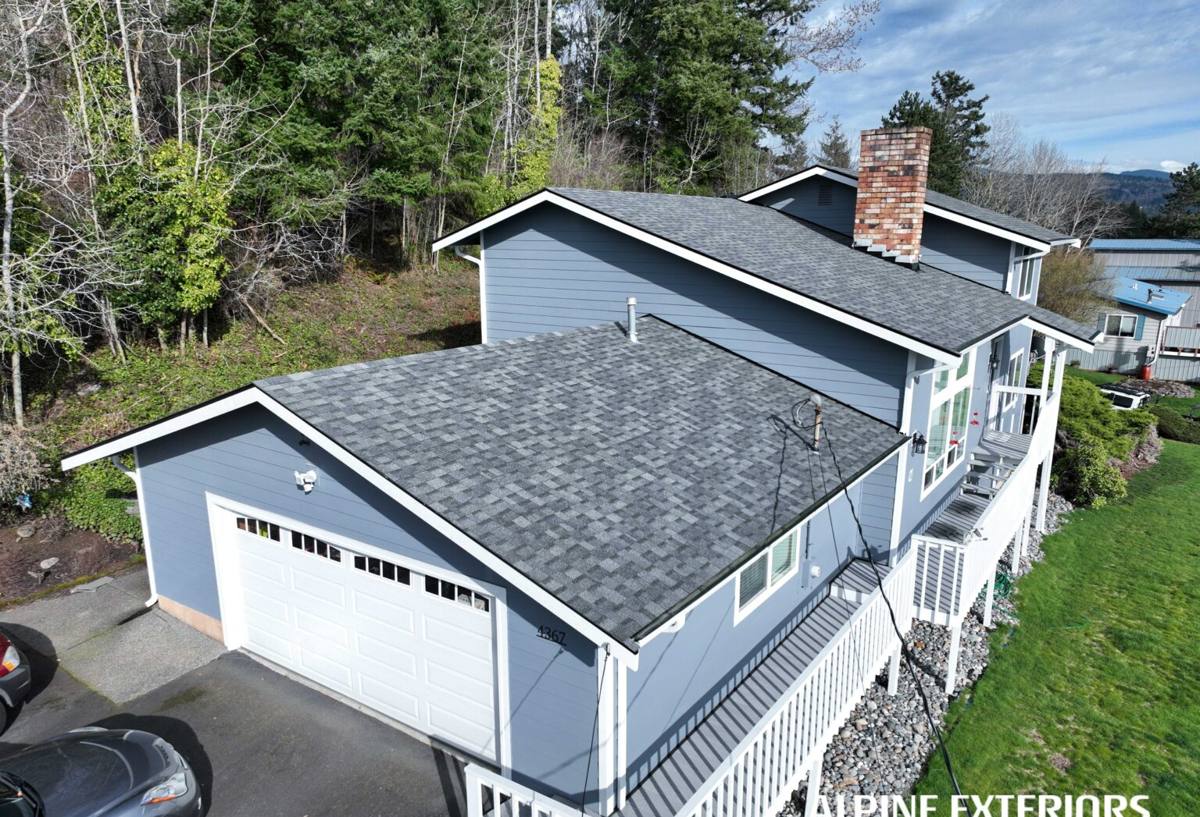
What a Correctly Installed Metal Roof Includes
"Metal roof" covers a wide range of quality. A correct installation for this area includes several things that aren't optional if you want the roof to actually perform through our wet season:
Underlayment built for long exposure
Metal panels aren't the only waterproofing layer — the underlayment underneath is what protects the deck if wind-driven rain ever gets past a seam or a fastener works loose over time. In a climate with this much sustained rainfall, we treat the underlayment as a real second line of defense, not an afterthought.
Fastener and flashing metal that matches the panel
Mixing dissimilar metals — say, the wrong screws with the wrong panel coating — sets up galvanic corrosion, where one metal degrades the other anywhere they touch and moisture is present. Near the water, this happens faster than most homeowners expect. Matching fastener and flashing metal to the panel system isn't a nice-to-have here, it's a requirement.
Ventilation that keeps the deck dry
Metal roofs handle exterior moisture well, but interior moisture — from bathrooms, kitchens, and daily living — still needs somewhere to go. Proper ridge and intake ventilation keeps condensation from forming on the underside of the deck, which matters even more under a non-breathing metal surface than under some other roofing types.
Detailing at valleys, walls, and penetrations
Most roof leaks don't happen in the open field of the roof — they happen where the roof meets something else: a wall, a chimney, a skylight, a valley. These transitions need custom-formed flashing, not generic trim pieces bent to fit. This is where driving rain finds its way in if the work is rushed.
Choosing the Right Panel and Metal Type
Not every metal roofing product is a good match for a coastal, high-rainfall environment. Here's how the common options compare for a Happy Valley home:
| Panel Type | Best For | Coastal Considerations | Relative Cost |
|---|---|---|---|
| Standing seam (concealed fastener) | Most Happy Valley homes, especially open exposure sites | No exposed fasteners to corrode or work loose over time; best long-term seal against driving rain | Higher |
| Exposed-fastener panels | Outbuildings, shops, budget-conscious projects | Fasteners need periodic inspection and eventual re-torquing or replacement as gaskets age | Lower to mid |
| Steel with a quality factory coating | Most residential applications | Coating quality matters more than steel type in salt air; ask what coating system is used | Mid |
| Aluminum | Homes with heavier salt exposure | Naturally resists rust since it has no iron content to corrode; often preferred closest to open water | Mid to higher |
We'll walk you through which option fits your specific site, roof complexity, and budget rather than defaulting to one product for every house. The right choice depends on how exposed your roof is, your roof's slope and shape, and how long you plan to stay in the home.
Moss, Debris, and Long-Term Roof Health
Whatcom County's moss season is long, and Happy Valley's tree cover means most roofs deal with shade, needle drop, and moisture retention on at least part of the roof for much of the year. Moss doesn't just look bad — it holds water against the roof surface and, on the wrong material, can work into seams and fastener heads over time.
Why metal helps, but doesn't eliminate the problem
Metal's smooth, hard surface gives moss and algae far less to grip onto compared to shingles, so it's naturally more resistant. But debris still collects in valleys and against any obstruction, and a roof with poor slope or clogged gutters will hold moisture regardless of what the panels are made of.
Design choices that reduce moss buildup
- Adequate slope in shaded sections so water and debris don't sit
- Properly sized and pitched valleys that shed debris instead of collecting it
- Gutter and downspout capacity matched to your actual roof area and local rainfall volume
- Trim and closure details that don't create ledges where needles and moss can accumulate
Coastal Air and Corrosion Protection
Salt air is the variable that trips up roofing crews who don't regularly work close to the water. It's not just about picking "marine-grade" materials — it's about consistency throughout the whole system. A high-quality panel installed with the wrong fasteners, or flashing made from a different metal than the panel, creates a weak point that will show corrosion well before the rest of the roof does.
We also pay attention to how a roof is detailed around anything else metal on the house — vents, gutters, and mounting hardware for anything installed on the roof later, like solar or antennas. Every one of those is a potential contact point for galvanic corrosion if it's not planned for during installation.
Our Process From Estimate to Finished Roof
- On-site assessment — we look at your roof's exposure, slope, shading, existing ventilation, and any current problem areas before recommending a system.
- Straightforward proposal — panel type, coating, underlayment, and flashing details spelled out in plain language, with cost factors explained rather than a single lump number.
- Deck inspection at tear-off — we check the roof deck once the old material is off and address any damage before anything new goes down, rather than covering a problem up.
- Underlayment and flashing first — the waterproofing layer and all transition details go in correctly before panels are ever set, since this is what protects you if anything above it is ever compromised.
- Panel installation — set to the manufacturer's fastening and spacing specifications, matched fastener metal throughout.
- Final walkthrough — we go over the finished roof with you, including what maintenance to expect and what's covered under warranty.
Signs It's Time to Consider a Metal Roof
Not every home needs a metal roof right now, but there are signs worth paying attention to, especially in a wet, salt-exposed area like Happy Valley:
- Your current roof is losing granules, curling, or showing bare spots at the edges
- You're seeing consistent moss regrowth within months of cleaning
- Metal flashing, gutters, or vents nearby show visible rust or pitting
- You've had a leak trace back to a valley, wall transition, or penetration rather than open roof field
- You're planning to stay in the home long-term and want to stop repeat roofing costs every 15-20 years
- You're adding solar, a heat pump, or other roof-mounted equipment and want a roof system built to last as long as that investment
Maintenance After Installation
A correctly installed metal roof needs far less upkeep than most materials, but "less" isn't "none." We recommend a simple annual check: clear debris from valleys and gutters, especially heading into the wettest months, and take a look at any sealant or flashing points after major storms. Homes with heavy tree cover should plan on debris clearing more than once a year. None of this requires a specialist visit every time — it's mostly a matter of not letting organic material sit and hold moisture against any part of the roof system.
Why Local Experience in Happy Valley Matters
A crew that only occasionally works this close to the water can specify a good product and still get the installation wrong for the environment, because the failure points here — galvanic corrosion, wind-driven rain at transitions, moss retention in shaded valleys — aren't things you run into on every job. Working regularly in Whatcom County's coastal neighborhoods means we've seen how different panel systems, coatings, and detailing choices actually hold up here over time, not just on a spec sheet. That's the kind of judgment that goes into recommending the right system for your specific home rather than a one-size answer.
If you're weighing options for your roof, we're happy to take a look and walk you through what makes sense for your home's exposure and budget. There's no pressure and no obligation — use the form below to request a free estimate.