 Whatcom County
 Why Windows in Happy Valley Take More Punishment Than People Think
Happy Valley sits close enough to Bellingham Bay that salt-laden air is part of daily life on your home's exterior, even if you can't smell it most days. Add in the driving, wind-blown rain that comes off the water through fall and winter, plus a moss season that can stretch from October well into spring, and you've got a combination that's tough on window frames, seals, and trim. None of this is dramatic — it's slow. A window that's fine in year three can be letting in drafts, fogging between panes, or rotting at the sill by year twelve if it wasn't built or installed for this specific exposure.
Energy-efficient windows aren't just about lower heating bills, though that matters plenty given how many months out of the year Whatcom County households run the furnace. In Happy Valley specifically, the bigger issue is often moisture management — keeping wind-driven rain from finding its way behind the frame, and keeping the glass unit's seal intact so it doesn't fail early from the constant damp-dry cycling.
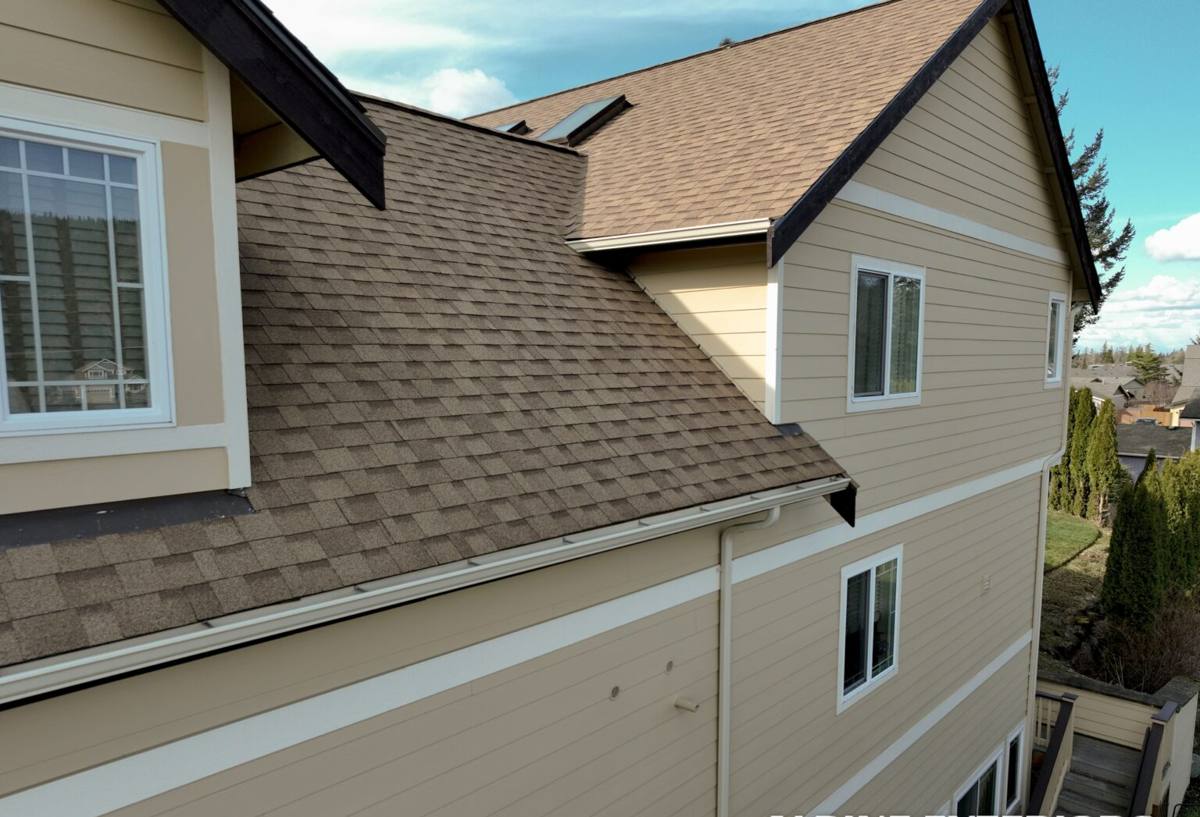
What "Energy-Efficient" Actually Means (Not Just a Sticker on the Glass)
Every window sold today carries an NFRC label, but most homeowners never look past the price tag to see what the numbers mean. Two ratings matter most for our climate:
- U-factor — how well the window resists heat loss. Lower is better. In Whatcom County's mild-but-damp winters, a U-factor in the 0.27–0.30 range is a reasonable efficiency target for standard double-hung or slider windows.
- SHGC (Solar Heat Gain Coefficient) — how much solar heat passes through. Because we don't get the intense summer sun that drives cooling costs east of the mountains, this matters less here than it does in, say, eastern Washington, but it's still worth checking on south- and west-facing rooms.
Beyond the label, the practical efficiency factors are the low-E coating (there are different formulations depending on whether you want more solar gain or less), the gas fill between panes (argon is standard, and it does make a real difference over an air-filled unit), and — the part most often overlooked — how well the window is actually installed. A high-performance window installed with a poor seal against the rough opening will underperform a mid-grade window installed correctly. We've seen it both ways.
Frame Materials: What Holds Up in a Marine Climate
Frame choice matters more here than in a drier inland climate because you're weighing moisture resistance, maintenance burden, and long-term performance against upfront cost. Here's how the common options compare for Happy Valley conditions:
| Frame Material | Moisture/Salt Air Performance | Maintenance | Typical Lifespan |
|---|---|---|---|
| Vinyl | Good — won't rot or corrode, handles damp cycling well | Low — occasional cleaning | 20–30 years |
| Fiberglass | Excellent — very stable in temperature/moisture swings, holds paint well | Low | 30–40+ years |
| Wood-clad | Fair — the exterior cladding protects the wood, but any breach in the cladding lets moisture reach the wood core | Moderate to high depending on cladding integrity | 20–30 years, less if cladding fails |
| Aluminum | Poor to fair — conducts heat and cold, and standard (non-thermally-broken) frames condense heavily in our damp climate | Low, but condensation issues are hard to fix after install | 20–30 years |
Our standard recommendation for most Happy Valley homes is vinyl or fiberglass, both of which shrug off the damp-cycling that this climate puts frames through. We're generally cautious about wood-clad windows in this specific exposure — not because the product is bad, but because the cladding has to stay perfectly intact for the life of the window, and any nick, gap, or failed caulk joint gives moisture a path into the wood underneath. That's a maintenance commitment worth being honest about before you buy.
What About Aluminum-Frame Replacement Windows?
We don't push aluminum-frame replacements on homes in this area unless the frame is thermally broken (a strip of non-conductive material separating the interior and exterior metal). Standard aluminum frames conduct temperature straight through, and in our humidity that shows up as condensation on the interior frame — which then feeds mildew growth on the sill and surrounding trim. It's a trade-off issue, not a defect claim: aluminum is strong and slim-profile, but the thermal performance doesn't suit this particular climate without the thermal break upgrade.
Where Old Windows Actually Fail Around Here
When we're called out to look at failing windows in Happy Valley and the surrounding Whatcom County neighborhoods, the problems tend to cluster in a few predictable spots:
- Fogged or hazy glass — the seal on the insulated glass unit has failed and moisture has gotten between the panes. This can't be fixed, only replaced.
- Soft or discolored wood at the sill or lower frame corners — a sign that wind-driven rain has been getting behind the exterior trim for a while.
- Visible moss or dark streaking on horizontal trim above windows — usually points to a gutter or roof drainage issue dumping water onto that section of the wall, not the window itself, but it accelerates wear on everything nearby.
- Drafts you can feel with a hand near the frame on a windy day — often a failed or compressed weatherstrip rather than a bad window overall.
- Difficulty opening or closing — swelling from moisture intrusion in wood-frame units, or a settled/out-of-square rough opening on older homes.
What a Correct Installation Looks Like Here
The window itself is maybe half the job. The other half is how it ties into the wall assembly, and that's where a lot of installation shortcuts show up years later as rot or leaks. For Happy Valley's exposure, our process includes:
- Removing the old unit carefully and inspecting the rough opening framing and sheathing for any hidden moisture damage before anything new goes in — this is the point where hidden problems get caught, not after.
- Flashing the opening properly, with a sill pan and integrated flashing that directs any water that does get past the exterior cladding back out, not into the wall cavity. This step matters more here than in a drier climate because wind-driven rain will find any gap over time.
- Setting the window level, plumb, and square, shimmed correctly so the frame isn't under stress that will eventually crack seals or bind the sash.
- Sealing and insulating the gap between the window frame and rough opening with the right materials — not just spray foam alone, which can trap moisture if it's the wrong type or over-applied.
- Finishing the exterior with proper caulking and trim work that sheds water rather than holding it against the frame — this is also where we make sure the new window ties in cleanly with the surrounding siding, since a window that's watertight but poorly integrated with the siding around it just moves the leak point.
What Drives the Cost
Every home and every window is different, but the main cost factors for a Happy Valley window project are:
| Factor | Why It Matters |
|---|---|
| Window size and configuration | Larger units, picture windows, and multi-panel combinations cost more in both materials and labor |
| Frame material | Vinyl is typically the most budget-friendly; fiberglass and wood-clad cost more upfront |
| Glazing package | Upgraded low-E coatings, argon fill, and triple-pane glass add cost but improve comfort and efficiency |
| Condition of the rough opening | Hidden rot or framing issues discovered during removal add time and material to fix properly before the new window goes in |
| Trim and siding tie-in | Matching or repairing surrounding siding and trim adds labor beyond the window swap itself |
| Access and home height | Second-story or hard-to-reach windows take more time and equipment |
Broadly, homeowners in this area should expect a wide range depending on these factors — a straightforward vinyl replacement in an existing opening costs meaningfully less than a larger fiberglass unit that requires framing repair and siding rework. We'll always walk you through what's driving your specific number rather than just handing over a quote.
Why It Matters That We Already Work in Happy Valley
A crew that regularly works this specific pocket of Whatcom County already knows what to expect before the first window comes out: which wall orientations take the worst of the driving rain, what moss buildup on trim usually means for the wood underneath, and how the local building department handles window replacement permitting for the jurisdiction your home falls under. That local familiarity shortens the guesswork and helps catch problems — like a rotted sill hidden behind trim — before they become a bigger repair mid-project.
It also matters that we're a siding contractor first. Windows don't exist in isolation from the wall around them — the flashing, the siding integration, and the trim details all have to work together to actually keep water out. A window-only installer who isn't thinking about how that opening ties into the rest of the exterior can do a technically fine window install that still leaks at the edges.
A Quick Checklist Before You Choose Windows
- Ask for the NFRC U-factor and SHGC ratings for the specific window model, not just a general brand claim.
- Confirm whether the quote includes full flashing and sill pan work, not just caulk around the new frame.
- Ask what happens if rot or damage is found in the rough opening once the old window is out.
- Get clarity on warranty coverage for both the glass unit and the installation labor separately.
- Check whether trim and siding repair around the window is included or billed separately.
- If you're doing multiple windows, ask whether doing them in one project versus phased over time changes the price or efficiency payoff.
Living With Your New Windows Here
Even good windows need a little seasonal attention in this climate. Rinsing frames and tracks periodically helps keep salt residue and grime from building up, especially on homes closer to the water. Keeping gutters and downspouts clear reduces the amount of water sheeting down over window trim during heavy rain. And a quick look at exterior caulk lines once a year — especially after the wetter months — catches small gaps before they become moisture problems.
If you're weighing new windows for a Happy Valley home, we're happy to take a look, explain what we're seeing, and give you straightforward options with no pressure to upgrade past what actually makes sense for your house. Use the form below to request a free estimate.