 Whatcom County
 Why Decks in Happy Valley Wear the Way They Do
Happy Valley sits close enough to the water and tree cover that its decks take a different kind of beating than decks further inland. You get salt-laden air moving through on a regular basis, long stretches of driving rain that don't let up for days, and a moss season that can run from early fall through late spring depending on how shaded the lot is. None of that is unusual for Whatcom County, but it adds up on a deck faster than most homeowners expect, because a deck is horizontal, low to the ground, and exposed to standing moisture in a way that siding or roofing isn't.
Salt air accelerates corrosion on fasteners and metal hardware. Driving rain finds its way into any gap in flashing or decking joints and doesn't dry out quickly under our cloud cover. Moss and algae hold moisture against wood and composite surfaces for weeks at a time, which is exactly the environment rot and mildew need. A deck built or repaired without these three factors in mind will look fine for a year or two and then fail in ways that are expensive to fix piecemeal.
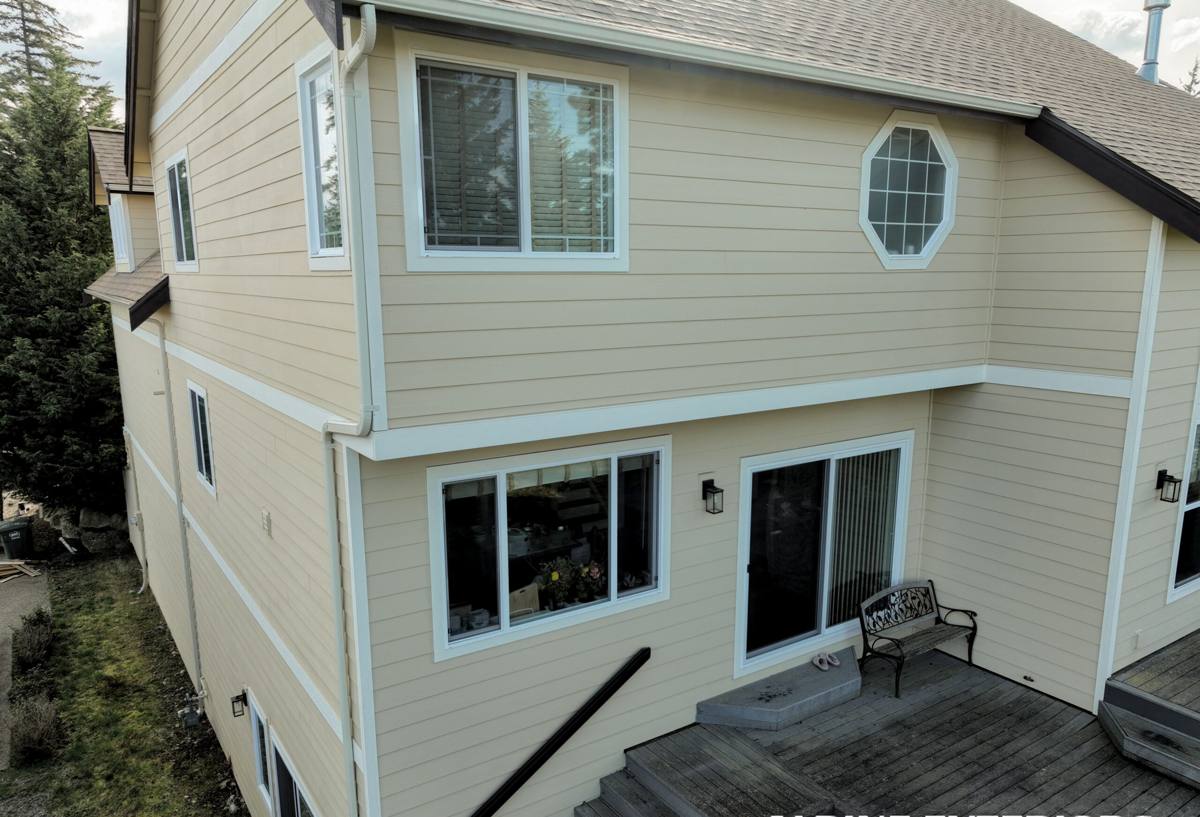
Repair, Refinish, or Full Replacement?
Not every tired-looking deck needs to come out. We look at three things before recommending replacement: the substructure, the ledger board connection to the house, and how much of the decking surface itself is still sound.
Signs you're looking at a repair, not a rebuild
- Surface graying, mild cupping, or a few loose boards on an otherwise solid frame
- Isolated moss staining that hasn't penetrated the wood fibers
- A handful of popped fasteners on decking that's still structurally sound underneath
Signs it's time for full replacement
- Soft or spongy spots when you walk the deck, especially near the ledger board or stair stringers
- Visible rot at joist ends, posts, or where decking meets the house
- Rust streaking or corroded fasteners throughout, not just in one spot
- A ledger board attachment that predates current flashing standards
- Railings that flex or posts that wobble under normal weight
The ledger board is the detail we check first and most carefully. It's the single most common point of failure on older decks in this region, because it's bolted directly to the house and sits right where wall and deck meet — exactly where driving rain wants to collect if the flashing isn't right.
What a Correct Deck Replacement Actually Involves
A deck replacement done right is not just pulling up old boards and screwing down new ones. There's a sequence, and skipping steps is how decks end up needing replacement again in eight years instead of twenty-five.
Substructure and framing
Posts, beams, and joists get inspected and replaced where there's any rot or undersizing for current code. In our climate, we favor pressure-treated framing rated for ground contact even above grade, because splash-back and prolonged dampness treat "dry" framing more like wet framing here than in drier parts of the state.
Ledger board and flashing
This is where most deck failures start, so it's where we spend the most attention. Proper flashing — a metal drip cap over the ledger and a membrane behind it — keeps water from wicking into the house rim joist. We don't reuse an old ledger connection just to save a step; if it's not flashed correctly, it gets redone.
Footings
Concrete footings need to sit below frost depth and bear on undisturbed soil. On sloped or poorly drained lots, which describes a fair number of yards in this area, we also look at whether water is pooling around the posts and whether drainage needs correcting before new footings go in.
Fasteners and hardware
Given the salt air, we use stainless steel or hot-dip galvanized structural hardware and coated fasteners rated for treated lumber contact, not bargain-bin screws that streak and corrode within a couple seasons.
Decking surface
Whatever material is chosen, boards need proper gapping for drainage and airflow underneath, not tight-fit installation that traps moisture and encourages moss growth between boards.
Choosing a Decking Material for This Climate
There's no universally "best" decking material — there's a best fit for your budget, your maintenance appetite, and how much sun versus shade the deck gets. Here's how the common options actually perform under Whatcom County conditions:
| Material | Moss & Moisture Behavior | Maintenance | Typical Lifespan Here |
|---|---|---|---|
| Pressure-treated wood | Absorbs moisture; needs gapping and airflow to resist moss buildup | Annual cleaning, periodic sealing/staining | 10-15 years with upkeep |
| Cedar | Naturally rot-resistant but still needs sealing against constant damp | Regular sealing to hold color and resist gray/moss | 15-20 years with upkeep |
| Composite decking | Doesn't absorb water like wood, but surface moss/algae still grows on damp, shaded boards | Occasional washing; no staining or sealing | 20-25+ years, manufacturer warranty-backed |
| PVC/capped polymer | Fully moisture-resistant surface; least hospitable to moss when clean | Lowest maintenance; periodic washing only | 25-30+ years, manufacturer warranty-backed |
Our honest take: on shaded, damp lots — which describes a good portion of Happy Valley properties with mature tree cover — composite or capped polymer decking earns its higher upfront cost by not needing the annual sealing that wood does. On open, sunnier lots with less moss pressure, a well-maintained cedar or treated wood deck is a perfectly reasonable and more budget-friendly choice. We'll walk your specific lot with you and give you a straight recommendation rather than pushing whatever has the best margin.
Our Deck Replacement Process
- On-site assessment — we inspect the ledger, framing, footings, and existing decking to confirm replacement is the right call and identify any drainage issues on the lot.
- Written scope and material selection — you get a clear breakdown of what's being replaced, what materials are recommended and why, and a firm cost range before work starts.
- Permitting — most deck replacements in Whatcom County require a permit, particularly if footings, framing, or railings are being altered. We handle that paperwork.
- Demolition and disposal — old decking, framing, and hardware removed and hauled off.
- Framing, footings, and flashing — the structural work that determines how long the new deck actually lasts.
- Decking, railing, and stair installation — installed with proper gapping, fastening, and attention to how water will move off the surface.
- Final walkthrough — we go over the finished deck with you, including any maintenance specific to the material you chose.
Local Considerations for Happy Valley Properties
A few things come up repeatedly on decks in this part of Whatcom County that are worth planning for ahead of time:
Shade and moss pressure
Lots with heavier tree cover hold onto moisture longer after rain and get less direct sun to dry surfaces out. If your lot fits that description, board spacing, orientation, and material choice matter more than they would on an open, sunny site.
Proximity to salt air
Properties closer to open water or exposed to onshore wind see faster corrosion on unprotected metal. This is one of the main reasons we don't cut corners on fastener and hardware grade regardless of which decking material you choose.
Permits and setbacks
Deck replacements that change the footprint, height, or attachment method typically require permitting through the county or city depending on exactly where the property sits. We confirm what's required for your specific address before work begins rather than assuming.
Keeping a New Deck in Good Shape
Whatever material you choose, a little seasonal attention goes a long way in this climate. A quick checklist we give every customer:
- Sweep debris and standing leaves off the deck regularly, especially in fall
- Clean moss and algae buildup at the first sign of it, before it stains or holds moisture against the surface
- Check that gaps between boards stay clear so water can drain through instead of pooling
- Inspect railings and stair connections once a year for looseness
- For wood decking, plan on resealing or restaining on the schedule your product calls for — don't wait until it's visibly gray
- Keep gutters and downspouts near the deck clear so runoff isn't dumping extra water onto the structure
Why a Crew That Already Works Happy Valley Matters
Deck replacement isn't exotic work, but the details that make a deck last in Whatcom County — ledger flashing, fastener grade, board gapping for moss resistance, footing depth for our soil and drainage patterns — are exactly the details that get skipped by crews unfamiliar with the area or working from a generic checklist. A crew that's replaced decks around Happy Valley and the surrounding neighborhoods already knows which corners of a lot tend to stay damp, what permitting looks like locally, and which materials actually hold up under repeated salt air and rain rather than just on paper.
If your deck is showing soft spots, rust streaks, persistent moss, or you're just planning ahead before it becomes a safety issue, we're happy to take a look. We'll give you a straight assessment of whether you need a repair or a full replacement, and if it's replacement, a clear, no-pressure estimate with material options that actually fit your lot. Fill out the form below to get started.