 Whatcom County
 Fiber Cement Siding Built for Happy Valley's Climate
Happy Valley sits close enough to the water and the hills around it that homes here take a steady beating from three things year-round: salt-laden air moving in off the water, long stretches of driving rain, and a moss season that can run from October clear through April. Siding that isn't engineered for that combination doesn't fail overnight — it fails slowly, in ways homeowners often don't notice until paint is peeling, trim is soft, or green streaking has taken hold on the north side of the house. Fiber cement siding, installed correctly, handles all three of those stresses better than almost any other cladding option on the market. This page covers what that actually means for a Happy Valley home, what correct installation involves, and why we only do this work with James Hardie fiber cement.
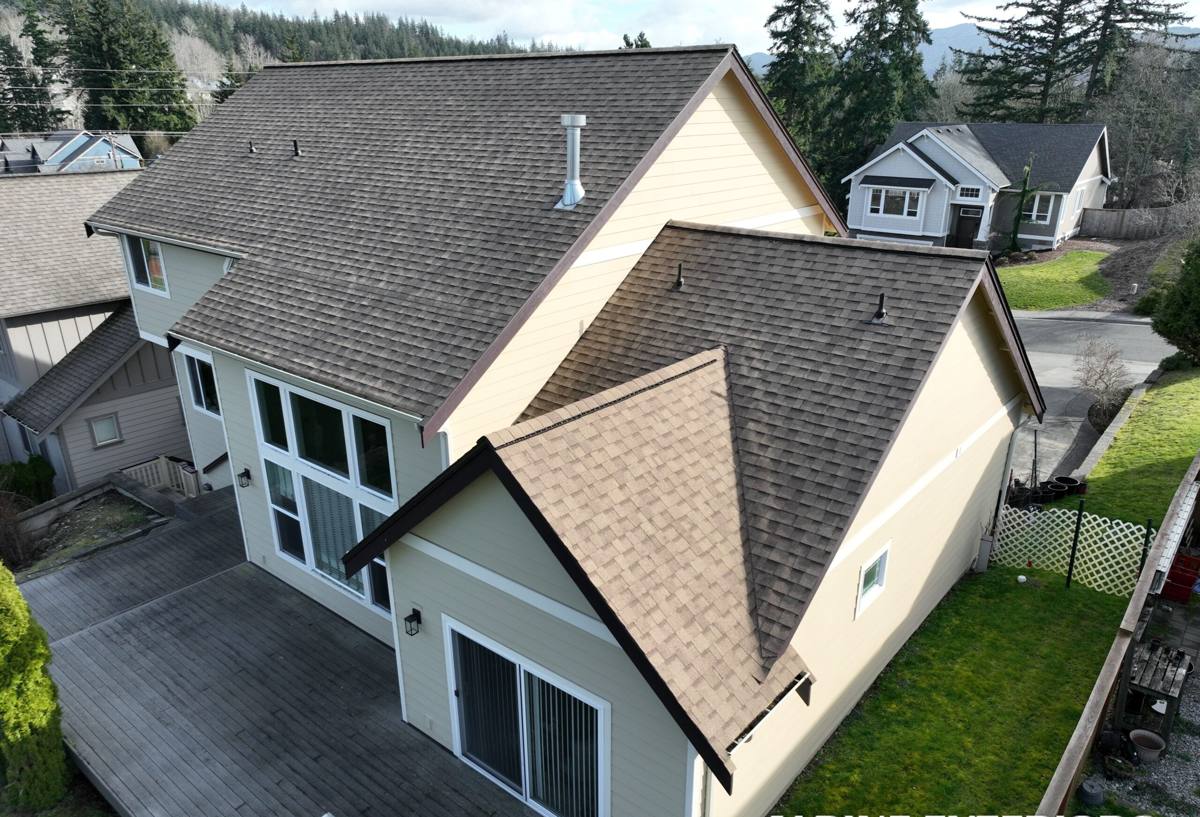
What Whatcom County's Climate Does to Siding
Salt Air
Even homes a few miles inland from Bellingham Bay pick up airborne salt on windy days. Salt is corrosive to exposed metal fasteners and hardware, and it accelerates the breakdown of unprotected wood fibers. Siding materials that rely on raw wood, or on a paint film alone for protection, lose their finish faster in a salt-air environment than they would inland. The practical effect is more frequent repainting, earlier caulk failure, and faster onset of rot at vulnerable points like butt joints and corner trim.
Driving Rain
Whatcom County doesn't just get a lot of rain — it gets wind-driven rain that hits walls at an angle instead of just running down them. That matters because it pushes water into laps, joints, and fastener penetrations that would stay dry in a calmer climate. A siding system's water-shedding detail — how each course overlaps the one below it, how corners and openings are flashed, how the water-resistive barrier behind the siding is installed — matters more here than in drier parts of the country.
Moss Season
Shaded, north-facing, and tree-adjacent walls in Happy Valley can stay damp for weeks at a stretch during the fall and winter. Wood-based sidings and porous coatings give moss and algae something to grip and feed on. Once moss establishes on a wall, it holds moisture against the surface even longer, which speeds up whatever degradation was already happening underneath. A dense, factory-finished cladding gives moss less to hold onto and makes routine cleaning far less destructive to the finish.
Why Fiber Cement Is the Right Call Here
Fiber cement is a mix of cement, sand, and cellulose fibers, cured into a dense, dimensionally stable board. It doesn't absorb water the way wood does, it doesn't rot, and it isn't a food source for moss or insects the way organic materials are. It's also non-combustible, which matters increasingly to insurers and to homeowners thinking about long-term risk. None of that makes it maintenance-free — no siding is — but it removes the specific failure modes that are hardest to manage in a marine, high-rainfall climate like this one.
The factory-applied finish is the other half of the equation. James Hardie's ColorPlus finish is baked on in a controlled factory environment, which gives it far better adhesion and UV resistance than field-applied paint. That matters in Happy Valley because a finish that's holding up well resists moss growth better, sheds water better, and doesn't need repainting on the same clock as a wood-sided or field-painted house.
What a Correct Fiber Cement Job Involves
Fiber cement siding performs the way it's supposed to only when it's installed to the manufacturer's spec. A rushed or generic install is where most of the "siding problems" homeowners blame on the product actually originate. Here's what we hold to on every job:
- Proper water-resistive barrier installed and lapped correctly before any siding goes up, with attention to how it integrates at windows, doors, and penetrations
- Correct fastener type, spacing, and placement — Hardie specifies this precisely, and it's not optional
- Minimum clearance maintained between the siding's bottom edge and grade, decks, roofs, and walkways, so water has somewhere to go and the board isn't sitting in standing moisture
- Butt joints flashed or caulked per spec, not just butted and painted over
- Corners, trim, and penetrations detailed to shed water outward rather than trapping it against the wall assembly
- Field-cut edges primed or sealed before installation so the cut edge isn't left exposed to weather
Every one of those details is more forgiving in a dry climate. In Whatcom County, with wind-driven rain and long damp stretches, skipping any of them is how a house ends up with soft trim or a moss-streaked wall five years in — not because the product failed, but because the install did.
Our Process for a Happy Valley Project
1. On-Site Assessment
We start by walking the exterior and looking specifically at the things Whatcom weather tends to expose: siding-to-grade clearance, condition of existing flashing and trim, shaded or damp-prone walls where moss has taken hold, and any soft spots that suggest moisture has already gotten behind the current siding.
2. Scope and Product Selection
We'll walk through the relevant James Hardie product line and profile options for the home, and talk through color in the context of the site — sun exposure, tree cover, and how a given ColorPlus finish tends to perform on shaded versus exposed walls.
3. Tear-Off and Substrate Check
Old siding comes off and we check the sheathing underneath for hidden moisture damage before anything new goes up. This is a step that gets skipped on quick jobs and is exactly where problems get buried instead of fixed.
4. Weather Barrier and Flashing
This is the layer that does the real work of keeping water out, and it's also the layer nobody sees once the siding is up. We install and document it carefully because it's the hardest thing to fix later without pulling siding back off.
5. Installation to Spec
Fastening, clearances, joint treatment, and trim detail all follow Hardie's published installation requirements — this is also what keeps the manufacturer's warranty intact.
6. Final Walkthrough
We go over caulking, touch-up, and cleanup, and explain what routine care looks like going forward, including how and when to deal with moss on shaded walls.
Comparing Common Siding Options for This Climate
| Material | Behavior in Salt Air | Behavior in Driving Rain | Moss/Algae Resistance |
|---|---|---|---|
| James Hardie Fiber Cement | Corrosion-resistant fasteners, dense board resists salt-driven degradation | Engineered lap and joint details shed wind-driven rain when installed to spec | Dense, factory-finished surface offers less for moss to grip |
| Vinyl | Doesn't corrode, but can become brittle and fade faster with sun and salt exposure over time | Water can travel behind panels at seams if not lapped correctly | Textured, lower-gloss surfaces can hold moss and mildew |
| Primed Wood/Cedar | Salt accelerates finish breakdown, exposing wood to moisture uptake | Wood absorbs water at joints and end grain, leading to swelling and rot | Organic material is a direct food source for moss and algae |
| LP SmartSide (engineered wood) | Better than raw wood but still wood-based, so salt-driven finish wear still applies | Engineered strand core is more water-resistant than solid wood but edge swelling remains a known risk if cuts aren't sealed | Wood-based composition still supports moss growth more than cement-based board |
Why We Only Install James Hardie
We get asked fairly often why we don't offer LP SmartSide, vinyl, or the lower-cost fiber cement alternatives like Cemplank or Allura. The honest answer is that we made a standardization decision based on what holds up best, over the longest period, in this specific climate — and we didn't want to be in the position of installing a product on a Whatcom County home that we knew had more maintenance risk baked into it. James Hardie's HZ product lines are engineered specifically for climate zones like ours, the ColorPlus factory finish outperforms field-applied paint, and the warranty structure is transferable and well-documented. That doesn't mean every other product on that list is a bad product — it means we'd rather stand fully behind one system we trust completely than offer several we'd have reservations about.
What to Expect Cost-Wise
Fiber cement is a mid-to-upper-tier siding investment — more than vinyl up front, generally comparable to or less than high-end engineered wood systems over the life of the siding once repainting and maintenance are factored in. Exact numbers depend on the size and complexity of the home, how much of the existing substrate needs repair, trim detail, and color selection, so we don't publish blanket pricing — every Happy Valley home is a little different in terms of exposure, wall complexity, and existing condition, and that's exactly what a walkthrough is for.
Maintenance Once It's Installed
Fiber cement lowers the maintenance burden significantly compared to wood, but it isn't zero-maintenance. A simple annual routine keeps it performing the way it's designed to:
- Rinse the exterior annually, and more often on shaded or tree-covered walls where moss tends to establish
- Inspect caulking at trim and joints every year or two and touch up as needed
- Keep gutters and downspouts clear so water isn't overflowing directly onto siding runs
- Trim back vegetation and tree cover that keeps a wall shaded and damp longer than it needs to be
- Address any soft trim, cracked caulk, or visible moisture staining promptly rather than waiting for it to spread
Why a Local Crew Matters
A crew that already works Happy Valley and the surrounding Whatcom County area has seen firsthand which walls hold moisture longest, which exposures take the worst of the wind-driven rain, and which installation shortcuts show up as problems a few winters later. That's not something you get from a general contractor working from a national spec sheet alone — it comes from doing this work, on homes like yours, in this weather, repeatedly.
If you're weighing a siding replacement or repair in Happy Valley, we're happy to walk the exterior with you and give you a straight read on what your home needs — no pressure, no hard sell. Reach out below for a free estimate.