 Whatcom County
 Siding Built for Columbia's Weather, Not Just Its Curb Appeal
Homes in the Columbia neighborhood take a different kind of beating than homes twenty miles inland. Between the salt-laden air rolling in off the water, the driving rain that comes sideways during winter storms, and a moss season that can stretch from October well into spring, siding here has to do more than look good on installation day. It has to hold up to moisture that doesn't just fall from the sky — it blows into laps, seams, and fastener heads, and it lingers in shaded, damp corners of the yard where moss and algae get a foothold on anything porous.
We install fiber cement siding — specifically James Hardie products — because it's the material that handles this combination of conditions without the maintenance treadmill that other sidings put homeowners on. This page covers what Columbia homes specifically need from their siding, what a correct fiber cement installation actually involves, and why the details matter more here than they would in a drier, more sheltered part of Whatcom County.
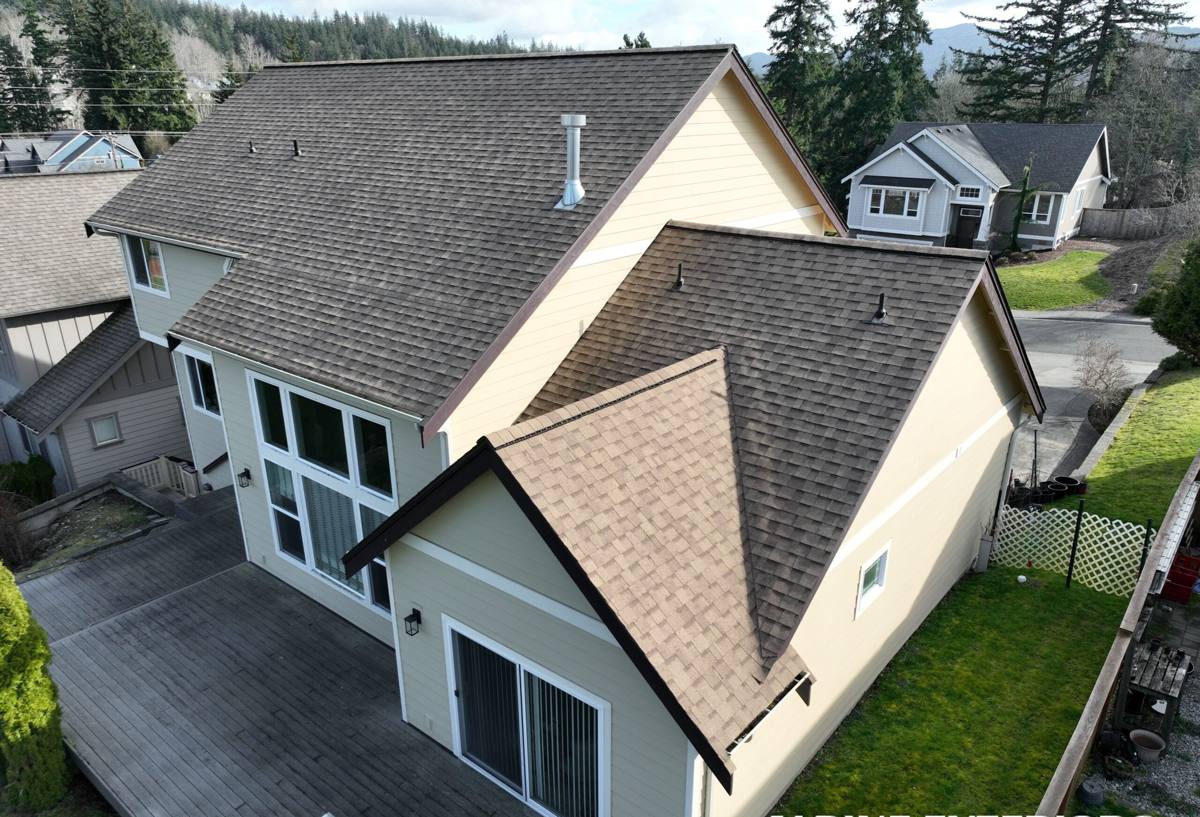
What Salt Air, Rain, and Moss Actually Do to Siding Over Time
Salt Air
Airborne salt is corrosive to exposed metal — fasteners, flashing, and trim hardware in particular. On siding materials that rely on face-nailing with exposed fastener heads, or on painted wood and composite products with weaker factory finishes, salt exposure accelerates finish breakdown and can lead to rust streaking and premature fastener failure years before a homeowner expects to be dealing with it.
Driving Rain
Whatcom County's winter storms don't just produce volume, they produce wind-driven rain that gets pushed sideways into siding laps, butt joints, and anywhere trim meets field material. Siding that isn't engineered and installed with the right lap, clearance, and flashing details will let water track behind the cladding. Once water gets behind siding, the problem stops being cosmetic and becomes a sheathing and framing problem.
Moss and Persistent Moisture
A long moss season means long stretches where siding, especially on north-facing and shaded walls, simply doesn't dry out between rain events. Porous or absorbent siding materials hold onto that moisture, which is exactly the environment moss, algae, and mildew need to establish. Over years, that constant damp cycle is what drives rot in wood-based products and paint failure on anything with a weaker finish.
Why We Only Install James Hardie Fiber Cement
We don't install LP SmartSide, vinyl, Cemplank, Allura, or bare cedar and primed wood siding. That's not a marketing position, it's a standard we hold because of what we see happening on homes in this climate over a 10-, 15-, and 20-year horizon. Each of those alternatives has real strengths, but each also has a moisture, maintenance, or durability trade-off that we don't think holds up well against salt air, driving rain, and a long wet moss season.
James Hardie fiber cement is cement, sand, and cellulose fiber, engineered specifically to resist moisture absorption and dimensional swelling. It's non-combustible, which matters for fire-rating and insurance in some cases, and it's manufactured with regional climate in mind — Hardie's HZ5 product line is engineered for exactly the freeze-thaw, high-moisture Pacific Northwest conditions Columbia sits in. Combined with the factory-applied ColorPlus finish, which is baked on under controlled conditions rather than field-painted, you get a finish that resists fading and holds up to the UV and moisture cycling this area sees, backed by a real transferable warranty.
What ColorPlus Finish Means in Practice
Field-painted siding is only as good as the paint job and the conditions it was applied under — and repainting every 7-10 years is a real, recurring cost most homeowners underestimate. ColorPlus is applied in a factory setting with multiple coats and a baked-on finish process that a job-site paint crew simply can't replicate. That's a meaningful difference in a climate where UV, salt, and moisture are all working against a painted finish year-round.
What a Correct Fiber Cement Installation Involves
Fiber cement is only as good as the installation behind it. Most of the siding failures we get called out to inspect aren't material failures — they're installation shortcuts that let water get where it shouldn't. In a climate like this one, those shortcuts show up faster.
- Correct weather-resistive barrier and rainscreen or drainage plane behind the siding, not just house wrap stapled flat to the sheathing
- Proper flashing at every window, door, and roof-to-wall intersection — this is where the majority of water intrusion actually starts
- Manufacturer-specified nailing pattern and fastener type, blind-nailed where the reveal allows it
- Correct minimum clearances from grade, roofing, and decks so the bottom edge of the siding isn't sitting in standing water or splashback
- Butt joints and trim seams caulked with a product rated for the exposure, not a generic caulk that will crack out in a season or two
- Factory-cut and factory-primed edges kept intact wherever possible, with field cuts sealed per Hardie's spec
None of this is exotic. It's discipline, and it's the difference between siding that performs for 30-plus years and siding that looks fine for five and then starts failing quietly behind the wall where nobody sees it until there's a problem.
Our Process for a Columbia Siding Project
1. On-Site Assessment
We walk the home, look at the existing siding and trim condition, check for signs of moisture intrusion at windows and rooflines, and talk through what's driving the replacement — age, damage, moss and mildew buildup, or just wanting off the maintenance cycle.
2. Product and Color Selection
We help you choose the right Hardie product line and profile for the house — lap siding, shingle-style panels, or a mix with trim details — and walk through ColorPlus color options so you're not choosing paint colors you'll need to redo down the line.
3. Prep and Tear-Off
Old siding comes off, sheathing gets inspected for hidden rot or moisture damage (common on older homes in wet, shaded areas), and any damaged sheathing gets replaced before anything new goes up. This step gets skipped by crews trying to move fast, and it's the step that matters most.
4. Weather Barrier and Installation
We install the drainage plane and flashing details first, then the Hardie siding per manufacturer spec, with attention to fastening, clearances, and joint treatment specific to this climate.
5. Final Inspection and Cleanup
We walk the finished job with you, check caulking and trim details, and clean up the site fully before we consider the job done.
Cost Factors for Fiber Cement Siding in Columbia
Every home is different, but the factors that move the price on a fiber cement project are fairly consistent. This isn't a quote — it's what to expect to talk through when we come out for an estimate.
| Factor | Why It Matters |
|---|---|
| Home size and stories | More square footage and multi-story access both add labor time and staging requirements |
| Existing siding removal | Tear-off of old wood, vinyl, or damaged siding adds labor beyond a straightforward install |
| Sheathing condition | Hidden moisture or rot found during tear-off means repair work before new siding goes on |
| Product line and profile | Lap siding, shingle-style panels, and trim/accent details carry different material and labor costs |
| Trim and detail level | Corner boards, window trim, and accent details add finish work and material |
| Site access | Tight lots, landscaping, or limited staging area can affect labor efficiency |
Signs a Columbia Home May Need New Siding Soon
- Persistent moss, algae, or dark streaking that comes back within a season of cleaning
- Soft spots, or a spongy feel when you press on wood-based or composite siding
- Paint that's peeling, bubbling, or chalking faster than it used to
- Visible gaps, warping, or buckling at seams and butt joints
- Rising energy bills that may point to compromised insulation behind failing siding
- Any sign of water staining on interior walls near exterior corners or window headers
Why Hiring a Crew That Already Works in Whatcom County Matters
Siding installation isn't uniform across climates, and a crew used to installing in drier, more sheltered regions can miss details that matter here. We work Columbia and the surrounding Whatcom County area regularly, which means we already know what wind-driven rain and long moss seasons do to a wall system, and we build the flashing, clearance, and drainage details around that reality rather than a generic install spec. We're also familiar with local permitting requirements and the practical realities of working on the older housing stock common in established neighborhoods like Columbia — homes where sheathing condition and past repair work vary widely and need to be assessed honestly, not assumed.
If you're weighing a siding replacement or just want an honest read on the condition of what's on your home now, we're glad to come take a look. There's no pressure and no obligation — fill out the form below and we'll set up a free estimate.