 Whatcom County
 Window Replacement in Ferndale: What Your Home Is Actually Up Against
Ferndale sits close enough to the water and the Nooksack lowlands that homes here deal with a specific combination of weather stress: salt-tinged air blowing in off the Strait, long stretches of driving rain through fall and winter, and a moss and mildew season that can run most of the year if a home has any shaded or north-facing exposure. None of that is dramatic on its own. It's the accumulation that wears windows down — seals that dry out and crack a season or two earlier than they would inland, frames that trap moisture instead of shedding it, and hardware that corrodes quietly until a window won't latch right anymore.
Whatcom County Siding works on homes throughout Whatcom County, and Ferndale jobs make up a steady part of our schedule. We've seen what holds up here and what doesn't, and that shapes how we spec and install every window replacement we do in this area.
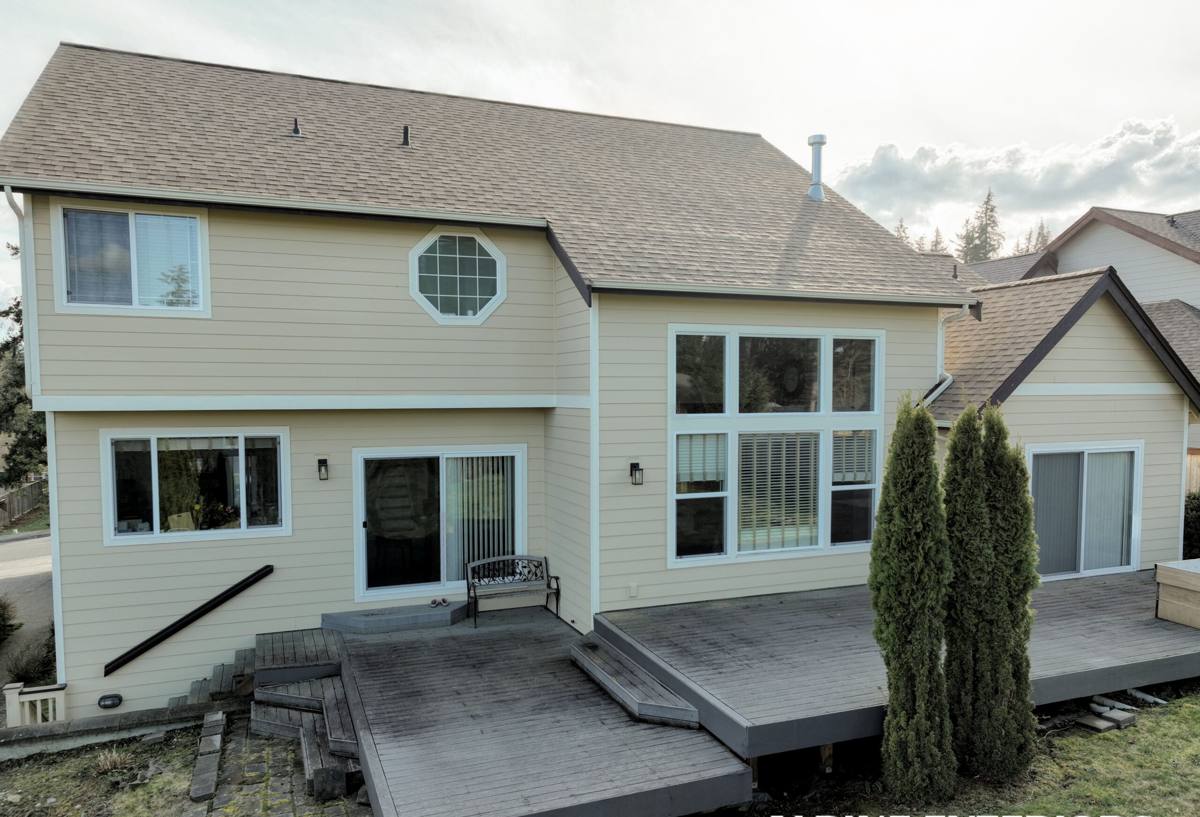
Signs a Ferndale Home Needs Window Replacement, Not Just Repair
Not every window problem calls for full replacement. But there's a point where patching a window costs more in the long run than replacing it, and in our climate that point usually shows up a bit sooner than homeowners expect.
- Condensation building up between the panes of a double-pane window — this means the seal has failed and the insulating gas is gone; it can't be repaired, only replaced.
- Wood frames that feel soft, spongy, or show dark staining at the sill — a sign moisture has been getting in for a while.
- Windows that are noticeably harder to open, close, or lock than they used to be, often from swelling, warping, or corroded hardware.
- A draft you can feel with your hand near the frame on a windy day, even with the window latched.
- Visible gaps between the window frame and the siding or trim, which lets both air and water in.
- Noticeable outside noise that didn't used to come through — a sign the seal or glazing has degraded.
If you're seeing one or two of these on a handful of windows, repair might still make sense. If it's showing up across most of the house, or the windows are original to a build from more than 20-25 years ago, replacement is usually the more honest recommendation, both for comfort and for what it does to your heating bill.
Why Coastal Whatcom County Conditions Change the Job
Salt Air and Hardware
Salt in the air accelerates corrosion on anything metal — hinges, locks, cranks, and the fasteners holding a window frame in place. Cheaper hardware finishes can start pitting or seizing up years before they would in a drier inland climate. We spec corrosion-resistant hardware on coastal-exposure jobs for this reason, not as an upsell, but because replacing a window twice in fifteen years costs more than doing it right the first time.
Driving Rain and Flashing
Whatcom County doesn't just get rain — a lot of it comes in sideways off storms moving through the lowlands. That means flashing details around a window opening matter more here than they would somewhere with mostly straight-down rainfall. A window that's watertight in a light drizzle can still leak during a wind-driven storm if the flashing and sill pan weren't installed correctly. This is one of the most common failure points we find when we pull old windows out of Ferndale homes — the window itself was fine, but the flashing underneath it was never right.
Moss, Mildew, and Trim
A long moss season means anything wood-adjacent near a window — trim, sills, casing — needs either a durable material or a real maintenance plan. Moisture that sits against wood trim near a window opening is a slow but steady path to rot, and once rot starts at a window opening, it can spread into the wall framing if it's not caught.
What a Correct Window Replacement Actually Involves
A window replacement is more than swapping the sash. The parts that determine whether a window lasts 25 years or 8 are mostly things you can't see once the job is done.
Removal and Inspection
We remove the old window and check the framing and sheathing underneath before anything new goes in. This is the point where hidden water damage shows up — soft sheathing, stained framing, or signs of past leaks. It has to be addressed before a new window goes in, not covered over.
Flashing and Water Management
The sill pan, flashing tape, and house wrap integration around the opening are what actually keep water out over the long term — more than the window itself. This is where we pay the closest attention on coastal-exposure homes, layering materials so water is directed out and down, never trapped behind the new window.
Setting and Shimming
The window has to be shimmed level, plumb, and square in the opening. A window that's slightly racked won't operate smoothly and puts uneven stress on the seals, which shortens their life.
Insulation and Air Sealing
The gap between the window frame and the rough opening gets filled with low-expansion foam or backer rod and sealant — not stuffed with fiberglass, which doesn't stop air movement the way homeowners often assume it does.
Exterior Trim and Sealant
Exterior caulking and trim work is the last line of defense and the first thing exposed to weather. We use sealants rated for exterior exposure and check trim fit closely, since gaps here are a common entry point for both water and the drafts that make a room feel cold even with a "new" window in place.
Choosing Window Materials for Ferndale's Climate
There's no single "best" window material — the right choice depends on budget, maintenance appetite, and how exposed a given wall is to weather. Here's how the common options actually compare for a coastal Whatcom County home:
| Material | How It Handles Local Conditions | Maintenance | Typical Lifespan |
|---|---|---|---|
| Vinyl | Good moisture and salt-air resistance; won't rot or corrode | Low — occasional cleaning | 20-30 years |
| Fiberglass | Very stable in temperature swings and moisture; holds up well long-term | Low | 30-40 years |
| Aluminum | Strong but conducts cold and can show corrosion near salt air over time without a quality finish | Moderate | 20-30 years |
| Wood | Best insulating properties but most vulnerable to our rain and moss season without diligent upkeep | High — regular painting/sealing | Varies widely with maintenance |
| Wood-clad (wood interior, vinyl/aluminum exterior) | Combines wood's interior look with a weather-resistant exterior shell | Low-moderate | 25-35 years |
We don't push a single brand or material on every job. What we push is being honest about trade-offs — a homeowner who wants the classic look of painted wood trim needs to know that's a maintenance commitment in this climate, not a one-time purchase. Vinyl and fiberglass tend to be the more forgiving choices for exposed coastal walls simply because they don't give moisture and salt a foothold the way wood or unfinished metal can.
Single-Pane, Double-Pane, and Triple-Pane: What's Actually Worth It
Most Ferndale homes we work on are replacing older single-pane or early double-pane windows. A few things are worth knowing before deciding on glazing:
- Double-pane with a low-E coating is the standard baseline for this climate — it handles both our cool, wet winters and cuts down on summer heat gain.
- Argon or krypton gas fill between panes adds a modest efficiency bump; it's a reasonable upgrade but not the deciding factor most homeowners think it is.
- Triple-pane windows offer better insulation and sound dampening, but the added cost usually makes more sense on north-facing walls, homes near busier roads, or for homeowners planning to stay long-term and prioritizing energy bills over upfront cost.
- The frame material and installation quality matter as much as the glass package — a well-installed double-pane window will outperform a poorly installed triple-pane one.
Our Process for a Ferndale Window Replacement
- On-site assessment. We walk the exterior and interior of the home, check existing windows for the signs of failure listed above, and look at overall exposure — is this a wall that catches driving rain and salt air directly, or a more sheltered side of the house?
- Honest scope and options. We explain what we're seeing, what needs replacing versus what can wait, and walk through material and glazing options with real trade-offs, not a pitch toward the most expensive option.
- Written estimate. Clear pricing, materials specified, and a realistic timeline — no vague allowances that turn into surprise costs later.
- Careful removal and prep. Old windows come out, framing gets inspected, and any hidden moisture damage gets addressed before new windows go in.
- Installation with proper flashing and sealing. This is where the long-term performance of the job is actually decided — we don't rush this step.
- Final walkthrough. We check operation on every window, confirm exterior sealant and trim are finished cleanly, and walk the homeowner through care and warranty details.
What to Check Before You Hire Anyone for This Work
Window replacement is one of those projects where a rushed or corner-cutting installation can look fine for a year or two and then start failing quietly behind the walls. A few things worth confirming with any contractor before you sign anything:
- Are they licensed and insured to work in Washington State, and can they show proof?
- Do they explain their flashing and water-management approach, or just talk about the window brand?
- Do they inspect the rough opening for existing damage before installing, or just swap the window and move on?
- Is the estimate itemized and specific, or a single vague lump sum?
- Do they have experience with homes in this specific climate — coastal exposure, high rainfall, moss — or mostly work inland?
- What's the warranty structure, and does it cover labor as well as the product itself?
Why a Crew That Already Works Ferndale Makes a Difference
A window replacement that's technically correct on paper can still underperform if it's not adapted to the specific way weather hits a given home. Crews who work Ferndale and the surrounding Whatcom County area regularly get a feel for which walls take the worst of the weather, how flashing details need to change for wind-driven rain, and which materials actually hold up here versus which ones look good in a showroom and struggle after a few wet winters. That local pattern recognition is hard to replace with a generic install checklist, and it's part of why we treat every job here with the coastal exposure in mind rather than a one-size-fits-all approach.
Get a Straightforward Estimate
If your windows are fogging, drafting, sticking, or just past their reasonable service life, we're happy to take a look and give you a clear, no-pressure assessment of what's actually going on. Fill out the form below and we'll set up a time to walk the exterior of your Ferndale home and talk through honest options.