 Whatcom County
 Storm Damage Roof Repair Built for Ferndale's Weather
Ferndale sits close enough to the water and open farmland that roofs here take a different kind of beating than roofs twenty miles inland. Wind off the Strait and the Nooksack valley funnels rain sideways during winter storms, salt-tinged air slowly works on fasteners and flashing, and the long gray stretch from October through April gives moss all the time it needs to get a foothold. When a storm does real damage, homeowners in Ferndale need a roofer who already understands that combination, not a crew learning the local climate on their dime.
This page covers what storm damage repair actually involves for homes in and around Ferndale, Whatcom County — what to look for after a storm, what a correct repair includes, and how our process works from first call to finished roof.
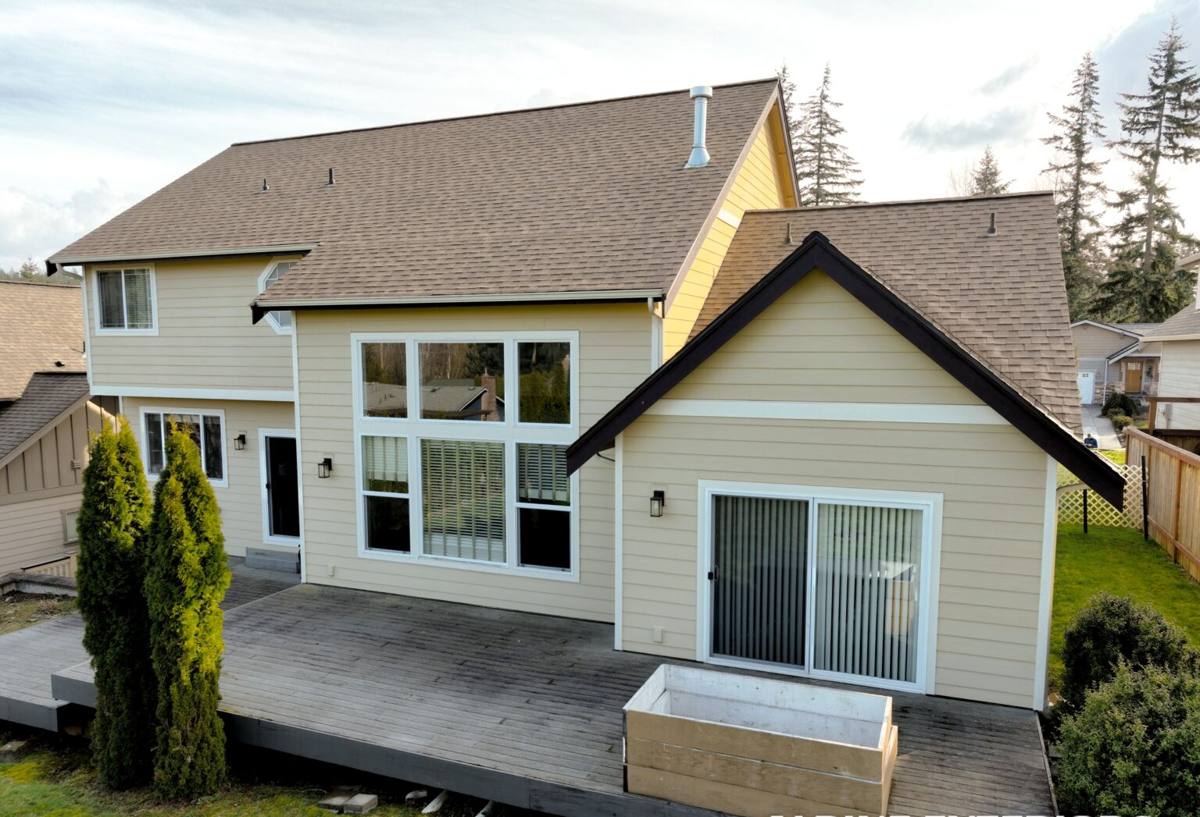
How Whatcom County Storms Damage Ferndale Roofs
Most storm damage we see in Ferndale falls into a handful of predictable categories. Understanding which one you're dealing with matters, because it changes both the repair and what your insurance adjuster will want to see documented.
Wind-Driven Rain and Uplift
Ferndale's exposure to wind coming off Bellingham Bay and across open fields means gusts can get under shingle edges and ridge caps, especially on roofs that were already a few years past their prime. Wind uplift rarely announces itself with dramatic missing shingles — more often it's a handful of tabs loosened or creased along one edge, which then lets wind-driven rain work its way underneath during the next storm.
Moss and Trapped Moisture
A long moss season doesn't cause storm damage directly, but it sets the stage for it. Moss holds moisture against the roof surface, keeps shingles from drying out between storms, and lifts edges as it grows — all of which makes a roof more vulnerable when a hard wind or heavy rain event does hit. Repairing storm damage on a moss-covered roof without addressing the moss is a short-term fix.
Salt Air and Fastener Corrosion
Homes closer to the water deal with a slower, quieter problem: salt-laden air accelerates corrosion on exposed nails, flashing seams, and metal roof-to-wall transitions. A storm can be the event that finally exposes a flashing joint that's been corroding for years — the wind didn't create the weak point, it just found it.
Debris Impact
Falling branches and wind-blown debris are common during Whatcom County's fall and winter storm systems. Impact damage can range from obvious punctures to bruised shingles that look fine from the ground but have lost their granule protection and will fail early.
Signs You Have Storm Damage
Not all storm damage is visible from the ground, and not all of it needs immediate attention — but knowing what to check after a significant wind or rain event helps you catch problems before they turn into interior leaks.
- Shingles that look curled, creased, or lifted at the edges, especially on the side of the roof that faces prevailing wind
- Granules collecting in gutters or at downspout outlets after a storm
- Visible gaps or shifted sections along the ridge line
- New or worsening water stains on interior ceilings, especially near chimneys, skylights, or where roof planes meet
- Flashing that looks bent, separated, or pulled away from a wall or vent pipe
- Soft or spongy spots when walking the roof (a sign moisture has already reached the decking)
- Moss buildup that has thickened noticeably around joints, valleys, or the north-facing slope
If you notice any of these after a storm, the priority is a professional look before the next round of weather, not months from now.
What a Correct Storm Damage Repair Involves
A storm repair that's done right addresses both the immediate damage and the conditions that made the roof vulnerable in the first place. That's especially true here, where salt air and moss don't take a break between storms.
Assessment First, Not Just a Patch
We start by inspecting the full roof, not just the area where damage was reported. Wind damage often extends beyond the obvious spot, and a roof that took damage in one area was usually stressed elsewhere too. We check the field of the roof, all flashing points, ridge and hip lines, and the attic or ceiling below for signs of moisture intrusion.
Matching Materials and Technique
Replacement shingles need to match the existing roof's material, profile, and where reasonably possible, color and age-weathering — patchwork that stands out is both a cosmetic problem and often a sign of a rushed repair. Fasteners and flashing metal should be corrosion-resistant grades appropriate for a coastal-influenced climate, not the cheapest option available.
Flashing and Sealant Details
A large share of storm-related leaks trace back to flashing, not the shingles themselves. Correct repair means re-securing or replacing compromised flashing at valleys, chimneys, vents, and wall transitions, not just caulking over a visible gap. Sealant is a supplement to proper flashing work, never a substitute for it.
Addressing Contributing Moss and Debris
Where moss or trapped debris contributed to the damage, we clear it and treat the area as part of the repair, not as a separate upsell. A storm repair that ignores an obvious moss problem is a repair that's likely to be revisited.
Repair vs. Full Replacement: How We Help You Decide
Storm damage doesn't automatically mean a new roof, and it doesn't automatically mean a small patch either. The honest answer depends on the roof's age, the extent of damage, and how it was maintained before the storm.
| Factor | Favors Repair | Favors Replacement |
|---|---|---|
| Roof age | Under 10–12 years, otherwise well maintained | Nearing or past typical service life for the material |
| Extent of damage | Isolated to one section or slope | Spread across multiple areas or slopes |
| Decking condition | Solid, no soft spots found | Soft or delaminated decking discovered underneath |
| Prior moss/moisture history | Minimal, roof dries out between storms | Chronic moss, trapped moisture, prior leak history |
| Underlying material condition | Granule loss and wear limited to damaged area | Granule loss and brittleness widespread across the roof |
We'll tell you plainly which category your roof falls into and why, including when a repair is genuinely the right call and a full replacement would be more than the situation calls for.
Our Process for Ferndale Storm Repairs
1. Fast Response and Temporary Protection
If a storm has left your roof exposed, our first priority is stopping active water intrusion — tarping or temporary sealing where needed — before we scope the permanent repair.
2. Full Roof Inspection
We inspect the whole roof, not just the reported damage area, and document what we find with photos for your records and for insurance purposes if you're filing a claim.
3. Written Scope and Estimate
You get a clear, written explanation of what's damaged, what needs repair, what materials we'll use, and a straightforward cost estimate — no vague line items.
4. The Repair
We complete the repair using matched materials and correct flashing technique, and we clean up debris and old materials from your property when we're done.
5. Follow-Up
We check our work holds up through the next weather event and are reachable if anything needs a second look.
Insurance and Documentation
Many storm damage repairs in Whatcom County involve a homeowner's insurance claim. We're glad to provide the documentation and photos an adjuster typically asks for, and to point out damage you might not have noticed yourself. We don't handle the claim on your behalf or promise a specific settlement outcome — that's between you and your insurer — but we make sure the roof-side facts are documented clearly and accurately.
Why a Locally Familiar Crew Matters
A roofer who already works in Ferndale and greater Whatcom County isn't guessing at what your roof is up against. We know that a roof here needs corrosion-resistant fasteners because of the salt air, that flashing details matter more here than in drier climates because of how long rain sits and drains, and that moss isn't cosmetic — it's a maintenance issue that affects how a roof performs in a storm. That local familiarity shows up in the quality of the repair, not just the sales pitch.
Storm Damage Repair Checklist for Ferndale Homeowners
- Walk the exterior and look up at the roofline after any significant wind event — don't wait for a leak
- Check gutters and downspouts for granule buildup after storms
- Note any new interior stains and their location relative to roof features (chimney, valley, vent)
- Photograph visible damage from the ground before calling for an inspection
- Have moss addressed as routine maintenance, not just after it causes a problem
- Get a full roof inspection, not just a look at the obviously damaged spot, after any major storm
- Keep documentation if you plan to file an insurance claim
If a recent storm has left your roof damaged, or you just want a professional set of eyes on it before the next one hits, we're happy to take a look. Fill out the form below for a free, no-pressure estimate — we'll tell you honestly what we find and what it needs.