 Whatcom County
 Ferndale's Roofs Work Harder Than the Brochure Says
Asphalt shingles are the most common roofing material in Whatcom County for good reason — they're cost-effective, durable when installed correctly, and available in dozens of colors and styles. But "correctly installed" means something different in Ferndale than it does in a dry inland climate. A shingle roof here spends a good chunk of the year wet, gets salt-tinged air rolling in off the water, and sits under tree cover that drops needles and seeds into every valley and gutter. None of that is a reason to avoid asphalt shingles. It is a reason to install and maintain them with this specific climate in mind.
This page is about one job in one place: asphalt shingle roofing for Ferndale homes. Not a general rundown of every roofing material we offer — just what local homeowners actually need to know before replacing or repairing a shingle roof here.
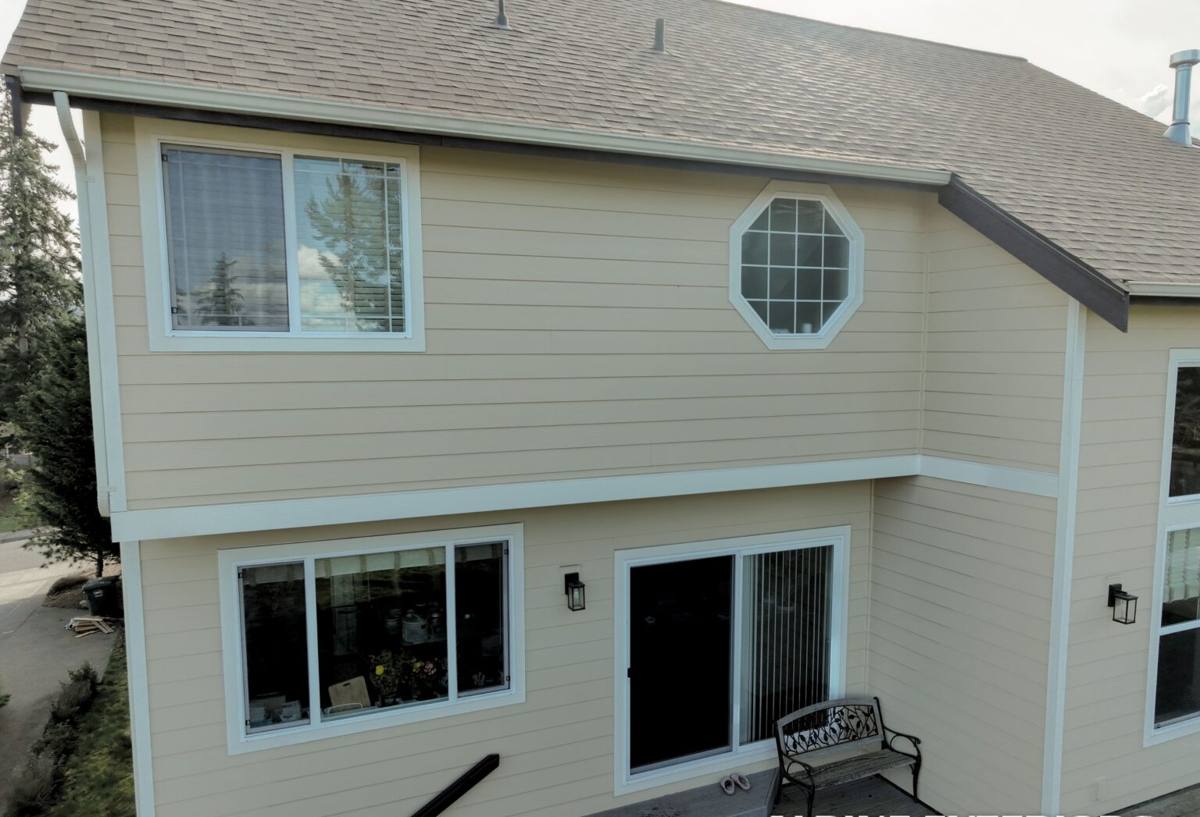
What Salt Air, Rain, and Moss Actually Do to a Shingle Roof
Moisture load
Western Washington doesn't get the heaviest rainfall totals in the country, but it gets a lot of days of rain — long stretches of steady, low-intensity moisture rather than short violent storms. That matters for roofing because it's less about any single downpour and more about how long a roof surface stays wet. Shingles, underlayment, flashing, and the wood deck underneath all need time to dry out between rain events. When a roof can't dry — because of poor ventilation, shade from mature trees, or debris trapping moisture against the surface — that's when granule loss, moss colonization, and eventually deck rot show up years earlier than they should.
Salt air
Ferndale's proximity to Bellingham Bay and the Strait of Georgia means homes here, especially closer to the water, deal with airborne salt that inland Whatcom County homes don't. Salt exposure accelerates corrosion on any exposed metal — nails, flashing, vent boots, gutter hardware. It's a slow process, but it's cumulative, and it's one of the reasons material choice and flashing details matter more here than they would forty miles inland.
Moss season
Between the moisture and the shade from evergreen tree cover common throughout Whatcom County, moss finds a foothold on north-facing slopes and shaded valleys fast. Moss isn't just cosmetic. It holds water against the shingle surface, lifts shingle edges as it grows, and works its way under tabs where it doesn't belong. A roof that isn't dealt with for a few seasons can end up with real moisture intrusion that starts as a moss problem and ends as a rot problem.
Choosing a Shingle That Suits This Climate
Not every asphalt shingle product is built the same way, and the differences matter more in a wet, mossy climate than they would somewhere dry. Here's how the common options stack up for a Ferndale roof:
| Shingle Type | Typical Lifespan Here | Moss/Algae Resistance | Best Fit |
|---|---|---|---|
| 3-tab (standard) | 15-20 years, often less with heavy moss exposure | Low unless algae-resistant granules are specified | Budget-conscious re-roofs, less shaded lots |
| Architectural / dimensional | 25-30+ years | Better mat and granule adhesion holds up longer | Most Ferndale homes — our default recommendation |
| Algae-resistant (AR) granules | Adds years of clean appearance | Copper or zinc granules actively resist algae/moss growth | Shaded lots, north-facing slopes, tree-heavy properties |
| Impact-rated / heavier mat | Comparable to architectural, better wind and debris resistance | Neutral — depends on granule spec | Open, wind-exposed lots near the water |
We lean toward architectural shingles with algae-resistant granules for the majority of Ferndale jobs, simply because the upfront cost difference is modest compared to the years of appearance and performance you get back. On more exposed or waterfront-adjacent lots, we'll also talk through wind rating, since gusts off the Strait can be stronger than what a standard shingle warranty assumes.
What a Correct Installation Actually Involves
The shingle itself is maybe a third of what determines how a roof performs here. The rest is in the details underneath and around it — the parts that don't show up in a driveway photo but decide whether you're calling us back in five years or twenty.
- Ice and water shield at eaves and valleys. Even though Ferndale doesn't see the ice damming of colder climates, a self-adhering membrane at eaves, valleys, and around penetrations gives real protection against wind-driven rain working its way backward under shingles — which is a genuine risk here.
- Synthetic underlayment across the full deck. A quality synthetic underlayment sheds water better than old felt paper and holds up longer through the wet stretches between shingle courses being weathertight.
- Proper nailing pattern and fastener count. Underdriven, overdriven, or misplaced nails are one of the most common causes of early shingle failure — and one of the least visible from the ground.
- Flashing at every transition. Chimneys, skylights, sidewalls, and roof-to-wall junctions need step flashing and counter-flashing done right, not just caulked over. Caulk is a stopgap, not a flashing detail.
- Balanced attic ventilation. Intake at the eaves, exhaust at the ridge, sized to the attic volume. Without it, moisture gets trapped under the deck from the inside, which shortens shingle life regardless of how good the shingle is.
- Corrosion-resistant metal. Given the salt air here, we spec flashing, vent boots, and fasteners that hold up to it rather than the cheapest option that meets code on paper.
How Our Process Works, Start to Finish
Inspection and estimate
We start on the roof, not just with a drone photo — checking the deck condition, existing ventilation, flashing points, and how much moss or granule loss is already present. You get a written estimate that spells out shingle type, underlayment, flashing scope, and ventilation work, not just a single lump-sum number.
Tear-off and deck check
Full tear-off to the deck lets us actually see what's underneath — soft spots, old leaks, or deck sections that need replacement before a single new shingle goes down. Roofing over an existing layer hides problems instead of fixing them, and it's not something we do.
Installation
Underlayment, ice and water shield, flashing, and shingles go on in that order, following manufacturer spec for nailing and exposure. We keep an eye on weather windows — starting a tear-off with rain moving in within a day or two isn't a risk we take with your deck exposed.
Cleanup and walkthrough
Magnetic sweep for nails, full debris haul-off, and a walkthrough so you know what was done and what to watch for going forward.
Living With a Shingle Roof in Whatcom County
Moss and algae maintenance
Even a well-installed roof with algae-resistant shingles benefits from periodic soft-washing or moss treatment, especially on shaded sections. We recommend a gentle, low-pressure approach — pressure washing strips granules and shortens shingle life, which defeats the purpose.
Gutters and debris
Ferndale's tree cover means gutters and valleys collect needles and debris faster than in more open areas. Keeping valleys clear prevents the standing water that feeds moss growth and, eventually, deck rot.
Annual or post-storm checks
A quick visual check after major wind events — looking for lifted or missing tabs — catches small problems while they're still small. Wind off the water can lift a compromised shingle edge that would otherwise sit fine for years.
What Drives the Cost of a Ferndale Re-Roof
| Factor | Why It Matters Here |
|---|---|
| Roof pitch and access | Steeper pitches and limited access add labor time and safety equipment needs |
| Deck condition | Rot from long-term moss or moisture intrusion means deck replacement, not just re-shingling |
| Shingle grade | Standard 3-tab vs. architectural vs. AR-granule pricing varies, but so does lifespan |
| Ventilation upgrades | Adding proper intake/exhaust venting where none exists is a worthwhile add, not a corner to cut |
| Flashing scope | Homes with multiple valleys, skylights, or chimneys need more flashing work than a simple gable roof |
| Layers to remove | Tear-off of multiple existing layers adds disposal and labor cost |
We don't quote a roof over the phone. Every one of these factors changes with the actual house, and an honest estimate needs eyes on the roof and the attic.
Signs Your Ferndale Roof Needs a Look
- Granules collecting in gutters or at downspout outlets
- Moss visible on north-facing slopes or in shaded valleys
- Curling, cupping, or cracked shingle tabs
- Dark streaking that doesn't wash off with light rinsing
- Soft spots underfoot in the attic or visible sagging from the street
- Daylight visible through the roof deck from inside the attic
- Shingles missing after a windstorm, even just one or two
Why a Crew That Already Works Ferndale Matters
A roofing crew that works this specific stretch of Whatcom County regularly knows which slopes on a given lot hold moss longest, how much wind exposure to expect on a more open property near the water, and which flashing details actually hold up against the salt air rather than just meeting minimum code. That's not something you get from a general regional contractor working from a spec sheet — it comes from having done this work, on these kinds of roofs, in this specific climate, repeatedly. It also means someone who can get to your property quickly if a storm causes damage, rather than scheduling you in behind jobs across three counties.
If your Ferndale home needs a new roof, a repair, or just an honest inspection to see where things stand, we're glad to take a look. Reach out for a free, no-pressure estimate using the form below.