 Whatcom County
 Window Replacement Built for Fairhaven's Climate
Fairhaven sits close to Bellingham Bay, which means homes here take a different kind of weather beating than houses further inland in Whatcom County. Salt-laden air off the water, driving rain that comes in sideways during fall and winter storms, and a moss season that can stretch from October through April all work against ordinary windows. If you've noticed drafts, fogged glass, or wood that's gone soft around your frames, that's not bad luck — it's the predictable result of years of this specific coastal exposure.
We install and replace windows across Whatcom County, and Fairhaven's older housing stock — a mix of early-1900s homes in the historic district and newer construction closer to the edges of the neighborhood — gives us a good read on what actually holds up here versus what looks fine in a showroom and fails in five years.
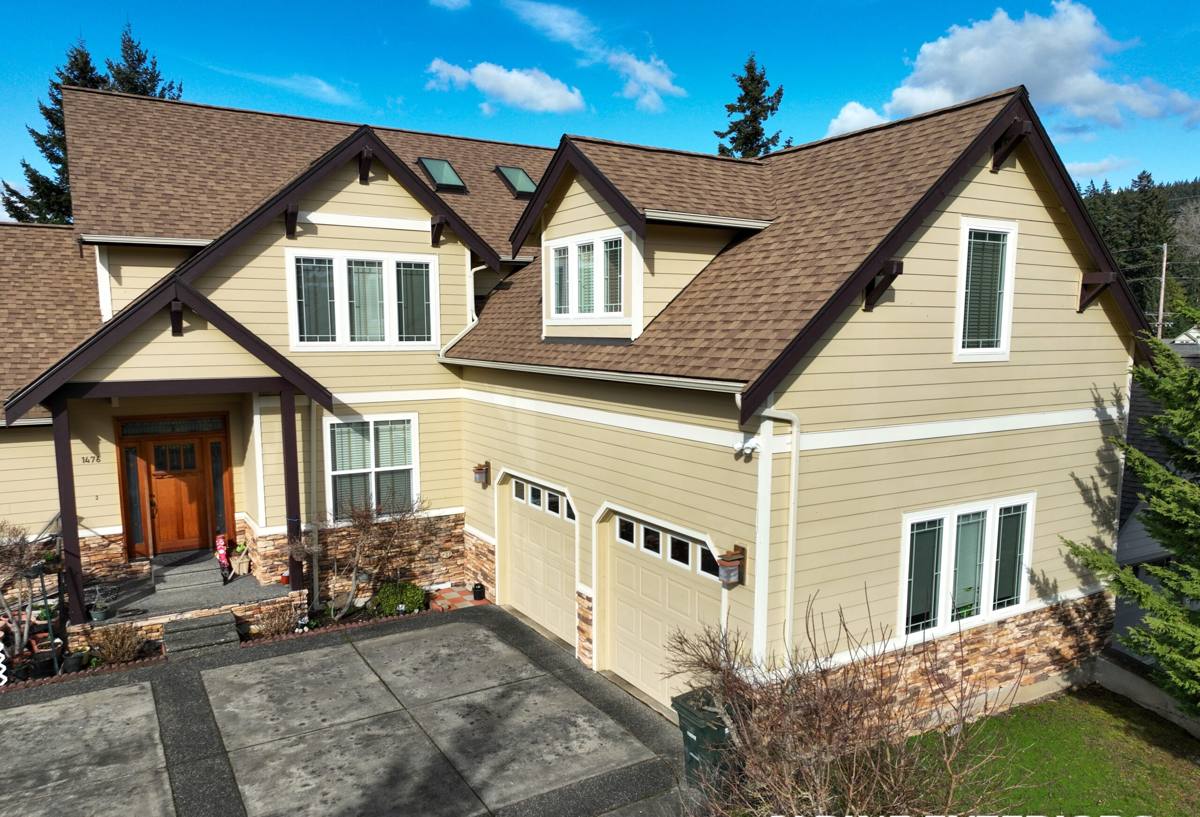
What Salt Air, Rain, and Moss Actually Do to Windows
Salt air and metal components
Airborne salt accelerates corrosion on window hardware — hinges, locks, balance mechanisms, and especially lower-grade aluminum cladding or fasteners. Once corrosion starts, it doesn't stay cosmetic for long. Locks bind, sashes stop closing flush, and the seal around the glass starts to fail because the frame itself is no longer holding true dimensions.
Driving rain and sill design
Wind-driven rain doesn't just fall on a window, it gets pushed sideways and upward under the sash and against the sill. A window that isn't detailed correctly — meaning the flashing, sill pan, and sealant work together to shed water outward — will eventually let moisture behind the trim. That's when you start seeing soft wood, stained drywall below the window, or a musty smell in the room even though the glass itself looks fine.
Moss and prolonged moisture
Moss doesn't grow on window glass, but it does grow on wood trim, sills, and anywhere organic debris collects and stays damp for months at a time. Once moss and the moisture underneath it get established on a windowsill or the trim around a frame, that wood is retaining water far longer than it should, which speeds up rot even in materials that are otherwise sound.
Signs a Fairhaven Home Needs Window Replacement, Not Just Repair
- Fogging or a persistent haze between the panes of a double-pane window — the seal has failed and the gas fill is gone
- Windows that are hard to open, close, or lock, especially if this changed gradually over a year or two
- Visible gaps between the sash and frame when the window is closed
- Soft, spongy, or discolored wood on the sill, jamb, or trim
- A noticeable draft near the window even when it's fully latched
- Condensation forming on the inside of the glass regularly during cold, wet weeks
- Paint that keeps failing on the exterior trim around the same windows no matter how often it's touched up
If you're only seeing one of these and the frame itself is solid, a repair or re-seal may be enough. Once two or three of these show up together, that's usually a sign the window assembly as a whole has reached the end of its useful life.
What a Correct Window Replacement Job Involves
Swapping glass into an old frame, or dropping a new window into an opening without addressing the flashing underneath, is the most common shortcut we see — and it's the reason a "new" window can still leak within a couple of winters. A proper replacement in this climate means:
- Full removal of the old unit so the rough opening can actually be inspected, not just covered up
- Checking the sheathing and framing around the opening for hidden rot or moisture damage before anything new goes in
- Installing a sill pan that directs any water that gets past the window back outside, rather than letting it pool
- Correct flashing integration with the existing weather-resistive barrier, so water sheds over each layer like shingles rather than getting trapped behind one
- Sealing and insulating the gap between the new frame and the rough opening with the right materials — not just a bead of caulk around the trim
- Setting the window level, plumb, and square so the sash operates smoothly and the seals compress evenly for the life of the window
Skip any one of these steps and you can end up with a window that looks new from the street but is still letting water into the wall cavity. That's a much more expensive problem to find later than it would have been to prevent up front.
Choosing Materials for a Bay-Adjacent, High-Moisture Climate
There's no single "best" window material for every home — it depends on your home's age, style, and how much upkeep you want to take on. Here's how the common options actually perform in Whatcom County's coastal conditions:
| Material | How It Handles Salt Air & Rain | Maintenance | Typical Fit |
|---|---|---|---|
| Vinyl | Doesn't corrode or rot; performs consistently in salt air and damp conditions | Low — occasional cleaning | Most homes, especially where budget and durability matter most |
| Fiberglass | Very stable dimensionally, resists moisture and corrosion well | Low | Homes wanting a narrower sightline or higher-end finish without the upkeep of wood |
| Aluminum | Prone to corrosion and pitting in salt air unless it's a marine-grade, properly finished product | Moderate to high near the water | Best reserved for specific architectural needs, not general coastal use |
| Wood | Attractive and traditional, but vulnerable to rot if moisture gets behind the cladding or finish fails | High — regular painting/sealing required | Historic homes where matching original character matters more than low upkeep |
| Clad wood (vinyl or aluminum exterior, wood interior) | Exterior cladding protects the wood from direct weather exposure, but installation quality is critical | Moderate | Homes wanting a wood interior look with better exterior durability |
For a lot of Fairhaven's older homes, we end up recommending vinyl or fiberglass for straightforward durability, but where a home's character genuinely calls for a wood look — especially in the historic district — a well-installed clad wood window can be the right trade-off between appearance and long-term performance. We'll walk through the honest pros and cons for your specific house rather than pushing one product line.
Our Window Replacement Process
We keep this straightforward because homeowners deserve to know what's happening at each stage, not just when the crew shows up:
- On-site assessment — we look at your current windows, the condition of the framing and trim, and talk through what's actually driving the need for replacement
- Honest recommendation — material, style, and whether every window needs replacing now or if some can wait
- Written estimate — clear pricing with no surprise add-ons buried in fine print
- Scheduling around the weather — we plan installs to minimize how long any opening sits exposed, which matters a lot given how often it rains here
- Installation — removal, inspection of the opening, sill pan and flashing work, setting the new window, and sealing it correctly
- Final walkthrough — we check operation, seals, and finish work with you before calling the job done
What Affects the Cost of Window Replacement
We don't publish fixed prices because every home and every window opening is different, but these are the main factors that move the number up or down:
| Factor | Why It Matters |
|---|---|
| Window material and glass package | Vinyl generally costs less than fiberglass or clad wood; upgraded glass (extra low-E coatings, gas fills) adds cost but improves comfort and efficiency |
| Condition of the existing opening | Hidden rot or framing damage found once the old window comes out adds repair time before the new unit can go in |
| Number of windows done at once | Bundling multiple windows in one project usually costs less per window than doing them one at a time over several years |
| Window size and style | Standard double-hung windows are typically less involved than large picture windows, bays, or custom shapes |
| Historic district or trim considerations | Matching existing trim profiles or working within historic character guidelines can add time and material cost |
| Access | Second-story or hard-to-reach windows take more time and equipment than ground-floor replacements |
Why Local Experience in Fairhaven Matters
A window that's correctly detailed for a dry inland climate isn't automatically correct for a home exposed to salt air and driving rain off Bellingham Bay. Crews who don't regularly work this specific kind of exposure sometimes treat flashing and sealing as an afterthought, because in a milder climate a shortcut there might not show up as a problem for a decade. Here, it shows up much sooner — usually as a stain on the wall below the window or a soft spot in the sill.
Working across Whatcom County means we see how windows actually perform over time in this climate, not just how they look on install day. That's the difference between a window replacement that solves the problem for good and one that just delays it.
If you're seeing drafts, fogged glass, or trim trouble around your windows, we're happy to take a look and give you a straightforward, no-pressure estimate — just fill out the form below to get started.