 Whatcom County
 Board & Batten Siding Built for Fairhaven's Waterfront Climate
Fairhaven sits close enough to Bellingham Bay that salt air is a daily fact of life, not an occasional nuisance. Add Whatcom County's long wet season, driving rain that comes in sideways off the water, and the moss and algae growth that thrives in shaded, damp corners of a lot, and you have one of the tougher siding environments in the county. Board and batten siding — with its bold vertical lines and deep shadow reveals — is a natural fit for the historic and craftsman character common in and around Fairhaven, but only if the material underneath that look can actually handle the exposure.
We install board and batten siding in Fairhaven using James Hardie fiber cement exclusively. This page walks through what the style demands structurally, what correct installation looks like in this specific microclimate, and why the crew doing the work matters as much as the product itself.
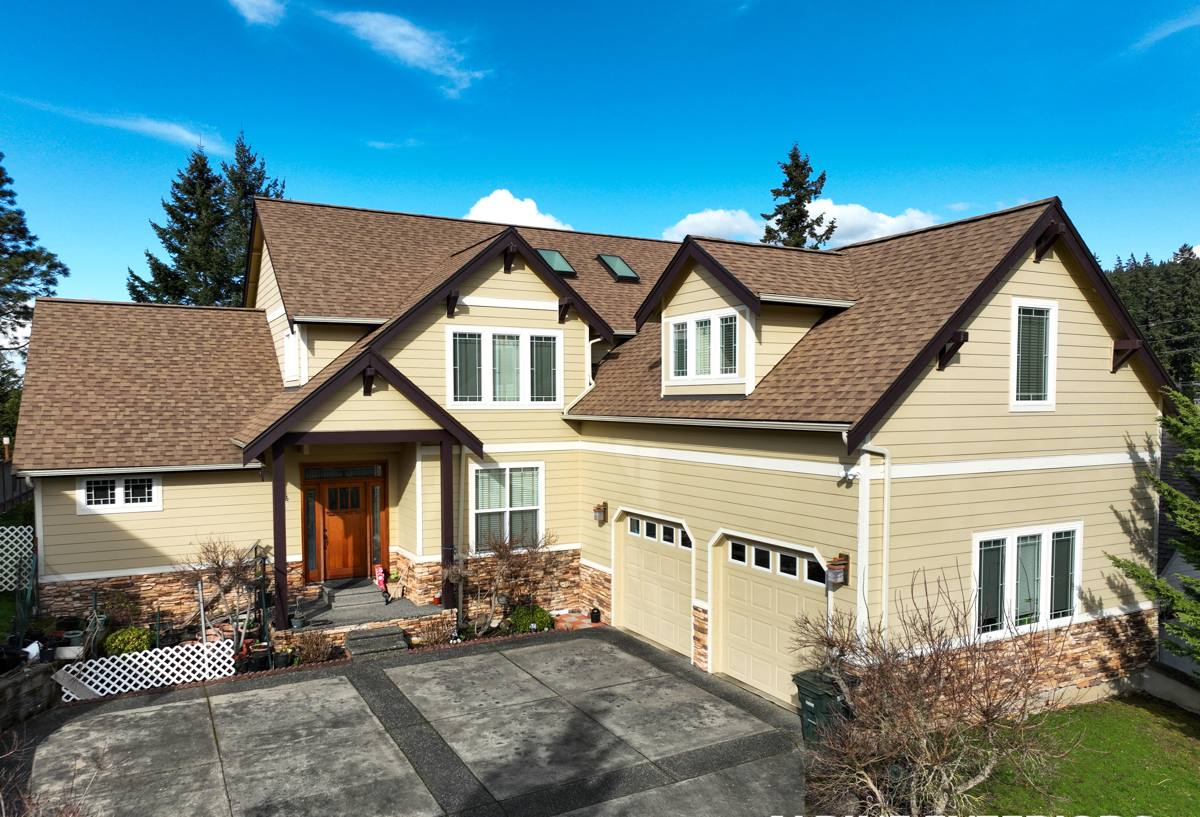
Why Board & Batten Fits Fairhaven's Architecture
Board and batten reads as a period-appropriate, textured alternative to flat lap siding, which is part of why it shows up so often on homes in and near older, walkable neighborhoods like Fairhaven. The vertical panels and raised battens create strong shadow lines that suit gable ends, dormers, and accent walls especially well, and it pairs cleanly with the mix of traditional and modern homes found throughout the area.
Beyond looks, the vertical orientation has a practical advantage in a rain-heavy climate: water tends to shed down the face of the board rather than pooling on a horizontal ledge. That said, the style introduces its own set of moisture-management details that have to be handled correctly, which we cover below.
Where It Works Best
- Full-facade siding on craftsman, farmhouse, or modern-farmhouse style homes
- Accent applications — gables, dormers, entry surrounds — paired with lap siding elsewhere
- Garages, additions, and outbuildings where a distinct texture separates them from the main house
- Homes near the water or in low-lying, shaded lots where moss control is an ongoing issue
What Salt Air and Driving Rain Do to Siding Over Time
Homes closer to Bellingham Bay deal with airborne salt that settles on exterior surfaces and accelerates corrosion of exposed fasteners and metal trim. Combine that with wind-driven rain that hits vertical seams and joints harder than it hits a flat wall, and any weak point in the water-management plan — a poorly lapped joint, an unsealed cut edge, a fastener driven into bare wood — becomes the spot where moisture gets in first.
Whatcom County's moss season adds a second, slower problem. Shaded north- and west-facing walls, areas under overhangs, and anywhere airflow is limited stay damp for extended stretches, which lets moss and algae take hold on siding surfaces that aren't factory-sealed the whole way through. Once organic growth establishes itself on a porous or poorly finished substrate, it holds moisture against the wall longer, which compounds the original problem instead of just being cosmetic.
The Three Recurring Failure Points We See
- Batten fasteners: improperly spaced or under-driven fasteners that work loose as the material moves seasonally, opening a path for water
- Cut edges left unsealed: factory finish protects the face of the board, but a field cut at a corner or window opening needs its own sealed edge
- Missing rainscreen gap: board and batten installed tight against the weather barrier with no drainage plane traps moisture instead of letting it escape
What Correct Board & Batten Installation Involves
A board and batten job that holds up in Fairhaven's conditions isn't just about nailing boards to the wall in a pleasing pattern. The sequence and details underneath the finish are what determine whether the siding is still performing in fifteen years or needs remedial work in five.
The Assembly, Step by Step
- Inspect and repair the sheathing and existing weather barrier before anything new goes up
- Install a code-compliant water-resistive barrier, lapped correctly at every seam and penetration
- Add vertical furring strips to create a rainscreen drainage gap behind the siding
- Flash all windows, doors, and penetrations before the first board goes on
- Install boards with manufacturer-specified fastener spacing and edge distance
- Seal every field-cut edge, corner, and joint per James Hardie's published details
- Install battens over board joints with correct overlap and fastening
- Caulk and touch-up only where the manufacturer's instructions call for it — over-caulking a system designed to breathe causes its own problems
Skipping the rainscreen gap or the sheathing inspection is the single most common shortcut we see on board and batten re-sides, and it's the one most likely to cause hidden rot behind a siding job that still looks fine from the curb.
Why We Only Install James Hardie for This Style
Board and batten is available in vinyl, engineered wood, and fiber cement, and the material choice matters more here than it does for a lot of other siding styles, because the battens and exposed vertical joints create more edges for water to find. James Hardie's fiber cement is non-combustible, dimensionally stable across our wet-to-dry seasonal swings, and factory-finished with ColorPlus technology, which means the color and protective topcoat are baked on before the board ever reaches the jobsite — including on the batten pieces themselves.
That factory finish is a direct answer to the salt-air and moss problems described above: a consistent, sealed surface resists the buildup that gives algae and moss a foothold, and it doesn't rely on a field-applied paint job to hold up to the coastal exposure. Hardie's HZ5 product line is engineered specifically for climates with heavy moisture exposure, which describes Fairhaven's conditions well.
Board & Batten Material Comparison
| Factor | Vinyl Board & Batten | Engineered Wood | James Hardie Fiber Cement |
|---|---|---|---|
| Moisture tolerance | Won't rot, but can warp and gap | Vulnerable at cut edges and joints | Engineered for wet climates (HZ5) |
| Fire resistance | Combustible | Combustible | Non-combustible |
| Finish durability | Fades, can look plasticky up close | Requires ongoing paint maintenance | Factory ColorPlus finish, long fade resistance |
| Salt-air performance | Fair, but joints can loosen | Fasteners and finish degrade faster | Strong when installed to spec |
| Typical lifespan (correctly installed) | 20-30 years | 15-25 years, finish-dependent | 30+ years |
Our Process for Fairhaven Board & Batten Projects
We start with an on-site walkthrough to assess the existing wall assembly, moisture history, and any moss or algae staining that signals a drainage problem worth addressing before new siding goes up. From there we scope the project — full re-side, accent application, or repair of an existing board and batten section — and give you a written estimate that spells out material, labor, and any sheathing repair separately, so there are no surprises once the crew is on site.
Because we work board and batten jobs throughout Fairhaven and the surrounding Whatcom County waterfront, we've built our sequencing around this exact climate: weather windows for tear-off, barrier installation timed to avoid exposed sheathing sitting in the rain, and fastener and sealing details that match what James Hardie's warranty actually requires.
Before You Hire Anyone for Board & Batten Work
- Ask whether the crew installs a rainscreen gap on every board and batten job, not just when requested
- Confirm they're following James Hardie's published fastening and clearance specifications
- Get the estimate in writing, broken out by material and labor
- Ask how they handle sheathing that turns out to be damaged once old siding comes off
- Check that the crew is factory-trained on fiber cement, not just experienced with vinyl or wood
Why Local Installation Experience Matters Here
Fairhaven's exposure to Bellingham Bay isn't uniform from block to block — some lots get more direct wind-driven rain, others sit in enough shade to hold moisture and grow moss for months at a stretch. A crew that has worked this specific area knows which details to over-build rather than treat as optional, and that judgment only comes from doing the work here repeatedly, not from a generic install checklist.
We also stand behind the work with both the manufacturer's product warranty and our own installation warranty, which matters more on a style like board and batten where a poorly executed detail can take years to show itself as a problem.
Get an Honest Look at Your Fairhaven Home
If you're considering board and batten siding for a Fairhaven home — whether it's a full re-side or an accent feature on a gable or entry — we'll walk the property, look at how your current siding and trim are holding up against the salt air and rain, and give you a straightforward, no-pressure estimate. Use the form below to get started.