 Whatcom County
 Roofing in Fairhaven Isn't the Same as Roofing Inland
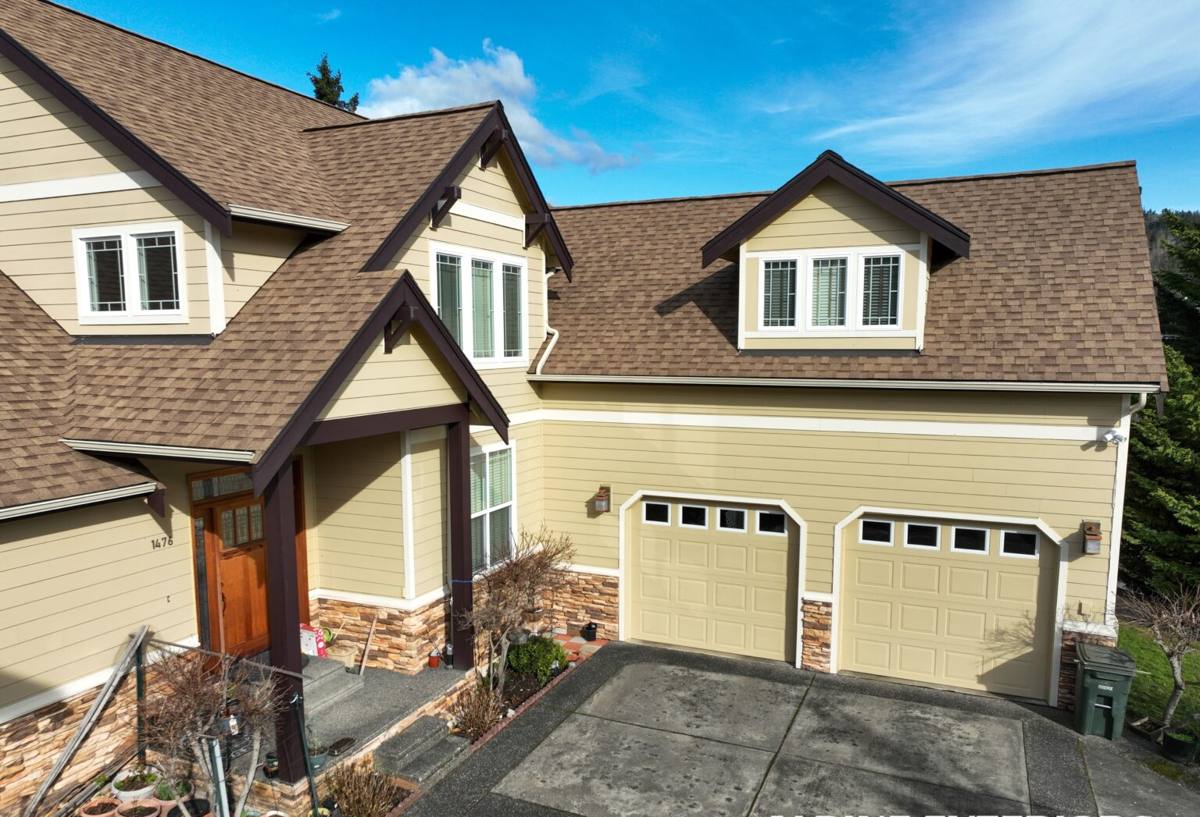
Fairhaven sits close enough to Bellingham Bay that salt-laden air, wind-driven rain, and heavy shade from mature trees all show up in the condition of local roofs years before they would on a home twenty miles inland. We work on asphalt shingle roofs across Whatcom County, and the pattern in Fairhaven is consistent: granule loss on the windward slopes, moss colonies on the shaded north sides, and soft spots where flashing has quietly failed under years of saturation. None of that means asphalt shingles are the wrong choice here — they're still the most practical, cost-effective roofing material for most homes in this area. It means the installation and maintenance have to account for what this specific microclimate does to a roof over time.
This page covers what a correctly built and maintained asphalt shingle roof looks like for a Fairhaven home, what tends to go wrong when it isn't, and how we approach the job from first inspection to final cleanup.
What Salt Air and Driving Rain Actually Do to a Shingle Roof
Two separate forces are at work on a Fairhaven roof, and they attack different parts of the system.
Salt Air and Corrosion
Airborne salt doesn't damage the asphalt shingle mat itself much, but it accelerates corrosion on every metal component of the roof: nails, flashing, valley metal, and vent caps. A roofing nail that would last decades in a dry inland climate can start rusting and losing holding power years sooner near the water. When fasteners weaken, shingles lift in wind, and a lifted shingle is an open door for the next problem.
Wind-Driven Rain and Wall/Roof Transitions
Fairhaven's storms tend to come in sideways off the water rather than falling straight down. That matters because standard shingle installation assumes rain falls vertically and sheds downhill. Driving rain can push water sideways under shingle tabs, up under step flashing at wall intersections, and into any gap around chimneys, skylights, or vent penetrations that wouldn't leak in a calmer climate. This is why flashing detail and sealant choice matter more here than the shingle brand printed on the wrapper.
Moss: The Slow Damage Most Homeowners Underestimate
Whatcom County's long, wet, mild winters are ideal moss-growing conditions, and Fairhaven's tree cover and coastal humidity make it worse. Moss isn't just cosmetic. As it establishes on a shingle roof, it:
- Holds moisture against the shingle surface for days after rain stops, instead of letting it dry and shed
- Works its rhizoids under shingle edges and tabs, gradually lifting them
- Traps needles, leaves, and grit that hold even more water against the roof deck
- Adds weight, especially when saturated, that stresses aging fastener holds
- Accelerates granule loss, which shortens the shingle's usable life by exposing the asphalt mat to UV and moisture directly
A few years of unmanaged moss on a shaded, north-facing slope can take meaningful life off a shingle roof that would otherwise perform well for its full warranty period. Moss control is not optional maintenance in Fairhaven — it's part of protecting the investment.
Choosing a Shingle System for a Coastal Whatcom County Home
Not every asphalt shingle product handles this climate equally well. The differences come down to algae resistance, wind rating, and how the shingle sheds standing moisture.
| Shingle Type | Typical Wind Rating | Algae/Moss Resistance | Best Fit for Fairhaven |
|---|---|---|---|
| 3-Tab (economy) | Lower | Low unless treated | Budget projects only; least tolerant of coastal wind and moss pressure |
| Architectural / Laminate | Higher | Moderate to high with copper/zinc granules | Standard recommendation for most Fairhaven homes |
| Algae-Resistant (AR) Laminate | Higher | High — copper-infused granules resist moss/algae staining | Best long-term value on shaded or north-facing roofs |
| Impact-Rated Laminate | Higher | Moderate to high | Worth considering on exposed roofs facing prevailing storm direction |
For most Fairhaven homes, we recommend algae-resistant architectural shingles as the baseline, not the upgrade. The copper or zinc granules built into these products actively discourage moss and algae growth over the life of the roof, which matters more here than in drier parts of the state. We'll walk through manufacturer options and warranty structures during the estimate rather than pushing one brand — the right product depends on your roof's exposure, slope, and shade pattern.
What a Correct Asphalt Shingle Roof Actually Includes
The shingle itself is the visible layer, but it's only one part of a system. A roof that fails early in this climate almost always failed because of what's underneath the shingles, not the shingles themselves.
Underlayment
Synthetic underlayment is standard on our installs. In a wind-driven-rain environment like Fairhaven, the underlayment is the backup layer that keeps the deck dry if wind pushes water past the shingle surface. We don't cut corners here — it's inexpensive relative to the whole job and it's the layer that saves a roof deck when a storm exceeds what the shingles alone can shed.
Ice and Water Shield at Vulnerable Points
Even though Whatcom County doesn't see the ice-dam problems of colder climates every year, we still install self-adhering waterproof membrane at eaves, valleys, and around penetrations. In Fairhaven specifically, this membrane also guards against wind-driven rain intrusion at the lowest, most exposed edges of the roof.
Flashing
Step flashing at walls, counter-flashing at chimneys, and valley metal all need to be corrosion-resistant given the salt air, and installed with enough overlap to handle sideways rain, not just vertical runoff. This is the single most common failure point we find on older Fairhaven roofs during inspections — reused or undersized flashing from a previous re-roof that was never designed for this exposure.
Ventilation
Balanced intake and exhaust ventilation keeps the underside of the roof deck dry and at a stable temperature. Poor ventilation traps moisture in the attic, which condenses on the underside of the sheathing and rots it from the inside — a problem that has nothing to do with the shingles above but will void a shingle warranty and shorten the roof's real life all the same.
Fastening
We use corrosion-resistant nails at the correct count and placement per manufacturer spec, not the minimum. In a coastal environment, upgraded fastener quality is one of the cheapest ways to add years of wind resistance to the finished roof.
Our Process for a Fairhaven Roofing Project
- Inspection. We check the deck, existing flashing, ventilation, and moss/moisture damage from the attic side as well as the roof surface — problems underneath are often worse than what's visible from the ground.
- Honest scope. We tell you plainly whether the roof needs full replacement, a targeted repair, or can be maintained a few more years with moss treatment and flashing fixes. We don't upsell a full tear-off when a repair will genuinely hold.
- Tear-off and deck check. On replacements, we remove old material down to the deck and inspect sheathing for rot or soft spots before anything new goes down — layering new shingles over old or a compromised deck just hides problems.
- System install. Underlayment, ice-and-water membrane, flashing, then shingles, installed per manufacturer specification to keep warranties valid.
- Cleanup and magnetic sweep. Full site cleanup including a nail sweep of the yard and driveway.
- Walkthrough. We review the finished roof with you, explain what maintenance it needs, and provide documentation for warranty registration.
Repair or Replace? Honest Decision Factors
Homeowners often ask us to just "fix the leak" without knowing whether that's actually the sound financial decision. These are the factors we weigh:
| Factor | Leans Toward Repair | Leans Toward Replacement |
|---|---|---|
| Roof age | Under 12–15 years | Approaching or past manufacturer's rated life |
| Granule loss | Isolated to one area | Widespread, exposed asphalt mat visible |
| Flashing condition | Localized failure, deck sound | Multiple flashing points corroded or undersized |
| Moss/algae staining | Surface-level, recently treated | Established, lifting shingle edges |
| Deck condition | Dry, solid to the touch | Soft spots, visible sagging, staining in attic |
| Number of past repairs | First or second repair | Repeated repairs to the same area |
If most factors point one direction, the decision is usually clear. When it's a mixed picture, we'll give you our honest read rather than defaulting to the more expensive option.
Maintenance That Actually Extends Roof Life Here
A well-installed shingle roof in Fairhaven still needs periodic attention to reach its full lifespan. This is the maintenance rhythm we recommend to local homeowners:
- Inspect for moss growth at least once a year, more often on shaded or north-facing slopes
- Treat moss with an appropriate roof-safe application before it establishes and lifts shingles — don't wait until it's visibly thick
- Keep gutters clear of needles and debris so water isn't held against the eaves and fascia
- Trim back overhanging branches to reduce shade, debris load, and physical abrasion on the shingle surface
- Have flashing checked every few years, especially around chimneys and wall intersections, since corrosion here is often invisible from the ground
- Address any granule buildup in gutters promptly — heavy granule loss in the gutter is an early warning sign, not just normal wear
Why It Matters to Hire a Crew That Already Works Fairhaven
A roofing crew that mostly works drier, inland conditions can install a technically correct roof that still underperforms here, simply because the details that matter in a coastal Whatcom County microclimate aren't the details they're used to prioritizing. Knowing which slopes in a given Fairhaven neighborhood tend to hold moss, how far wind-driven rain typically pushes under a wall flashing in a coastal storm, and which fastener and flashing upgrades are worth the modest extra cost here comes from doing this work locally and repeatedly — not from a generic install checklist. We build every asphalt shingle roof with this specific climate in mind from the first layer down, not just the shingle on top.
Get a Straightforward Estimate
If your Fairhaven roof is showing granule loss, moss buildup, or you're dealing with a leak that keeps coming back, we're happy to take a look and give you an honest assessment — repair or replace, no pressure either way. Fill out the form below for a free estimate.