 Whatcom County
 Siding Repair Built for Edgemoor's Bayside Conditions
Edgemoor sits close enough to Bellingham Bay that its homes take on a different set of siding problems than houses further inland in Whatcom County. Salt-laden air off the water, driving rain that comes in sideways during fall and winter storms, and a moss season that can stretch from October well into spring all put steady stress on exterior siding. None of that is dramatic on its own — it's the accumulation over years that causes trouble. A house that looked fine at year eight can have soft trim, failing caulk joints, and moisture working behind the siding by year fifteen if the material and the installation weren't built for this specific climate.
Siding repair in a neighborhood like Edgemoor isn't just about matching a board or touching up paint. It's about understanding why a section failed in the first place, because in this climate a cosmetic patch over a moisture problem almost always comes back worse.
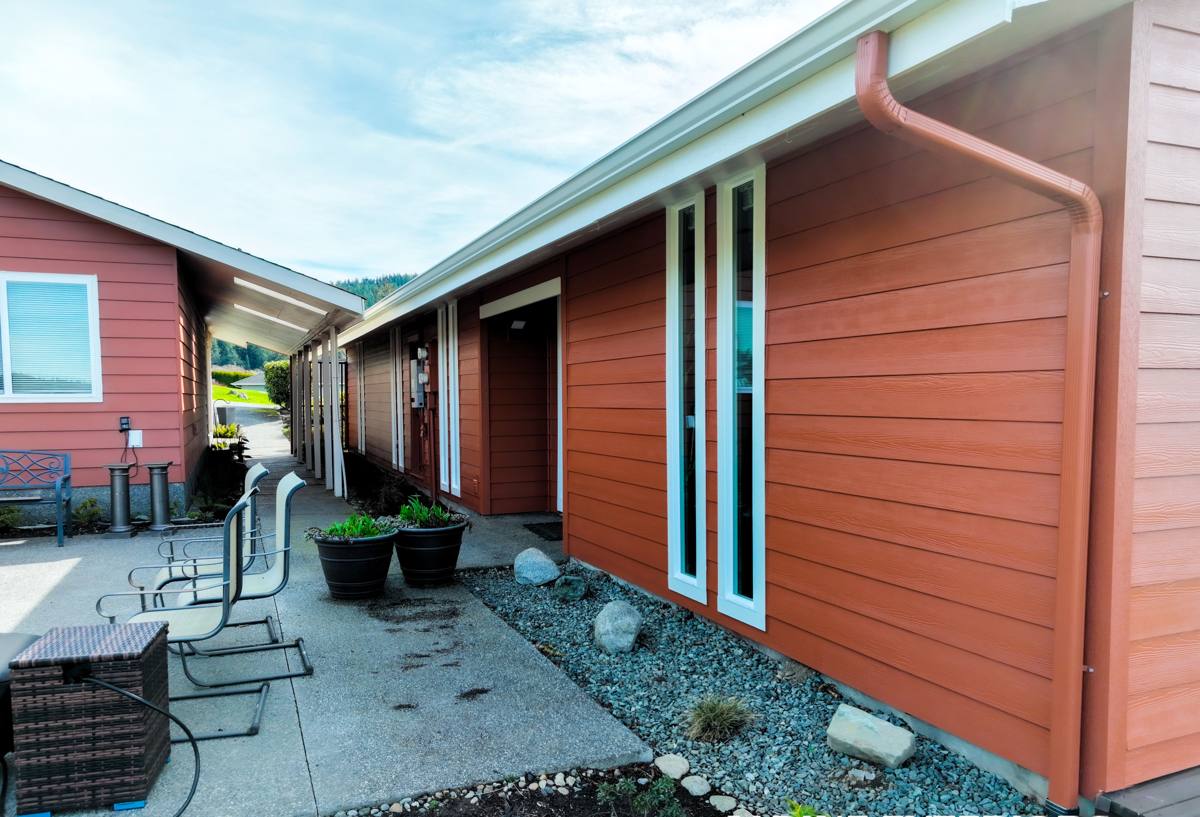
Why Salt Air, Rain, and Moss Are a Tougher Combination Than They Sound
Salt Air
Homes closer to the water deal with airborne salt that settles on siding, trim, and fasteners. Over time it accelerates corrosion on lower-quality nails and metal flashing, and it can degrade paint and finish coatings faster than the same product would wear inland. Fastener corrosion is one of the more common hidden causes of siding that looks like it's "popping" or working loose along a wall.
Driving Rain
Whatcom County storms often bring rain on a strong onshore wind, which pushes water horizontally into siding laps, corner boards, and window trim rather than letting it simply run down the face of the wall. Siding systems that rely on tight, well-maintained caulk joints instead of proper flashing and drainage details are the ones that let water in first.
Moss Season
Extended damp, low-light periods are ideal for moss and algae growth on siding, especially on north-facing walls, under eaves, and near mature trees. Moss holds moisture directly against the siding surface for months at a time. On materials that aren't dimensionally stable or properly sealed at the edges, that sustained dampness is what eventually leads to swelling, soft spots, or paint failure.
Individually, each of these is manageable. Together, over a Whatcom County winter after winter, they're the reason certain sections of a house — usually north- and west-facing walls, areas under overhangs, and spots near grade — wear out faster than the rest.
Signs an Edgemoor Home Needs Siding Repair
Most siding damage doesn't announce itself. It shows up as small, easy-to-dismiss details first. Here's what we look for, and what homeowners should watch for between inspections:
- Soft or spongy spots when you press on siding or trim, especially near the bottom of walls or below windows
- Paint that's bubbling, peeling, or repeatedly failing in the same spot
- Visible gaps at seams, corners, or where siding meets trim, windows, or doors
- Persistent moss or dark streaking that keeps returning shortly after cleaning
- Nail heads that are rusting, backing out, or staining the siding around them
- Warping, cupping, or boards that no longer sit flat against the wall
- Musty smell or visible staining on interior walls that back onto exterior siding
- Cracked or missing caulk at joints that used to be sealed
Any one of these on its own might be minor. Several appearing together, or appearing on the same wall repeatedly, usually points to a moisture problem that's bigger than what's visible on the surface.
What a Correct Siding Repair Actually Involves
A repair that only replaces the visible damaged board is a temporary fix if the underlying cause isn't addressed. Our process always starts with figuring out why that section failed before deciding how to fix it.
Diagnosis First
We look past the damaged board itself — checking the house wrap or weather barrier behind it, the condition of the sheathing, flashing at windows and penetrations, and whether water has been tracking sideways or downward from a different failure point entirely. In a lot of cases, the board that looks worst isn't where the water is actually getting in.
Matching Materials, Not Just Color
Siding repair only holds up long-term if the replacement piece matches the original in material, profile, and how it handles moisture — not just paint color. Mixing incompatible materials on the same wall (for example patching fiber cement with a different product) creates different expansion rates, different moisture behavior, and a seam that's more likely to fail again.
Fixing the Detailing, Not Just the Board
Proper flashing, correct fastener placement, and adequate clearance from grade and rooflines matter as much as the siding material itself. A brand-new board installed with the same flawed flashing detail that caused the original failure will fail again — often faster, since the wood or substrate behind it may already be compromised.
Repair or Replace? How We Make That Call
Not every damaged section needs a full re-side, and not every "small" repair should be treated as small. We walk homeowners through the decision using a few honest factors:
| Factor | Favors Repair | Favors Replacement |
|---|---|---|
| Extent of damage | Isolated to one or two wall sections | Spread across multiple walls or elevations |
| Underlying sheathing | Dry, solid substrate | Soft, rotted, or water-stained sheathing |
| Age of existing siding | Well within expected service life | Nearing or past typical lifespan |
| Material condition overall | Rest of the siding is sound | Widespread paint failure, warping, or moss staining |
| Original installation quality | Flashing and details were done correctly | Recurring failures suggest systemic installation issues |
We'll always tell you honestly which side of that table your home falls on. Sometimes the right answer really is a targeted repair on one wall. Other times, patching a symptom while the rest of the siding is a few years from the same failure just means paying for the same work twice.
Why We Repair — and Replace — With James Hardie Fiber Cement
We install and repair with James Hardie fiber cement siding exclusively. We don't install vinyl, LP SmartSide, Cemplank, Allura, primed spruce, or cedar, and that standard applies to repairs as much as new installs. When we're patching a section of siding, we use Hardie product so the repair matches the performance of the surrounding material, not just its color.
Fiber cement doesn't absorb water the way engineered wood products can, and it's non-combustible, which matters on homes with mature tree canopy nearby. James Hardie's ColorPlus factory finish is baked on under controlled conditions, which holds up better against the freeze-thaw, salt-air, and UV exposure this region sees than field-applied paint typically does. The HZ5 product line in particular is engineered for wetter, harsher climates — the kind of exposure a bayside Edgemoor lot deals with more than a home set back from the water.
When a repair calls for new boards, we use the same class of material throughout so the wall performs consistently — not a patchwork of products that age and move differently from each other.
Our Siding Repair Process
- On-site inspection. We assess the damaged area and check adjacent sections, flashing, and any visible moisture pathways — not just the spot you called about.
- Honest diagnosis. We explain what caused the damage and whether it's isolated or a sign of a broader issue, before any work starts.
- Clear scope and pricing. You get a straightforward explanation of what needs to happen and why, with no pressure to upsell beyond what the house actually needs.
- Removal and substrate check. Damaged siding comes off, and we inspect the sheathing and weather barrier underneath before anything new goes back on.
- Correct detailing. Flashing, fasteners, and clearances are addressed as part of the repair — not skipped to save time.
- Matched materials. Replacement siding matches the surrounding wall in material and profile so the repair blends in and performs the same way.
- Final check. We walk the repair with you before calling the job done.
Living With Siding Between Repairs: Moss, Mildew, and Salt Residue
A correctly done repair still benefits from basic upkeep in this climate. A few habits go a long way toward extending the life of siding on an Edgemoor home:
- Rinse siding periodically to remove salt residue and organic buildup, especially on walls that face the water or sit in shade
- Trim back tree limbs and shrubs that keep a wall damp or shaded for long stretches of the day
- Check and refresh caulking at trim, windows, and joints every couple of years rather than waiting for a visible gap
- Keep gutters clear so overflow isn't running down the siding face during heavy storms
- Address small paint failures or nail pops early, before they turn into a moisture path
None of this replaces professional inspection, but it does reduce how often you need one.
Why It Matters to Hire a Crew That Already Works in Edgemoor
Siding behaves differently a few hundred feet from the water than it does further inland, and a contractor who mostly works dry, inland lots can miss that. A crew that regularly works Edgemoor and the surrounding Bellingham-area neighborhoods knows which elevations tend to fail first, how much salt exposure to plan for, and how long moss season really runs in a given year — details that change how a repair should be detailed, not just what it costs.
Local familiarity also means fewer surprises with permitting, typical lot conditions, and the kind of tree cover and drainage patterns common to bluff and bayside properties in Whatcom County. It's the difference between a repair that's built for the house's actual conditions and one that's built for a generic climate.
What Affects the Cost of a Siding Repair
| Cost Factor | Why It Matters |
|---|---|
| Size of the damaged area | More linear footage means more material and labor |
| Sheathing condition | Rotted substrate adds framing and sheathing repair before siding goes back on |
| Wall accessibility | Height, landscaping, and staging needs affect labor time |
| Number of affected elevations | Repairs spread across several walls take more coordination than one section |
| Matching existing siding | Older profiles or discontinued colors can take extra time to source or blend |
We give straightforward, itemized pricing so you know exactly what you're paying for and why — no vague lump-sum numbers that hide the scope of the work.
If you're seeing soft spots, recurring moss staining, or gaps in your siding on an Edgemoor home, it's worth having someone look before the next storm season adds to the damage. Reach out for a free, no-pressure estimate — we'll walk the exterior, tell you honestly what's going on, and lay out your options.