 Whatcom County
 Why Roofs in Edgemoor Wear Differently
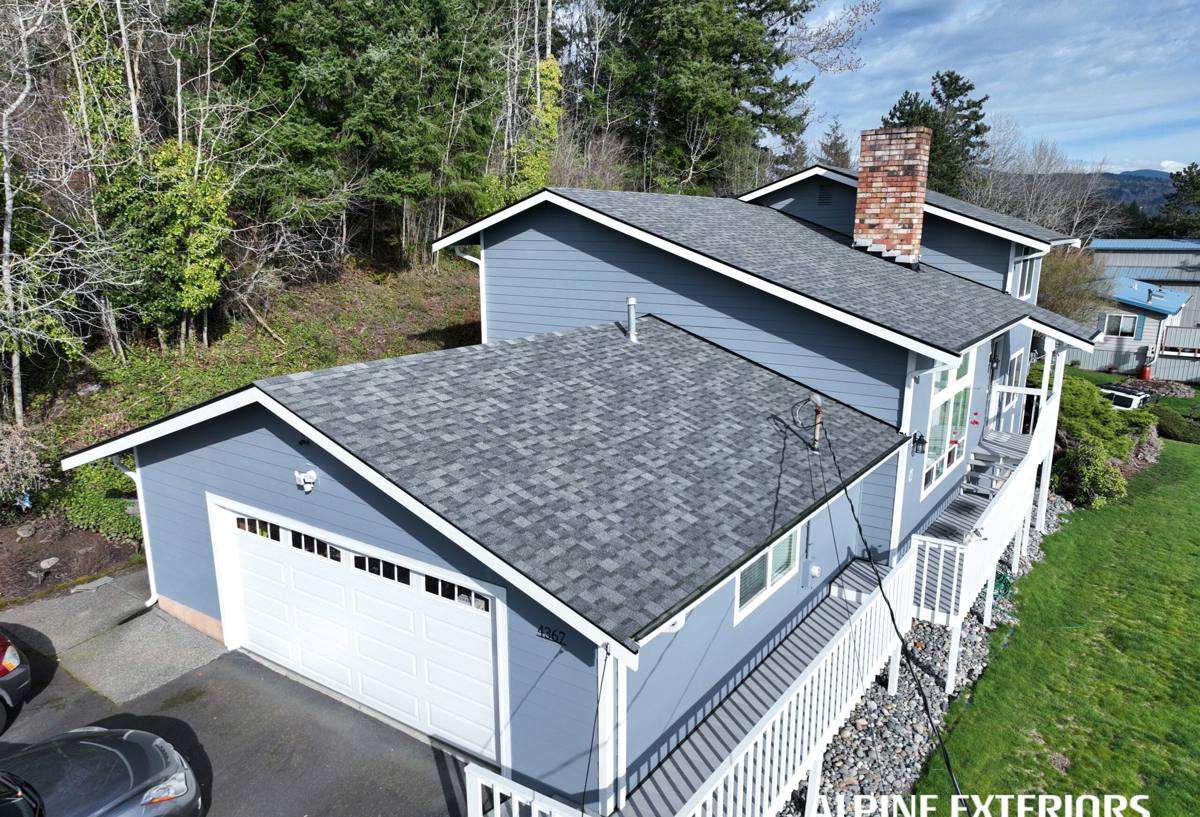
Edgemoor sits along the bluffs above Bellingham Bay, and that setting is beautiful right up until you look at what it does to a roof. Homes here deal with three things at once: salt-laden air drifting up off the water, driving rain that comes in sideways during fall and winter storms, and heavy tree canopy that keeps large sections of roof shaded almost year-round. Any one of those factors would shorten a roof's life on its own. Together, they compound.
Salt air accelerates corrosion on exposed metal — flashing, fasteners, vent caps, gutter hardware — well before the shingles themselves show their age. Driving rain finds every weak seam, nail pop, and undersized flashing detail, especially on the windward side of a roof facing the water. And shade from mature evergreens keeps roof surfaces damp long after a storm has passed, which is exactly the condition moss and algae need to take hold. In Whatcom County generally, moss season runs long; in a wooded, waterfront neighborhood like Edgemoor, it runs longer than almost anywhere else in the area.
Signs Your Roof Needs Replacement, Not Just Repair
Not every roof problem calls for a full tear-off. But when several of these show up together, patching becomes a short-term fix on a roof that's already failing underneath.
- Shingles that are cupping, curling, or losing granules in patches rather than evenly across the roof
- Moss growth that keeps returning within months of cleaning, especially on north-facing or shaded slopes
- Dark streaking or staining that spreads even after a wash
- Soft or spongy decking felt underfoot in the attic, or daylight visible through the roof deck
- Rusting or heavily corroded flashing, vent boots, or fasteners
- Interior water stains on ceilings or in the attic near valleys, chimneys, or skylights
- A roof that's already had two or more repair visits for the same recurring leak
- Shingles at or past 20-25 years old (typical asphalt lifespan), regardless of visible damage
When Repair Still Makes Sense
A younger roof with an isolated issue — a single damaged flashing detail, storm damage to one slope, a localized moss patch — is usually a repair candidate. The distinction that matters is whether the problem is contained to the surface or has already reached the decking and underlayment. That's something worth having assessed rather than guessed at, because guessing wrong in either direction costs money.
What a Correct Roof Replacement Actually Involves
A roof replacement is more than swapping old shingles for new ones. Done right, it addresses everything underneath the surface layer that determines whether the new roof will actually hold up to Edgemoor's conditions.
Full Tear-Off and Deck Inspection
We remove the existing roofing down to the deck rather than layering over it. That's the only way to actually see what's happening underneath — soft spots, rot around penetrations, or decking that's been absorbing moisture for years under shaded, damp conditions. Any compromised sheathing gets replaced before anything new goes down; installing new roofing over a weak deck just hides the problem for another few years.
Ventilation and Moisture Control
Shaded, damp roofs need airflow more than most. Poor attic ventilation traps moisture underneath the roofing, which shortens shingle life from below even while the surface looks fine from above. We check intake and exhaust ventilation as part of every replacement and correct it where it's inadequate — this matters more under tree canopy than it does on an open, sun-exposed roof.
Flashing and Valleys Built for Driving Rain
Most leaks don't come from the field of the roof — they come from the details: valleys, chimney flashing, skylight curbs, and wall-to-roof transitions. On a bluff-side property catching wind-driven rain off the water, these details need to be built with more margin than a standard installation, not less. We use corrosion-resistant flashing materials given the salt air, and we pay particular attention to valley design and step flashing at every wall intersection.
Underlayment as a Real Second Layer of Protection
Underlayment isn't a formality — it's the backup system if wind or ice ever gets under the shingles. Given how much wind-driven rain Edgemoor roofs see, we treat underlayment selection and installation as a real part of the weatherproofing, not a step to rush through.
Material Options for This Climate
There's no single "best" roofing material for every home — it depends on the home's exposure, roof pitch, budget, and how much shade the roof sits under. Here's how the common options stack up against Edgemoor's specific conditions.
| Material | Moss/Algae Resistance | Salt Air Durability | Typical Lifespan | Maintenance Load |
|---|---|---|---|---|
| Architectural asphalt shingle (standard) | Moderate — improves with algae-resistant granules | Good, with corrosion-resistant flashing | 25-30 years | Periodic moss treatment on shaded slopes |
| Architectural asphalt shingle (algae-resistant/copper-infused) | Higher | Good | 25-30 years | Lower, still needs monitoring under heavy canopy |
| Standing seam metal | High — sheds moss more easily due to smooth surface and slope | Requires coated/corrosion-rated panels and fasteners near the water | 40-50+ years | Low, but fastener and coating quality matters near salt air |
| Cedar shake | Low without regular treatment — moss and rot risk in shaded, damp settings | Fair | 20-30 years with upkeep | High — regular treatment and inspection required |
We don't install cedar shake as a default recommendation for heavily shaded Edgemoor lots. It's a legitimate product and it looks good, but on a damp, tree-covered roof it demands a maintenance commitment that most homeowners underestimate going in — and when that upkeep lapses, moisture and moss problems show up faster than on other materials. If a homeowner wants that look and understands the maintenance tradeoff, we'll discuss it honestly rather than talk them out of it.
Cost Factors on a Roof Replacement
We won't quote a number without seeing the roof, but the honest range for a full replacement on a typical single-family home runs broadly from the mid-teens to the high-30s in thousands of dollars, with material choice being the single biggest swing factor. What actually moves the number for a given project:
- Roof size and pitch — steeper roofs take longer and require more safety setup
- Number of layers to remove — tear-off of multiple existing layers adds labor and disposal cost
- Decking condition — rot or soft sheathing found during tear-off means replacement boards, priced as they're found
- Material selection — standard asphalt, algae-resistant asphalt, and metal are priced very differently
- Roof complexity — valleys, dormers, skylights, and chimneys all add flashing labor
- Access — tree-covered lots with limited driveway or yard access can add setup and material-staging time
How Our Process Works
- On-site assessment. We inspect the roof surface, decking (where visible), attic ventilation, and flashing details, and photograph anything that affects the scope.
- Written proposal. A clear breakdown of material, scope, and price — no vague allowances that turn into surprise add-ons later.
- Scheduling around weather. Given how much rain Whatcom County sees, we plan tear-off and dry-in around forecast windows so your home isn't left exposed.
- Tear-off and deck repair. Full removal, deck inspection, and replacement of any compromised sheathing before anything new is installed.
- Installation. Underlayment, flashing, ventilation corrections, and the finish material, installed to spec rather than to the minimum the material will tolerate.
- Cleanup and walkthrough. Full site cleanup, magnetic sweep for stray fasteners, and a final walkthrough so you know what was done and why.
Why Hiring a Crew That Already Works Edgemoor Matters
A roofing crew that mostly works open, sun-exposed subdivisions will approach an Edgemoor roof the same way they approach every other job — and that's how homeowners end up with standard ventilation on a heavily shaded roof, or standard-grade flashing hardware on a home catching salt air off the bay. A crew that regularly works this neighborhood knows to check ventilation more carefully under tree canopy, to spec corrosion-resistant hardware without being asked, and to plan tear-off around the driving rain patterns that come off the water in fall and winter. It also means realistic expectations about access — many Edgemoor lots have limited staging space and mature trees close to the roofline, which affects how a crew sets up safely and protects landscaping during tear-off.
After the Replacement: What Keeps It Lasting
A correctly installed roof still needs some ongoing attention in this environment. Plan on periodic moss inspection on shaded slopes, keeping gutters clear of needle and leaf debris from overhanging trees, and trimming back branches that keep sections of roof in constant shade. None of this is heavy maintenance, but skipping it is how a well-installed roof ends up with the same moss and moisture issues years earlier than it should.
If your roof is showing its age, or you'd just like an honest read on how much life it has left, we're glad to come take a look. The estimate is free, there's no pressure attached to it, and you'll get a straight answer about whether you're looking at a repair or a replacement — just fill out the form below.