 Whatcom County
 Roof Repair Built for Edgemoor's Bay-Side Conditions
Edgemoor sits close enough to Bellingham Bay that homes here deal with a slightly different mix of weather stress than roofs just a few miles inland. Salt-laden air off the water, long stretches of driving rain through the fall and winter, and a moss season that seems to start earlier and last longer every year all add up. A roof repair here isn't just about patching a leak — it's about understanding why that leak happened in the first place and whether the surrounding roof is set up to keep it from coming back.
We've worked on homes throughout Whatcom County long enough to know that Edgemoor roofs age differently than roofs in drier, more sheltered parts of the county. That's not a knock on any particular roof — it's just physics. Moisture that lingers, combined with salt air that accelerates corrosion on exposed metal, means the small stuff (a lifted shingle tab, a gap in flashing, a clogged valley) turns into bigger problems faster than homeowners expect.
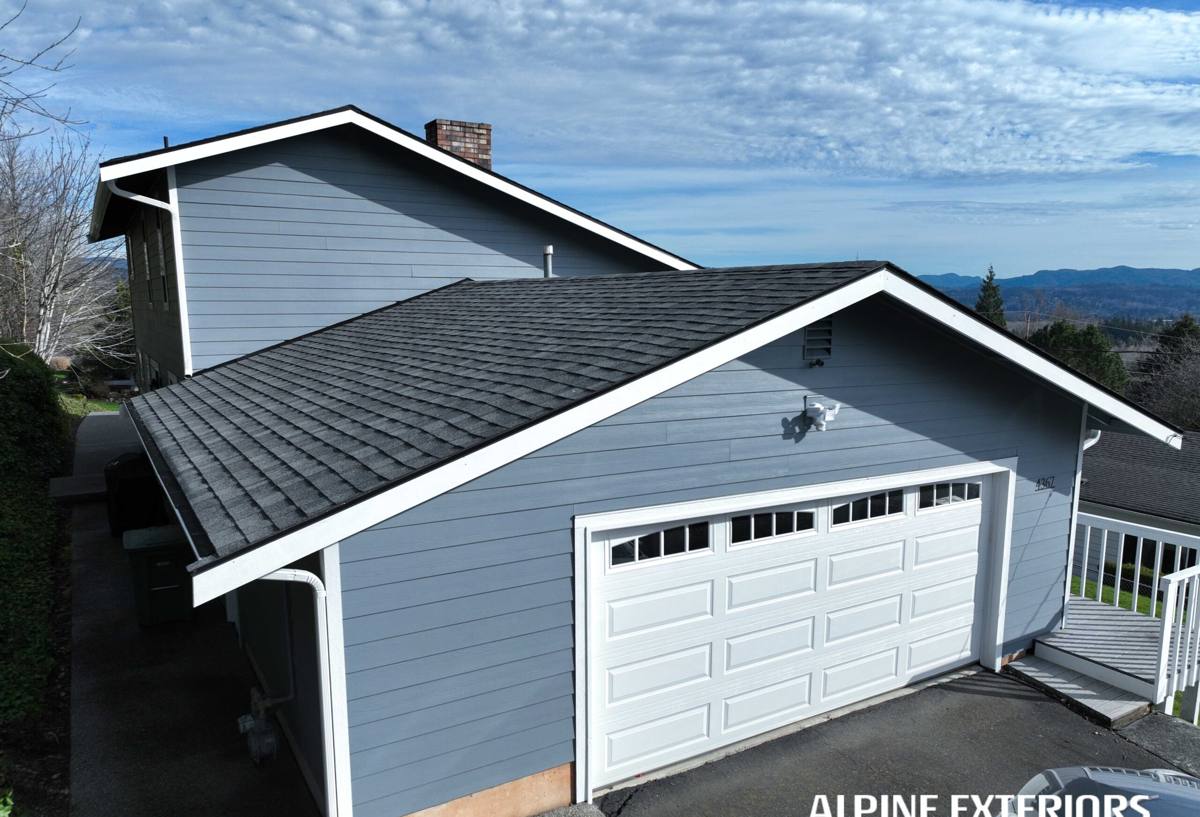
What Edgemoor's Climate Actually Does to a Roof
Salt Air and Metal Fatigue
Proximity to Bellingham Bay means airborne salt settles on roofing components year-round, not just during storms. Exposed fasteners, flashing, and metal roof edges corrode faster than they would a few miles inland. Once corrosion starts on a nail head or flashing seam, water finds a path in — usually slowly, which is why so many Edgemoor roof leaks show up as a stain that "just appeared" after months of quiet damage underneath.
Driving Rain and Wind-Driven Water
Whatcom County doesn't usually get the sheer rainfall totals of some Western Washington areas, but wind off the water pushes rain sideways and up under laps, ridge caps, and flashing that would stay dry in a straight-down rain. Roofs designed or repaired without that in mind tend to develop leaks specifically during wind-driven storms, even when the roof looks fine on a calm day.
Moss and Organic Growth
Shade from mature trees, marine-layer humidity, and a mild climate that rarely gets cold enough to kill growth all combine to give moss an extended season in Edgemoor. Moss doesn't just look bad — it holds moisture against the roofing material, lifts shingle edges as it grows, and can work its way under laps where it keeps the deck damp long after the surface has dried.
Signs an Edgemoor Roof Needs Repair, Not Just Watching
- Water stains on interior ceilings or upper-wall corners, especially after a windy rainstorm rather than a calm one
- Granules collecting in gutters or at downspout outlets — a sign of shingle wear, not a cosmetic issue
- Moss or dark streaking concentrated in shaded sections, particularly north-facing slopes or areas under tree cover
- Lifted, curling, or missing shingle tabs, especially near ridges and edges where wind stress is highest
- Rusting or discolored flashing around chimneys, vents, and skylights
- Sagging or soft-feeling spots when walked on carefully, which can indicate deck moisture damage
- Daylight visible through the roof deck from inside an attic or crawlspace
Any one of these on its own doesn't mean the whole roof is failing. But in a salt-air, high-moisture environment like Edgemoor, small issues compound faster than in drier inland neighborhoods, so it's worth having them looked at sooner rather than later.
What a Correct Roof Repair Actually Involves
A roof repair done right isn't just sealing the spot where water is showing up inside the house. Interior stains often show up several feet from the actual entry point, since water travels along rafters and sheathing before it finds a way through the ceiling. A proper repair starts with tracing the leak to its source, not just its symptom.
Our Process
- Inspection from the ground and the roof. We look at flashing, valleys, penetrations (vents, chimneys, skylights), ridge lines, and the general condition of the roofing material — not just the area near the reported leak.
- Source diagnosis. We trace water paths along the deck and framing where possible, since the entry point is frequently uphill or to the side of where the stain appears indoors.
- Assessment of surrounding material. If the shingles, flashing, or decking near the repair area are already compromised by moss growth, corrosion, or age, patching just the leak point without addressing that context tends to fail again within a season or two.
- Repair scoped to what's actually needed. Sometimes that's a flashing replacement. Sometimes it's a section of shingles and underlayment. We explain what we find and why we recommend what we recommend — not a bigger job than the roof needs, and not a smaller one that skips the actual cause.
- Moss and debris clearing where relevant. If moss or debris buildup contributed to the failure, we address that as part of the repair so the fix isn't undone by the same conditions that caused the original problem.
Repair vs. Replacement: How We Think About It
Not every roof issue in Edgemoor calls for a full replacement, and we don't push toward one when a targeted repair will genuinely hold up. At the same time, a roof that's already near the end of its service life, or that has widespread moss damage and corrosion rather than an isolated issue, may not be a good candidate for another patch. We'll tell you honestly which category your roof falls into.
| Factor | Leans toward repair | Leans toward replacement |
|---|---|---|
| Extent of damage | Isolated area (one valley, one flashing point, a small shingle section) | Widespread wear, multiple failure points, or damage across several slopes |
| Roof age | Well within expected service life for the material | Already past or near the upper end of expected lifespan |
| Moss/moisture history | First occurrence or recently addressed | Repeated moss buildup with visible deck or material degradation |
| Underlying deck condition | Solid, dry decking near the repair area | Soft, spongy, or visibly water-damaged decking |
| Cost over time | Repair cost is a small fraction of replacement cost | Repeated repairs are starting to add up toward replacement cost |
Why It Matters That We Already Work in Edgemoor
A crew that's unfamiliar with this specific stretch of Whatcom County can still fix a roof, but they're often working from general assumptions rather than local experience. We've seen how salt air specifically affects fasteners and flashing choices in bay-adjacent neighborhoods. We know which tree-shaded sections of a roof tend to hold moss longest through the wet season, and we factor that into where we look first when diagnosing a leak. That local pattern recognition shortens the diagnostic process and helps us catch related issues before they become their own separate repair call.
It also means we're realistic about timing. Roof repairs in this area are easiest to schedule and complete cleanly during drier windows, and we plan around Whatcom County's weather patterns rather than treating every roof like it's in a different climate zone.
Materials and Flashing Choices for a Salt-Air, High-Moisture Environment
When we're repairing or replacing flashing, fasteners, or sections of roofing near the bay, we lean toward corrosion-resistant materials and details that shed wind-driven rain rather than just standard straight-down runoff. This is a matter of professional standard, not brand-bashing — some products and installation methods simply hold up better under sustained salt exposure and repeated wetting-and-drying cycles, and we'll walk you through what we're recommending and why for your specific roof.
Maintenance That Extends the Life of an Edgemoor Roof
- Clear moss promptly using methods appropriate to the roofing material — aggressive scraping or pressure washing can do more harm than the moss itself
- Keep gutters and downspouts clear so water isn't backing up under the lowest shingle course
- Trim back tree branches that keep sections of the roof shaded and damp longer than the rest
- Have flashing points (chimneys, vents, skylights) checked periodically, since these are the most common failure points in wind-driven rain
- Address small leaks early — in this climate, a delay of one wet season can turn a simple repair into a deck-replacement job
Get a Straight Answer on Your Roof
If you're dealing with a leak, moss buildup, or just want an honest read on where your roof stands, we're glad to take a look. We'll tell you plainly whether you need a repair, what's driving the issue, and what it would take to fix it right — no upsell, no guesswork. Reach out for a free, no-pressure estimate and we'll get you a clear picture of what your Edgemoor roof actually needs.