 Whatcom County
 Edgemoor's Waterfront Exposure Is Different From Inland Bellingham
Edgemoor sits close to Bellingham Bay, and that proximity changes what siding has to survive. Homes just a few miles inland deal with normal Pacific Northwest rain. Homes in Edgemoor deal with that same rain plus salt-laden air moving off the water, wind-driven moisture that hits walls at an angle instead of falling straight down, and a moss season that runs longer than it does in drier, more sheltered parts of Whatcom County. Siding that would hold up fine in a valley neighborhood can fail early here if it wasn't chosen and installed with the marine exposure in mind.
This page is about one job: correct fiber cement siding installation for Edgemoor homes, and what "correct" actually means when salt air, driving rain, and moss are working against the building envelope year-round.
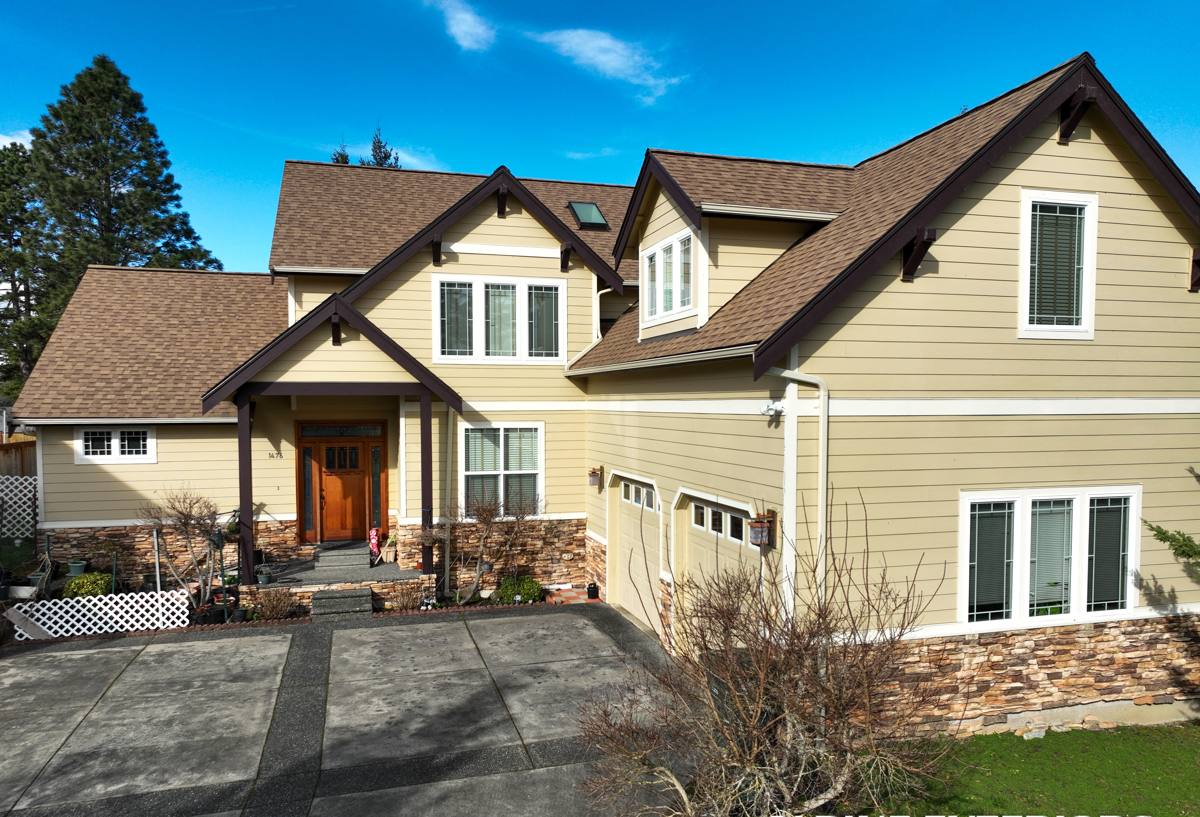
What Salt Air, Driving Rain, and Moss Season Actually Do to Siding
Salt Air
Airborne salt is corrosive to exposed metal — fasteners, flashing, trim edges, and hardware. On siding materials that rely on paint film alone for protection, salt exposure also accelerates coating breakdown, especially on south- and west-facing walls that take the brunt of weather coming off the bay.
Driving Rain
Wind off open water pushes rain sideways into wall assemblies instead of letting it run down and off. That means lap joints, butt seams, corner boards, and every penetration (hose bibs, vents, light fixtures) are under more pressure to actually shed water rather than just tolerate it. A siding system that depends on gravity alone to stay dry struggles in this kind of exposure.
Extended Moss Season
Cooler, shaded, moisture-retentive conditions near the water keep surfaces damp longer between dry spells. Moss and algae take hold fastest on siding that stays wet, especially on north-facing walls, under eaves, and behind landscaping. Left alone, moss holds moisture against the surface and can accelerate wear on materials that aren't built to handle sustained dampness.
Why Fiber Cement Is the Right Base Material Here
Fiber cement is a mix of cement, sand, and cellulose fibers, engineered to be dimensionally stable in wet-dry cycling — it doesn't swell, warp, or rot the way wood-based siding can when it stays damp for extended periods. That matters directly in a place like Edgemoor, where "dry" isn't guaranteed for long stretches of the year.
We install James Hardie fiber cement exclusively, and we don't install LP SmartSide, vinyl, Cemplank, Allura, primed spruce, or cedar. That's not a marketing line — it's a standard we hold because of what we've seen happen to the alternatives in exactly this kind of marine, high-moisture exposure over time. Engineered wood products use wood fiber as their base, which means moisture management at every seam and cut edge is non-negotiable; vinyl can warp and fade under sustained UV and salt exposure and offers limited real protection against wind-driven water at seams; cedar and primed spruce require an ongoing maintenance commitment — sealing, painting, and moss treatment — that most homeowners underestimate until they're several years in. Hardie's fiber cement formulation and factory-applied ColorPlus finish are built to hold up to exactly the conditions Edgemoor throws at a house.
James Hardie's HZ5 Product Line
Hardie engineers its siding by climate zone. For homes in the Pacific Northwest, including waterfront and near-waterfront properties like those in Edgemoor, the HZ5 formulation is built for higher moisture exposure and freeze-thaw conditions. Choosing the right HZ designation isn't cosmetic — it affects how the product performs against the specific weather pattern your home actually faces.
What a Correct Fiber Cement Installation Actually Involves
Fiber cement siding is only as good as the installation behind it. In a high-exposure location like Edgemoor, the details that get skipped on an easier job are exactly the details that matter most.
- Weather-resistive barrier and rainscreen gap: A properly lapped water-resistive barrier behind the siding, ideally with a drainage gap, so any moisture that gets past the siding has somewhere to go instead of sitting against the sheathing.
- Correct clearances: Hardie specifies minimum clearances from roofing, decks, grade, and other horizontal surfaces so water doesn't wick up into the bottom edge of the siding.
- Flashing at every penetration: Windows, doors, vents, and fixture penetrations all need proper flashing and integration with the water-resistive barrier — this is where driving rain finds its way in if it's skipped.
- Fastener pattern and type: Corrosion-resistant fasteners, placed and spaced according to Hardie's specifications, not "close enough."
- Joint treatment: Butt joints and panel seams sealed or flashed per manufacturer instructions, not just butted together and caulked over.
- Factory-finished edges protected: Field-cut edges primed or sealed so the factory ColorPlus finish's protection isn't compromised at every cut.
Skip any one of these and you don't just risk a cosmetic issue down the road — you risk moisture getting behind a material that's otherwise built to last decades.
Our Process for Edgemoor Projects
1. On-Site Assessment
We look at wall exposure direction, existing moisture damage, current moss and algae buildup, trim and flashing condition, and how the home's specific position relative to the bay affects which walls take the worst of the weather.
2. Product and Color Selection
We help you choose the right Hardie plank profile, texture, and ColorPlus color, factoring in HOA or neighborhood expectations where relevant and how a color will actually read against the wet, often overcast light common to this part of Whatcom County.
3. Tear-Off and Substrate Check
Old siding comes off and we inspect the sheathing underneath for existing moisture damage before anything new goes up. Covering a wet or compromised substrate with new siding just hides a problem instead of solving it.
4. Water Management Installation
Weather-resistive barrier, flashing, and drainage details go in before a single piece of siding is hung.
5. Hardie Installation to Manufacturer Spec
Panels and planks installed with correct clearances, fastening, and joint treatment, using the HZ5 product appropriate for this exposure.
6. Final Walkthrough
We walk the finished job with you, checking trim lines, caulking, and touch-up needs before calling it done.
Fiber Cement Compared to Other Siding Options for This Exposure
| Factor | James Hardie Fiber Cement | Vinyl | Cedar / Primed Spruce |
|---|---|---|---|
| Behavior in sustained damp/moss conditions | Dimensionally stable, non-combustible base material | Can warp under heat and stress; seams vulnerable to wind-driven rain | Prone to moisture absorption, rot, and moss growth without diligent upkeep |
| Salt air resistance | Factory ColorPlus finish engineered for UV and weather exposure | Can fade and become brittle with prolonged salt/UV exposure | Paint or sealant breaks down faster near salt air; frequent recoating needed |
| Maintenance burden | Periodic washing; repaint not required for the life of the ColorPlus finish | Low maintenance but limited repair options once damaged | Regular sealing, painting, and moss treatment required |
| Warranty structure | Strong transferable manufacturer warranty when installed to spec | Varies widely by manufacturer and grade | Typically limited to the coating, not the wood itself |
Living With Fiber Cement Siding in a Marine Climate
Correctly installed Hardie siding is low-maintenance, not no-maintenance. A little seasonal attention keeps it performing the way it's designed to in Edgemoor's conditions.
- Rinse siding periodically to remove salt residue and airborne grime, especially on bay-facing walls.
- Trim back vegetation and landscaping that keeps siding shaded and damp longer than necessary.
- Watch north-facing and shaded sections for early moss or algae growth and address it before it spreads.
- Inspect caulking at trim and penetrations annually — caulk is a maintenance item even on a well-installed job.
- Address any impact damage or chips promptly so the substrate underneath doesn't get exposed to moisture.
What Fiber Cement Siding Typically Involves Cost-Wise
| Cost Factor | Why It Matters in Edgemoor |
|---|---|
| Substrate condition | Homes with existing moisture damage from years of marine exposure may need sheathing repair before new siding goes up |
| Wall exposure and complexity | Bay-facing walls with more flashing and penetration detail take more labor to get right |
| Product line and profile | HZ5-rated products and specific plank profiles or panel styles affect material cost |
| Trim and accessory scope | Corner boards, window trim, and fascia integration add to the full scope of a proper job |
We give honest, project-specific numbers after seeing the home — broad online estimates rarely account for what a particular wall's exposure and existing condition actually require.
Why Hiring a Crew That Already Works in Edgemoor Matters
Siding installers who mostly work inland don't always think about rainscreen detailing, HZ5 product selection, or flashing sequencing the same way — because their jobs don't demand it as often. A crew that regularly works waterfront and near-waterfront properties in Whatcom County treats those details as standard practice, not an afterthought, because we've seen what happens on this kind of exposure when they're skipped. That familiarity with local wind direction, moisture patterns, and moss behavior around Bellingham Bay translates directly into a longer-lasting installation.
If you're weighing a siding project on an Edgemoor home, we're glad to take a look and talk through what your specific walls need. Reach out for a free, no-pressure estimate using the form below.