 Whatcom County
 Why South Hill Decks Wear Out Faster Than the Brochures Promise
A deck in South Hill lives a harder life than the same deck would in a dry inland climate. Salt-laden air off the water accelerates corrosion in fasteners and hardware. Driving rain gets pushed sideways under railings and against ledger boards by wind, finding every gap a builder left. And the long moss season here isn't just a cosmetic nuisance — moss and algae hold moisture against wood and composite surfaces for months at a time, which is exactly the condition that rots framing and delaminates cheap decking from the inside out. Add in freeze-thaw cycles through the winter and you have a structure that's under constant low-grade attack, even when it looks fine from the yard.
Most decks don't fail because the homeowner did anything wrong. They fail because they were built to a generic spec instead of a Whatcom County spec — undersized ledger flashing, standard fasteners instead of coated ones, decking chosen for looks rather than moisture behavior. When we replace a deck in South Hill, every material and connection detail is chosen with this specific climate in mind, not a national average.
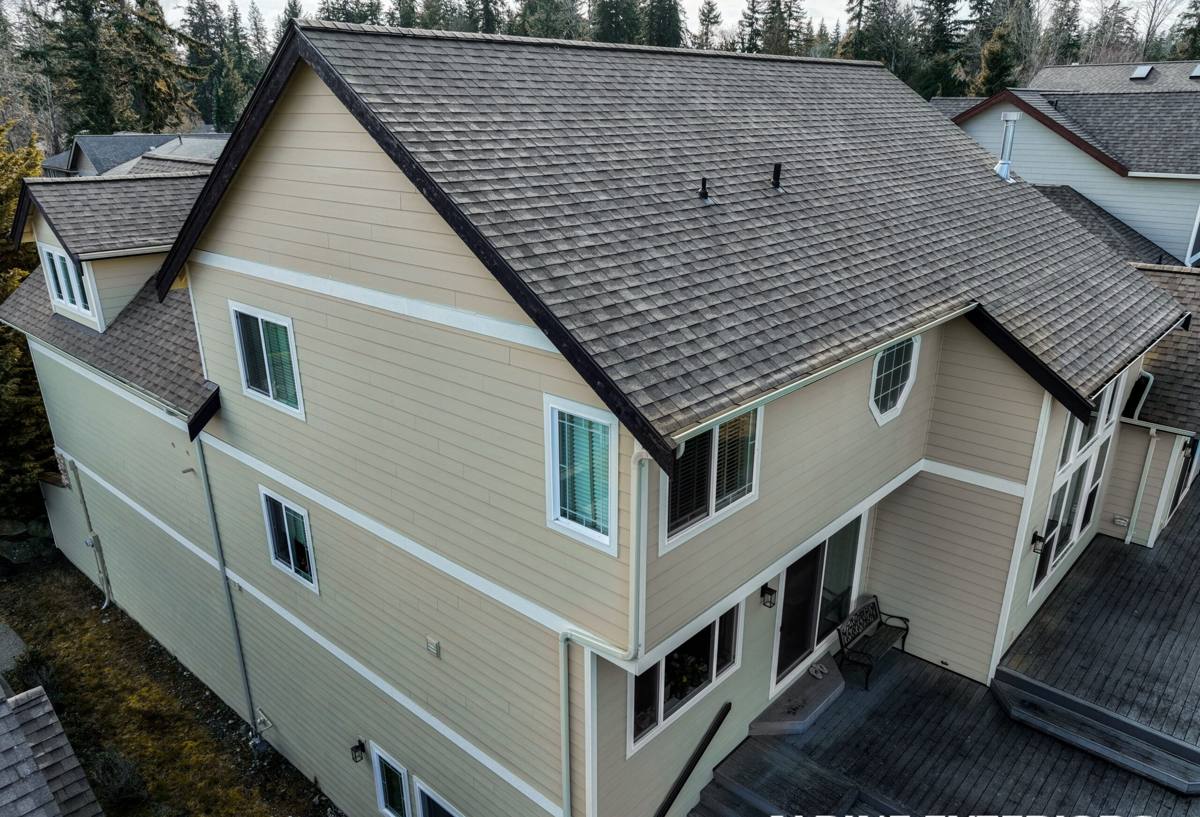
Signs Your Deck Needs Replacement, Not Just Repair
Repair makes sense when the damage is isolated. Replacement makes sense when the problems are systemic — when the structure itself has been compromised by years of moisture exposure. Here's what tells us which category a deck is in:
- Soft, spongy, or spring-back decking boards, especially near the house or in shaded corners where moss holds moisture
- Rust streaking or crumbling around fastener heads and post bases
- Ledger board separating from the house, or visible daylight/gaps at the ledger-to-siding connection
- Posts that feel loose or have visible rot at the base, where they sit closest to wet soil or standing water
- Railings that flex more than they should when leaned on
- Persistent green or black staining that comes back within weeks of cleaning
- A deck more than 20-25 years old built with original fasteners and no upgraded flashing
If you're only seeing one or two of these on a deck that's otherwise structurally sound, a targeted repair is often the honest recommendation. We'll tell you that rather than sell you a full replacement you don't need. But once the ledger connection or the main support posts are compromised, patching individual boards just delays a bigger problem.
What a Correct Deck Replacement Actually Involves
Structural Framing and Footings
Everything starts below the decking surface. Footings need to be sized and set to the depth the local frost line and soil conditions call for, not guessed at. Framing lumber should be rated for ground contact where it's near soil or persistent moisture, and joist spacing should account for the actual decking product going on top — composite and PVC boards often have tighter span requirements than solid wood.
Ledger Board and Flashing
The ledger — where the deck attaches to the house — is the single most common failure point we see in this climate. It needs proper structural fasteners (not deck screws), a code-compliant flashing detail that sheds water away from the house sheathing, and a gap or membrane that keeps the ledger from trapping moisture against the wall. Get this wrong and you're not just risking the deck — you're risking rot damage to the house itself.
Fasteners and Hardware
In a salt-air environment, fastener choice isn't a minor detail. We use corrosion-resistant, coated fasteners and connectors rated for the treated lumber and exposure conditions involved. Cheaper, uncoated hardware is the reason so many older decks show rust bleed and loosening connections well before the wood itself has failed.
Railings and Code Compliance
Railing height, baluster spacing, and guard requirements are governed by code, and they matter for both safety and resale. A replacement is the right time to correct any older deck that was built before current code, or that never met it to begin with.
Decking Material Options for This Climate
There's no single "best" decking material — there's a best material for how you plan to use and maintain the deck. Here's how the common options actually perform in a wet, moss-prone coastal climate:
| Material | Moisture Behavior | Maintenance | Typical Lifespan |
|---|---|---|---|
| Pressure-treated wood | Good if properly sealed and kept ventilated underneath; prone to splintering and moss growth if neglected | Needs cleaning and resealing every 1-2 years | 15-20 years |
| Cedar | Naturally rot- and insect-resistant, but still absorbs moisture and needs finish maintenance | Annual cleaning, periodic staining or sealing | 15-20 years |
| Capped composite | Excellent — the cap layer resists moisture absorption and moss adhesion far better than wood | Occasional washing, no sealing or staining | 25-30+ years |
| PVC decking | Fully moisture-resistant; performs well in consistently wet, shaded areas | Low — periodic washing only | 25-30+ years |
We don't push one product on every job. A shaded, low-airflow deck under trees is a poor candidate for bare pressure-treated wood no matter how well it's sealed, because it simply won't dry out between rain events. An open, sun-exposed deck can do fine with wood if the owner is committed to yearly maintenance. We'll walk your specific site conditions with you before recommending a material, rather than defaulting to whatever's easiest to install.
Our Deck Replacement Process
- On-site assessment — we inspect the existing structure, ledger connection, footings, and framing to confirm what's actually failing versus what's cosmetic
- Honest scope and estimate — a written breakdown of what's being replaced, what materials we recommend and why, and a realistic price range
- Permit handling — where a permit is required, we prepare and submit what's needed so you're not navigating that process alone
- Demolition and disposal — full removal of the old deck, checking the house connection point for hidden moisture damage before anything new goes up
- Framing and footings — new structural framing set to proper depth and spacing, with corrosion-resistant hardware throughout
- Ledger flashing — correct flashing and fastening at the house connection, the detail most decks in this climate fail at first
- Decking and railings — installed to the material manufacturer's spec and current code for guard height and baluster spacing
- Final walkthrough — we go over the finished deck with you, including any maintenance the material you chose will need going forward
Permits and Local Considerations in Whatcom County
Most deck replacements that involve new footings, structural changes, or a deck above a certain height trigger a permit requirement locally. Requirements vary by jurisdiction and by the specifics of the project, so we check what applies to your address rather than assuming. We also factor in setback and property line considerations early, since a replacement is the wrong time to discover the existing deck was never fully compliant. Handling this correctly up front avoids problems at resale, when a buyer's inspector or the title company asks whether the deck was permitted.
What Affects the Cost of a Deck Replacement
| Factor | Why It Matters |
|---|---|
| Deck size and shape | Square footage and the number of angles, steps, or levels directly drive material and labor time |
| Decking material | Composite and PVC cost more upfront than wood but require far less long-term maintenance |
| Framing condition | If footings and framing are sound, we can sometimes reuse the substructure; if not, full rebuild adds cost |
| Railing style | Cable, glass, or composite railing systems cost more than standard wood or metal balusters |
| Height and access | Elevated decks and difficult site access add labor time for footings, framing, and material staging |
| Permit scope | Structural changes or height increases can add permit and inspection steps |
We give real, project-specific numbers after seeing the site — not a number pulled from a national average that doesn't account for our climate, our permit process, or the actual condition of your existing structure.
Why a Crew That Already Works South Hill Matters
A deck built without accounting for South Hill's specific mix of salt air, driving rain, and moss will show problems years before it should — even if every board looks fine on installation day. A crew that already works this area knows which fastener grades hold up here, which decking products actually resist moss adhesion rather than just marketing that they do, and which framing details matter most given how this specific climate behaves through the wet season. That local knowledge is the difference between a deck that needs attention in year eight and one that's still solid in year twenty-five.
Keeping a New Deck Looking Good Through Moss Season
Whatever material you choose, a few habits go a long way in this climate. Keep gutters and downspouts clear so runoff isn't dumping onto the deck surface. Sweep leaves and debris off the boards regularly, especially in shaded corners where moisture lingers longest. Trim back overhanging branches to let air and sunlight reach the deck. And for wood decks, don't let a missed sealing year turn into three missed years — moss and rot both get a foothold fast once a finish starts to fail. Composite and PVC owners have it easier here, which is part of why so many South Hill homeowners choose those materials for a low-maintenance replacement.
If your deck is showing its age, we're happy to take a look and give you a straight answer about whether it needs repair or full replacement — no pressure, no upsell. Reach out for a free estimate using the form below.