 Whatcom County
 Why Sehome Decks Wear Out Faster Than the Brochure Says
Sehome sits close enough to Bellingham Bay that salt-laden air reaches deck framing and fasteners well before most homeowners notice a problem on the surface. Add Whatcom County's long wet season, driving rain that comes in sideways off the water, and months of shade-grown moss, and a deck that looked fine five years ago can be hiding soft joists, rusted hardware, and a ledger board that's no longer doing its job. We've replaced enough decks in this neighborhood to know the failure pattern is rarely the decking boards themselves — it's what's underneath.
A deck replacement here isn't just swapping old boards for new ones. It's a chance to fix the structural and moisture problems that caused the original deck to fail, so the new one doesn't repeat the cycle in another decade.
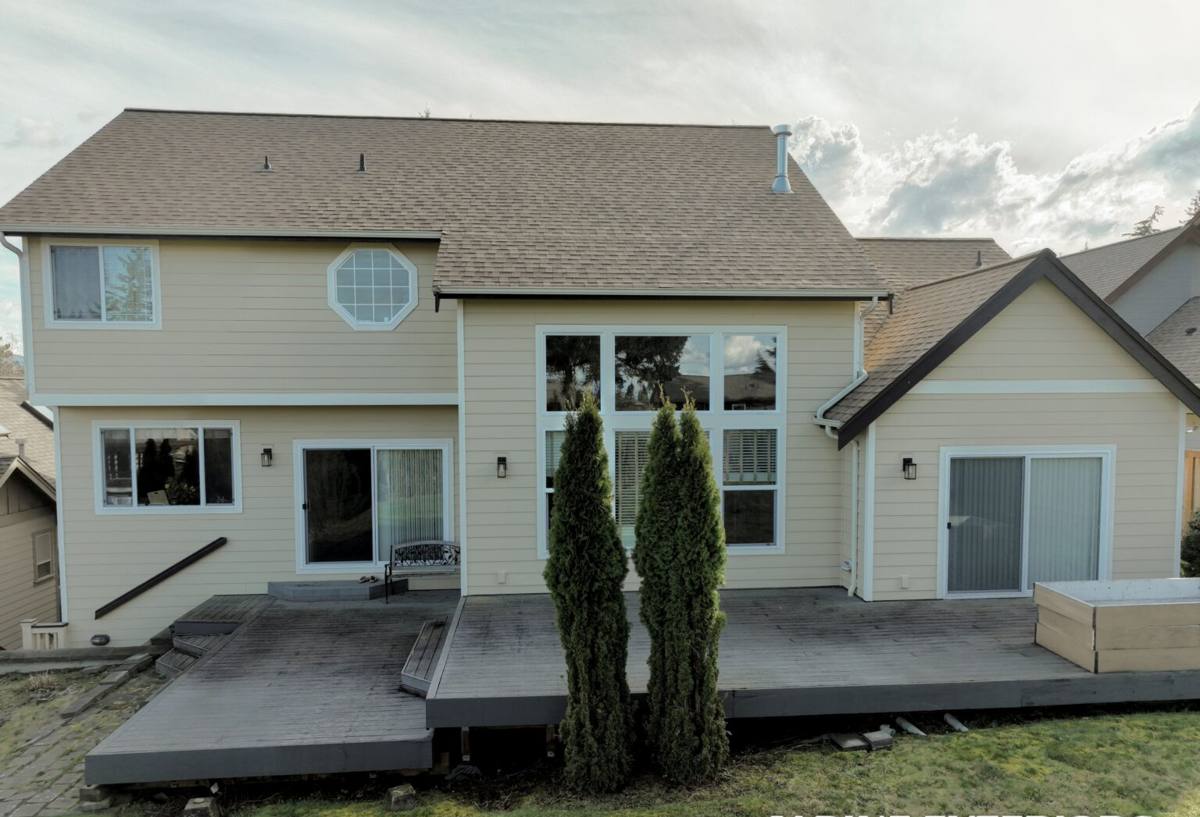
What Whatcom County's Climate Actually Does to a Deck
Salt Air and Metal Fasteners
Standard hot-dip galvanized nails and screws hold up fine in a dry inland climate. Closer to the bay, salt in the air accelerates corrosion, especially at joist hangers, ledger bolts, and any fastener that sits in a spot where water pools even briefly. Once a fastener starts rusting, it loses holding strength long before it looks obviously bad from a casual glance.
Driving Rain and Wind-Driven Moisture
Rain that falls straight down is manageable. Rain that gets pushed sideways by wind off the water finds its way under poorly flashed ledger boards, behind rim joists, and into end grain that isn't sealed. This is where rot usually starts on older Sehome decks — not on the open, exposed top of the deck where you'd expect it, but in the hidden connection points.
Moss and Prolonged Dampness
Decks shaded by mature trees or the north side of a house stay damp for days after a storm passes. Moss and algae hold that moisture against the wood surface, and on horizontal decking that never fully dries, it accelerates surface decay and makes boards dangerously slick underfoot. A moss-covered deck is also often a sign that drainage or airflow underneath the structure isn't what it should be.
Signs Your Sehome Deck Needs Replacing, Not Patching
- Soft or spongy spots when you walk across the boards, especially near the house or stair landings
- Visible rust streaks running down from fasteners or hardware
- Gaps or movement where the ledger board meets the house siding or rim joist
- Persistent moss or black staining that comes back within weeks of cleaning
- Railings or posts that wobble when you push on them
- A screwdriver or awl sinks into the wood with light pressure, particularly at board ends and joist tops
- Visible daylight or gaps between decking boards that have widened significantly over the years
If you're only seeing one or two of these, a repair might still make sense. If you're seeing several at once, especially structural softness, replacement is usually the more honest recommendation — patching a deck with a compromised frame just delays a bigger problem.
What a Correct Deck Replacement Involves
Tear-Off and Structural Inspection
We remove the old decking and railings down to the framing, then inspect every joist, beam, post, and footing before deciding what gets reused and what doesn't. This is the step that separates a real replacement from a cosmetic resurface — you can't know what's wrong until the old boards are off.
Ledger Board and Flashing
The ledger board — where the deck attaches to the house — is the single most common failure point we find on older Bellingham-area decks, and it's directly tied to how well the structure has handled driving rain over the years. A correct install uses proper flashing that directs water away from the house rather than behind the ledger, along with corrosion-resistant lag bolts or structural screws rated for the load.
Framing and Fasteners
Given the salt air exposure this close to the bay, we use fasteners and hardware rated for coastal or ACQ-treated lumber compatibility, not standard interior-grade hardware that will start corroding within a few seasons. Joist hangers, post bases, and structural connectors all get the same treatment.
Footings and Posts
Undersized or frost-heaved footings are a common issue on older decks in this area. We check that footings meet current code depth and bearing requirements before setting new posts — this isn't optional, and it's not something that shows up until you dig.
Decking Material Installation
Proper board spacing for drainage and expansion, hidden or exposed fastening depending on the material, and attention to end-grain sealing on any cut boards all matter more in a climate that stays damp for months at a time than they would somewhere dry.
Choosing Decking Material for a Sehome Property
There's no single "best" decking material — the right choice depends on how much maintenance you want to do, your budget, and how shaded or exposed the deck location is.
| Material | Moss/Moisture Resistance | Maintenance | Typical Lifespan |
|---|---|---|---|
| Pressure-treated wood | Good if sealed regularly | Annual cleaning and re-sealing | 15-20 years |
| Cedar | Naturally moderate rot resistance | Periodic sealing, more if shaded | 15-25 years |
| Composite | High; doesn't absorb moisture like wood | Periodic washing, no sealing | 25-30 years |
| PVC/capped composite | Highest; fully moisture resistant surface | Occasional washing | 25-30+ years |
In shaded, moss-prone spots common in Sehome's tree-lined lots, composite and capped composite boards generally hold up with far less upkeep than natural wood decking, since they don't provide the same food source and moisture retention that algae and moss need to take hold. That said, plenty of homeowners prefer the look and feel of real wood and are willing to keep up with sealing — that's a legitimate choice too, as long as the maintenance actually happens.
Why We're Selective About Certain Composite Products
Not every composite board on the market is built the same. Some early-generation and budget composite products use a wood-plastic blend without a full protective cap, which means the exposed surface can still absorb moisture and support mold or staining in a climate this wet — undermining the low-maintenance appeal that's the whole reason to choose composite in the first place. Our standard is to spec fully-capped composite or PVC products in shaded, damp-prone installs specifically because of that moisture behavior, not because any particular brand is unreliable. It's a trade-off between upfront cost and long-term performance, and we'll walk you through it honestly for your specific site.
Our Process for a Sehome Deck Replacement
- On-site assessment — We inspect the existing deck, check framing and footings where accessible, and talk through what you want from the new deck (size, material, railing style).
- Written estimate — A clear scope of work and price range, with any structural unknowns flagged before we start, not discovered as a surprise mid-project.
- Permitting — Deck replacements in Whatcom County and the City of Bellingham typically require a permit depending on size and height; we handle that paperwork as part of the job.
- Tear-off and structural repair — Old decking and railings come off, framing gets inspected and repaired or replaced as needed.
- Framing, flashing, and footings — The structural work that determines how long the deck actually lasts.
- Decking, railing, and finish work — Installation of your chosen material with proper spacing, fastening, and sealed cut ends.
- Final walkthrough — We go over the finished deck with you, including basic care guidance for whatever material you chose.
Maintenance Checklist for a Long-Lasting Deck
- Sweep debris off the deck surface regularly, especially in fall when leaves trap moisture against boards
- Clean moss and algae buildup promptly rather than letting it establish, particularly in shaded corners
- Check fasteners and hardware annually for rust or looseness, especially near the ledger board
- Reseal wood decking on the manufacturer's recommended schedule, typically every 1-2 years in this climate
- Keep gutters and downspouts clear so runoff isn't dumping extra water directly onto or under the deck
- Trim back vegetation that keeps the deck surface shaded and slow to dry
Why It Matters to Hire a Crew That Already Works in Sehome
A deck built to a generic national spec doesn't account for what Bellingham Bay's salt air does to fasteners over ten years, or how much shade a typical Sehome lot gets from mature landscaping. A crew that regularly works this neighborhood already knows which corners of a deck fail first in this climate, which hardware actually holds up, and how local permitting works for deck projects in this jurisdiction. That familiarity shows up in fewer surprises during the project and a deck that's built for the conditions it will actually face, not just the conditions on a spec sheet written somewhere else.
We also stand behind the structural work specifically, not just the visible decking — because in this climate, the framing is where problems start.
Get a Free, No-Pressure Estimate
If your deck is showing soft spots, persistent moss, or hardware that's starting to rust, it's worth having someone look at it before those small signs turn into a bigger repair. We're happy to walk your property, give you an honest read on whether repair or replacement makes more sense, and put together a straightforward estimate — no pressure, no obligation. Use the form below to get started.