 Whatcom County
 Why Ferndale Decks Wear Out Faster Than the Brochures Say
If you own a home in Ferndale, you've probably noticed your deck ages differently than a deck would in a drier climate. Whatcom County sits close enough to Bellingham Bay and the Strait of Georgia that salt-laden air is a real factor here, not just a coastal talking point. Combine that with our long, wet winters and a moss season that can stretch from October well into spring, and you have a set of conditions that specifically target the weak points of an aging deck: fasteners, ledger boards, joist tops, and any spot where water can sit instead of shed.
A deck that would last two or three decades in Eastern Washington can start showing structural trouble in half that time here if it wasn't built or maintained with our climate in mind. This page is about what that means for a deck replacement in Ferndale specifically, and what we think a correct job looks like.
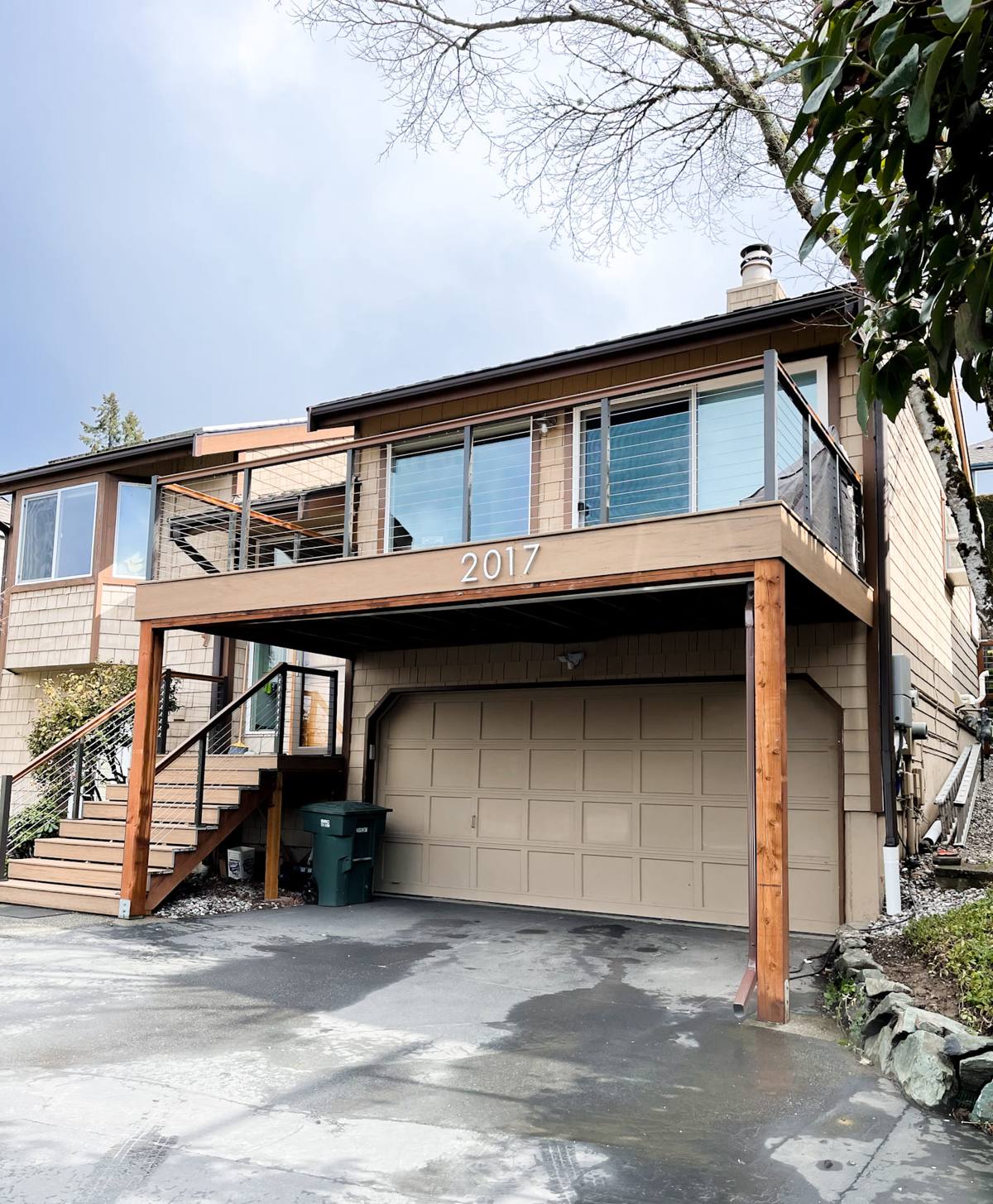
What Whatcom County's Climate Actually Does to a Deck
Salt Air and Metal Fatigue
Salt air accelerates corrosion on fasteners, joist hangers, post bases, and any exposed metal hardware. Once a nail, screw, or bracket starts to corrode, it loses holding strength long before it looks obviously bad from the surface. On an older deck, this is often the real story behind a "wobbly" railing or a board that feels softer than it should.
Driving Rain and Water Intrusion
Rain here doesn't always fall straight down. Wind-driven rain gets pushed sideways into ledger connections, under flashing, and into end grain on boards and rim joists. Over years, that repeated wetting and drying cycle is what actually rots wood framing, not a single storm. The ledger board, where the deck attaches to the house, is one of the most common failure points we see, and it's also one of the most dangerous to ignore because it affects the whole structure's connection to the house.
Moss, Algae, and Trapped Moisture
Our extended damp season is ideal for moss and algae growth on horizontal surfaces, especially decks that get partial shade from trees or the house itself. Moss holds moisture against the wood or composite surface far longer than open rain exposure would. On wood decking, that means faster rot underneath a layer that looks merely "dirty" from a distance. On composite decking, moss and algae are mostly a slip hazard and a cosmetic issue, but they still point to a drainage or airflow problem worth addressing during a replacement.
Repair or Replace? Reading the Real Signs
Not every tired-looking deck needs a full replacement, but a lot of Ferndale decks that look "just cosmetically rough" have deeper problems once you check the framing. Here's how we sort it out during an inspection.
- Soft or spongy spots when you walk the deck, especially near the house or stair stringers
- Visible rot, dark staining, or fungal growth on joists, beams, or the ledger board
- Rust streaks running down from fasteners or joist hangers
- Railings or posts that flex noticeably when pushed
- Gaps that have opened up between the ledger and the house siding or band board
- Stair stringers that feel unstable or show cracking
- A deck that was never properly flashed at the house connection (common on older builds)
- Persistent moss or standing water in the same spots after every rain
If the framing and ledger are sound and the issues are limited to worn surface boards or an outdated railing, a repair or resurfacing may make sense. If the structural members are compromised, especially the ledger connection or multiple joists, replacement is the honest recommendation, because patching around rotten framing just relocates the problem for a year or two.
What a Correct Deck Replacement Actually Involves
A deck replacement done right is a structural project first and a surface-material choice second. In our climate, the parts that don't show are what determine whether the new deck lasts.
Full Tear-Off and Framing Inspection
We remove the old decking and railings down to the frame so we can actually see the ledger, joists, beams, and posts rather than guessing at their condition. Any deck built more than 15-20 years ago in this area is a strong candidate for hidden ledger or joist damage even if the surface looked fine.
Ledger Flashing Done Properly
The ledger-to-house connection is where most rain-driven failures start. A correct replacement uses proper flashing that directs water away from the house sheathing, not just a bead of caulk. This detail matters more here than almost anywhere in the build, given how much wind-driven rain this deck connection has to handle over its lifetime.
Footings and Post Bases
Whatcom County's frost depth and soil moisture affect footing requirements. Post bases should hold posts up off the deck surface and away from standing water, not bury them in concrete or dirt where they'll wick moisture continuously.
Fastener and Hardware Selection
Given the salt-air exposure, we use corrosion-resistant fasteners and structural hardware rated for exterior and coastal-adjacent use. This is one of those details that costs a little more upfront and saves a full rebuild down the line.
Decking, Railing, and Drainage
Once the structure is sound, decking material, railing style, and airflow underneath the deck come into play. Proper spacing and ventilation under the deck reduce the moss and trapped-moisture problems that are so common in shaded Ferndale yards.
Comparing Decking Materials for a Wet, Mossy Climate
There's no single "best" decking material for every home, but some perform more predictably than others under our conditions. Here's how the common options compare.
| Material | Moisture Behavior | Moss/Algae Resistance | Maintenance |
|---|---|---|---|
| Pressure-treated wood | Absorbs and releases moisture; prone to warping/checking if not sealed regularly | Low — needs regular cleaning | Annual sealing/staining recommended |
| Cedar | Naturally moisture-resistant but still needs sealing over time | Moderate | Periodic cleaning and refinishing |
| Capped composite | Does not absorb water into the core; won't rot | Moderate to good, varies by brand/texture | Occasional washing, no sealing needed |
| PVC decking | Fully synthetic, no moisture absorption | Good, smooth surfaces resist buildup | Low — periodic washing only |
We'll walk you through these trade-offs honestly during an estimate rather than pushing one product line. Wood costs less upfront but demands consistent maintenance to survive our wet season; composite and PVC cost more initially but reduce the recurring work, which matters if the deck sits in a shaded, moss-prone part of your lot.
Our Process, Start to Finish
- On-site inspection — we check framing, ledger, footings, and drainage, not just the visible surface
- Honest assessment — repair vs. replace recommendation with the reasoning explained
- Material and layout discussion — decking, railing, and structural options based on your home and budget
- Permitting — Whatcom County and City of Ferndale permit requirements handled as part of the project when applicable
- Demolition and disposal — old materials removed and hauled off
- Structural rebuild — framing, ledger flashing, footings, and hardware installed to code
- Decking and railing installation — finished surface, railings, and stairs completed
- Final walkthrough — we go over the finished deck with you before calling the job done
Permits and Local Considerations in Whatcom County
Deck replacements that involve structural changes, new footings, or railings above certain heights typically require a permit in Whatcom County and within Ferndale city limits. Skipping this step can create real problems later, from insurance issues to complications when you sell the home. We factor permitting into the timeline and cost from the start rather than treating it as an afterthought, so there are no surprises partway through the project.
Sun, Shade, and Site-Specific Factors
Ferndale lots vary quite a bit — some sit open to more direct sun and wind, others are tucked under mature trees that keep decks shaded and damp much of the year. A shaded deck will need better ventilation underneath and may benefit from a material more resistant to moss buildup. An open, wind-exposed deck faces more direct driving rain at the ledger and railing connections. Part of a proper estimate is looking at your specific site, not applying a one-size answer to every Ferndale property.
Keeping a New Deck Healthy Through Whatcom County's Wet Season
Even the best-built deck benefits from some seasonal attention here. This isn't about high-maintenance upkeep — it's a short list that prevents the moisture and moss issues that are common in our climate from taking hold.
- Sweep leaves and debris off the deck regularly in fall, especially in shaded corners
- Rinse or gently wash the surface a couple of times a year to slow moss and algae buildup
- Check that gaps between boards remain clear for drainage rather than packed with debris
- Inspect railings and stair connections once a year for looseness
- Look at the ledger area at the house connection periodically for staining or gaps
- Trim back overhanging branches that keep sections of the deck shaded and damp
Why Hiring a Crew That Already Works in Ferndale Matters
A deck built to a generic national spec sheet isn't necessarily built for Whatcom County. Crews who work this specific area regularly already know which ledger and flashing details hold up against our driving rain, which fastener grades make sense given the salt air off the Bay, and how much airflow a shaded, moss-prone yard actually needs underneath a deck. That local pattern recognition is hard to replace with a generic checklist, and it's the difference between a deck that needs attention again in five years and one that doesn't.
We also know the practical side: what Whatcom County and Ferndale permitting typically expects for deck projects, and how to sequence a tear-off and rebuild around our wet-season weather windows so the project doesn't stall out mid-build.
Get a Straightforward Estimate
If your Ferndale deck is showing soft spots, rust stains, persistent moss, or just feels past its useful life, we're happy to take a look and give you an honest read on repair versus replacement. Fill out the form below for a free, no-pressure estimate.