 Whatcom County
 Deck Repair Built for Samish Conditions
Samish sits close enough to the water that decks here deal with a different kind of wear than decks fifty miles inland. Salt-laden air speeds up corrosion on fasteners and hardware, driving rain off the Sound finds every gap in flashing and board spacing, and a moss season that can stretch from fall through spring keeps surfaces damp far longer than most homeowners expect. A deck that would be fine in a drier climate can develop hidden rot in Samish within a few seasons if it wasn't built or maintained with that reality in mind.
We repair decks throughout this part of Whatcom County, and the pattern we see in Samish is consistent: the wood itself is often still sound, but the connections, fasteners, and moisture-prone spots are what fail first. Good deck repair here isn't about replacing everything — it's about knowing exactly which parts take the beating and fixing those correctly.
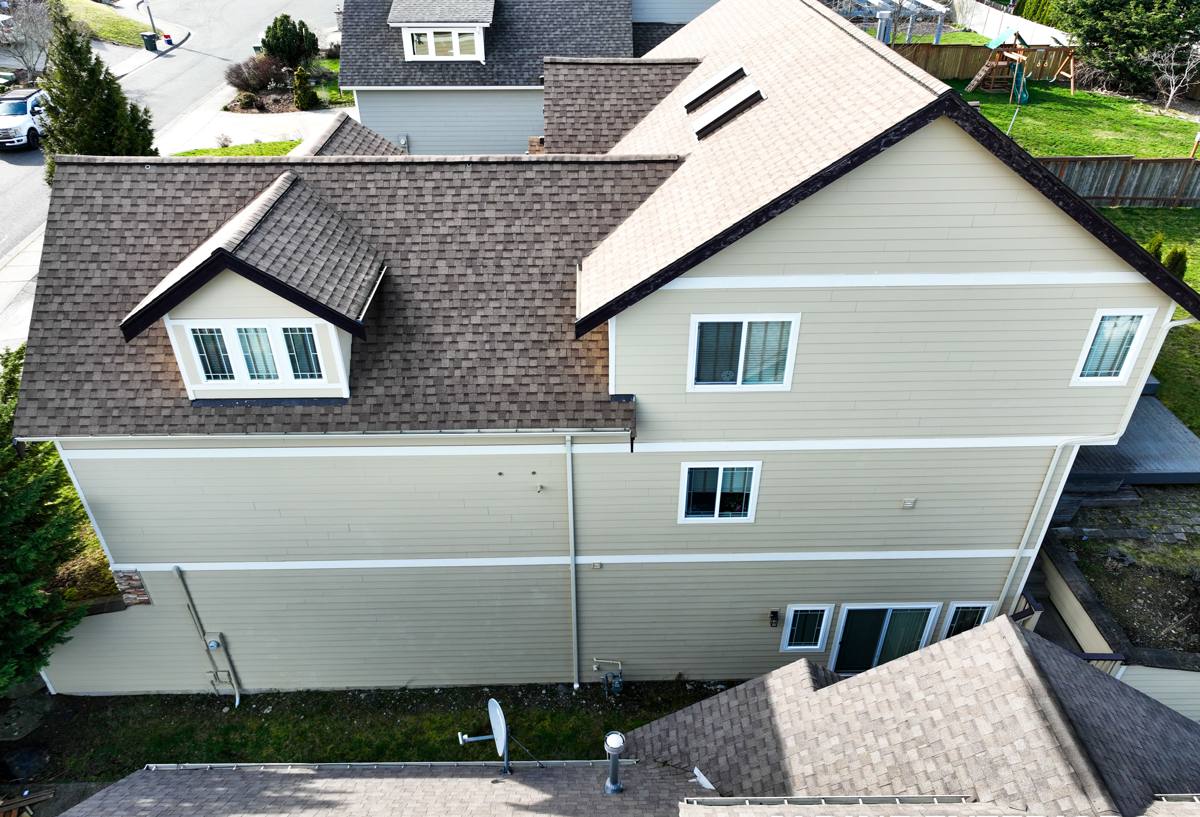
Signs Your Samish Deck Needs Repair
Deck problems rarely show up all at once. They usually start small and get overlooked until a board gives way or a rail feels loose underfoot. Here's what we tell homeowners to check twice a year, especially after the wet months:
- Soft, spongy, or springy spots when you walk across the decking
- Boards that have cupped, split, or pulled away from their fasteners
- Rust streaks around screws or nail heads
- A railing or post that moves more than it should when you push on it
- Green or black staining that doesn't wash off with a deck cleaner
- Gaps or separation where the deck meets the house (the ledger board)
- Stair stringers that feel uneven or make new creaking sounds
- Visible daylight or soft wood where support posts meet footings
Any one of these on its own might be minor. Several together usually mean moisture has been working on the structure for a while.
What's Actually Causing the Damage
Salt Air and Metal Fasteners
Homes with any exposure to the marine air off the Sound see accelerated corrosion on nails, screws, and structural hardware. Once a fastener starts rusting, it loses holding strength and can also stain and weaken the wood fiber around it. This is one of the most common repair calls we get in Samish — a deck that looks fine from a distance but has corroded connectors doing far less work than they should.
Driving Rain and Water Intrusion
Whatcom County storms don't always come straight down — wind-driven rain gets pushed sideways into joints, under flashing, and into any gap between the deck and the house. The ledger board connection (where the deck attaches to the structure) is the single most critical point on any deck, and it's also the point most vulnerable to this kind of water intrusion if flashing was installed poorly or has failed over time.
Moss, Algae, and a Long Wet Season
A shaded or north-facing deck in this area can stay damp for months at a stretch. Moss and algae aren't just cosmetic — they hold moisture against the wood surface and make boards slick and dangerous underfoot. Left untreated, that constant dampness is what eventually turns into soft, rotting wood beneath the surface.
Freeze-Thaw Cycling
Whatcom County doesn't see deep freezes often, but the repeated freeze-thaw swings we do get are hard on any wood that's already holding water. Saturated wood that freezes expands and splits along the grain, which is why damage tends to show up worse each spring.
Common Deck Repairs We Handle in Samish
| Repair Area | What We Typically Find | What the Fix Involves |
|---|---|---|
| Ledger board | Failed or missing flashing, water staining, soft wood at the house connection | Remove affected boards, inspect framing behind, install proper flashing, reattach with corrosion-resistant hardware |
| Joists and beams | Rot at joist ends, corroded hangers, sagging spans | Sister damaged joists or replace sections, swap in stainless or coated hangers |
| Decking boards | Cupping, splitting, soft spots, moss staining | Replace individual boards or full runs, re-space for proper drainage |
| Railings and posts | Loose posts, rusted connectors, wobble under load | Reinforce or replace post attachment, upgrade fasteners |
| Stairs | Uneven stringers, worn treads, loose handrails | Rebuild stringers or treads as needed, secure handrail connections |
| Footings and posts | Settling, rot at the base, undersized footings on older decks | Assess load path, replace or reinforce footings to current standards |
Repair or Replace? How We Decide
Most decks don't need a full rebuild — but some do, and it's not always obvious which category a given deck falls into from the surface. We look at a few honest factors before recommending either path:
- Extent of structural rot: Isolated rot at a joist end or post base is repairable. Widespread rot through multiple structural members usually isn't worth chasing board by board.
- Ledger and framing condition: If the ledger board or main framing has serious water damage, that's the load-bearing core of the deck — repairs there have to be done right, and sometimes that points toward a rebuild.
- Age and build quality: An older deck built to outdated fastening or footing standards may need more than patchwork to be safe long-term.
- Budget and timeline: Repairs are almost always faster and less expensive than replacement. We'll give you a straightforward comparison rather than pushing toward the bigger job.
Broadly, targeted repairs on an otherwise sound deck tend to run a fraction of what a full rebuild costs — but the right number depends entirely on what we find once boards come up, which is why we inspect before quoting.
Our Repair Process
We approach every deck repair in Samish the same methodical way, because guessing at what's underneath a deck is how small problems get missed:
- On-site inspection: We check the ledger connection, probe joists and posts for soft spots, and look at footings and drainage before touching anything cosmetic.
- Honest scope: We tell you what's structural, what's cosmetic, and what can reasonably wait — in plain terms, not a sales pitch.
- Repair execution: We remove only what needs to come out, address the moisture source (flashing, drainage, spacing) as well as the visible damage, and rebuild with appropriate materials and fasteners.
- Final check: Railings, stairs, and structural connections get tested for solidness before we call the job done.
Materials and Fasteners That Hold Up Here
What goes into a deck repair matters as much as the labor. In a marine climate like Samish's, we favor:
- Corrosion-resistant fasteners (stainless steel or high-grade coated hardware) instead of standard galvanized, especially anywhere close to salt air exposure
- Properly flashed ledger connections using materials rated for continuous moisture exposure, not just a bead of caulk
- Decay-resistant lumber or composite decking for board replacement, chosen based on your budget and how the deck is used
- Adequate board spacing and airflow underneath, so moss and standing moisture have somewhere to go instead of sitting on the surface
We're upfront that composite decking costs more upfront than wood but trades that for lower long-term maintenance in a climate where wood needs regular sealing and cleaning to keep moss and rot at bay. Either choice can be right — it depends on how much upkeep you want to take on.
Keeping a Repaired Deck in Good Shape
A repair holds up longer with a little seasonal attention. After we finish a repair, we recommend:
- Clearing leaves and debris from between boards before the wet season sets in
- Washing off moss and algae growth at least once a year, more often on shaded sections
- Checking railings and stair connections for movement each spring
- Re-sealing or staining wood decking on the manufacturer's recommended schedule
- Keeping gutters and downspouts clear so runoff isn't draining directly onto the deck
Why a Local Crew Matters
Deck repair isn't complicated in theory, but doing it correctly in this climate means understanding exactly where Samish decks tend to fail and why — the ledger flashing detail that gets skipped, the fastener grade that doesn't hold up to salt air, the shaded corner that never quite dries out. We work on homes throughout Whatcom County and see these same patterns repeat, which means we're not guessing at what a deck here needs — we've already found the problem spots on dozens of similar builds.
If your deck has soft spots, loose railings, or just needs an honest look before another wet season, we're happy to take a look and give you a straightforward assessment — no pressure, no upsell. Reach out for a free estimate and we'll walk your deck with you and tell you exactly what we find.