 Whatcom County
 Windows Built for Fairhaven's Bay-Side Climate
Fairhaven sits close enough to Bellingham Bay that its homes take on a different weather load than houses further inland in Whatcom County. Salt-laden air off the water, driving rain that comes in sideways during fall and winter storms, and a moss season that runs longer here than in drier parts of the county all put extra stress on window systems. A window that performs fine in a sheltered inland neighborhood can fail early in Fairhaven if it wasn't specified and installed with that exposure in mind.
This page covers what custom window replacement actually involves for Fairhaven homes specifically — the material and hardware choices that matter here, how a correct installation handles water and air, and what to expect from a crew that already works this part of Whatcom County.
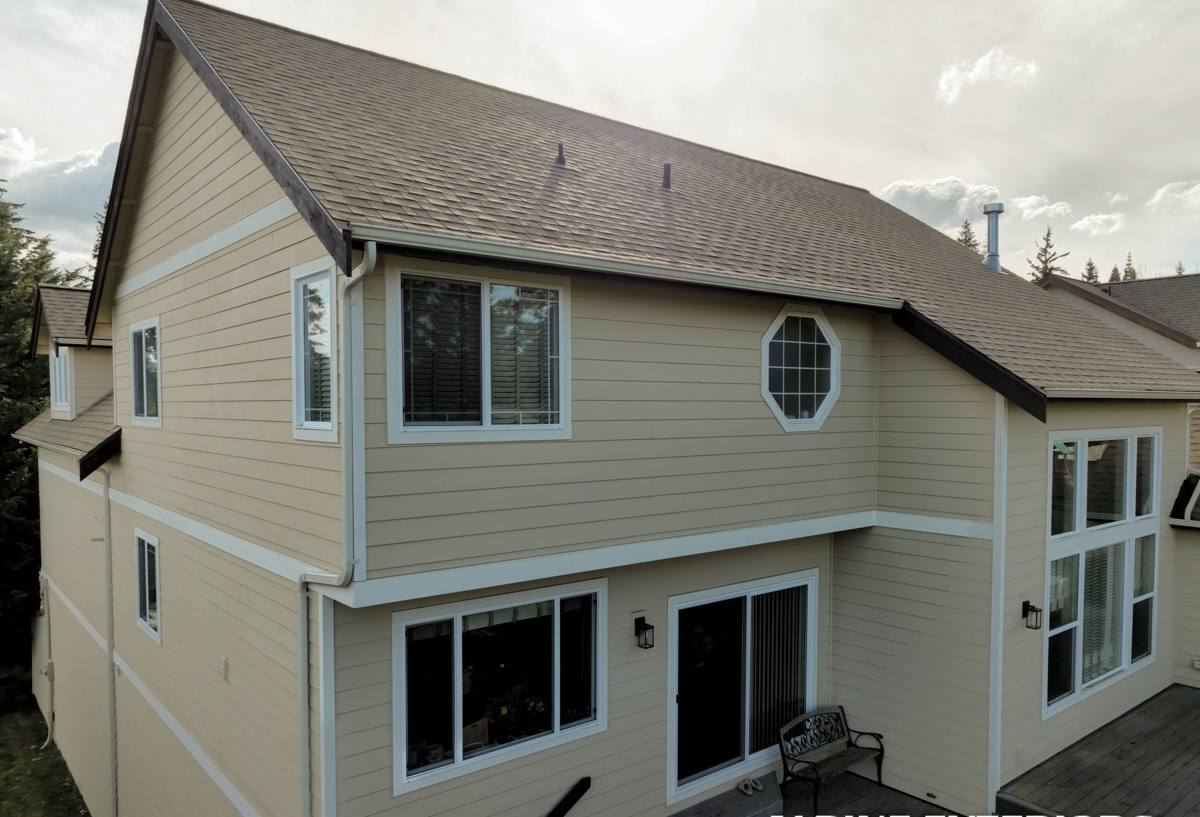
What Salt Air, Rain, and Moss Actually Do to Windows
Salt Air
Airborne salt from the bay accelerates corrosion on exposed metal — hinges, balance hardware, screen frames, and lower-grade cladding fasteners. It's not dramatic; it's slow pitting and oxidation that shows up over several seasons as stiff operation, streaking, or hardware that seizes. Homes closer to the water and on exposed elevations see this faster than homes tucked back from the shoreline.
Driving Rain
Wind off the bay pushes rain into wall assemblies at an angle, not straight down. That means flashing details and sill pans matter more here than in calmer inland settings — a window that only sheds water well in a vertical downpour can still let water track sideways under the sill or around the head flashing during a real Fairhaven storm.
Moss and Sustained Moisture
Whatcom County's moss season is long, and Fairhaven's tree cover and marine moisture keep surfaces damp for extended stretches. Moss and algae growth around window trim and sills isn't just cosmetic — sustained dampness against wood trim or poorly sealed joints is what eventually leads to soft spots and rot if it's not designed and maintained to shed water and dry out.
What a Correct Window Job Involves Here
"Custom windows" doesn't just mean picking a style — it means the opening, the flashing, and the unit itself are matched to the specific wall assembly and exposure of that house. For Fairhaven homes, that typically means paying close attention to a few things a generic install can skip past:
- Accurate field measurement of each opening — older Fairhaven homes are rarely perfectly square, and a true custom unit is built to the actual opening, not a catalog size with shims making up the difference
- A sill pan or sloped sill detail that directs any water that does get past the window back outside the wall, not into the framing
- Head and jamb flashing sequenced correctly with the home's existing water-resistive barrier, so water sheds over layers rather than behind them
- Corrosion-resistant hardware and fasteners appropriate for a marine-influenced climate, not standard-grade hardware chosen for cost alone
- Sealant and backer rod at the interior and exterior perimeter, sized and placed to allow for material movement without failing early
- Proper shimming and fastening so the window operates smoothly and doesn't rack out of square over time
Skipping any one of these doesn't usually cause an immediate problem — it shows up two, five, or ten years later as a soft sill, a fogged unit, or a window that won't latch. That lag is exactly why cutting corners on installation is a bad trade for a homeowner, even though it's invisible on install day.
Choosing a Window Type for This Exposure
There's no single "best" window for Fairhaven — the right choice depends on the elevation's exposure, the home's style, and the homeowner's maintenance preferences. Here's how the common frame materials generally compare for a marine-influenced Whatcom County setting:
| Frame Material | How It Handles Salt Air & Moisture | Maintenance | Typical Fit |
|---|---|---|---|
| Vinyl | Won't corrode or rot; performs consistently in marine air | Low — occasional cleaning | Budget-conscious replacements, rental or resale properties |
| Fiberglass | Very stable, resists moisture-driven expansion and contraction well | Low | Homes wanting durability with a more refined sightline |
| Aluminum-clad wood | Good exterior protection if cladding and flashing are done right; interior wood still needs care | Moderate — exterior low, interior periodic | Historic or architecturally detailed Fairhaven homes wanting a wood interior look |
| Bare wood | Most vulnerable to sustained damp and moss-season exposure without diligent upkeep | High — regular refinishing needed | Only where authenticity is a priority and upkeep is planned for |
For exposed elevations facing the water or open weather, we generally steer homeowners toward vinyl, fiberglass, or well-detailed clad options rather than bare wood — not because wood windows are a bad product, but because sustained marine moisture raises the maintenance burden on exposed wood significantly, and that's an honest trade-off worth knowing about upfront.
Our Process for a Fairhaven Window Project
1. On-Site Assessment
We look at each opening individually — exposure, current flashing condition, signs of past water intrusion, and how the existing wall assembly is built. This is also when we flag anything already showing salt or moss-related wear so it's addressed rather than sealed over.
2. Measurement and Product Selection
Openings are measured precisely, and we walk through frame material, glazing, and hardware options suited to that specific elevation's exposure — a bay-facing window and a sheltered side window don't always need the same spec.
3. Removal and Opening Prep
Old units are removed carefully to check the condition of the framing and sheathing underneath. Any soft or compromised material found at this stage is addressed before the new window goes in — installing a new window over hidden rot just hides the problem.
4. Flashing and Water Management
Sill pans, flashing tape, and the water-resistive barrier are integrated in the correct shingle-lap sequence so water always has a path outward. This step is where most long-term callbacks originate if it's rushed, so we don't rush it.
5. Installation and Sealing
The window is set level, plumb, and square, fastened per manufacturer spec, and sealed with appropriate sealant at both the interior and exterior. We check operation — smooth opening, closing, and locking — before calling the unit finished.
6. Final Walkthrough
We walk each window with the homeowner, confirm operation, and go over any maintenance notes specific to that home's exposure, including what moss or salt-related upkeep to expect and watch for.
Why a Crew That Already Works Fairhaven Matters
Whatcom County covers a lot of ground, and building conditions vary a lot within it. A crew that's already done window work in Fairhaven has seen how homes here actually age — where moss tends to hold moisture, which elevations take the worst of the driving rain, and how older wall assemblies in this neighborhood were typically built. That familiarity shows up in fewer surprises during removal, better flashing decisions on the spot, and a more accurate initial assessment, rather than learning a neighborhood's quirks on the homeowner's project.
It also means realistic expectations. A crew unfamiliar with marine exposure might spec the same window and install method they'd use anywhere in Whatcom County. A crew that works this specific climate zone regularly adjusts for it — in material choice, in flashing detail, and in what maintenance advice actually applies.
Maintenance in a Salt Air, High-Moss Environment
Even a correctly installed window benefits from some seasonal attention in this climate. A short, practical checklist for Fairhaven homeowners:
- Rinse exterior frames and hardware periodically to reduce salt buildup, especially on bay-facing elevations
- Clear moss and organic debris from sills, tracks, and surrounding trim before it holds moisture against the surface
- Check that weep holes (on vinyl and some clad units) stay clear so water can drain out rather than pool
- Operate each window a few times a season so hardware doesn't seize from disuse combined with corrosion
- Inspect exterior sealant lines annually and have any cracked or separated caulk addressed before the rainy season
- Watch for soft trim, peeling paint, or dark staining near sills — early signs worth having looked at before they spread
Cost Factors Specific to This Job
Every project is different, but for Fairhaven homes specifically, a few factors tend to move the price beyond the base cost of the window units themselves:
| Factor | Why It Affects Cost Here |
|---|---|
| Exposure of the elevation | Bay-facing or wind-exposed openings often warrant upgraded flashing details and corrosion-resistant hardware |
| Existing water damage | Hidden rot found at removal adds repair scope before the new window can go in correctly |
| Opening condition and age | Older, out-of-square openings in historic Fairhaven housing stock may need more prep work than newer construction |
| Frame material chosen | Vinyl, fiberglass, and clad-wood options carry different material costs and different long-term maintenance costs |
| Number and size of openings | Larger custom shapes or oversized units cost more to fabricate and install than standard sizes |
We don't quote broad numbers without seeing the actual openings — too many variables in an older coastal-influenced home to make that honest otherwise. What we can say is that spending a bit more upfront on proper flashing and corrosion-resistant hardware in a marine climate like this is almost always cheaper than repairing water damage down the road.
Get a Local, No-Pressure Estimate
If you're weighing window replacement for a Fairhaven home, we're happy to come take a look, walk the openings with you, and give you an honest read on what your home actually needs given its exposure and condition. Use the form below to request a free estimate — no pressure, no obligation.