 Whatcom County
 Building Decks That Actually Hold Up in Happy Valley
Happy Valley sits close enough to Bellingham Bay that salt-laden air reaches the neighborhood's older homes and newer infill alike, and it shares the same wet-season punishment as the rest of Whatcom County: long stretches of driving rain from fall through spring, followed by a moss season that seems to start earlier every year. A deck built without those conditions in mind will look fine for a season or two and then start showing problems — soft spots underfoot, green film on the boards, fasteners bleeding rust streaks down the fascia. We build and replace decks in Happy Valley with those specific stresses in mind, not with a one-size-fits-all approach pulled from a warmer, drier climate.
This page covers what a deck actually needs to survive here, what a correct build involves from the ground up, and how we run the project from first estimate to final walkthrough.
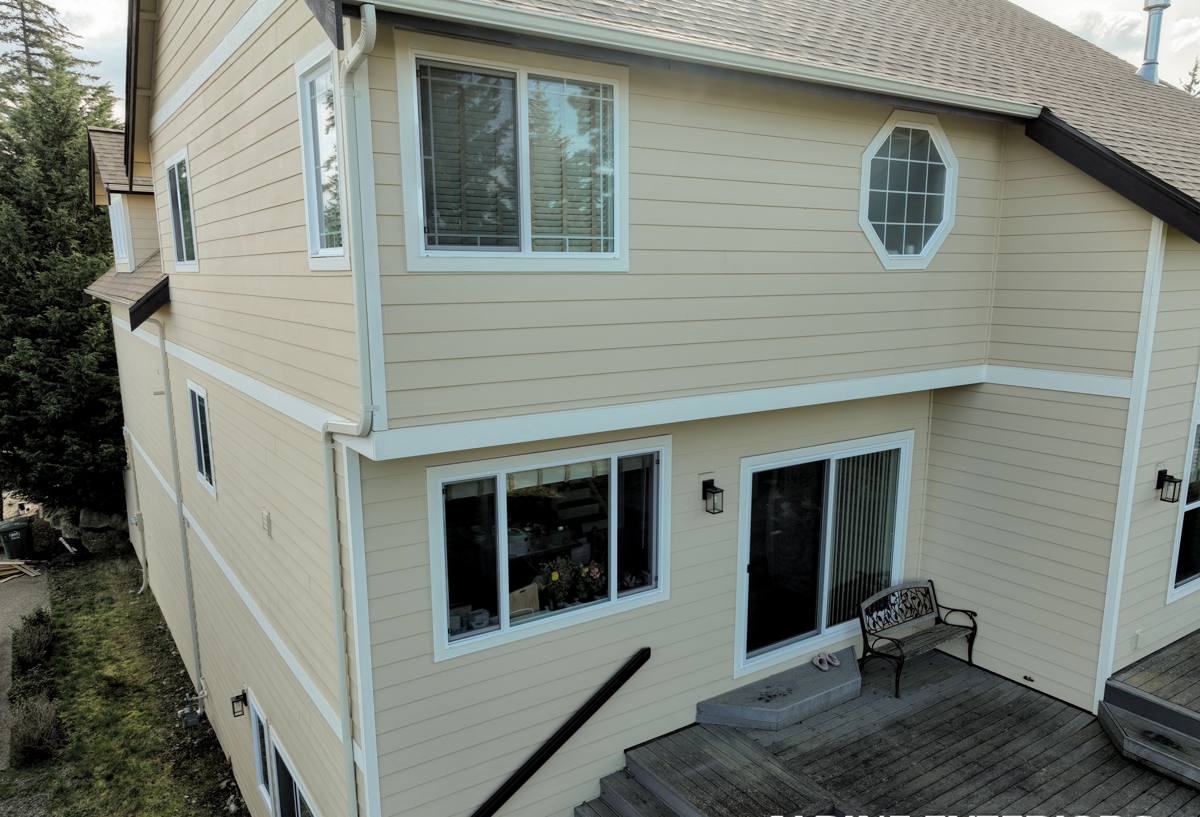
What Whatcom County's Climate Does to a Deck
Salt Air and Fasteners
Proximity to the water means airborne salt settles on exposed wood and metal year-round, not just during storms. Over time, salt air accelerates corrosion on fasteners and connectors that aren't rated for it. We've seen decks where the boards themselves were still structurally sound but the hidden hardware holding the frame together had corroded to the point of failure — that's a safety issue, not a cosmetic one.
Driving Rain and Moisture Intrusion
Rain here doesn't just fall straight down; wind-driven rain gets pushed sideways into ledger boards, stair stringers, and any spot where the deck meets the house. If flashing and water management aren't done correctly at that connection, moisture works its way into the rim joist and framing behind it — often invisibly, until the damage is advanced.
Moss, Algae, and Surface Buildup
Whatcom County's mild, damp winters are ideal moss and algae conditions, especially on decks with northern exposure or heavy tree cover, both common in and around Happy Valley. Moss holds moisture against the deck surface, which accelerates wood decay and turns boards slick and dangerous underfoot. Composite and PVC decking resist moss growth far better than wood, but no material is fully immune — surface prep, drainage, and airflow underneath the deck all matter as much as the decking material itself.
What a Correct Deck Build Involves
Framing and Structure
The frame is what actually holds the deck up, and it's the part most likely to be shortcut on a cheap job because nobody sees it once the boards go down. Correct framing for this climate means pressure-treated lumber rated for ground contact where posts meet footings, joist spacing sized to the decking material's span rating (not stretched to save a few boards), and proper blocking at butt joints and stair connections.
Ledger Attachment and Flashing
Where the deck attaches to the house is the single most common failure point we find on older decks in this area. A correct ledger connection uses through-bolts or approved structural screws (never just nails), proper flashing integrated with the house's existing water-resistive barrier, and a small gap or flashing detail that keeps water from pooling against the house wall. This is also where a deck can be built as a free-standing structure instead, which removes the ledger connection risk entirely — worth discussing depending on your home's siding and age.
Fasteners and Hardware
Given the salt air exposure common to Happy Valley, we use corrosion-resistant, code-rated fasteners and structural connectors throughout — hidden fastener systems for the decking surface where the material allows, and stainless or heavily coated hardware for structural connections. This adds a modest cost up front and pays for itself by not needing hardware replaced in five years.
Drainage and Airflow
A deck built low to the ground or against a slope needs deliberate grading and, in some cases, a drainage system underneath so water doesn't pool and sit against the framing. Airflow under the deck also matters for keeping the underside of the joists and decking dry enough to resist rot and moss.
Choosing a Decking Material for This Climate
There's no universally "correct" decking material — it's a trade-off between upfront cost, maintenance commitment, and how the material behaves in a wet, mossy environment. Here's how the common options compare for Whatcom County conditions specifically:
| Material | Moisture & Moss Behavior | Maintenance | Typical Lifespan Here |
|---|---|---|---|
| Pressure-treated wood | Absorbs moisture; needs sealing to resist moss and rot | Annual cleaning, re-sealing every 1-2 years | 10-15 years with upkeep |
| Cedar | Naturally rot-resistant but still needs finish maintenance in wet climates | Regular cleaning and staining/sealing | 15-20 years with upkeep |
| Composite decking | Resists moisture absorption and moss far better than wood | Periodic washing, no sealing or staining | 25-30+ years, manufacturer-warrantied |
| PVC/capped polymer | Fully moisture-resistant surface, best moss resistance | Occasional washing | 25-30+ years, manufacturer-warrantied |
We install both wood and composite/PVC systems and will walk through the honest trade-offs for your specific site — how much shade and moss exposure it gets, how much upkeep you actually want to do, and your budget. We don't push one material as universally "better"; we size the recommendation to the deck's exposure and your maintenance tolerance.
A Note on Composite Warranties
If you go with a composite or PVC product, installation matters as much as the material. Most manufacturer warranties require specific fastening patterns, gapping for expansion, and ventilation clearances underneath. An improperly installed composite deck can still trap moisture and stain or warp despite the material's inherent resistance — so the installer's attention to the manufacturer's spec is part of what you're paying for, not just the boards.
Railings, Stairs, and Code Requirements
Whatcom County and local jurisdictions enforce building codes around deck height, railing requirements, guard spacing, and stair geometry, and permits are typically required for decks above a certain height or attached to the home's structure. We handle the permitting and inspection process as part of the build so you're not left guessing whether your deck is compliant — this matters both for safety and for resale, since an unpermitted deck can become a problem during a home sale.
Our Process, Start to Finish
- On-site assessment. We look at your existing deck (if replacing one), the ledger connection to your home, grading and drainage around the site, sun/shade exposure, and any structural issues.
- Honest recommendation. We talk through material options and framing needs based on what your specific site actually requires — not a default package.
- Written estimate. Clear scope, materials, and pricing before any work starts.
- Permitting. We pull the necessary permits and schedule required inspections.
- Demolition (if applicable) and framing. Old decking and any compromised framing come out; new structural framing goes in to current code.
- Decking, railing, and stairs. Installed per manufacturer spec for warranty coverage.
- Final walkthrough. We go over the finished deck with you, including basic care and maintenance guidance for your chosen material.
Why Hire a Crew That Already Works This Neighborhood
A contractor who regularly builds decks around Whatcom County already knows how the local moss season behaves, which fastener specs actually hold up to the salt air off the bay, and how local permitting works for deck projects. That's the difference between a crew following a generic checklist and one that's already solved the specific problems your deck will face. We're not guessing at what "coastal-adjacent Pacific Northwest" conditions do to a deck — we see the results every time we tear out an old one.
Signs Your Existing Deck Needs Attention
- Soft, spongy, or bouncy spots when you walk across the deck
- Visible green or black growth that returns quickly after cleaning
- Rust streaks running down from screws, nails, or metal connectors
- Gaps, cracks, or splintering boards, especially near the house connection
- Railings or posts that feel loose or wobble under pressure
- Standing water that doesn't drain off the surface after rain
- Visible daylight or gaps where the deck meets the house siding
If any of these sound familiar, it's worth having the deck looked at before it becomes a safety issue rather than a cosmetic one. Some decks just need targeted repair; others have enough underlying framing damage that replacement is the more honest recommendation.
Get a Free, No-Pressure Estimate
Whether you're planning a new deck for a Happy Valley home or your current one is showing its age after another wet Whatcom County winter, we're happy to take a look and give you a straight answer on what it needs. Fill out the form below for a free estimate — no pressure, no upsell, just an honest assessment of your deck and your options.