 Whatcom County
 Cordata's Climate Is Harder on Siding Than It Looks
Cordata sits inland from the water compared to some Bellingham neighborhoods, but it still lives under the same Whatcom County weather pattern that wears out siding faster than most homeowners expect. Salt-tinged marine air drifts in off the Sound, driving rain comes sideways during fall and winter storms, and a long, damp shoulder season keeps north-facing walls and shaded siding wet for weeks at a stretch. None of that shows up on day one. It shows up five, ten, fifteen years later, as paint failure, soft trim, moss streaking, and siding that looks tired well before it should.
Siding replacement in this climate isn't just a cosmetic swap. It's a chance to fix whatever let moisture in the first time and to install a product and detailing that's actually built for Whatcom County conditions instead of a generic national spec. This page covers what that looks like in practice for a Cordata home.
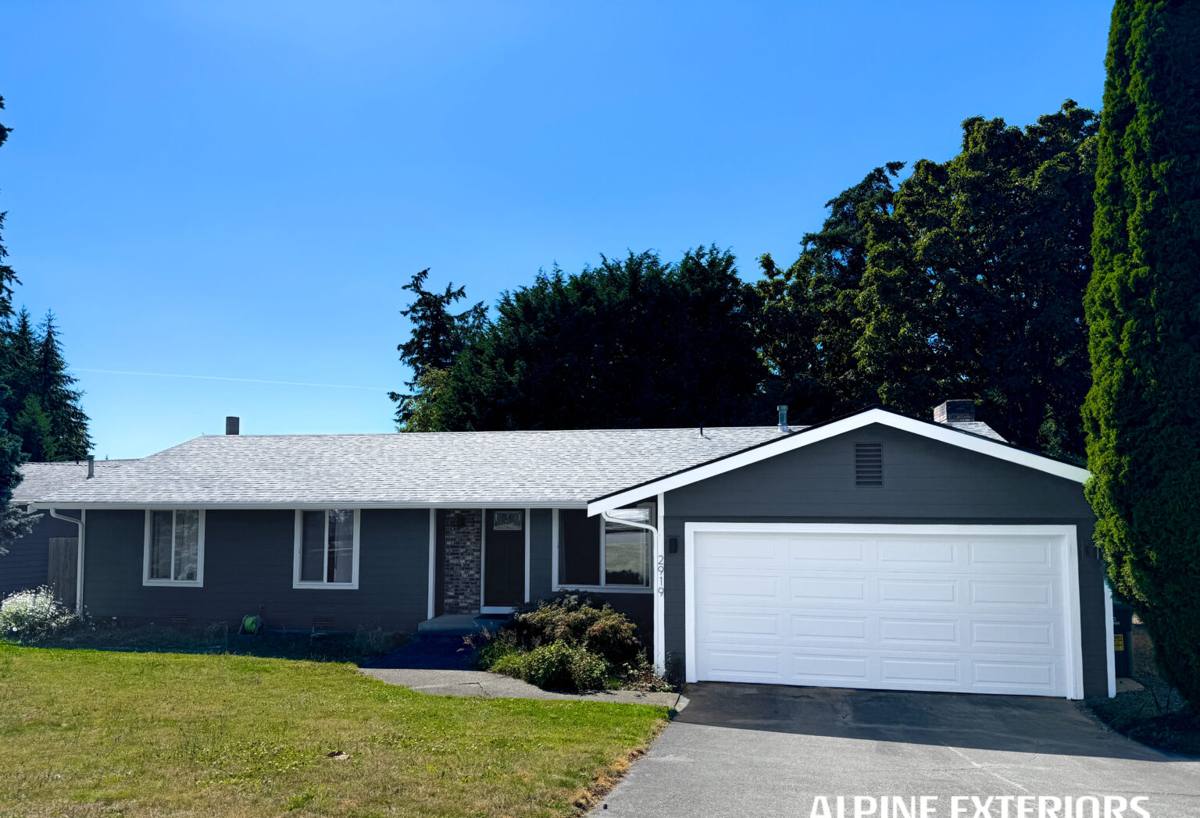
What Whatcom County Weather Does to Siding Over the Years
Driving Rain and Wind-Driven Moisture
Storms here rarely fall straight down. Wind pushes rain sideways into wall assemblies, working it behind poorly lapped siding, undersized flashing, and old caulk joints that have shrunk and cracked. Over time, that moisture finds sheathing and framing, not just the siding surface.
Salt Air
Proximity to Puget Sound means airborne salt is a constant, low-level factor even well inland. Salt-laden moisture accelerates corrosion on fasteners, hardware, and metal flashing, and it speeds up the breakdown of finishes that weren't engineered to handle it.
Moss Season
Whatcom County's moss season runs long — often eight or nine months of the year in shaded, north- and west-facing areas. Moss and algae hold moisture directly against the siding surface, which is worse for wood-based and poorly sealed products than for materials engineered to resist it. Left unaddressed, sustained moss growth also traps debris in laps and joints, which slows drying even further.
Signs a Cordata Home Needs Siding Replacement, Not Just Repair
Repair makes sense for isolated damage. Replacement is the right call when the problems are systemic — spread across multiple walls, tied to the original installation, or indicating the water-resistive barrier underneath has failed. Before scheduling anything, walk your home and check for:
- Soft, spongy, or crumbling siding when pressed, especially near the bottom courses and around windows
- Paint that's peeling, bubbling, or chalking heavily on more than one elevation
- Persistent moss or dark streaking that returns within months of cleaning
- Visible warping, cupping, or gaps between siding boards or panels
- Rust staining below nail heads or metal trim, a sign salt air and moisture are working on fasteners
- Rot or discoloration around window and door trim
- Rising energy bills with no other explanation, which can point to a failed weather barrier letting in drafts and moisture
- Interior signs — musty smells, peeling interior paint, or damp drywall on exterior-facing walls
What a Correct Siding Replacement Job Involves
Tear-Off and Sheathing Inspection
Once the old siding comes off, the sheathing underneath tells the real story. Any soft, delaminated, or rotted sheathing gets replaced before anything new goes up — installing new siding over compromised sheathing just hides the problem for a few more years instead of solving it.
Weather-Resistive Barrier and Flashing
This is the layer that actually keeps water out, and in a climate with this much wind-driven rain, it deserves as much attention as the siding itself. That means a properly lapped weather-resistive barrier, correctly integrated window and door flashing, kick-out flashing where rooflines meet walls, and careful detailing at every penetration — vents, hose bibs, light fixtures, and utility lines.
Fastening and Field Installation
Fastener spacing, nailing patterns, and gaps at butt joints all need to follow manufacturer specification, not shortcuts. In salt-air conditions, fastener material matters too — corrosion-resistant fasteners rated for the exposure, not whatever's cheapest on the truck.
Finish and Trim Details
Caulking, trim board selection, and paint or factory finish all affect how the wall assembly sheds water going forward. Factory-applied finishes tend to hold up more consistently over time than field-applied paint, particularly on a home exposed to sustained damp and salt air.
Material Options and How They Hold Up Locally
Homeowners in Cordata typically compare a handful of siding materials. Here's how they generally perform under Whatcom County's rain, moss, and salt-air conditions:
| Material | Moisture Behavior | Moss/Algae Resistance | Maintenance | Typical Lifespan |
|---|---|---|---|---|
| James Hardie fiber cement | Non-combustible, dimensionally stable, engineered to resist moisture-related warping | Factory finish resists staining better than raw wood surfaces | Low — occasional washing | 30+ years with proper install |
| Vinyl | Doesn't rot, but can warp or crack in temperature swings and impact | Moderate — algae can grow on the surface | Low, but color fades and can't be repainted easily | 20-30 years, varies widely |
| LP SmartSide (engineered wood) | Wood-based; sensitive to sustained moisture exposure at cut edges and joints | Moderate; depends heavily on installation and sealing | Higher — edge sealing and touch-up paint matter | 20-30 years, install-dependent |
| Cedar | Natural material; absorbs moisture, prone to swelling and checking over time | Lower without regular treatment | Highest — regular staining/sealing required | Varies widely, shorter without upkeep |
Why We Install Only James Hardie Fiber Cement
We made a deliberate call to stop installing vinyl, LP SmartSide, cedar, and other fiber cement brands, and to install James Hardie exclusively. It's not that those products have no place in the market — vinyl is inexpensive and low-maintenance in mild conditions, engineered wood siding can look great when detailed and maintained well, and cedar has a natural appearance some homeowners genuinely prefer. But each comes with a trade-off that matters more in a climate like ours: vinyl's dimensional movement and limited repairability, engineered wood's sensitivity to sustained moisture at cut edges, and cedar's ongoing maintenance demands to fight rot and moss.
James Hardie's fiber cement is non-combustible, dimensionally stable across temperature and moisture swings, and available in HZ5 and HZ10 product lines engineered for specific climate zones — HZ5 is built for regions with more freeze-thaw and moisture cycling, which fits Whatcom County's damp, cool conditions well. Combined with a factory-applied ColorPlus finish that resists fading and chipping better than field-applied paint, and a strong transferable warranty, it's the product we're comfortable standing behind long-term on Cordata homes.
Our Process From Estimate to Final Walkthrough
- Free on-site assessment. We inspect the current siding, sheathing condition where accessible, trim, flashing, and any signs of moisture intrusion, and walk you through what we find.
- Written estimate. A clear scope and price, with material, color, and any sheathing or repair work spelled out — no vague allowances.
- Scheduling around Whatcom County weather. We plan tear-off and installation windows with our rain patterns in mind, so exposed sheathing isn't left open to the weather any longer than necessary.
- Tear-off and inspection. Old siding comes off, sheathing gets inspected, and any needed repairs are addressed before the new barrier goes up.
- Weather barrier, flashing, and installation. Installed to manufacturer specification, with attention to every penetration and transition point.
- Final walkthrough. We go over the finished job with you, cleanup included, before calling it complete.
Why a Crew That Already Works in Cordata Matters
Siding installation quality depends as much on judgment calls as it does on materials. A crew that already works throughout Bellingham and Whatcom County has seen how local wind exposure, roofline orientation, and shade patterns affect individual homes, and adjusts flashing and detailing accordingly instead of applying a one-size-fits-all approach. They also know the local permitting process, are familiar with common construction styles found in this area, and can move quickly when a weather window opens instead of losing days figuring out logistics from scratch. That local familiarity translates into fewer surprises during tear-off and a job that's sequenced sensibly around our rain patterns rather than a generic installation calendar.
What Siding Replacement Costs Depend On
Every home is different, but the main cost drivers on a Cordata siding replacement are consistent:
| Factor | Why It Matters |
|---|---|
| Home size and wall complexity | More square footage, corners, and roof intersections mean more material and labor time |
| Sheathing condition | Rot or moisture damage found during tear-off adds repair scope before new siding goes up |
| Siding profile and finish selection | Plank width, texture, and color line affect material cost |
| Trim and detail work | Window and door surrounds, corner boards, and fascia detailing add labor |
| Accessibility | Height, slope, and site access affect equipment needs and labor time |
| Removal and disposal | Volume and type of old siding being torn off and hauled away |
After Your New Siding Is Installed
Correctly installed James Hardie siding with a factory finish needs very little from you going forward — periodic washing to keep moss and pollen from building up, and an annual look at caulking and trim joints. Given how long Whatcom County's damp season runs, an occasional rinse of shaded, north-facing walls goes a long way toward keeping moss from getting a foothold in the first place.
If your Cordata home is showing any of the signs above, or you're simply planning ahead, we're glad to take a look and walk you through your options. Reach out for a free, no-pressure estimate — there's no obligation, and no pressure tactics, just an honest read on what your siding actually needs.