 Whatcom County
 Roof Repair in Cordata: What Local Homes Actually Need
Cordata sits far enough north and close enough to the water that its homes take a different kind of beating than a roof in, say, eastern Washington ever would. It isn't one big storm that wears a roof out here — it's the accumulation. Salt-tinged air off the Strait, long stretches of driving rain that push water sideways under flashing, and a moss season that can run eight or nine months out of the year all work on a roof at the same time, in different ways. A repair that doesn't account for all three tends to fail again within a year or two.
When we look at a roof repair in Cordata, we're not just patching the spot that's leaking. We're asking why that spot failed here specifically, and whether the fix will hold up through another wet season of the same conditions.
Why Whatcom County's Climate Is Hard on Roofing
Salt Air and Metal Fatigue
Homes closer to Bellingham Bay and the Strait of Georgia deal with airborne salt that accelerates corrosion on exposed metal — flashing, fasteners, gutter hardware, and vent caps. It's slower and less dramatic than storm damage, but it's steady. A nail that rusts through, or flashing that thins out at the edges, can open a leak path years before the surrounding shingles or siding show any wear.
Driving Rain and Wind-Driven Moisture
Whatcom County doesn't usually get the volume of rain some coastal areas see, but it gets a lot of horizontal rain — wind-driven moisture that gets pushed up under shingle laps, around chimney flashing, and into any gap that a calmer rain would never reach. This is why so many "mystery leaks" trace back to flashing details rather than the field of the roof itself.
Moss, Shade, and a Long Wet Season
Cordata has a good amount of mature tree cover, and combined with our long damp stretch from fall through spring, that means moss and algae get a real foothold on north-facing slopes and shaded valleys. Moss doesn't just look bad — it holds moisture against the roofing material, lifts shingle edges as it grows, and can work its way into seams over a couple of seasons.
Common Roof Repair Issues We See in Cordata
- Moss-lifted shingles on shaded, north-facing roof planes, especially near tree cover
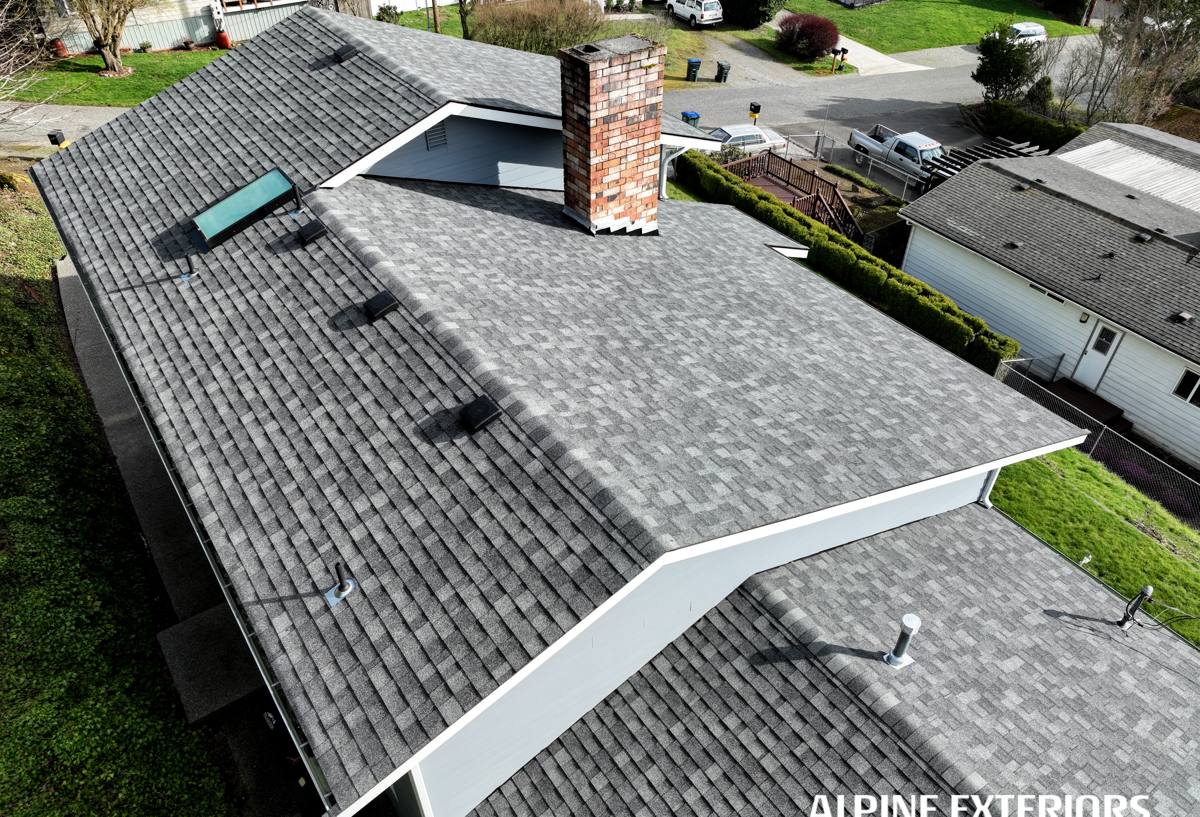
- Corroded or failing flashing around chimneys, skylights, and roof-to-wall transitions
- Clogged or undersized gutters causing water to back up under the first course of shingles
- Nail pops and fastener corrosion from salt-air exposure over time
- Soft or damp roof decking discovered under a small leak that had been building for a while
- Ridge cap and vent boot deterioration from repeated freeze-thaw and UV cycling
What a Correct Roof Repair Actually Involves
A repair that's done right starts with figuring out the real source of the problem, not just the visible symptom. Water travels — a stain on a ceiling in one room can trace back to a flashing failure several feet away on the roof. That's the part of the job that separates a lasting repair from a temporary patch.
Step 1: Find the Actual Source
We trace leaks from the interior evidence back to the roof, checking flashing, penetrations, and shingle condition in the area — not just the spot directly above the stain.
Step 2: Check the Decking
If water has been getting in for a while, the plywood or OSB decking underneath may be soft or delaminating. Repairing shingles over compromised decking doesn't hold — the deck has to be sound, or replaced in that section, before new roofing goes down.
Step 3: Match Materials and Method
Shingle color, profile, and granule wear all matter for a patch to blend and perform. Flashing gets replaced with new material rather than reused, since bent or corroded flashing rarely seals properly a second time.
Step 4: Address the Cause, Not Just the Leak
If moss caused the failure, that means addressing moss growth going forward. If it was a flashing detail that was undersized or poorly installed originally, the repair corrects that detail rather than repeating it.
Our Process for a Cordata Roof Repair
| Stage | What Happens |
|---|---|
| Initial inspection | On-site look at the roof, attic (if accessible), and the interior area affected, with photos documenting findings |
| Honest assessment | We tell you plainly whether it's a targeted repair, a larger section replacement, or something to just monitor |
| Written scope | A clear description of the work and materials before anything starts — no vague line items |
| Repair work | Decking check, flashing replacement where needed, shingle or material matching, and proper sealing |
| Cleanup and walkthrough | Debris removed, gutters checked, and the work reviewed with you before we consider it done |
Repair or Replace? How to Tell the Difference
Not every roof problem in Cordata calls for a full replacement, and not every leak can be solved with a patch. The honest answer usually comes down to the age of the roof, how widespread the damage is, and what's happening under the surface.
| Factor | Points Toward Repair | Points Toward Replacement |
|---|---|---|
| Roof age | Under 12-15 years | Nearing or past expected material lifespan |
| Damage area | Localized — one section or penetration | Spread across multiple roof planes |
| Decking condition | Solid, dry | Soft, delaminated, or repeatedly wet |
| Moss/algae extent | Surface growth, shingles intact underneath | Growth has lifted or degraded shingle mat |
| Flashing condition | Isolated failure point | General corrosion across multiple details |
When a roof is borderline, we'll say so, along with the trade-offs of each path — including what a repair buys you in time versus what it might not solve.
Materials and Approach: Why We Do It This Way
We use materials matched to the exposure the roof plane actually gets, rather than treating every section of the roof the same. A north-facing valley under tree cover in Cordata needs different attention than a south-facing slope that dries out quickly. On flashing specifically, we favor new corrosion-resistant material over reusing or patching old flashing — reused flashing has already been through however many wet seasons it's seen, and it tends to fail again at the same seam.
We're straightforward about warranty structure, too: manufacturer warranties on shingles typically cover material defects, not workmanship, which is why the installation detail — how flashing is lapped, how fasteners are placed, how ventilation is handled — matters as much as the shingle brand itself.
Why It Matters to Hire a Crew That Already Works in Cordata
A roofer who works Whatcom County regularly already knows which roof details tend to fail first in this climate — which flashing styles hold up to wind-driven rain, which north-facing roof lines need moss treatment sooner, and how far salt exposure reaches inland from the water. That local pattern recognition shortens the diagnosis and reduces the chance of a repair that misses the real cause.
It also means accountability. A crew that's planning to keep working in this neighborhood has a reason to get the repair right the first time and to stand behind it if something comes back.
Maintenance Checklist for Cordata Homeowners
- Check for moss growth on shaded roof slopes each fall and spring
- Clear gutters before the heavy fall rains start
- Look for granule buildup in gutters, a sign of shingle wear
- Check attic insulation and ventilation — poor airflow speeds up moss and moisture problems
- Have flashing around chimneys and skylights inspected every couple of years
- Trim back tree limbs that keep roof sections shaded and damp
- Address small leaks promptly — decking damage gets more expensive the longer water sits
Cost Factors for Roof Repair
Repair costs vary based on scope, so we won't quote a number without seeing the roof, but a few things reliably drive the price up or down:
| Factor | Effect on Cost |
|---|---|
| Roof pitch and access | Steeper or harder-to-reach areas take more time and safety setup |
| Decking condition | Rotted or soft decking adds material and labor to replace |
| Number of penetrations | More flashing points (chimneys, skylights, vents) means more detail work |
| Material matching | Older or discontinued shingle profiles can be harder to match cleanly |
| Extent of moss/algae damage | Heavier growth may mean more shingles need replacing, not just cleaning |
A Straightforward Next Step
If you're dealing with a leak, moss buildup, or just want an honest read on how much life is left in your roof, we're happy to take a look. There's no pressure and no upsell — just a clear picture of what's going on and what it would take to fix it right. Fill out the form below for a free, no-obligation estimate.