 Whatcom County
 Deck Building in Cordata: Built for What Whatcom County Actually Throws at It
Cordata sits close enough to the water and the low country around Bellingham that decks here take a different kind of beating than a deck in a drier climate. It's not one big storm that wrecks a deck out here — it's the slow grind of driving rain, salt-laden air off the Sound, and a moss season that can run eight or nine months a year. A deck built without that in mind will look fine for a season or two and then start showing problems: soft spots, black streaking, fasteners bleeding rust, boards cupping. We build decks in Cordata the way the climate demands, not the way a generic build-anywhere spec sheet says to.
This page covers what a deck actually needs to hold up here, what a correct build looks like from the ground up, and how we run the job from first call to final walkthrough.
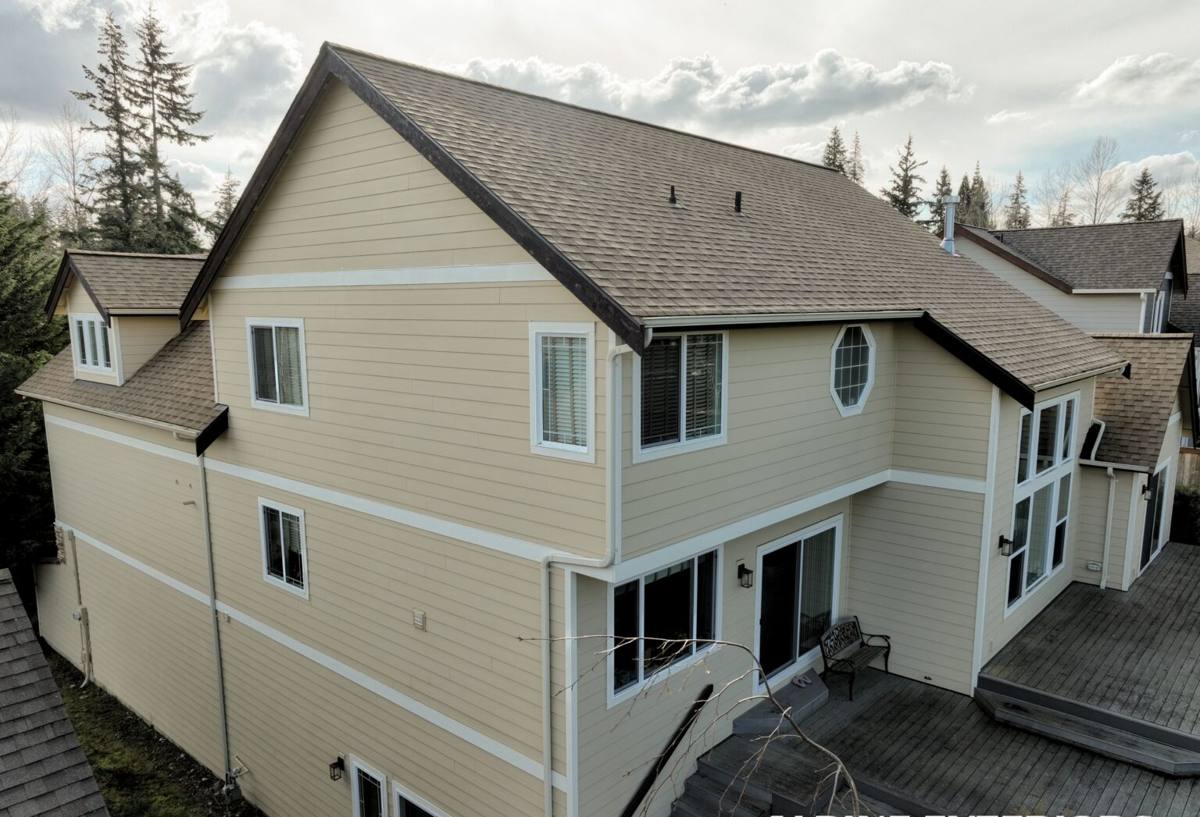
What Whatcom County's Climate Does to a Deck
Driving Rain and Standing Moisture
Rain in this area doesn't always fall straight down — wind off the water pushes it sideways into ledger boards, stair stringers, and any horizontal surface that isn't sloped to shed water. Framing that sits wet for weeks at a time is where rot starts, especially at joints, fastener holes, and anywhere two pieces of wood meet without a gap for airflow.
Salt Air
Cordata isn't right on the water, but the marine air that moves through Whatcom County still carries enough salt to accelerate corrosion on hardware that isn't rated for it. Standard zinc-coated screws and brackets can start rusting within a couple of seasons in this environment, and rust stains on decking are one of the most common complaints we hear from homeowners who had a deck built with the wrong fasteners.
Moss and Algae
Long stretches of damp, mild weather with limited direct sun are exactly what moss and algae need to take hold. On a deck, that growth isn't just cosmetic — it holds moisture against the wood surface, and on stairs or ramps it creates a real slip hazard. Decking that doesn't drain and dry quickly between rains will grow moss faster than one that does, regardless of species or finish.
What a Correct Deck Build Involves Here
Footings and Foundation
Everything starts underground. Footings need to be sized and set below frost depth per code, and in this region that also means accounting for soil that can stay saturated for long stretches. We don't shortcut footing depth or diameter to save a half-day of digging — it's the one part of the deck nobody sees again after backfill, and it's the part that determines whether the structure stays level and solid for decades.
Ledger Attachment and Flashing
The ledger board — where the deck attaches to the house — is the single most common failure point on decks in wet climates. It has to be properly flashed so water sheds away from the house rather than running behind the ledger and into the rim joist. We use flashing details designed for this, not a bead of caulk and hope.
Framing Materials and Fasteners
We frame with pressure-treated lumber rated for ground contact where it matters, and we fasten with stainless steel or coated hardware rated for the corrosive, high-moisture conditions common near the water and throughout Whatcom County. Joist hangers, hurricane ties, and structural screws all need to match that standard — mixing a good frame with bargain fasteners just moves the failure point from the wood to the metal.
Decking Material Choice
Composite, PVC, cedar, and pressure-treated lumber all perform differently under constant damp and low sun exposure. There's no universally "best" decking material — there's a best material for a given budget, maintenance appetite, and how much sun a particular section of yard actually gets.
Decking Material Comparison for a Cordata Climate
| Material | Moisture/Moss Resistance | Maintenance | Typical Lifespan |
|---|---|---|---|
| Pressure-treated lumber | Good if sealed regularly; prone to moss without upkeep | Annual cleaning and re-sealing recommended | 15-20 years with maintenance |
| Cedar | Naturally rot-resistant but still needs sealing in this climate | Periodic cleaning, re-staining every few years | 15-25 years with upkeep |
| Composite | Strong resistance to rot; surface can still host algae/moss film | Occasional washing, no sealing or staining | 25-30+ years |
| PVC/capped composite | Best moisture resistance of the group | Low — occasional washing | 25-30+ years |
None of these materials eliminate moss entirely — moss will grow on almost any horizontal surface that stays damp and shaded long enough. The differences are in how much the material itself degrades while that's happening, and how much work it takes to keep ahead of it.
Drainage and Airflow: The Details That Actually Prevent Rot
A deck that drains and dries quickly outlasts one that doesn't, regardless of species or brand. This is where a lot of cut-rate builds fail quietly over a few years rather than obviously on day one.
- Decking boards spaced to allow water to pass through rather than pool on the surface
- Joists protected with tape or a joist cap to keep water out of end grain and fastener holes
- Adequate clearance and ventilation underneath the deck so the structure can dry between rain events
- Stairs and landings sloped slightly so water sheds rather than sits
- Ledger flashing that directs water away from the house wall, not into it
- Fasteners and hardware rated for coastal/marine-adjacent exposure
Our Process for a Cordata Deck Build
1. On-Site Assessment
We walk the property, look at drainage patterns, sun exposure, and how the deck will tie into the house, and talk through what you actually want to use the space for. A deck that's mostly for morning coffee has different priorities than one built for regular entertaining.
2. Design and Material Selection
We go over decking and railing options honestly, including trade-offs in cost, maintenance, and how each material handles the local climate, so you're choosing based on real information rather than a showroom sample.
3. Permitting
Deck construction in Whatcom County typically requires a permit, and we handle that process as part of the job rather than leaving it to the homeowner to sort out after the fact.
4. Build
Footings, framing, ledger flashing, decking, and railing installed in sequence, with inspections at the points the county requires them.
5. Final Walkthrough
We walk the finished deck with you, cover basic care and what to watch for over the first year, and make sure everything meets what was agreed on before we call it done.
Sizing Up the Job: Cost Factors
| Factor | Why It Matters Here |
|---|---|
| Deck size and shape | More linear footage of framing, decking, and railing directly increases material and labor cost |
| Height off grade | Taller decks need more substantial footings, structural bracing, and often guardrails per code |
| Decking material | Composite and PVC cost more upfront than pressure-treated lumber but reduce long-term maintenance |
| Ledger and flashing complexity | Tying into an existing wall assembly correctly takes more time than a freestanding structure |
| Site access and grading | Sloped or hard-to-access lots common in this area can add excavation and footing work |
| Railing style | Custom or glass-panel railings cost more than standard wood or metal baluster systems |
Any honest quote for deck work should reflect these factors specifically for your property, not a flat per-square-foot number pulled from a generic estimate.
Why a Local Crew Matters for This Job
A crew that already works in Cordata and the surrounding Whatcom County area knows which fastener specs actually hold up here, how deep footings need to go given local soil and frost conditions, and which decking materials are worth the extra cost versus which ones are overkill for a shaded backyard that rarely sees direct sun. That's the kind of knowledge that comes from building and repairing decks in this specific climate, not from a national installation manual written for a different part of the country. It also means we're a known, reachable crew if a warranty question or maintenance question comes up years down the road — not a company that did one job in the area and moved on.
Maintenance Checklist for a New Deck in This Climate
- Sweep debris off the deck regularly, especially in fall — trapped leaves hold moisture and speed up moss growth
- Clean the surface at least once a year with a deck-safe cleaner to remove algae and moss film before it takes hold
- Check and re-seal wood decking on the manufacturer's recommended schedule, not just when it looks dry
- Inspect fasteners and hardware yearly for early rust staining, especially near the water side of the property
- Keep gutters and downspouts near the deck clear so runoff isn't dumping extra water onto or under the structure
- Trim back overhanging branches to improve sun exposure and airflow across the deck surface
If you're planning a new deck or need an honest look at whether an existing one is holding up the way it should, we're happy to come take a look. The estimate is free, there's no pressure to move forward, and you'll get a straight answer about what your Cordata property actually needs.