 Whatcom County
 Board & Batten Siding Built for Cordata's Climate
Cordata sits close enough to the water and the low hills north of Bellingham that homes here take a steady beating from three things at once: salt-laden air drifting in off Bellingham Bay and the Strait, driving rain that comes in sideways during fall and winter storms, and a moss season that can stretch from October well into spring. Board and batten siding — with its bold vertical lines and deep shadow reveals — is one of the most popular exterior styles we install in this neighborhood, but it's also one of the least forgiving styles if it's installed wrong. The vertical battens create dozens of extra seams and fastening points compared to a flat lap profile, and every one of those seams is a place water can find its way in if the underlying work isn't done correctly.
This page covers what board and batten siding actually needs to hold up in Cordata specifically — not siding in general — and why we install it only in James Hardie fiber cement rather than the vinyl, engineered wood, or cedar versions of the same look.
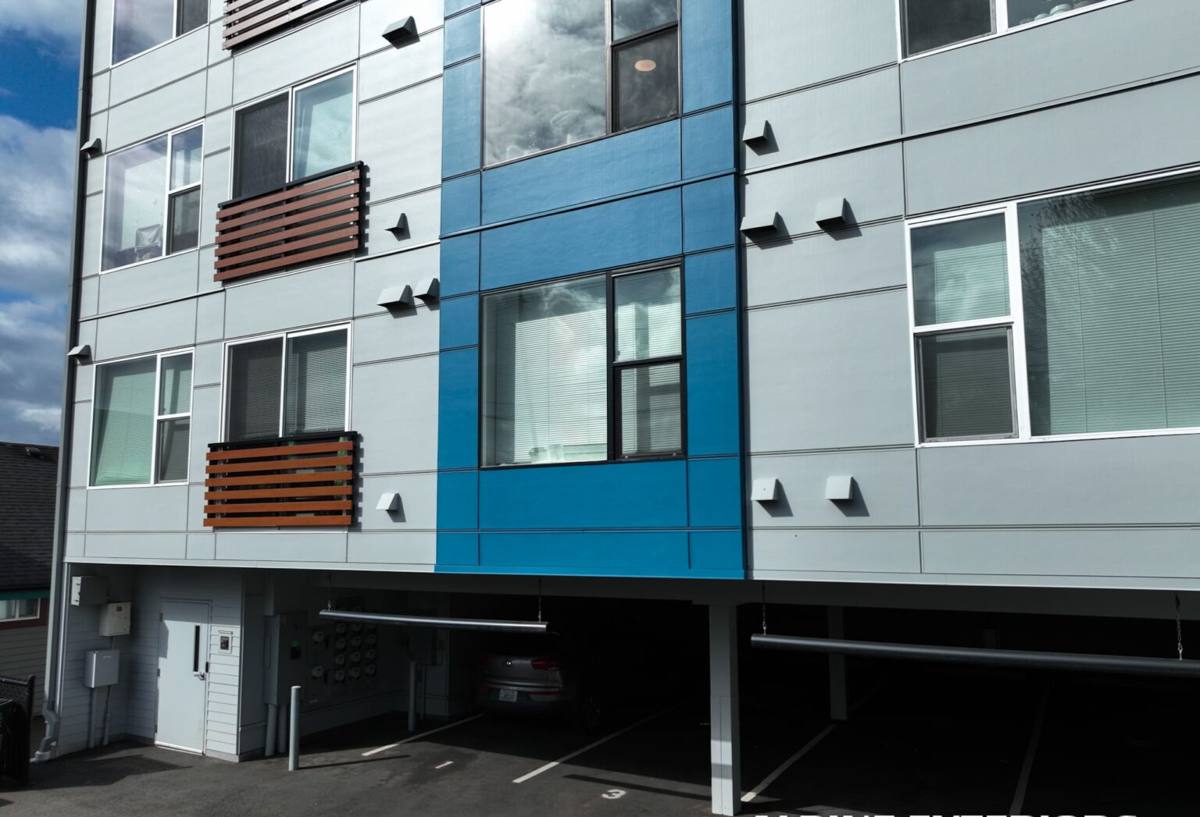
What Whatcom County's Climate Does to Vertical Siding
Salt air
Homes within a few miles of the water deal with airborne salt that accelerates corrosion on fasteners, flashing, and metal trim. Over years, undersized or improperly coated fasteners can weep rust streaks down a wall — a cosmetic problem that's also a sign the fastener itself is degrading.
Driving rain
Whatcom County's rain rarely falls straight down. Wind-driven storms push moisture sideways and upward, which means it can get behind battens and trim at horizontal joints, inside corners, and anywhere a batten meets a window or door. Board and batten's vertical battens are more exposed to this wind-driven moisture than a standard horizontal lap profile, because each batten edge is a raised surface facing the weather.
Moss and prolonged dampness
North-facing walls, shaded elevations near trees, and any spot that doesn't get much direct sun can stay damp for extended stretches. Moss and algae take hold in exactly those conditions, and once established they hold moisture directly against the siding surface, which is hard on any material that isn't engineered to resist it.
None of this is unique to Cordata — it's true across Whatcom County — but Cordata's mix of tree cover, proximity to water, and mature residential lots means most homes here have at least one wall facing this combination of stressors.
Why We Install Board & Batten Only in James Hardie Fiber Cement
Board and batten is available in several materials, and each one has a real trade-off worth understanding before you commit to a 20+ year exterior decision:
- Vinyl board and batten is inexpensive and low-maintenance in mild climates, but it expands and contracts significantly with temperature swings, which can telegraph through as waviness over time, and it's not rated for the fire resistance homeowners increasingly want in the Pacific Northwest.
- Engineered wood (LP SmartSide and similar products) looks good on day one and is easier to cut on-site, but it's wood-based at its core — meaning any breach in the factory coating or field-cut edge that isn't properly sealed becomes an entry point for moisture, and in a wet climate that risk compounds over the years.
- Cedar and primed spruce board and batten is the traditional look, but real wood requires ongoing refinishing, is vulnerable to moss and rot in shaded, damp areas, and is combustible.
James Hardie fiber cement is non-combustible, dimensionally stable across our temperature swings, and engineered specifically for wet marine climates through Hardie's HZ10 product line, which the Pacific Northwest falls under. We standardized on it because it's the one material in this comparison that doesn't ask a homeowner to accept a maintenance trade-off in exchange for the board and batten look. That's a professional judgment call we're upfront about — Hardie isn't magic, it's a well-engineered product installed correctly, and installation quality matters as much as the material itself.
What a Correct Board & Batten Installation Actually Involves
The visual appeal of board and batten is simple — vertical battens over a flat panel or overlapping boards — but the assembly behind that look is what determines whether it lasts. On every board and batten job we do, the work includes:
Water-resistive barrier and flashing first
A correctly lapped weather-resistive barrier goes on before any siding, with flashing integrated at every window, door, and penetration so water is directed out and down, never trapped behind the panel.
Proper batten spacing and fastening
Battens need consistent spacing over the field panel, fastened per Hardie's engineering specifications — not just nailed wherever looks even. Fastener placement, type, and depth all affect how the assembly holds up to wind-driven rain and how well it resists pull-through over time.
Rainscreen or drainage gap where appropriate
On walls that see heavy wind-driven rain or limited sun exposure, a drainage gap behind the siding lets any moisture that does get past the outer layer drain and dry instead of sitting against the wall assembly — an important detail for the shaded and north-facing walls common on Cordata lots.
Correct clearances
Board and batten siding needs proper clearance from grade, roof lines, decks, and other transitions so water and moss don't have a direct path to sit against the bottom edge of the siding.
What to ask any contractor bidding board and batten work
- Will you install a weather-resistive barrier and flashing package before the siding goes on?
- Are you following manufacturer fastener spacing and type specifications, not just "what's always worked"?
- Will there be a drainage gap on shaded or heavy-exposure walls?
- What clearance will the siding have from grade, roofs, and decks?
- Is the warranty backed by the manufacturer, the installer, or both — and what does each actually cover?
Our Process, Start to Finish
| Step | What Happens |
|---|---|
| Site walk and assessment | We look at every elevation, note shaded and high-exposure walls, existing moisture or moss issues, and current siding condition. |
| Written estimate | A clear scope covering material, prep work, flashing details, and drainage approach — no vague allowances. |
| Tear-off and prep | Removal of old siding, inspection of sheathing for hidden rot or damage, and repair of anything found before new material goes on. |
| Barrier, flashing, and drainage install | The unseen work that determines longevity — done before a single piece of visible siding goes up. |
| Board and batten installation | Panels and battens installed to Hardie spec, with attention to spacing consistency and fastening. |
| Trim, caulking, and final detail | Corners, window and door trim, and paint-grade caulking finished to a clean, consistent line. |
| Walkthrough | We review the finished work with you and flag any maintenance items specific to your home's exposure. |
Style Options and Hardie Product Lines
Board and batten with James Hardie is typically built using HardiePanel vertical siding with Hardie batten strips over the seams, giving you the classic bold-shadow look in a factory-finished ColorPlus finish that resists fading and chipping far better than field-applied paint. It can also be used as an accent — for example on a gable, dormer, or porch feature — paired with HardiePlank lap siding on the rest of the home, which is a common combination we see requested in and around Cordata for homes that want visual variety without going full board and batten on every elevation.
ColorPlus finishes come pre-baked at the factory, which matters in a rainy climate because the color coat is cured and sealed before the siding ever sees weather, rather than depending on field conditions the day it's painted.
Cost Factors for Board & Batten Siding
Every project is different, but these are the main variables that move the price on a board and batten job:
| Factor | Why It Matters |
|---|---|
| Wall complexity | More corners, gables, and window trim means more cutting, more flashing detail, and more labor. |
| Existing siding removal | Tear-off of old material and any sheathing repair adds time before new siding can go up. |
| Full replacement vs. accent use | Board and batten across an entire home costs more than using it as an accent alongside lap siding. |
| Drainage/rainscreen detail | Adding a drainage gap on high-exposure walls is a worthwhile upcharge in this climate, not a corner to cut. |
| Trim and color selection | Custom trim details and premium ColorPlus colors can shift material cost. |
We give a written, itemized estimate before any work starts so you can see exactly what's driving the number — not a single lump figure.
Maintenance in a Marine, Moss-Prone Climate
James Hardie board and batten is low-maintenance compared to wood, but "low-maintenance" doesn't mean "no maintenance" anywhere in Whatcom County. A simple seasonal routine keeps it performing as designed:
- Rinse siding annually, and more often on shaded or north-facing walls where moss and algae tend to establish first.
- Keep gutters clear so overflow doesn't run down the face of the siding during heavy storms.
- Trim back vegetation and tree cover that keeps a wall shaded and damp longer than necessary.
- Check caulking at trim and window edges every year or two, and have any cracked or failing caulk redone before it lets water behind the siding.
- Watch for green or black staining, which usually means a spot isn't drying between rains and may need attention beyond a simple rinse.
Why Hire a Crew That Already Works in Cordata
Board and batten is unforgiving of shortcuts, and a crew that already works throughout Whatcom County has seen how local exposure plays out over years — which elevations moss first, where driving rain tends to find weak details, and how salt air affects fastener choice near the water. That local pattern recognition, combined with installing James Hardie's engineered HZ10 product to spec, is what keeps a board and batten wall looking sharp and performing well a decade or more after installation, instead of needing early repairs.
If you're considering board and batten siding for a home in Cordata, we're happy to walk the property, look at your specific exposure, and put together a straightforward estimate — no pressure, no obligation. Use the form below to get started.