 Whatcom County
 Why Roofs in Columbia Wear Out Faster Than the Brochure Says
Most roofing material is rated and marketed based on generic national averages. Columbia doesn't get generic weather. Sitting inside Whatcom County's marine-influenced climate, homes here deal with a specific combination of salt-laden air off the water, long stretches of driving rain pushed sideways by wind, and a moss season that can run most of the year in shaded areas. None of those three things alone is unusual for the Pacific Northwest. Together, over years, they add up to roofs that fail from the inside out and from the surface down at the same time.
Salt Air and Metal Components
Salt air accelerates corrosion on anything metal that isn't rated for coastal exposure — nails, flashing, vent stacks, and fastener heads. A roof that looks fine from the ground can have fasteners backing out or rusting through underneath the shingle line, which is exactly the kind of failure that doesn't show up until water is already inside the attic.
Driving Rain and Wind-Driven Moisture
Rain that falls straight down is easy to shed. Rain that's pushed sideways by wind off the water finds every gap in flashing, every under-lapped shingle course, and every place where underlayment was cut short to save material. A roof built for calmer conditions elsewhere often isn't detailed for wind-driven rain, and that's where leaks start — not at the field of the roof, but at the edges, valleys, and penetrations.
Moss Season and Roof Deck Health
Whatcom County's shaded, moist conditions give moss a long growing season on north-facing slopes and anywhere tree cover blocks the sun. Moss isn't just cosmetic. It holds moisture against the shingle surface, lifts shingle edges as it grows, and over time works its way into fastener holes and seams. A roof that's constantly damp underneath its moss growth ages faster than a dry one, even if both are the same age and material.
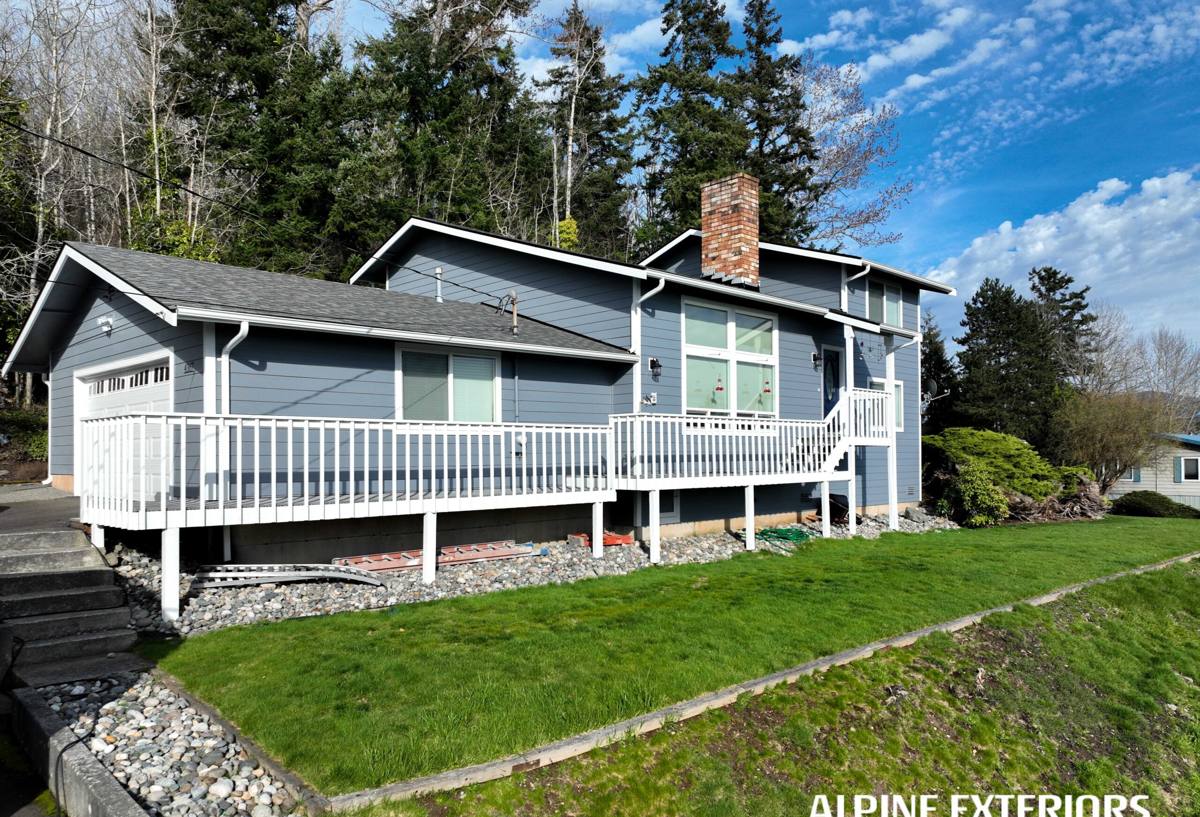
Signs a Columbia Home May Need a New Roof, Not Another Repair
Not every roof problem calls for full replacement, but there's a point where patching stops making financial sense. We look for a combination of the following before recommending a new roof over a repair:
- Granule loss heavy enough that you can see bare, shiny patches on the shingle surface
- Multiple past repairs concentrated in the same area, especially valleys or eaves
- Moss or algae established across large sections rather than isolated spots
- Soft spots or sagging when walked on, which usually points to deck damage underneath
- Daylight visible through the roof deck from inside the attic
- Shingles curling, cupping, or cracking across a significant portion of the roof
- Rusted or deteriorating flashing around chimneys, skylights, or vent penetrations
- The roof is at or past its material's realistic service life for this climate, not just its warranty number
If you're only seeing one or two of these, a targeted repair is often the honest recommendation. We'll tell you that directly rather than pushing a full tear-off you don't need yet.
What a Correct New Roof Installation Actually Involves
A new roof is only as good as what's underneath it. In a climate like Columbia's, the details that don't show up in a photo matter more than the shingle color.
Tear-Off and Deck Inspection
We remove the old roofing down to the deck rather than layering over it. That's the only way to actually see the plywood or plank sheathing underneath — soft, delaminated, or water-stained sections get replaced before anything new goes down. Skipping this step is the most common shortcut in the trade, and it's the one that causes the most expensive failures later.
Underlayment and Ice-and-Water Protection
Given how much wind-driven rain this area sees, we pay particular attention to self-adhering waterproof underlayment at eaves, valleys, and around every penetration, not just the minimum code-required areas. Synthetic underlayment across the rest of the field gives a second line of defense if wind ever drives water up under a shingle course.
Flashing Details
Flashing around chimneys, skylights, sidewalls, and vent pipes is where most leaks actually originate, not the open field of the roof. We use new flashing rather than reusing old pieces, and we detail step flashing and counter-flashing so water is directed out and away rather than relying on caulk or sealant to do the job long-term.
Ventilation
A roof deck that can't breathe traps moisture from inside the house, which shortens the life of the new roofing from underneath regardless of how good the shingles are. We check intake at the eaves and exhaust at the ridge and correct the balance where the existing setup is inadequate.
Roofing Material Options for Whatcom County Homes
There's no single "best" roofing material — the right choice depends on your home's exposure, your roof's pitch and shading, and how much long-term maintenance you're willing to take on. Here's how the common options actually compare for a home in this climate:
| Material | Moss/Moisture Resistance | Wind-Driven Rain Performance | Long-Term Maintenance |
|---|---|---|---|
| Architectural asphalt shingle | Good with proper underlayment; moss still needs periodic cleaning | Strong when installed with full underlayment and proper flashing | Low to moderate; occasional moss treatment |
| Standing seam metal | Excellent; sheds moisture and resists moss growth | Excellent; sealed seams handle wind-driven rain well | Low; coastal-rated fasteners recommended given salt exposure |
| Synthetic shake/slate | Good; doesn't absorb moisture like wood | Strong with correct installation | Low; more durable than natural wood alternatives |
| Natural cedar shake | Requires regular maintenance to resist moss and rot in this climate | Moderate; installation sensitivity is higher | High; periodic treatment and inspection needed |
We don't install natural cedar shake as a default recommendation for this area. It's a maintenance-intensive product in a climate that stays damp for much of the year, and the upkeep burden is significant if you want it to perform the way it does in drier regions. That's a judgment call based on moisture behavior here, not a knock on the material itself — homeowners who understand and want to take on that maintenance have every right to choose it, and we'll say so honestly if asked.
How Our New Roof Installation Process Works
- On-site inspection. We look at the current roof, attic ventilation, and any visible damage before recommending replacement over repair.
- Written estimate. You get a clear scope of work and price range before anything is scheduled, with material options explained in plain terms.
- Scheduling around weather. Given how much rain this area sees, we plan installation windows carefully and protect the open deck if conditions shift mid-job.
- Tear-off and deck repair. Old roofing comes off, the deck is inspected, and any damaged sheathing is replaced before moving forward.
- Underlayment, flashing, and material installation. Waterproofing details go in first, followed by the new roofing material and all flashing components.
- Ventilation check. Intake and exhaust airflow are confirmed or corrected as part of the job, not treated as an optional add-on.
- Final walkthrough. We review the completed roof with you, including gutters and any areas that need periodic attention like shaded, moss-prone slopes.
What Affects the Cost of a New Roof in Columbia
Every roof is different, and we won't quote a number without seeing the job, but these are the main factors that move price up or down:
| Factor | Why It Matters |
|---|---|
| Roof size and complexity | More valleys, dormers, and penetrations mean more flashing work and labor time |
| Deck condition | Rotted or soft sheathing found during tear-off adds material and labor to replace it properly |
| Material choice | Asphalt, metal, and synthetic options carry different material and installation costs |
| Roof pitch and access | Steep or hard-to-access roofs take longer and require more safety setup |
| Existing layers | A full tear-off of multiple old layers takes more time than a single-layer removal |
| Ventilation corrections | Adding or upgrading intake/exhaust venting is worth the modest added cost for roof longevity |
Be cautious of any bid that's dramatically lower than the others you've collected — it usually means underlayment, flashing detail, or deck repair is being cut somewhere you won't see until it's a problem.
Why Local Experience in Columbia Specifically Matters
A roofing crew that mainly works inland or in drier parts of the state may not default to the underlayment coverage, flashing details, or ventilation balance that this area actually needs — not because the work is careless, but because the climate they're used to doesn't demand it. Crews who work Columbia and the surrounding Whatcom County area regularly see which roof details actually hold up against salt air, sideways rain, and long moss seasons, and which ones fail here even though they'd be fine somewhere drier. That local pattern recognition is worth as much as any single material choice.
Keeping a New Roof Healthy Through Moss Season
A correctly installed new roof isn't maintenance-free, especially on shaded slopes. Periodic moss treatment, keeping gutters clear so water doesn't back up under the shingle edge, and trimming back overhanging branches that keep sections of the roof damp all extend the life of the investment you just made. We'll walk through what your specific roof's shading and exposure means for upkeep as part of the final walkthrough, so you're not guessing at a maintenance schedule after we leave.
If your roof is showing its age or you're just planning ahead, we're happy to take a look and give you an honest read on repair versus replacement — no pressure, no obligation. Use the form below to request a free estimate for your Columbia home.