 Whatcom County
 Board & Batten in Columbia: A Style That Has to Earn Its Keep
Board and batten siding has a clean, vertical look that shows up on a lot of homes in and around Columbia — from older bungalows with an accent gable to newer builds using it as a full exterior. It's a popular choice because it reads as sturdy and a little more architectural than plain lap siding. But in this part of Whatcom County, "looks good" is only half the job. The siding also has to survive salt-laden air off the bay, sideways rain that doesn't let up for months, and a moss season that can stretch from fall through spring. A board and batten job that isn't built for that reality will look fine for a year or two and then start showing problems that are expensive to unwind.
We work on homes throughout Whatcom County, and Columbia comes with its own mix of housing stock — older homes that have been through multiple re-sides, and newer construction where the original siding choice is just now hitting the age where flaws start to show. Either way, the climate here doesn't forgive shortcuts.
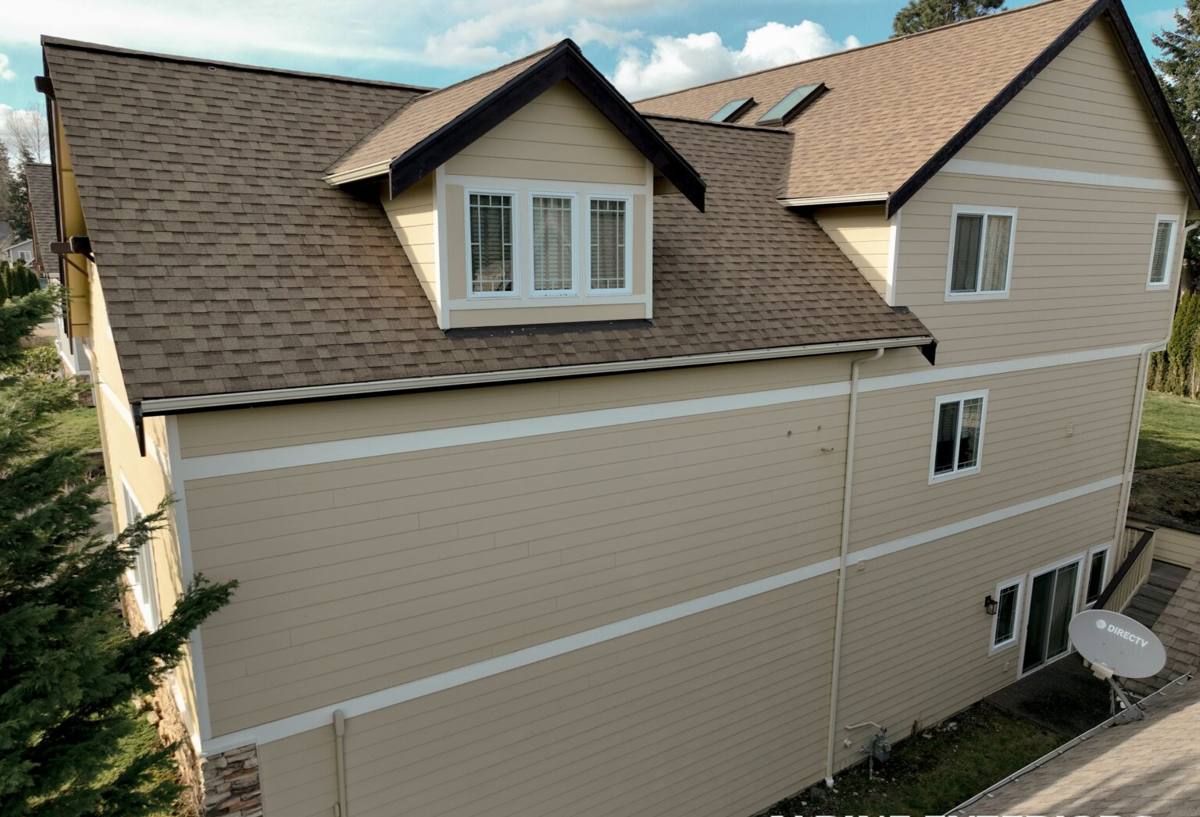
What Columbia's Climate Actually Does to Siding
It's worth being specific about what "coastal Pacific Northwest climate" means for a wall assembly, because it's not just "it rains a lot."
Salt Air
Proximity to Bellingham Bay means a steady low-level exposure to salt-laden moisture in the air. Over years, that salt exposure accelerates corrosion on exposed metal fasteners, flashing, and trim — and it can degrade paint and coatings faster than an inland home would experience. Siding materials and finishes that aren't built to handle that exposure fade, chalk, or fail at the fastener points first.
Driving, Wind-Driven Rain
Whatcom County gets rain that doesn't just fall straight down — wind pushes it sideways into wall assemblies, especially on exposed elevations. Any gap in flashing, caulking, or panel overlap becomes an entry point. Vertical board and batten siding has more seams than a single flat panel, which means more places where water management has to be right the first time.
Long Moss and Moisture Season
Extended damp periods with limited direct sun create ideal conditions for moss, algae, and mildew growth on north- and shade-facing walls. This isn't just cosmetic — sustained moisture sitting against a wall surface for months at a time is exactly the condition that breaks down materials not engineered to handle it, and it's a major reason organic-based sidings (wood, some engineered wood products) need more frequent maintenance here than in drier climates.
Why We Install Board & Batten Only in James Hardie Fiber Cement
We get asked why we don't offer board and batten in vinyl, LP SmartSide, primed wood, or cedar. Our answer isn't that those products are worthless — each has a place. It's that we've standardized on one product line because we want to stand behind every job we do in this specific climate, and James Hardie fiber cement is the material that holds up best against salt air, driving rain, and moss season without demanding constant upkeep from the homeowner.
Fiber cement is non-combustible, doesn't rot or feed insects, and doesn't swell or delaminate the way wood-based products can when moisture gets behind them repeatedly over the years. James Hardie also finishes its board and batten panels with a factory-applied ColorPlus finish, which is baked on and warranted against fading and chipping in a way that field-applied paint or stain on wood-based sidings typically isn't. And Hardie's HardieZone system engineers its products specifically for regional climates — including HZ5, developed for wetter, more variable climates like ours in the Pacific Northwest — rather than shipping one generic product everywhere.
That's the whole reason for our "one product" approach: it lets us guarantee installation quality against a product we know behaves predictably in Whatcom County conditions, instead of juggling different maintenance expectations for every material a homeowner might ask for.
What a Correct Board & Batten Installation Actually Involves
Board and batten looks simple from the curb, but the installation has more steps than a standard lap siding job, and skipping any of them is where problems start.
- Weather-resistive barrier check: the house wrap or building paper underneath has to be intact and properly lapped before any siding goes up — this is the actual first line of defense against wind-driven rain.
- Furring or proper drainage plane: vertical siding needs a way for incidental moisture to drain and the wall to dry out behind it. This is one of the most commonly skipped steps on lower-quality installs.
- Correct panel spacing and fastening: James Hardie specifies exact fastener placement, spacing, and clearances for board and batten panels — get this wrong and you create stress points that show up as cracking or fastener pop years later.
- Batten placement over seams: the battens aren't just decorative — they cover the vertical panel joints and have to be installed with the correct overlap and fastening to actually shed water.
- Flashing at every penetration: windows, doors, vents, and any wall-mounted fixture need proper flashing integration, not just caulk over a gap.
- Clearance from grade, decks, and roof lines: siding installed too close to the ground, a deck surface, or a roof intersection traps moisture and voids manufacturer warranties.
- Caulking at approved joints only: Hardie's installation instructions specify where caulk is appropriate and where it isn't — over-caulking can trap moisture instead of releasing it.
Any one of these done wrong won't necessarily show up on day one. It shows up two, five, or ten years later — usually as a repair that costs more than doing it right the first time would have.
How Our Process Works for Columbia Homes
1. On-Site Assessment
We start by walking the home and identifying what's actually going on with the current siding, trim, and water management — not just the visible surface. In this climate, we're specifically checking for hidden moisture damage around windows, at the base of walls, and behind any areas where moss or algae growth suggests water has been sitting.
2. Substrate and Moisture Check
Before any new siding goes up, we confirm what's underneath is sound. If sheathing has taken on water damage from a prior installation's flashing failures — which we see more often than you'd expect on older Whatcom County homes — that gets addressed before it's covered up again.
3. Tear-Off and Prep
Old siding comes off, the weather barrier is inspected and repaired or replaced as needed, and any trim or flashing details are corrected before the new board and batten system goes on.
4. Installation to Manufacturer Spec
We install James Hardie board and batten siding following the manufacturer's fastening, spacing, and clearance requirements exactly — this is what keeps the material's warranty valid and what actually makes the difference in how it performs against Columbia's rain and salt exposure over time.
5. Final Inspection and Walkthrough
We walk the finished job with the homeowner, confirm caulking and touch-up work is complete, and go over basic care so the siding performs the way it's designed to for its full service life.
Board & Batten vs. Traditional Lap Siding: What Changes in This Climate
| Factor | Board & Batten (Vertical) | Traditional Lap (Horizontal) |
|---|---|---|
| Water shedding path | Relies on batten overlap and proper drainage plane behind panels | Relies on horizontal overlap, generally more forgiving of minor imperfections |
| Seam count | More vertical seams to detail correctly | Fewer critical seams per square foot |
| Salt air exposure at fasteners | Batten fasteners need correct spacing to avoid stress cracking near coast-exposed walls | Standard fastening pattern, similar exposure risk |
| Moss/algae visibility | Vertical lines can make streaking more visible on shaded elevations | Horizontal lines tend to mask streaking somewhat differently |
| Best suited for | Accent walls, gables, full modern or farmhouse-style exteriors | Traditional and craftsman-style homes, full exteriors |
Neither style is "better" outright — it comes down to the home's design and making sure whichever profile is chosen gets installed with this climate's demands in mind.
Signs Your Current Siding Is Already Behind the Curve
If you're in Columbia and wondering whether it's time to talk about replacement rather than another round of patching, these are the signs we look for first:
- Persistent moss or algae growth that returns within weeks of cleaning
- Soft spots, bubbling, or visible swelling near the base of walls or around windows
- Fastener heads showing rust streaks or "popping" through the surface
- Paint or finish that's chalking, peeling, or fading unevenly across the same wall
- Visible gaps at seams, corners, or batten joints where daylight or drafts get through
- A musty smell or visible staining on interior walls that share an exterior wall with problem siding
What to Ask Before Hiring Anyone for This Job
Board and batten is easy to install poorly and have it look fine for a year. Before hiring a crew for a Columbia home, it's worth asking specifically:
- Do you follow the manufacturer's published fastening and clearance specifications, and can you show me what those are?
- How do you handle the drainage plane and weather barrier behind vertical siding specifically?
- What's your experience with homes in this immediate area, given the salt air and rain exposure?
- What warranty applies to materials, and separately, what warranty applies to your labor?
- Will you inspect and address existing moisture or sheathing damage before installing new siding over it?
A crew that already works Columbia regularly should be able to answer all of this without hesitation — because they've run into the same conditions on the last job down the street.
Maintenance Expectations Once It's Installed
One advantage of James Hardie fiber cement in board and batten form is that the maintenance burden in a climate like this is genuinely lower than wood-based alternatives — but "lower" doesn't mean "none." A periodic gentle wash to keep moss and algae from getting established, an annual visual check of caulking at trim and penetrations, and prompt attention to any physical damage (from a ladder, debris, or impact) will keep the siding performing for the long haul. Because the color is baked into the ColorPlus finish rather than field-applied, you're not looking at a repaint cycle the way you would with painted wood siding — but you should still expect to keep an eye on it like any other exterior surface exposed to this much moisture.
Let's Take a Look at Your Home
If you're weighing a board and batten look for a home in Columbia, or your current siding is already showing what a few Whatcom County winters can do, we're glad to come take a look. There's no pressure and no cost to get an honest read on what your home actually needs — just fill out the form below and we'll set up a time to walk the property with you.