 Whatcom County
 Board & Batten Siding in Silver Beach's Climate
Silver Beach sits close enough to the water that homes here deal with a specific combination of weather stress: salt-laden air moving in off the water, driving rain that hits walls sideways rather than falling straight down, and a moss season that can stretch across most of the year in the shaded, damp corners of a property. Board and batten siding is a strong architectural choice for this kind of neighborhood — the vertical lines read as clean and modern or classic farmhouse depending on trim and color, and the deep shadow lines the battens create hide minor wall irregularities better than lap siding does. But the same profile that looks good is also less forgiving of a sloppy install than a standard horizontal plank job.
The vertical seams in board and batten siding are longer, run with gravity instead of across it, and rely on the battens themselves to shed water at every joint. In a climate that delivers sustained wind-driven rain, any weakness in that seam detail shows up as staining, soft wood, or a failed panel a lot sooner than it would in a drier region. That's the piece of this job that matters most in Silver Beach, and it's the piece a lot of installers treat as an afterthought.
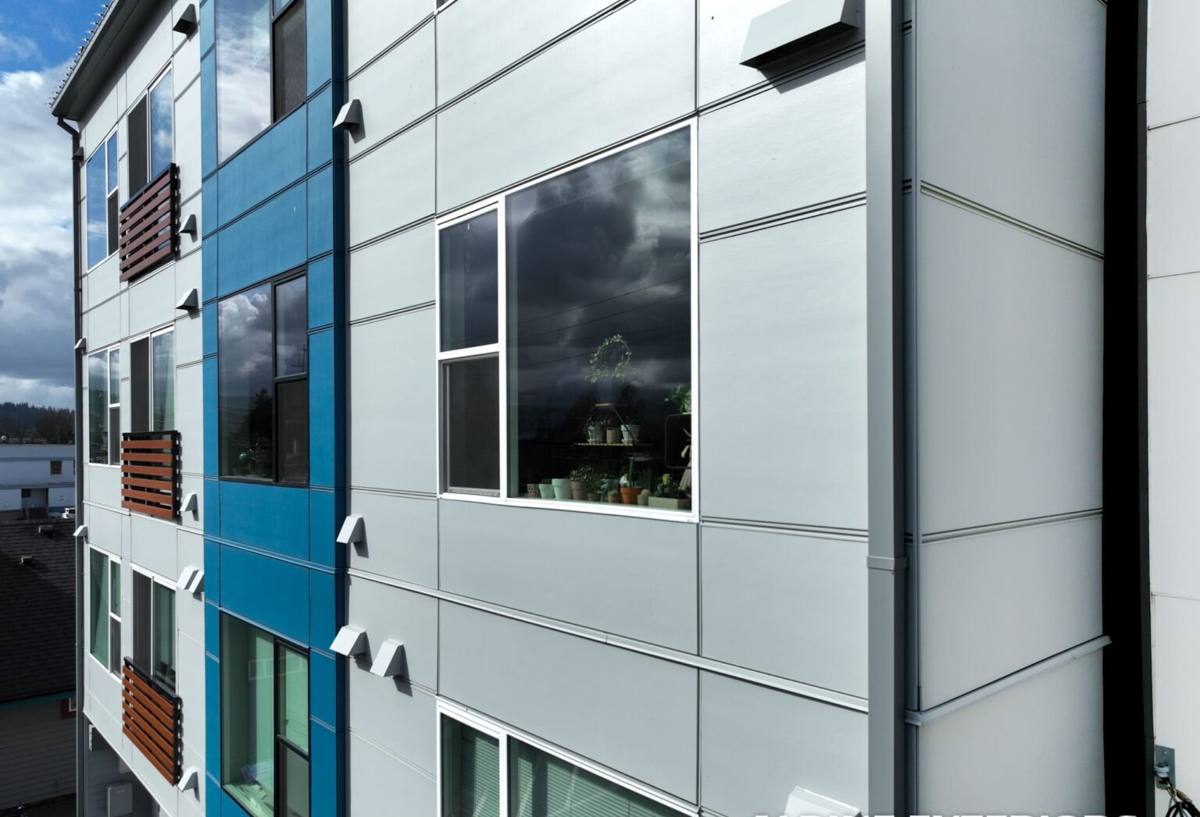
What Local Homes Actually Need From This Siding
Before talking about product or process, it's worth being specific about what a Silver Beach home is asking of its siding over a 30-plus year lifespan:
- Resistance to moisture wicking at the vertical seams where battens meet the base panel
- A finish that doesn't rely on the homeowner repainting every 5-7 years to stay protected
- Material that won't swell, cup, or rot when it stays damp for days at a stretch during fall and winter
- A surface that doesn't hold moss and algae film the way porous or textured materials can in shaded, low-airflow areas
- Enough dimensional stability that the reveal lines stay straight and the battens don't pull away from the wall over time
Any siding material can look right on install day. The differences show up three, five, and ten years later, which is exactly when a lot of homeowners discover that the product or the install cut a corner somewhere.
What a Correct Board & Batten Installation Involves
Drainage plane and rainscreen gap
Vertical siding needs a clear path for water to get out from behind it. That means a weather-resistive barrier installed correctly, furring strips or a rainscreen mat to create an air gap behind the panels, and flashing details at every horizontal transition — window heads, roof-to-wall intersections, and the base of the wall. Skipping the rainscreen gap is one of the most common shortcuts we see on board and batten jobs, and it's also one of the hardest problems to diagnose from the outside once the siding is up.
Fastening pattern and reveal consistency
Battens need to be fastened into structural framing or properly blocked backing, not just into the base panel, and spaced with a consistent reveal so the wall doesn't develop a wavy or uneven look as the house settles seasonally. Fastener placement also has to account for expansion and contraction — fiber cement moves less than wood, but it still moves, and the fastening schedule has to respect that.
Sealant discipline
A well-detailed board and batten job uses flashing and lap geometry to shed water first, and caulk as a secondary defense — not the other way around. Jobs that lean on caulk to do the primary sealing work will fail as soon as that caulk ages, shrinks, or is applied in the wrong weather conditions during install.
The James Hardie Board & Batten System
We install James Hardie fiber cement exclusively, and board and batten is one of the styles where that decision matters the most. Hardie's board and batten options give you a factory-engineered panel and batten combination rather than a field-built approximation, which removes a lot of the variability that causes problems later:
- Factory-primed, dimensionally consistent panels and battens that don't warp or cup the way raw wood can when it absorbs moisture
- ColorPlus factory finish — a baked-on finish applied under controlled conditions, which holds color and resists fading and moss growth far better than field-applied paint, especially useful in a climate where repainting is a multi-day weather gamble
- Non-combustible fiber cement construction, which doesn't provide the fuel source that wood-based products do
- Climate-engineered HZ5 formulation for the Pacific Northwest, designed around freeze-thaw cycling and sustained moisture exposure rather than a one-size-fits-all national spec
- A transferable, manufacturer-backed warranty that follows the home if it's sold, which matters in a neighborhood where board and batten's curb appeal is often part of what makes a home marketable
Hardie's board and batten profile can be built as a panel-and-batten system or as vertical plank with battens over the seams, depending on the look you want and the wall's existing sheathing condition. Either way, the water-management detailing described above still has to be done correctly — the product doesn't install itself, and even the best fiber cement will underperform if it's put up without a rainscreen gap and proper flashing.
Comparing Board & Batten Material Options
| Material | Moisture behavior in wet climates | Finish durability | Long-term maintenance |
|---|---|---|---|
| James Hardie fiber cement | Doesn't swell or rot; engineered HZ5 formula for the region | Factory ColorPlus finish, resists fading and moss staining | Occasional wash; no repainting cycle needed for years |
| Cedar or primed spruce | Absorbs moisture, prone to cupping and rot at seams if not maintained | Field-applied paint or stain, wears faster in driving rain | Repainting/restaining every few years; seam caulk needs regular inspection |
| Vinyl | Doesn't rot, but can warp or crack in temperature swings; seams can allow water intrusion | Color molded in but fades over time; limited board-and-batten realism | Low maintenance but limited repair options if damaged |
| LP SmartSide (engineered wood) | Treated wood strand product; still wood-based and sensitive to sustained moisture at cut edges and seams | Factory finish available, but performance depends heavily on correct sealing of every cut | Requires diligent caulk/sealant maintenance at edges |
Our Process on a Silver Beach Board & Batten Job
- On-site assessment — we look at existing sheathing condition, current moisture issues, sun/shade exposure, and how the house is oriented to prevailing wind and rain
- Removal and inspection — old siding comes off and we check the sheathing and framing underneath for rot or hidden moisture damage before anything new goes up
- Weather barrier and rainscreen installation — a correctly lapped weather-resistive barrier plus furring or rainscreen matting to create the drainage gap board and batten depends on
- Flashing at every transition — window and door heads, roof lines, deck ledgers, and the base of the wall all get flashed before siding goes on
- Panel and batten installation — fastened to Hardie's specifications with consistent reveals and proper fastener placement into structural backing
- Trim, caulk, and final detailing — sealant used as a secondary layer, not a substitute for correct flashing
- Walkthrough — we go over the finished job with you before calling it done
Why Local Experience in Whatcom County Matters Here
Board and batten failures are rarely dramatic — they're slow. A seam that wasn't detailed right doesn't fail in month one; it shows up as a dark stain two winters later, after the wood underneath has already started to soften. A crew that's worked other homes in and around Silver Beach has usually already seen how a particular street's exposure to wind, or a particular lot's shade pattern, tends to push moss growth or wear siding unevenly. That's not something you can fully compensate for with a generic install checklist — it comes from having actually worked walls in this specific stretch of Whatcom County, in this specific weather.
It also matters for warranty and service. A crew based locally is the crew that shows up in five years if you have a question about a seam or want a section inspected after a bad storm — not a company that did one job in the area and moved on.
Maintenance Checklist for Board & Batten Siding
- Rinse siding annually to remove salt residue, pollen, and early moss growth before it takes hold
- Inspect caulk lines at trim and penetrations each fall, before the wet season sets in
- Trim back vegetation and tree limbs that keep any section of the wall shaded and damp longer than the rest of the house
- Check gutters and downspouts twice a year — overflow onto siding is one of the most common causes of localized staining and moss buildup
- Look for any soft spots, dark streaking, or separation at batten edges after major storms
Cost Factors to Expect
Board and batten with James Hardie generally costs somewhat more than standard lap siding, driven mainly by the additional labor of installing battens over base panels or planks and the extra flashing detail at every seam. Home size, the amount of trim and architectural detail, the condition of the existing sheathing, and site access all affect the final number more than the siding material itself. We'll walk through the specifics for your home rather than quoting a number that doesn't reflect your actual wall conditions.
If you're weighing board and batten for a home in Silver Beach, we're happy to walk the property, look at what you're currently dealing with, and give you a straightforward, no-pressure estimate — just fill out the form below.