 Whatcom County
 Edgemoor's Climate Asks More of Board & Batten Siding
Edgemoor sits close to Bellingham Bay, and that proximity to open water shapes everything about how siding performs there. Board & batten is one of the more demanding siding profiles to get right in this setting, because its vertical boards and raised battens create more joints, more fastener penetrations, and more edges where water and salt-laden air can find a way in. A batten profile that looks sharp for the first year but wasn't detailed for Whatcom County's marine exposure tends to show its weaknesses by year three or four.
Salt Air and Marine Exposure
Homes near the bay deal with airborne salt that accelerates corrosion on fasteners, flashing, and any hardware that isn't rated for coastal exposure. On a board & batten wall, the battens themselves are fastened through the field boards, which means there are simply more exposed fastener heads than on lap siding. If those fasteners aren't corrosion-resistant and properly set, they become the first failure point — rust streaking down a batten is one of the most common early complaints we hear about on marine-adjacent homes.
Driving Rain Off the Bay
Wind off the water doesn't just bring rain straight down — it drives it sideways into wall assemblies, and board & batten's vertical seams give wind-driven rain a more direct path toward the sheathing than horizontal lap siding does. Correct water-resistive barrier detailing behind the boards, along with proper batten spacing to allow drainage and drying, matters more here than it would on a more sheltered inland lot.
A Long Moss Season
Whatcom County's wet season runs long, and shaded or north-facing walls in a tree-lined neighborhood like Edgemoor stay damp for extended stretches. Moss and algae take hold on any siding material that can't shed moisture quickly, and once organic growth establishes itself in the vertical grooves between boards, it holds moisture against the material and accelerates whatever underlying problem already exists.
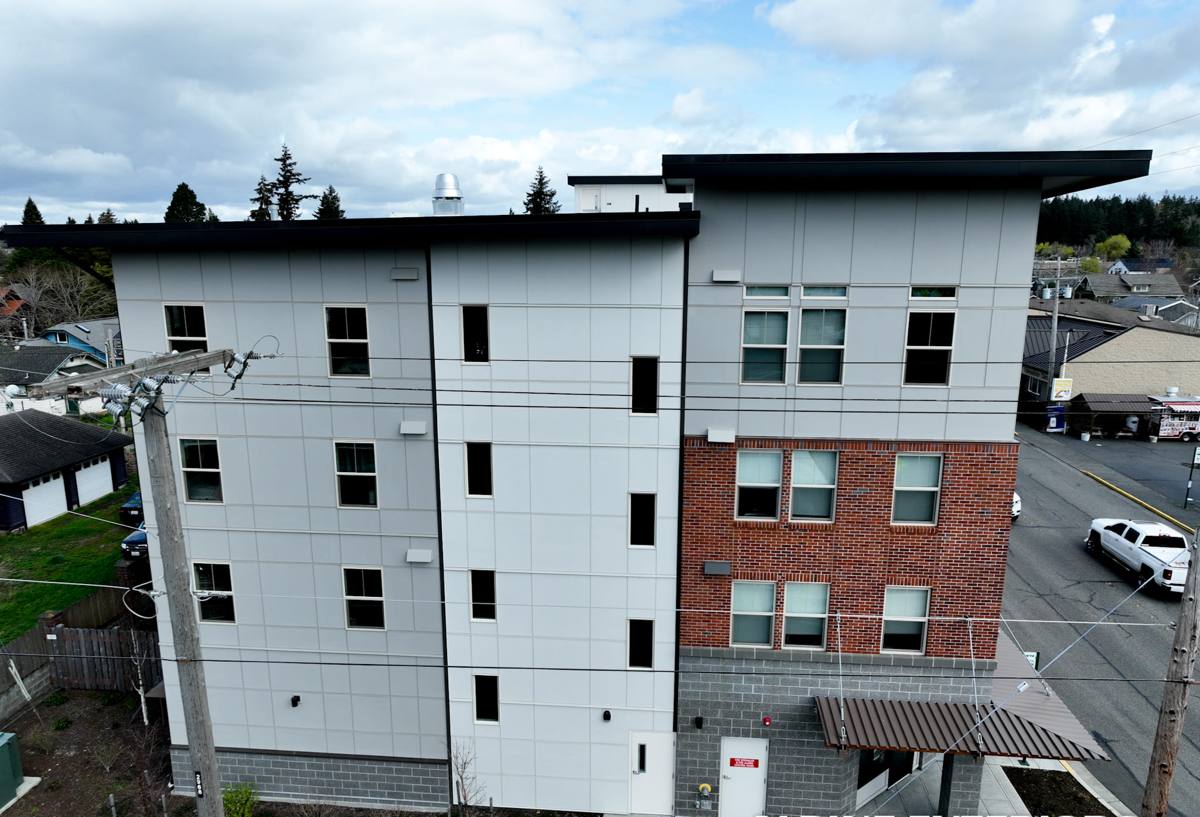
What a Correctly Installed Board & Batten Wall Actually Involves
Board & batten looks simple from the curb — vertical boards, evenly spaced strips — but the installation sequence underneath determines whether it holds up in this climate or becomes a recurring maintenance headache.
Substrate and Moisture Barrier
Everything starts behind the boards. A continuous water-resistive barrier, properly lapped and sealed at every penetration, is what actually keeps a wall dry — the siding itself is the second line of defense, not the first. Skipping or rushing this layer is invisible on installation day and expensive to fix later, because it means removing the finished siding to correct it.
Batten Spacing and Fastening
Battens need consistent spacing for a clean look, but consistency has to be balanced against proper fastening into structural framing, not just into the field boards. Fasteners driven only through the batten into the board beneath it, without reaching solid framing, work loose over time — especially under the freeze-thaw and wet-dry cycling common to a Whatcom County winter.
Flashing and Trim Details
Windows, doors, corners, and the base of the wall are where board & batten installations most often fail. Each of these transitions needs flashing that directs water outward and downward, never behind the cladding. On a marine-exposed home, we pay particular attention to the bottom termination of the siding and any horizontal trim, since these are the spots where standing water and salt residue do the most long-term damage.
Why We Install Only James Hardie Fiber Cement
We don't install LP SmartSide, vinyl, Cemplank, Allura, primed spruce, or cedar board & batten. That's a deliberate standard, not an oversight, and it's worth explaining honestly rather than just stating it.
Vinyl board & batten is inexpensive and low-maintenance in mild climates, but it expands and contracts significantly with temperature swings, and in driving coastal wind it's more prone to flexing and water intrusion at the seams than a rigid material. Cedar is genuinely beautiful and has real merit as a natural material, but real wood in a salt-air, high-moisture environment requires a maintenance commitment — refinishing, sealing, and monitoring for rot — that most homeowners underestimate when they choose it. Primed spruce and other wood composites carry similar moisture-sensitivity concerns, often with less proven long-term performance data than cedar. LP SmartSide and other engineered wood products have improved over the years and hold up reasonably well in many climates, but they're still wood-strand based, meaning moisture management at every cut edge and fastener penetration is non-negotiable — miss one detail and water finds the vulnerable strand core.
James Hardie fiber cement doesn't have a strand-based core to protect, it's non-combustible, and Hardie's HZ5 product line is engineered specifically for the freeze-thaw and moisture cycling common to the Pacific Northwest. The factory-applied ColorPlus finish resists fading and chipping better than field-applied paint, which matters in a neighborhood exposed to constant salt air and UV. Combined with a transferable warranty, it's the product we're willing to put our name behind.
| Factor | James Hardie Fiber Cement | Vinyl / Wood-Alternative Options |
|---|---|---|
| Moisture core sensitivity | No wood-strand core to absorb water | Wood-based cores vulnerable at cut edges |
| Salt air / coastal performance | Engineered HZ lines rated for marine exposure | Varies; often requires added sealing |
| Finish longevity | Factory ColorPlus, fade and chip resistant | Field-applied paint or factory coatings wear faster |
| Combustibility | Non-combustible | Combustible (wood, vinyl) |
| Warranty | Long-term, transferable | Varies by manufacturer, often shorter |
Our Process for Edgemoor Board & Batten Projects
- Site walk and exposure assessment — we evaluate how much direct bay exposure, shade, and wind driving each wall faces, since not every side of the house needs identical detailing.
- Moisture barrier and flashing plan — before any board goes up, we plan out drainage paths, flashing at every opening, and how the base of the wall terminates.
- Board and batten layout — we lay out spacing for a clean, consistent reveal while making sure every batten lands on solid fastening.
- Installation to Hardie's fastening and clearance specifications — including proper ground clearance and gaps at abutting surfaces, both of which affect long-term moisture performance.
- Final detailing and cleanup — caulking only where Hardie specifies it (not as a substitute for proper flashing), and a final walkthrough.
Keeping Board & Batten Siding Performing in a Marine Climate
Even correctly installed siding benefits from periodic attention in a climate like this one. Homeowners in Edgemoor can extend the life and appearance of a board & batten wall with a few simple habits:
- Rinse salt residue and grime off exterior walls once or twice a year, especially on sides facing the bay
- Keep gutters clear so overflow doesn't run down the face of the siding
- Trim back vegetation that shades walls and traps moisture against the surface
- Check caulking at trim and window transitions annually and have gaps addressed before they widen
- Watch for early moss or algae growth in grooves and shaded corners and address it before it spreads
What Board & Batten Siding Typically Costs in Edgemoor
Pricing depends on the size and complexity of the home, how much trim and detail work is involved, and the condition of the substrate underneath the existing siding. Rather than quote a number that doesn't reflect your specific home, here's what tends to move the price:
| Cost Factor | Why It Matters |
|---|---|
| Wall complexity (corners, dormers, transitions) | More cuts, more flashing detail, more labor time |
| Substrate condition | Rot or moisture damage found during tear-off adds repair scope |
| Batten spacing and board width chosen | Affects material quantity and installation time |
| Exposure level (direct bay-facing walls vs. sheltered sides) | May call for added flashing or drainage detailing |
| Existing siding removal | Tear-off adds labor separate from the new install |
Why a Crew Already Familiar With Edgemoor Matters
A siding crew that regularly works this stretch of Whatcom County already knows how differently a bay-facing wall behaves compared to a sheltered one three streets back, and that shapes decisions before the first board ever goes up — flashing details, fastener selection, and where extra attention to drainage actually pays off. That's the kind of judgment that comes from repeated work in this specific climate, not from a generic install checklist applied the same way everywhere.
We install James Hardie board & batten siding to the manufacturer's specifications, with detailing suited to Edgemoor's marine exposure, and we stand behind the work with the product's transferable warranty. If you're weighing a board & batten project on a home near the bay, we're happy to take a look and put together a free, no-pressure estimate — no obligation, just an honest read on what your home needs.