 Whatcom County
 Blaine's Coastal Climate Asks More of Your Siding
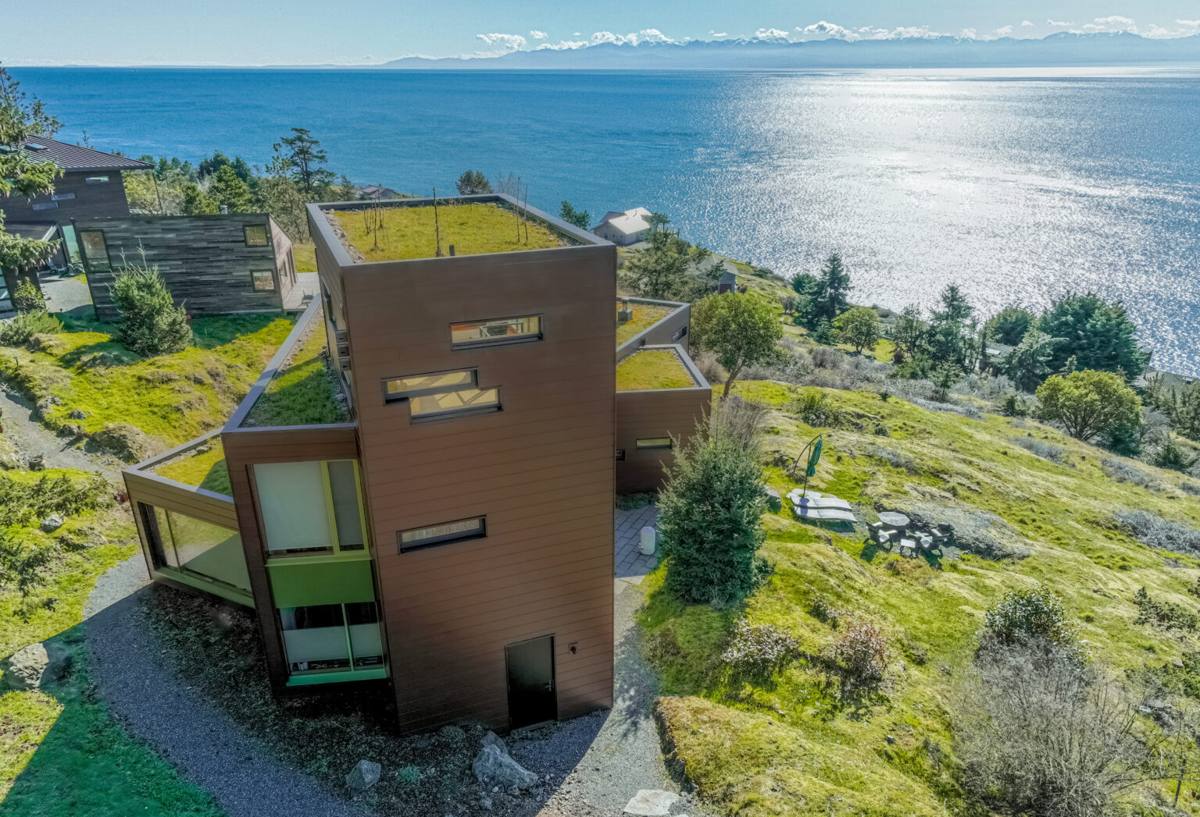
Blaine sits where the Salish Sea meets the Canadian border, and that location shapes everything about how a home's exterior ages here. Salt-laden air off Semiahmoo Bay and Drayton Harbor works its way into wood fibers, fasteners, and paint films year-round. Add Whatcom County's long wet season — driving rain that comes in sideways off the water, not just straight down — and you have conditions that punish siding systems that aren't built for sustained moisture exposure. Then there's moss. Blaine's combination of shade, humidity, and mild temperatures gives moss and algae a season that runs far longer than it does inland, and once it establishes itself on a north-facing wall or under an eave, it holds water against the siding surface almost permanently.
None of this means Blaine homes need something exotic. It means they need siding that's engineered for moisture, salt exposure, and biological growth, installed by people who understand why those three things compound each other. That's the whole basis of what follows.
How Salt Air, Rain, and Moss Actually Damage Siding
Salt air
Airborne salt is hygroscopic — it pulls moisture out of the air and holds it against whatever surface it settles on. On wood-based sidings, that means fasteners corrode faster, paint and stain break down faster, and any exposed end-grain or cut edge absorbs moisture at an accelerated rate. On metal flashing and trim, salt exposure speeds up corrosion in ways inland homes never have to deal with.
Driving rain
Blaine's storms don't just fall — they push. Wind-driven rain gets forced up under laps, around butt joints, and behind trim in ways vertical rain never does. A siding system with weak lap coverage, poor caulking practices, or gaps at inside corners will take on water in exactly the spots a homeowner can't see until the damage has already spread to sheathing.
Moss and algae
Moss doesn't just look bad — it holds a wet layer directly against the siding face for weeks at a time. On a substrate that swells when wet, that constant moisture cycle is what eventually causes soft spots, delamination, and paint failure, especially on north and west elevations that stay shaded longest.
Signs a Blaine Home Needs Siding Replacement, Not Just Repair
- Soft or spongy spots when you press on the siding, especially near the bottom courses or below windows
- Visible swelling, bubbling, or delamination — layers separating at the edges or face
- Paint or finish that keeps failing within a year or two of repainting, no matter how well it's prepped
- Persistent moss or dark streaking that comes back within a season of cleaning
- Rust staining running down from fasteners or trim
- Gaps opening up at butt joints, corners, or around windows and doors
- Rot or damage found once one section is opened up — often a sign the problem extends further than what's visible
If you're seeing more than one or two of these, patch repairs are usually a short-term fix. Once moisture has gotten behind the siding plane, replacing the affected sections — sometimes the whole elevation — is what actually stops the cycle instead of just resetting the clock.
What a Correct Siding Replacement Actually Involves
Tearing off old siding and nailing up new boards is the easy part. The work that determines whether a Blaine home stays dry for the next 30 years happens underneath, in steps that are invisible once the job is done:
- Full tear-off and sheathing inspection. Every section of old siding comes off so the sheathing underneath can actually be inspected, not guessed at. Any rot, soft spots, or water-damaged framing gets addressed before anything new goes up.
- Correct water-resistive barrier. A weather-resistant barrier goes on with proper overlap, sealed penetrations, and integrated flashing — this is the layer that manages the water that inevitably gets past the siding face in a climate like Blaine's.
- Flashing at every water-prone detail. Windows, doors, roof-to-wall intersections, and deck ledgers all need site-specific flashing, not a bead of caulk standing in for it.
- Manufacturer-specified fastening and clearances. Fastener type, spacing, and minimum clearances above grade, decks, and roof lines all affect how well the siding sheds water and resists corrosion over time.
- Factory-finished siding installed to spec. The finish itself matters less than whether the installation preserves the manufacturer's warranty — cut edges sealed, joints treated, caulking done at the right joints and skipped at the ones that need to drain.
Skip any one of these steps and the siding can look right for a year or two while the real problem — trapped moisture — builds behind it.
Why We Install Only James Hardie Fiber Cement
We standardized on James Hardie fiber cement siding and don't install vinyl, LP SmartSide, or cedar, and Blaine's climate is a big part of why. Fiber cement doesn't absorb water the way wood-based products do, doesn't expand and contract with humidity the way vinyl does, and isn't a food source for the moss and algae that thrive in this area's shade and moisture. James Hardie's ColorPlus factory finish is baked on and warranted separately from the substrate, which matters in a climate where field-applied paint has a hard time holding up against salt air and prolonged wet exposure.
Hardie's HZ5 product line is engineered specifically for climates with sustained moisture and freeze-thaw cycling — the Pacific Northwest is exactly the environment it was designed around. That's not a marketing detail; it affects how the product performs on a wall that faces Drayton Harbor weather for decades. Combined with a transferable, long-term warranty when installed to manufacturer spec, it's the system we're willing to put our name behind on a Blaine home.
Our Process for a Blaine Siding Replacement
| Stage | What Happens |
|---|---|
| Assessment | On-site inspection of existing siding, sheathing where accessible, and known trouble spots — north/west walls, areas under trees, low-clearance sections near grade or decks |
| Scope and estimate | Written scope covering tear-off, any sheathing repair allowance, flashing details, and the specific Hardie product and color selected |
| Tear-off | Old siding removed section by section so sheathing can be inspected as we go, not just at the start |
| Repair and prep | Any damaged sheathing or framing replaced; water-resistive barrier and flashing installed at every penetration |
| Installation | Hardie siding installed to manufacturer fastening, clearance, and joint-treatment specifications |
| Final walkthrough | Trim, caulking joints, and paint touch-up reviewed with the homeowner before we consider the job finished |
What Drives Cost on a Blaine Siding Replacement
Every home is different, but the same handful of factors move the price up or down on most Blaine projects:
| Factor | Why It Matters |
|---|---|
| Sheathing condition | Homes with hidden moisture damage need more sheathing replaced before new siding can go on — this is often the biggest unknown until tear-off starts |
| Home size and stories | More square footage and taller walls mean more material, more labor, and more staging/scaffolding time |
| Siding profile and accessories | Lap width, trim details, and accent features like board-and-batten sections all affect material and labor cost |
| Access and site conditions | Tight side yards, slopes, fencing, or landscaping close to the walls can slow tear-off and staging |
| Existing moisture or moss damage | Elevations with heavy moss growth or long-term water intrusion often need more extensive repair before new siding goes up |
We walk through these with every homeowner before work starts so there aren't surprises mid-project — and any sheathing repair we find gets documented and shown before we close it up.
Why Hiring a Crew That Already Works Blaine Matters
A siding crew that mostly works drier, inland parts of Whatcom County will approach a Blaine home the same way they'd approach one twenty miles east — and that's a mistake. Crews who work the coastal edge of the county regularly know which elevations on a typical Blaine home take the worst wind-driven rain, where moss tends to establish first, and how much clearance really needs to be built in above grade and decking given how wet the ground stays here. That knowledge shows up in the small decisions — where extra flashing goes, which joints get sealed and which get left to drain, how conservative to be about additional sheathing repair — and those small decisions are exactly what determine whether a siding job holds up through its warranty period or starts showing problems in year five.
Get a Straightforward Estimate
If your Blaine home is showing soft spots, recurring moss, failing paint, or you're simply planning ahead for a home exposed to salt air and heavy coastal rain, we'll walk the exterior with you, tell you honestly what we find, and put together a clear estimate for James Hardie siding replacement — no pressure, no inflated scope. Use the form below to request a free estimate.