 Whatcom County
 Why Blaine Roofs Wear Differently Than Roofs Inland
Blaine sits right on the water at the northern edge of Whatcom County, and that location shapes how roofs age here. Salt-laden air off the Strait of Georgia works on exposed metal fasteners, flashing, and vent components faster than it does even a few miles inland. Add driving rain that comes in sideways during winter storms, and a moss season that can run from October through May in the shade of mature evergreens, and you've got three separate stressors hitting the same roof at the same time. A repair plan that ignores any one of those factors tends to fail early.
Most of the roof problems we see in Blaine aren't dramatic. They're small, slow failures — a lifted shingle tab, a hairline gap at a flashing seam, a patch of moss holding moisture against the roof deck — that get worse every wet season until they turn into a leak. Catching and correcting those early is what roof repair should actually accomplish.
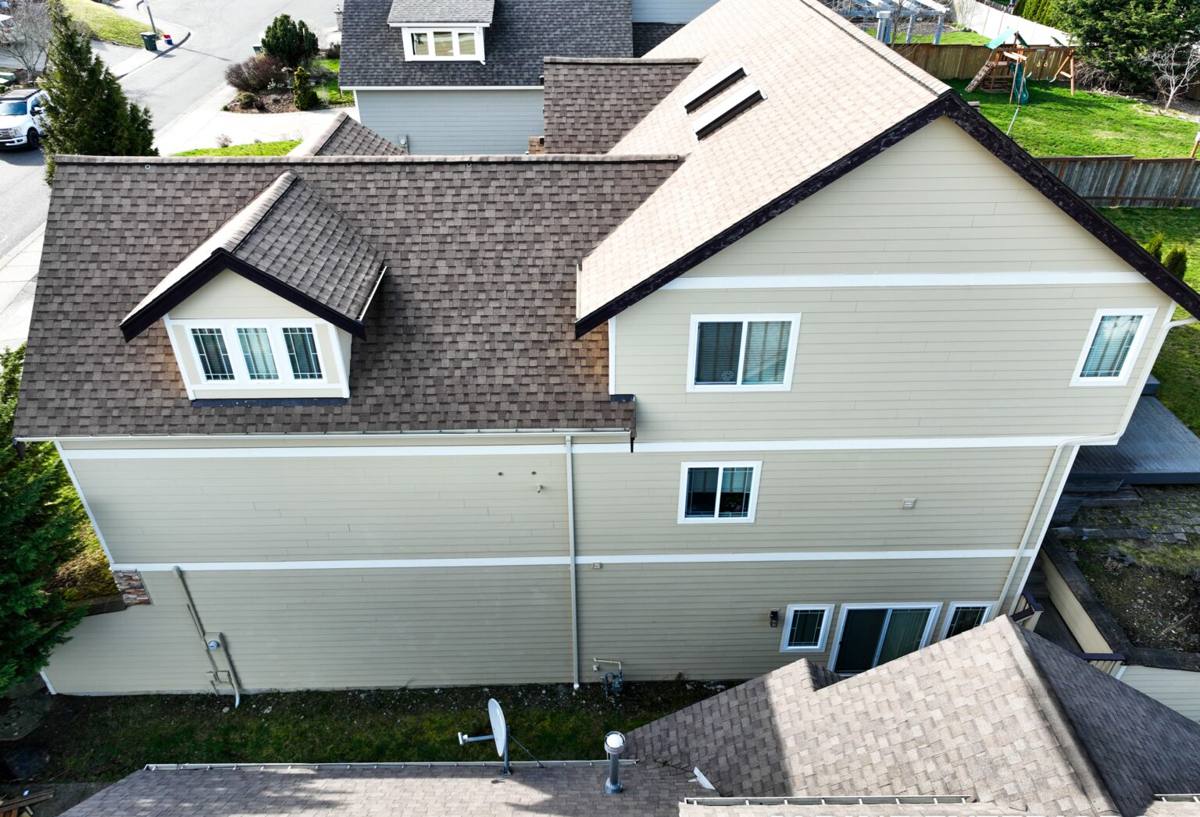
What a Correct Repair Actually Involves
"Roof repair" covers a wide range of work, and the right approach depends entirely on what's actually failing. A proper repair starts with figuring out the real cause of a problem, not just patching the spot where water showed up inside the house — water travels along rafters and sheathing before it drips, so the visible stain and the actual entry point are often several feet apart.
The Diagnosis Comes First
Before any material goes back on the roof, we look at the whole system: shingles or roofing material, flashing at valleys, chimneys, and wall intersections, vent boots, gutters, and the underlayment where it's exposed. In a coastal, high-moisture area like Blaine, it's common to find more than one contributing issue — a worn vent boot and a moss-clogged valley, for example — and treating only one leaves the leak alive.
Then the Fix, Matched to the Cause
A repair should use materials and techniques suited to the specific failure, not a one-size patch. Corroded fasteners get replaced with corrosion-resistant hardware appropriate for salt air exposure. Failed sealant gets fully removed and redone, not layered over. Damaged shingles get pulled and replaced so the new course ties into the existing pattern and drainage path correctly, rather than just caulked over.
Common Failure Points We See on Blaine Roofs
Some problem areas show up over and over in this area because of the combination of salt exposure, wind-driven rain, and shade-grown moss. Knowing where to look shortens the diagnosis and keeps the repair focused on what's actually wrong.
| Symptom | Likely Cause in This Climate | What a Proper Fix Looks Like |
|---|---|---|
| Interior water stain near an exterior wall | Wind-driven rain forced under flashing or siding-to-roof transition | Remove and rebuild the flashing detail with correct overlap and sealant, not surface caulk |
| Dark streaking or green patches on shingles | Moss and algae holding moisture against the roofing material | Safe removal, treatment, and correction of the shade/drainage conditions feeding regrowth |
| Rusted or loose fasteners around vents and flashing | Salt air accelerating metal corrosion | Replace with corrosion-resistant fasteners rated for coastal exposure |
| Granule buildup in gutters | Shingle wear accelerated by prolonged wet exposure | Assess remaining shingle life; localized replacement if the deck below is sound |
| Soft or spongy spot underfoot near a valley | Long-term moisture intrusion into the roof deck | Cut back to sound decking and rebuild that section before re-roofing over it |
Our Repair Process
We keep the process straightforward because homeowners deserve to know what's happening to their roof and why.
- Inspection and diagnosis. We look at the whole roof system, not just the spot where a leak showed up, and check flashing, vents, valleys, and moss coverage.
- Honest explanation. We walk through what's actually causing the problem, what it will take to fix it correctly, and what happens if it's left alone.
- Written scope and estimate. You get a clear description of the work and materials before anything starts — no vague line items.
- The repair itself. Damaged material is removed back to sound decking or a clean seam, not just covered over, and replaced with materials matched to the surrounding roof and this climate.
- Cleanup and check. Debris and old material are hauled off, and we confirm the fix addresses the root cause, not just the symptom.
Materials and Methods: What Changes for a Coastal, Mossy Climate
The right repair materials for Blaine aren't always the cheapest or the most common option — they're the ones that hold up to the specific combination of salt, rain, and moisture the roof deals with here.
| Element | Standard Approach | Why It Matters in Blaine |
|---|---|---|
| Fasteners | Corrosion-resistant, rated for coastal/marine exposure | Standard fasteners can rust and back out years faster this close to the water |
| Flashing sealant | Full removal and rebuild of the joint, not caulk-over | Driving rain finds gaps that surface caulk alone won't hold against over time |
| Shingle matching | Closest available match in profile and color, tied into existing courses | A patched-in section needs to shed water the same way the surrounding roof does |
| Moss treatment | Manual removal plus a treatment appropriate to the roofing material | Pressure-washing or harsh chemical strippers can damage shingles and void warranties |
Moss Season: The Slow Damage That Adds Up
Whatcom County's long wet season and heavy tree cover in many Blaine neighborhoods create ideal moss conditions for much of the year. Moss doesn't just look bad — it holds water against the roofing surface long after the rest of the roof has dried, which accelerates granule loss on asphalt shingles and can work its way under lifted edges. Left alone through a few moss seasons, what started as a cosmetic issue becomes a genuine moisture problem at the deck level.
Our approach to moss as part of a repair is gentle removal by hand or low-pressure methods appropriate to the roofing material, followed by addressing why it's growing there in the first place — usually shade and slow drainage — rather than just scraping it off and leaving the same conditions to grow it back.
When a Patch Isn't the Right Call
Part of doing repair work honestly is telling a homeowner when a patch is the wrong move. A few situations where repair stops making sense:
- Multiple areas of the roof deck have gone soft from long-term moisture, not just one isolated spot
- The roofing material is at or near the end of its expected service life and repairs would only be temporary
- Repeated leaks keep showing up in different spots each wet season, suggesting broader material failure
- The cost of repeated repairs over a couple of years starts to approach what a targeted section replacement would cost
In those cases we'll say so directly, along with what a more complete fix would realistically involve — we're not in the business of stringing along small patches on a roof that needs a bigger conversation.
Why a Crew That Already Works Blaine Matters
Roof repair work benefits from local familiarity in ways that aren't always obvious. A crew that regularly works Blaine and the surrounding Whatcom County coastline already knows which fastener and flashing choices hold up against this specific salt-air exposure, has a feel for how moss and shade patterns behave on the roof pitches common in this area, and understands how wind-driven rain off the water tends to find its way into flashing details that would be fine in a more sheltered inland location. That local pattern recognition shortens diagnosis time and reduces the chance of a repair that looks right but fails again the next storm season.
It also means a straightforward, local point of contact if a question comes up after the work is done — no call center, no guessing about who actually did the job.
Protecting the Repair: A Homeowner's Maintenance Checklist
A good repair lasts longer with a small amount of upkeep between visits. Homeowners in Blaine can extend the life of both the repair and the surrounding roof with a few basic habits:
- Clear gutters and downspouts at least twice a year, more often under overhanging trees
- Do a visual check after major windstorms for lifted or missing shingles
- Watch for moss regrowth in shaded sections and address it early, before it spreads
- Trim back branches that keep a section of roof shaded and slow to dry
- Note any new interior stains right away and have them checked before the next heavy rain
If you're seeing a leak, moss buildup, or just want a straight assessment of where your roof stands, we're happy to take a look. Fill out the form below for a free, no-pressure estimate.