 Whatcom County
 New-Construction Windows Are a Different Job Than Replacement
Replacement windows go into an existing opening that's already flashed, sided, and weathertight — the job is mostly about matching the old opening and re-sealing around it. New-construction windows are installed before the siding goes on, into a bare rough opening with only a weather-resistant barrier (WRB) and framing around them. That means the window itself is only part of the job. The flashing sequence, the sill pan, the nailing-flange integration with the house wrap, and the coordination with whoever is doing the siding all matter as much as the window unit itself.
If any of that sequencing is off, you don't find out for a year or two — until water finds its way behind the siding and into the framing. In Blaine, where the building sits close to the water and takes weather from the Strait of Georgia and Semiahmoo Bay almost year-round, that margin for error is smaller than it is inland.
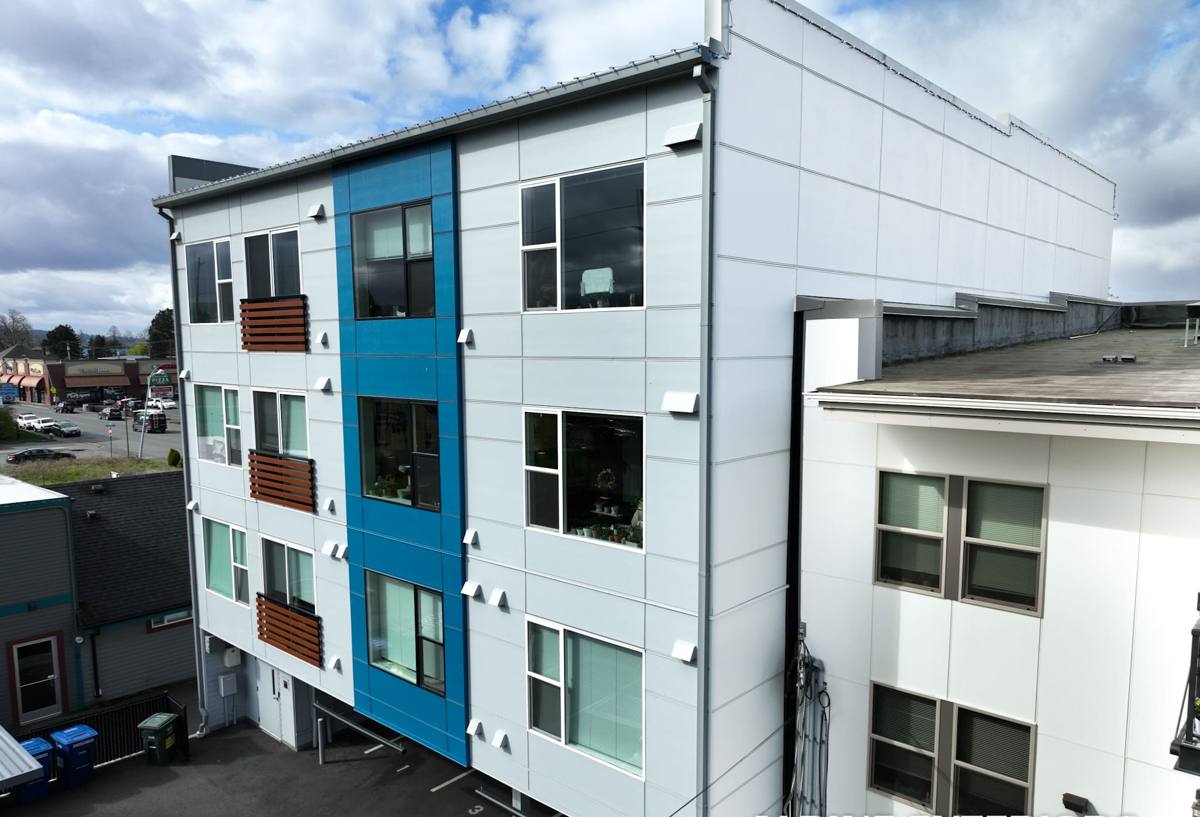
What Blaine's Climate Actually Does to a New Window Install
Whatcom County's marine climate is mild compared to a lot of the country, but it's relentless. Homes near Blaine deal with a specific combination that a new-construction window install has to be built for, not just tolerate:
Salt Air and Corrosion
Being this close to saltwater means metal hardware, fasteners, and even some window frame components are exposed to airborne salt continuously, not just during storms. Cheap or mismatched fasteners and hardware corrode faster here than they would twenty miles inland. We pay attention to fastener and flashing material compatibility for that reason — mixing the wrong metals against each other near salt air accelerates corrosion through galvanic reaction, not just weathering.
Driving Rain, Not Just Rain
Whatcom County gets wind-driven rain that comes in at an angle, which pushes water sideways and upward into gaps that a straight-down rain would never reach. A new-construction window relies on its flashing and sill pan to manage exactly this kind of water intrusion — a sill pan that's flat instead of sloped, or a head flashing that's missing a drip cap, will hold up fine in a light drizzle and fail in a real Whatcom County storm.
A Long Moss and Mildew Season
Constant damp and moderate temperatures mean moss, algae, and mildew have months to establish themselves on anything that stays wet — window sills, trim, and the siding around an opening. Detailing that sheds water quickly and doesn't trap moisture against wood trim keeps that growth from taking hold in the first place, rather than relying on cleaning it off later.
What a Correct New-Construction Install Actually Involves
A window that looks fine from inside the house can still be installed wrong. The parts that actually determine whether it stays weathertight happen before the window is even set:
- A sloped sill pan under the opening, so any water that gets past the window sheds outward instead of pooling
- Correct shingle-style flashing sequence — sill flashing first, then side flashing, then head flashing, each one overlapping the one below it
- Proper integration of the nailing flange with the WRB, using flashing tape rated for the temperature and moisture conditions at install time, not just whatever tape is on hand
- A back dam or sill pan upturn at the interior edge so water can't run back into the framing
- Shimming and squaring the unit so the sash operates correctly and the weatherstripping seals evenly — a racked window leaks and wears out its seals early
- Insulating the gap between the frame and the rough opening without overpacking it, which can bow the frame
- Sealant at the right joints only — sealing every seam, including ones designed to drain, traps water instead of letting it out
Every one of these steps is invisible once the siding goes on. That's exactly why they need to be done right the first time — there's no easy way to inspect them again without removing exterior finish.
Sequencing With Siding and Trim
On a new build, windows don't get installed in isolation — they have to be sequenced correctly with the WRB, any rainscreen or furring strategy, and the siding and trim that go on afterward. A window flange taped over house wrap that later gets siding lapped incorrectly over it can still leak, even if the window itself was installed perfectly. Because we do both siding and window work in Blaine, we plan that sequence as one job rather than treating the window install and the siding install as two separate contractors' problems to sort out on-site.
Choosing Materials for This Climate
Window frame material affects how well a unit holds up to salt air, moisture cycling, and UV exposure over the years. There's no single "best" material — it depends on the home's design and budget — but the trade-offs are real and worth understanding before a decision gets made:
| Frame Material | Behavior in Salt Air / Damp Climate | Maintenance | Typical Fit |
|---|---|---|---|
| Vinyl | Doesn't corrode or rot; can become brittle with age and heavy UV exposure over decades | Low — occasional cleaning | Most new-construction budgets |
| Fiberglass | Very stable dimensionally, resists moisture and salt exposure well | Low | Higher-end new construction, larger openings |
| Wood-clad | Good insulating properties, but the cladding-to-wood seams need careful detailing near salt air and constant damp | Moderate to high — seam inspection matters | Design-driven projects where wood interior look is wanted |
| Aluminum | Strong and slim sightlines, but prone to condensation and corrosion issues without a thermal break and marine-grade hardware | Moderate | Specific architectural styles, used selectively |
Whatever frame material a homeowner or builder chooses, we're honest about which hardware and fastener specs it needs to hold up near the water — we won't install marine-adjacent windows with standard-grade fasteners just because it's what's on the truck.
Glass and Low-E Coatings
Whatcom County's climate is more about moderating heat loss and condensation than blocking intense sun, so a low-E coating tuned for a milder, wetter climate makes more sense here than a high-solar-gain-blocking glass meant for a hot, dry region. Double-pane with the right low-E coating and argon fill covers most new-construction needs in Blaine without over-specifying.
Our Process
- Site visit and rough opening review — we check opening sizes, sill height, and how the window plan interacts with siding and trim details before ordering anything
- Material and unit selection — matched to the home's design, budget, and exposure to wind and rain
- Flashing and sill pan install — done before the window ever goes in the opening
- Window set, shim, and square — checked for level, plumb, and square, not just "fits in the hole"
- Flange integration with WRB — taped and lapped in the correct shingle sequence
- Coordination with siding crew — trim and siding lapped correctly over the completed flashing
- Final operation and seal check — every sash opens, closes, and locks correctly before we call it done
Mistakes We See on New Builds
Most of the water problems we get called to fix in new-ish Blaine homes trace back to one of a handful of shortcuts: sill pans skipped or installed flat instead of sloped, flashing taped in the wrong order (head flashing under the WRB instead of over it, for example), sealant used to compensate for a bad flashing job instead of proper drainage, or windows set out of square so the weatherstripping never seals evenly. None of these show up on move-in day. They show up two or three wet seasons later as stains, soft trim, or drafts — right when it's expensive and disruptive to trace back and fix.
Why a Local Blaine Crew Matters
A crew that works new construction across Whatcom County regularly — not just occasionally — has already seen how a given flashing detail holds up through an actual Blaine winter, not just in a manufacturer's install manual written for a different climate. That matters for judgment calls: how much drainage gap to leave, which tape actually stays adhered in cold, damp conditions, and how to sequence work around the wet stretches of the build schedule instead of fighting them. We also know the practical realities of building near the water in this county — permitting expectations, typical wind exposure by lot orientation, and how local siding and trim choices interact with window details.
What to Ask Before Windows Go In
- Is there a sloped sill pan under every window opening, not just a flat piece of flashing?
- What's the flashing sequence, and does it match a recognized shingle-lap order (sill, then jambs, then head)?
- What tape or flashing product is being used, and is it rated for the temperature and moisture conditions at install time?
- How will window flanges integrate with the WRB and the siding that goes on afterward?
- Are fasteners and hardware appropriate for coastal salt-air exposure?
- Will the windows be checked for square and even operation before the siding crew closes things up?
If you're building or adding on in Blaine and want windows installed the way this climate actually requires, we're happy to walk the plans with you and give you a straightforward, no-pressure estimate — just fill out the form below.