 Whatcom County
 Why Window Installation in Bellingham Is Different
Bellingham sits right on Bellingham Bay, which means homes here deal with a combination that inland Washington houses don't: salt-laden air off the water, wind-driven rain that comes in sideways during fall and winter storms, and a moss and algae season that can stretch eight months or more. None of that is a problem for a window on its own. It becomes a problem when a window is installed without accounting for it. A window that's perfectly good on paper can still leak, fog, rot the framing around it, or fail early if the flashing, sealant, and drainage details aren't handled correctly for this specific climate.
That's really what "window installation" means as a service in Bellingham: it's not just setting a window into an opening and caulking the edges. It's managing water and air movement around an opening that will spend most of the year wet, occasionally very windy, and always exposed to salt air that accelerates corrosion on cheap hardware and fasteners.
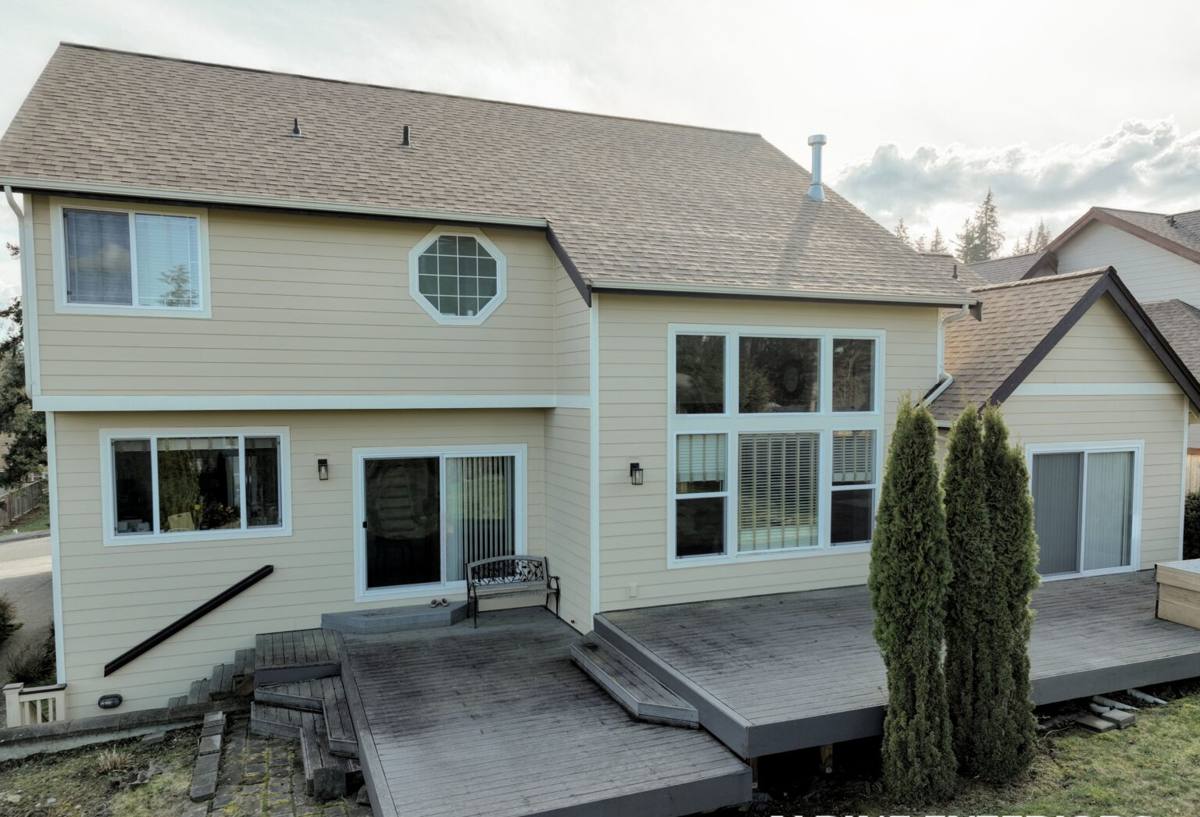
What Whatcom County's Climate Does to Windows Over Time
Salt Air and Metal Fatigue
Homes closer to the bay see faster corrosion on window hardware, screws, and lower-grade aluminum components. Over years, this shows up as stiff or failing locks, streaking on frames, and fasteners that back out or rust in place. It's not dramatic, but it adds up.
Driving Rain and Water Intrusion
Bellingham's storms don't just fall straight down — wind pushes rain sideways into wall assemblies, especially on west and southwest-facing elevations. A window opening needs proper flashing and a drainage path so that any water that gets past the glass and frame has somewhere to go besides your wall cavity.
Moss, Algae, and Prolonged Moisture
Long stretches of damp, low-light weather let moss and algae take hold on horizontal surfaces and shaded corners, including window sills and trim. Where trim stays wet longer than it should — because of poor flashing or clogged weep holes — you get soft wood, peeling paint, and eventually rot around the window frame itself.
Signs a Bellingham Home Needs Window Work
- Fogging or moisture trapped between panes of a double- or triple-pane window (failed seal)
- Soft or discolored trim/siding directly around a window frame
- Visible gaps, drafts, or whistling around the sash during windstorms
- Windows that are difficult to open, close, or lock — often from swelling or hardware corrosion
- Moss or dark streaking building up on sills or below the window, suggesting standing water
- Condensation forming on interior glass or frames during cold, wet stretches
- Paint peeling or bubbling on interior trim near a window, which usually points to a leak already in progress
Any one of these on its own might be minor. Several together, especially around the same window, usually means water has already found a way in and it's worth having someone look at the whole opening, not just the glass.
What a Correct Window Installation Actually Involves
Removing the Old Window the Right Way
Before a new window goes in, we check the condition of the framing, sill, and sheathing behind the old unit. In a marine climate like this, hidden rot around an old window is common enough that we don't assume the wall behind it is sound just because the house looks fine from outside. If we find soft or damaged framing, that gets addressed before anything new is installed — putting a new window into a compromised opening just hides the problem for a few more years.
Flashing and Water Management
This is the part that matters most for Bellingham's climate and the part that's easiest to shortcut. A correct installation integrates window flashing with the home's existing weather-resistive barrier in the right shingle-lap order — meaning each layer overlaps the one below it so water is always directed outward and down, never behind the layer beneath. Sill pans, head flashing, and proper sealant placement (not just caulk smeared around the trim) are what actually keep driving rain out over the long term.
Air Sealing and Insulation
The gap between the window frame and the rough opening needs to be insulated and air-sealed without over-packing it, which can bow the frame and affect how the window operates. Done correctly, this cuts drafts and helps with the condensation issues that show up on cold, wet Whatcom County nights.
Exterior Trim and Siding Integration
Since this is a siding company, we pay particular attention to how the window trim ties back into the surrounding siding — making sure water shedding off the siding above a window doesn't get funneled behind the trim, and that trim boards are back-primed or sealed on cut edges where they're most likely to absorb moisture.
Choosing Window Frame Materials for a Marine Climate
There's no single "best" window material — it depends on the home, the budget, and how exposed the elevation is to wind and rain. Here's how the common options generally compare for a house in the Bellingham area:
| Frame Material | How It Handles This Climate | Maintenance | General Cost |
|---|---|---|---|
| Vinyl | Doesn't rot or corrode; performs well against moisture and salt air | Low — occasional cleaning | Lower |
| Fiberglass | Very stable in temperature swings and moisture; strong long-term durability | Low | Mid to higher |
| Aluminum | Can corrode faster near the bay if not a quality marine-grade finish; conducts cold | Moderate | Varies |
| Wood / Wood-Clad | Attractive but needs consistent upkeep to resist the extended wet season here | High — refinishing and sealing needed | Higher |
For most Bellingham homes, we lean toward vinyl or fiberglass simply because they hold up with the least ongoing maintenance against the amount of rain and salt exposure this area gets. Wood windows can still be the right call on certain homes, especially where matching an existing architectural style matters more than minimizing upkeep — that's a conversation we have honestly, including what the maintenance commitment really looks like.
Retrofit vs. Full-Frame Replacement
Bellingham has a lot of older housing stock, and one of the first decisions on a window project is whether to do a retrofit (pocket) installation — where the new window fits into the existing frame — or a full-frame replacement that removes the old frame down to the rough opening.
When Retrofit Makes Sense
If the existing frame and surrounding wall are still in good, dry condition, a retrofit is faster and less invasive, and it avoids disturbing siding or interior trim more than necessary.
When Full-Frame Is the Right Call
If there's any rot, water staining, or soft framing found once we look closely — which happens more often here than in drier climates — a full-frame replacement is usually the honest recommendation. It costs more upfront but it's the only way to actually fix a moisture problem instead of installing a new window around one.
Our Window Installation Process
- On-site assessment of existing windows, framing, and any visible water damage
- Honest recommendation on retrofit vs. full-frame replacement, with reasoning explained
- Window selection guidance based on the home's exposure, style, and budget
- Careful removal, with framing repairs made if hidden damage is found
- Proper flashing, sill pan, and air-sealing installation before the new window goes in
- Window installation, leveling, and hardware check
- Exterior trim and siding integration to keep water managed going forward
- Final walkthrough and operation check on every window installed
Why a Local Bellingham Crew Matters for This Work
Window installation done wrong doesn't usually fail in the first year — it fails in year three or five, after enough wet Whatcom County winters have worked their way into a poorly flashed gap. A crew that works this area regularly knows which elevations take the worst of the wind-driven rain, how moss and algae behave on shaded north and east sides of local homes, and what corrosion actually looks like on hardware exposed to bay air. That's the kind of judgment that comes from doing this work in this specific place, not from a general installation checklist.
After Installation: Keeping Windows Performing Long-Term
- Rinse salt residue and grime off frames and glass a few times a year, especially on bay-facing elevations
- Keep weep holes at the base of window frames clear of debris and moss
- Check exterior caulking annually for cracking or gaps, particularly after a hard winter
- Trim back vegetation that shades window trim and keeps it damp longer than necessary
- Address any soft trim or bubbling paint near a window promptly rather than waiting
If you're dealing with drafty, foggy, or aging windows on a Bellingham home, we're happy to take a look and give you a straightforward assessment of what's actually going on and what it would take to fix it. Fill out the form below for a free, no-pressure estimate.