 Whatcom County
 Asphalt Shingle Roofing Built for Bellingham's Weather
Bellingham sits where Puget Sound weather meets the extra moisture that piles up against the foothills of Whatcom County. That combination is tough on a roof. Homes near Bellingham Bay deal with salt-laden air that speeds up corrosion on fasteners and flashing. Homes tucked under the tree canopy that covers so much of this area deal with shade, standing moisture, and a moss season that can run most of the year. An asphalt shingle roof that's installed correctly for this climate will handle all of that quietly for decades. One that's installed generically — the way a crew from a drier region might do it — starts showing problems within a few winters.
This page covers what an asphalt shingle roof needs to hold up in Bellingham, what a correct installation or repair actually involves, and how we approach the work.
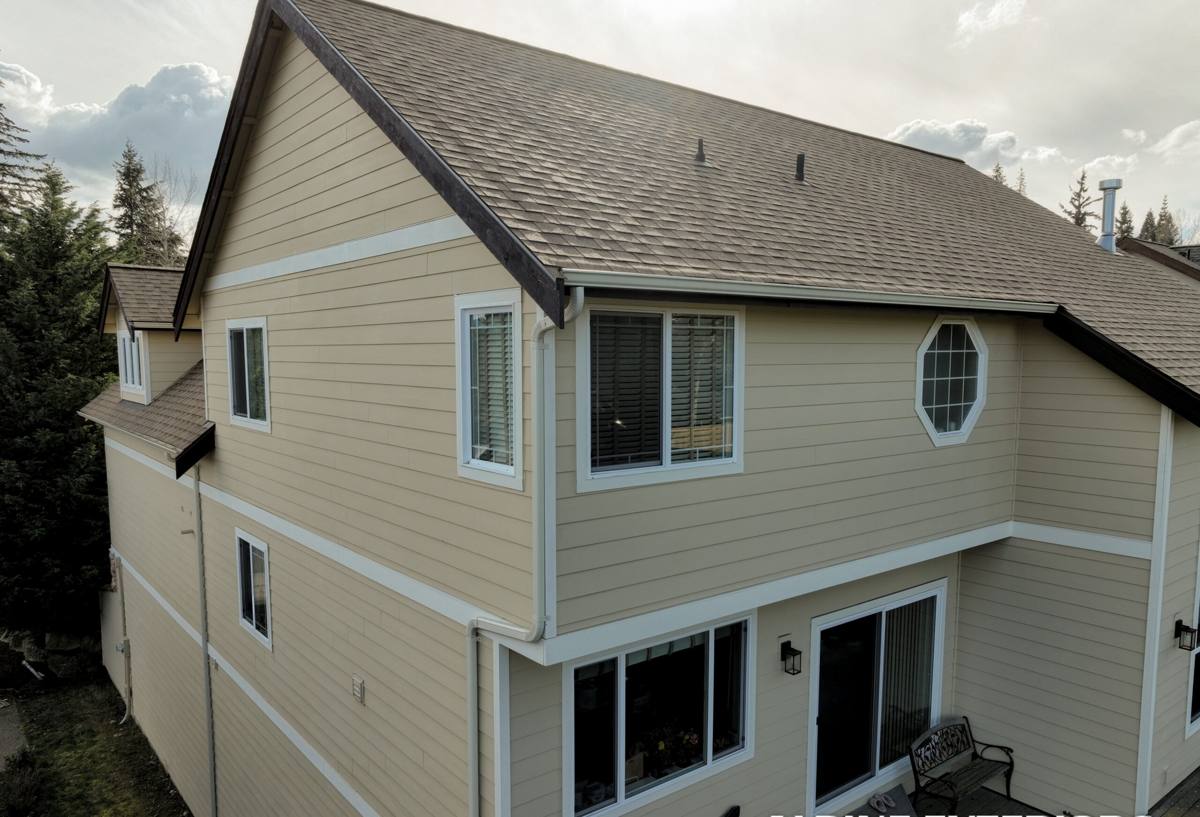
What Bellingham's Climate Does to a Shingle Roof
Salt Air and Metal Components
Asphalt shingles themselves tolerate salt air reasonably well, but the metal parts of a roofing system — nails, flashing, vent boots, drip edge — don't. Salt-carrying moisture off Bellingham Bay accelerates corrosion on lower-grade or improperly coated fasteners. Once a nail head starts rusting, it loses its grip and a shingle tab that should stay locked down for 25 years starts lifting in half that time.
Driving Rain
Storms coming off the Sound don't just fall straight down — wind-driven rain pushes water sideways and up under shingle tabs, into valleys, and around any flashing that isn't properly lapped. A roof that would be fine in a calmer climate can leak here if the underlayment, valley metal, and step flashing weren't detailed for wind-driven conditions.
Moss and Shade
Whatcom County's tree cover keeps a lot of roofs in partial shade most of the day, which means shingles stay damp longer after every rain. That's exactly what moss and algae need to take hold. Moss doesn't just look bad — it lifts shingle edges as it grows, holds moisture against the roof deck, and works its way into nail holes and laps over a few seasons. A roof that gets moss treatment and the right shingle type from day one will hold up dramatically longer than one that doesn't.
What a Correct Asphalt Shingle Roof Involves
A shingle roof is a system, not just a layer of shingles nailed to plywood. Every layer matters, especially in a wet climate like this one.
- Deck inspection and repair — any soft, delaminated, or water-damaged sheathing gets replaced before anything goes back on, not covered up.
- Ice-and-water shield — self-adhering waterproof membrane at eaves, valleys, and around penetrations, where wind-driven rain and ice dams are most likely to force water backward under shingles.
- Synthetic underlayment — a full water-resistant barrier across the whole deck as backup protection if wind ever gets under a shingle tab.
- Drip edge and starter strips — proper metal at eaves and rakes so water sheds off the roof instead of curling back under the edge.
- Correct nailing pattern — the right number of nails, in the right zone of each shingle, driven flush (not overdriven or underdriven). This single detail is one of the most common causes of premature shingle failure and wind blow-off.
- Flashing at every transition — step flashing at walls, counterflashing at chimneys, and properly lapped valley metal so nothing depends on caulk alone to stay dry.
- Ventilation — balanced intake and exhaust airflow so moisture from inside the house doesn't condense against the underside of the deck, which rots sheathing from below no matter how good the shingles are.
Skip any one of these and the roof can still look fine from the ground for a few years. The failures show up later, usually as a soft spot in the decking or a stain on a ceiling that traces back to a shortcut nobody could see from the driveway.
Choosing the Right Shingle for a Bellingham Home
Not every asphalt shingle product is a good match for a shaded, damp, salt-air climate. We steer homeowners toward shingles with algae-resistant (AR) granules and a wind rating that matches what this coastline actually sees, rather than the cheapest option on the rack.
| Shingle Type | Typical Lifespan | Best For | Moss/Algae Resistance |
|---|---|---|---|
| 3-Tab | 15–20 years | Budget-conscious re-roofs, simple roof lines | Lower unless AR-rated |
| Architectural (Laminate) | 25–30+ years | Most Bellingham homes; better wind and rain performance | Good with AR granules |
| Premium/Designer Architectural | 30–50 years | Steep or highly visible roofs, homeowners wanting a heavier look | Best available, plus stronger algae warranties |
For most Bellingham homes, an architectural shingle with algae-resistant granules is the honest middle ground — better wind performance in exposed spots near the water, and noticeably slower moss and algae growth under tree cover than a basic 3-tab. We'll walk through the real trade-offs for your specific roof rather than pushing whatever's easiest to install.
Common Problems We Find on Bellingham Roofs
- Moss growth along ridges and in shaded valleys, often starting where debris collects and holds moisture.
- Lifted or missing tabs from wind-driven storms, especially on roofs with poor nailing or older, brittle shingles.
- Rusted flashing and fasteners on homes closer to Bellingham Bay, where salt air speeds up corrosion on lower-grade metal.
- Granule loss on roofs past the 15-20 year mark, leaving shingles thin and more vulnerable to UV and rain penetration.
- Clogged valleys and gutters from the amount of leaf and needle debris common under Whatcom County's tree canopy, which backs water up under shingle edges.
Most of these are catchable early with a straightforward inspection. Left alone, they turn into deck rot, interior water stains, and — eventually — a full re-roof instead of a repair.
Our Process
- On-site inspection — we get on the roof (not just a look from the ground) to check the deck, flashing, ventilation, and shingle condition, and photograph anything that needs attention.
- Honest assessment — repair, partial re-roof, or full replacement, explained in plain terms along with why, not just a number.
- Written estimate — materials, scope, and timeline spelled out before any work starts.
- Protection of the property — landscaping, gutters, and siding covered before tear-off begins.
- Tear-off and deck repair — old material removed and any damaged sheathing replaced, not covered over.
- System installation — ice-and-water shield, underlayment, flashing, and shingles installed to manufacturer spec and matched to Bellingham's climate demands.
- Cleanup and final walkthrough — site cleared, magnetic sweep for stray nails, and a walkthrough so you know exactly what was done.
Roof Maintenance for a Long Moss Season
A well-installed asphalt shingle roof in Bellingham still needs a bit of seasonal attention to reach its full lifespan. A short annual checklist covers most of it:
- Clear valleys and gutters of needles and leaf debris at least once a year, more often under heavy tree cover.
- Have moss growth treated before it spreads across a slope, not after it's already lifting shingle edges.
- Check flashing around chimneys, skylights, and wall transitions for rust or gaps every couple of years.
- Trim back overhanging branches that keep sections of the roof shaded and damp.
- Schedule a professional inspection after any major windstorm, even if nothing looks obviously wrong from the ground.
What Affects the Cost of a Bellingham Roofing Project
| Factor | Why It Matters Here |
|---|---|
| Roof pitch and access | Steeper roofs and limited access (common on hillside lots) take longer and require more safety setup. |
| Deck condition | Moisture-related rot under old shingles is common in shaded, damp areas and adds sheathing replacement cost. |
| Shingle grade chosen | Algae-resistant and higher wind-rated products cost more upfront but hold up better to local conditions. |
| Flashing and ventilation scope | Roofs with multiple valleys, chimneys, or skylights need more flashing work to stay watertight. |
| Tear-off layers | Removing an existing roof (or multiple layers) adds labor and disposal cost versus a bare deck. |
Every roof is different, so exact numbers depend on the inspection — we're not going to quote a price sight unseen, and anyone who does is guessing.
Why Hire a Crew That Already Works in Bellingham
A roofer who works this area regularly already knows which details actually matter here: where moss tends to take hold first, how much wind exposure a given hillside or waterfront lot gets, and which flashing details hold up against Whatcom County's rain instead of just looking finished on installation day. That local pattern recognition is the difference between a roof that's built to spec on paper and one that's actually built for the conditions it has to survive. It also means straightforward local permitting knowledge and a crew that isn't learning this climate on your roof.
If your Bellingham roof is showing moss, missing shingles, or you're just due for an honest inspection, we're happy to take a look. Use the form below to request a free, no-pressure estimate.