 Whatcom County
 Storm Damage Roof Repair in Barkley: Why Local Conditions Matter
Barkley sits in a part of Whatcom County that takes a steady beating from Pacific storm systems, salt-laced wind off the Sound, and a moss season that can run nine months out of the year. None of that is unusual for this corner of Washington, but it does mean roofs here fail in specific, predictable ways — and repairing storm damage correctly requires understanding those patterns, not just patching whatever is visibly broken.
A roof that took wind or rain damage in Barkley rarely fails in one clean, obvious spot. More often the damage is a chain: wind lifts a few shingles or shakes, driving rain finds the gap, and moss or moisture has already been quietly working on the underlayment nearby. A repair that only addresses the visible symptom without checking the surrounding area tends to come back — sometimes within a single wet season.
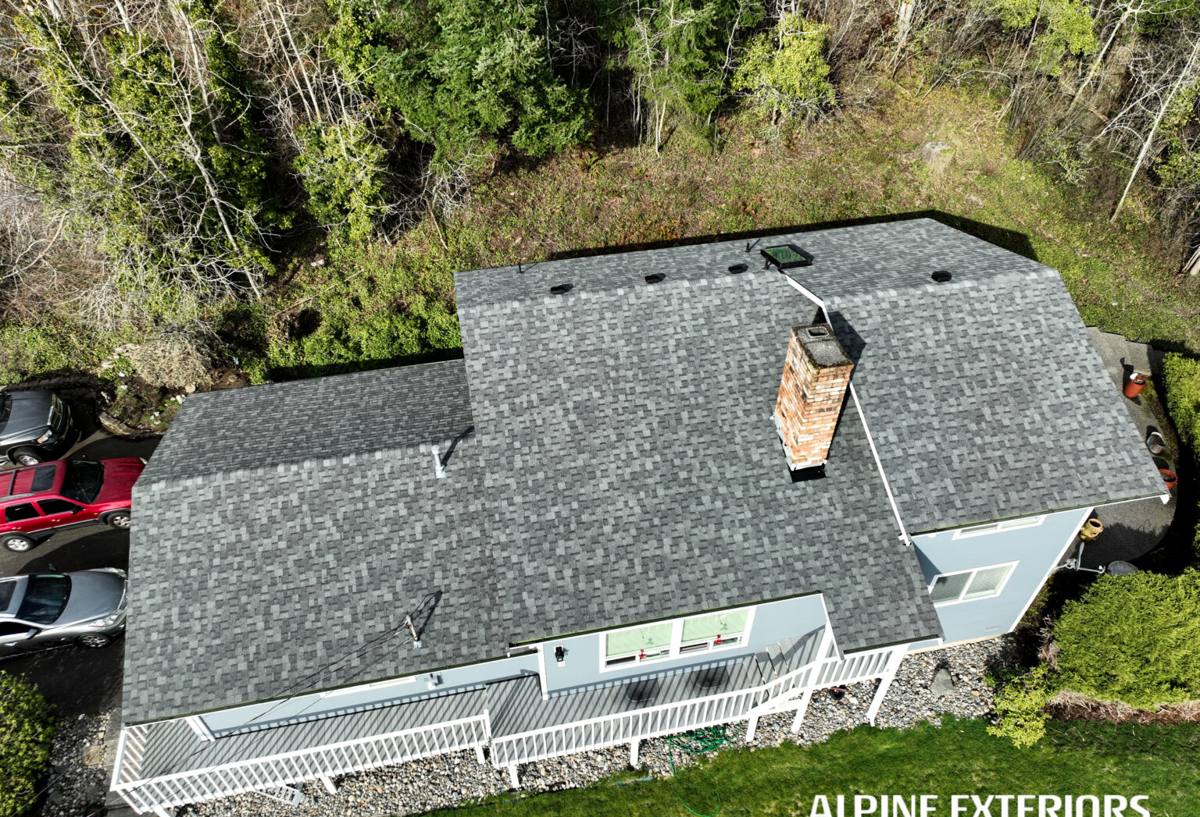
How Whatcom County Weather Attacks a Roof
Salt Air and Driving Rain
Homes closer to the water deal with salt-laden air that accelerates corrosion on exposed metal — flashing, fasteners, gutter hardware, and any metal roofing components. Corroded or loosened fasteners are one of the most common failure points we find after a windstorm, because a fastener that's already weakened by salt exposure gives up its grip long before a healthy one would. Combine that with the driving, near-horizontal rain that comes through during winter storm systems, and water gets pushed sideways into gaps that would stay dry in a calmer climate.
The Long Moss Season
Whatcom County's mix of shade, moisture, and mild temperatures gives moss and algae a long growing window. Moss doesn't just look bad — it holds moisture against the roof surface, works its way under shingle edges, and lifts tabs just enough for wind and rain to get a foothold. A roof with an existing moss problem is more vulnerable to storm damage than a clean one, because the moss has already been prying things loose before the wind ever shows up.
What This Means for Repairs
Because these three factors compound, a storm damage repair in Barkley needs to check for pre-existing moss and corrosion damage, not just the fresh wind or rain damage from the most recent storm. Fixing only what a homeowner can see from the ground misses the underlying weak points that caused the failure in the first place.
What Actually Counts as Storm Damage
Homeowners often aren't sure whether what they're seeing qualifies as storm damage or is just normal wear that happened to become noticeable after a storm. Both matter, but they get handled differently — especially if insurance is involved.
- Wind damage: lifted, creased, torn, or missing shingles or shakes; bent or displaced flashing; ridge cap separation.
- Impact damage: bruising or punctures from falling branches or wind-blown debris, common where mature trees overhang a roofline.
- Water intrusion: staining in the attic or on ceilings following a storm, often the first visible sign of a breach that happened days or weeks earlier.
- Accelerated wear revealed by the storm: a roof nearing the end of its service life that a storm pushed over the edge — this is real damage, but it's a different conversation than a sudden, isolated event.
Part of an honest assessment is telling a homeowner which category they're in, because it affects whether a targeted repair makes sense or whether the roof was already due for larger work.
What a Correct Storm Damage Repair Involves
1. A Full-Roof Inspection, Not a Spot Check
We start at the reported damage but walk the entire roof plane, valleys, penetrations, and flashing lines. Storm damage is frequently worse — or present in more places — than what's visible from the ground or from a single photo a homeowner sends us.
2. Checking What's Underneath
Where shingles or shakes have lifted or torn away, the underlayment and decking beneath need to be checked for moisture intrusion. If water has been getting in even briefly, drying and repairing that layer matters more than the surface material itself — replacing shingles over wet decking just traps the problem.
3. Matching Materials Correctly
Repairs should use materials that match the existing roof in type, profile, and weathering as closely as possible. A patch that's visibly newer or a mismatched shingle line isn't just a cosmetic issue — mismatched materials can also behave differently in wind and rain, creating a new weak point.
4. Flashing and Fastener Review
Given the salt-air corrosion issue common in this area, any exposed flashing or fasteners in the repair zone get inspected and typically replaced rather than reused, since corroded metal is one of the more common reasons a "repaired" roof leaks again within a year or two.
Repair vs. Replacement: How We Help You Decide
| Factor | Leans Toward Repair | Leans Toward Replacement |
|---|---|---|
| Age of roof | Under 10–12 years, or well-maintained | Nearing or past expected service life |
| Extent of damage | Isolated to one section or slope | Spread across multiple planes |
| Underlying deck condition | Dry, sound decking found on inspection | Soft spots or rot found under damaged area |
| Moss/algae history | Minimal or recently treated | Long-term moss growth across large areas |
| Material availability | Matching material still obtainable | Discontinued profile or color, poor match |
Most storm calls in Barkley are legitimate repairs, not full replacements — but we'll tell you plainly if what we find during inspection points the other way, and explain why.
Our Process for Barkley Homeowners
- Initial call or estimate request — tell us what you're seeing (leaks, missing pieces, visible debris impact) so we can prepare for the visit.
- On-site inspection — full roof walk, interior attic check if accessible, and photo documentation of all damage found, not just the area you flagged.
- Written scope and estimate — a clear explanation of what's damaged, what needs repair, and a realistic cost range before any work starts.
- Repair work — matched materials, corroded flashing and fasteners addressed, underlayment repaired where compromised.
- Final walk-through — we go over what was done and what to watch for going forward, including any moss or drainage issues we noticed that aren't urgent yet but are worth addressing.
Why a Crew That Already Works in Barkley Makes a Difference
A contractor who regularly works roofs in this part of Whatcom County has already seen how the local weather pattern shows up on real roofs — which slopes tend to take the brunt of prevailing wind, how quickly moss regrows in shaded, moisture-heavy yards, and which fastener and flashing choices hold up versus which corrode early. That local pattern recognition shortens the inspection, sharpens the estimate, and reduces the chance of a repair that misses a related problem nearby.
It also matters for responsiveness. Storm damage that's actively letting water in doesn't wait for a convenient scheduling slot, and a crew already working in and around the area can typically get to an active leak faster than one dispatching from farther out.
Insurance Claims and Documentation
If you're planning to file a homeowner's insurance claim for storm damage, documentation matters as much as the repair itself. We photograph damage thoroughly during the inspection and provide a written scope of work that describes the cause and extent of damage in plain terms — the kind of documentation adjusters expect to see. We're happy to walk an adjuster through the roof if that's helpful, though the insurance claim itself is between you and your carrier.
Preventing Repeat Damage
Once a storm repair is done, a few ongoing habits go a long way toward keeping the next storm from causing the same problem:
- Keep gutters and valleys clear of debris so wind-driven rain has somewhere to drain instead of backing up under roofing material.
- Treat moss growth before it establishes rather than after — a light, established moss patch is far easier to manage than one that's been growing for a season or more.
- Trim back tree limbs that overhang the roof, since falling branches are a recurring source of impact damage locally.
- Have flashing and fasteners checked periodically, especially if your home is closer to the water and more exposed to salt air.
- Schedule a post-storm visual check after any significant windstorm, even if nothing looks obviously wrong from the ground.
Cost Factors for Storm Damage Repair
| Factor | Why It Affects Cost |
|---|---|
| Size of damaged area | More square footage means more material and labor |
| Roof pitch and access | Steeper or harder-to-access roofs take longer and require more safety setup |
| Underlayment/decking condition | Wet or rotted decking adds material and labor beyond surface shingles |
| Material match | Discontinued or specialty profiles can cost more to source |
| Flashing/fastener replacement | Corrosion from salt air often means more metal needs replacing, not just reusing |
Most straightforward storm repairs land in a modest range compared to full roof replacement, but the real number depends entirely on what the inspection finds underneath — which is why we give a specific estimate after seeing the roof, not a number over the phone.
Materials We Use for Storm Repairs
For repair work, we match the existing roofing material whenever a sound match is available — asphalt shingle, wood shake, or metal — rather than introducing a different product that can behave differently under wind load or shed water differently at transitions. Where flashing needs replacement, we use corrosion-resistant metal appropriate for this area's salt-air exposure rather than lower-grade material that will just corrode again on a similar timeline. Our standard is to use materials suited to how they'll actually perform here, not just what's cheapest to install.
If your Barkley home has visible storm damage — or you're just not sure whether recent wind and rain left something behind that needs attention — we're glad to take a look. Fill out the form below for a free, no-pressure estimate and honest read on what your roof actually needs.