 Whatcom County
 Fiber Cement Siding for Barkley Homes
Barkley sits close enough to the water and the hills that its homes take a steady, year-round beating from the same forces that wear down siding everywhere in Whatcom County: salt-laden air moving in off the Sound, long stretches of driving rain, and a moss season that seems to start earlier and last longer every year. Siding here isn't just a cosmetic choice. It's the one layer standing between your framing and a climate that rarely lets a wall dry out completely between storms.
We install James Hardie fiber cement siding exclusively, and we work Barkley regularly enough to know what the local exposure does to different products over time. This page covers what that exposure means for a fiber cement job specifically here, what a correct installation looks like, and how our process works from first look to final walkthrough.
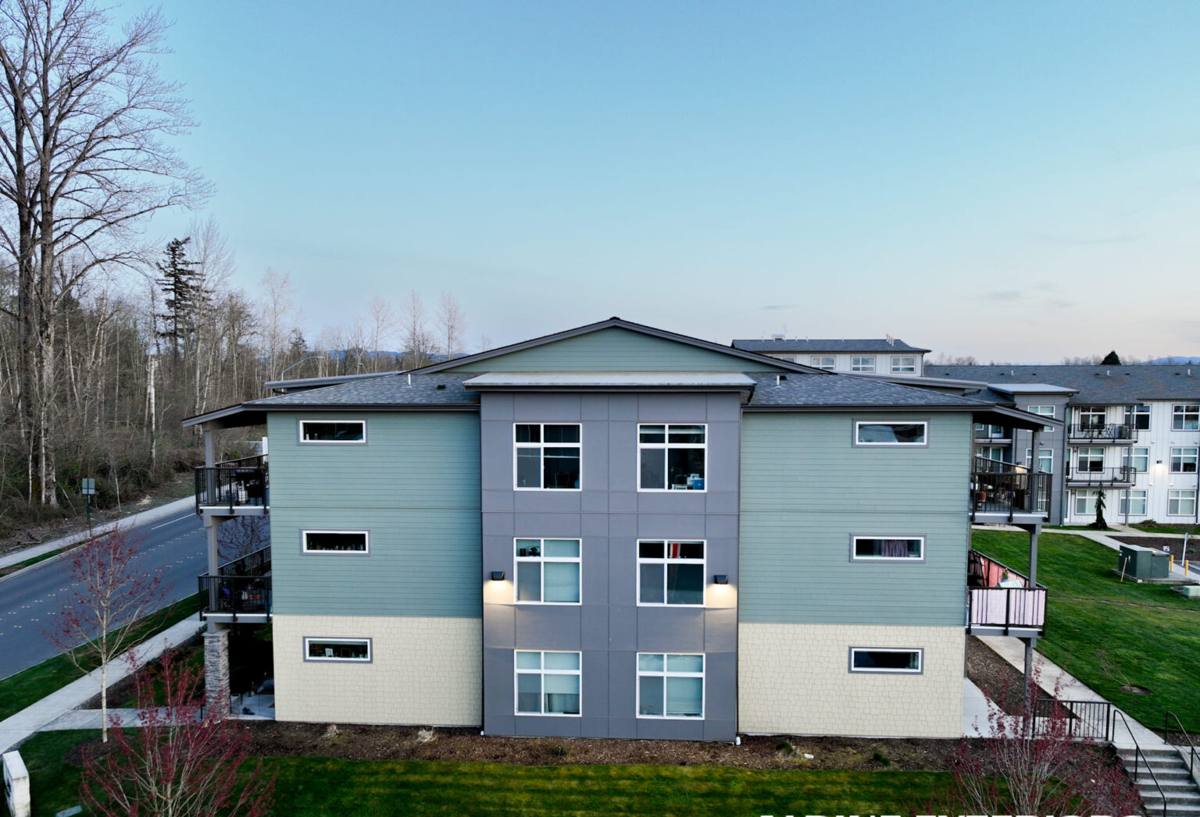
Why Barkley's Climate Is Harder on Siding Than It Looks
None of the individual stressors in Whatcom County are extreme on their own. It's the combination, repeated for months at a stretch, that adds up.
Salt Air
Proximity to Bellingham Bay and the broader Salish Sea means airborne salt reaches inland further than most homeowners assume, carried by wind and settling on siding, trim, and fasteners. Salt accelerates corrosion on anything metal — nail heads, flashing, hardware — and it's abrasive to finishes that aren't built to shed it. A factory finish rated for this kind of exposure matters more here than it would in a landlocked climate.
Driving Rain
Whatcom County rain is rarely a straight-down soak. Wind off the water pushes it sideways, which means it finds horizontal laps, butt joints, and penetrations that a calmer climate would never test. Siding systems that rely on paint film alone to keep water out, rather than a manufactured drainage plane and correct lap geometry, get exposed by this pattern faster than they would elsewhere.
Moss and Sustained Moisture
Shade from mature trees, morning fog, and a long damp season give moss and algae a long runway on north-facing and shaded walls. Moss holds moisture against the siding surface, which is a problem for any material that can absorb water or swell — and a much smaller problem for a material that can't.
What Fiber Cement Gets Right for This Exposure
James Hardie fiber cement is cement, sand, and cellulose fiber — it doesn't rot, it isn't a food source for moss or insects, and it won't swell or delaminate the way wood-based products can when they take on repeated moisture. That's the baseline reason it holds up in a climate like Barkley's better than most alternatives. On top of the material itself, Hardie's ColorPlus factory-applied finish is baked on under controlled conditions and backed by its own finish warranty — a meaningfully different proposition than field-applied paint trying to cure in Whatcom County's humidity.
Hardie also builds region-specific product lines (its HZ5 formulation, engineered for wetter, harsher climates) rather than a single one-size-fits-all board. That climate-engineering is part of why we standardized on this one manufacturer instead of stocking several.
What a Correct Fiber Cement Job Actually Involves
The material is only half the equation. Most siding failures we get called out to inspect — regardless of brand — trace back to installation shortcuts, not the product itself. A correct job on a Barkley home includes:
- Proper weather-resistive barrier and drainage plane behind the siding, so any water that gets past the cladding has a path out instead of sitting against the sheathing.
- Correct lap and clearance dimensions — minimum overlap on horizontal laps, proper clearance from grade, roof lines, decks, and hardscape, sized for a climate that sees more rain events than most.
- Rain-screen or furring where called for, especially on shaded or north-facing walls where moss and slow drying are the biggest long-term risk.
- Flashing at every penetration and transition — windows, doors, roof-to-wall intersections, and anywhere trim meets siding — installed to shed water outward, not just caulked and hoped for.
- Fastener selection matched to salt exposure, driven to Hardie's specified depth and pattern rather than however's fastest with a nail gun.
- Factory-cut and factory-painted edges wherever possible, with any field cuts sealed per manufacturer spec, since a raw cut edge is where moisture intrusion starts.
Skip any one of these and the siding can still look fine going up — the problems show up two, five, or ten years later, usually behind the wall where you can't see them until there's a stain, a soft spot, or a mold smell.
Our Process for a Barkley Siding Project
1. Walkthrough and Assessment
We look at your home's specific exposure — which walls face prevailing wind and rain, which stay shaded and hold moisture longest, where existing moss or staining is already showing, and what's happening behind the current siding wherever we can check it.
2. Scope and Product Selection
We spec the Hardie product line, plank width or panel style, and color that fit the home and the exposure, and lay out where extra flashing or rain-screen detailing is needed based on what we found in the walkthrough.
3. Tear-Off and Substrate Check
Old siding comes off and we inspect the sheathing and framing underneath before anything new goes up. Any rot or water damage gets addressed and documented before we close the wall back up — covering a known problem is not something we do.
4. Weather Barrier and Flashing
This is the step that determines whether the siding actually performs over the next 20-30 years, and it's the step that's easiest to shortcut and hardest to inspect after the fact. We install it to spec, every time.
5. Siding Installation
Hardie boards or panels go up per manufacturer fastening and clearance requirements, with attention to the details above — laps, clearances, fastener pattern, sealed field cuts.
6. Final Walkthrough
We go over the finished job with you, including care basics for the specific exposure your home has — where moss is likely to return, what to watch for, and simple maintenance that keeps the ColorPlus finish looking right for the long run.
Cost Factors for a Barkley Fiber Cement Project
Every home is different, but the variables that actually move the price on a job like this are consistent. We don't quote broad numbers here because a real number requires seeing the house — but this is what drives it:
| Factor | Why It Matters |
|---|---|
| Tear-off scope | Full removal of existing siding vs. siding over a compliant substrate changes labor significantly. |
| Substrate condition | Rot or water damage found during tear-off adds repair work before new siding can go up. |
| Wall complexity | Dormers, multiple stories, and cut-up elevations take more time per square foot than simple rectangular walls. |
| Product line and profile | Plank width, panel style, and Hardie product line (standard vs. HZ5) carry different material costs. |
| Trim and detail work | Corner boards, window and door trim, and fascia detailing add labor beyond the field siding itself. |
| Access and site conditions | Slope, landscaping, and how close the house sits to property lines affect staging and scaffolding needs. |
Why It Matters That We Already Work Barkley
A crew that works Whatcom County regularly already knows which walls in a neighborhood like Barkley tend to hold moss, which exposures take the worst of the wind-driven rain, and how the local moisture cycle actually behaves through a full year — not just what a spec sheet says in general. That local pattern recognition shows up in small decisions: where we add extra flashing attention, which walls get rain-screen detailing even when it's not strictly required, and what we flag during the walkthrough before tear-off even starts.
It also means straightforward accountability. We're not a crew passing through the area for one job — we're working this county's homes on an ongoing basis, and the work has to hold up to neighbors and repeat homeowners who'll notice if it doesn't.
Why We Only Install James Hardie
We get asked occasionally about other fiber cement brands or lower-cost alternatives like vinyl or LP SmartSide. Our answer is the same every time: we standardized on one manufacturer because it lets us install to one spec, warranty one system, and stand behind it without qualification. James Hardie's HZ5 line is engineered for climates like ours, the ColorPlus finish is factory-controlled rather than field-applied, and the warranty structure is transferable and well-documented. That consistency is worth more to us — and to the homeowners we work for — than the flexibility of stocking multiple product lines.
Signs Your Current Siding Is Struggling in This Climate
- Persistent moss or algae staining that comes back within a season of cleaning
- Soft spots, bubbling, or visible swelling, especially near the bottom courses or trim
- Paint that's peeling or chalking faster than it should for its age
- Gaps opening up at butt joints or around window and door trim
- A musty smell near exterior walls, especially after heavy rain
- Visible fastener corrosion or staining running down from nail heads
If you're seeing any of these on a Barkley home, it's worth having someone look at what's happening behind the siding, not just at the surface.
If you're planning a siding project in Barkley or elsewhere in Whatcom County, we're happy to take a look and put together a straightforward, no-pressure estimate — just fill out the form below.