 Whatcom County
 Board & Batten in Barkley: A Style That Has to Earn Its Keep
Board & batten has become one of the most requested siding styles in Barkley, and it's easy to see why. The vertical lines read as clean and modern on newer builds, but the same profile also works on older Barkley homes looking to shed a dated look without going full contemporary. It's a distinctive choice in a neighborhood where a lot of exteriors still default to horizontal lap siding.
But board & batten is not a style you can treat casually here. The wide flat panels and the vertical battens that cover the seams create a very different water and air management challenge than lap siding does, and Whatcom County's climate does not forgive shortcuts. Salt air off the Sound, driving rain that comes in sideways during fall and winter storms, and a moss season that can run half the year all put real, ongoing stress on an exterior wall system. A board & batten job that looks great for the first two years but wasn't detailed correctly will show problems — usually at the battens, the panel seams, or the base trim — well before a lap siding job with the same flaw would.
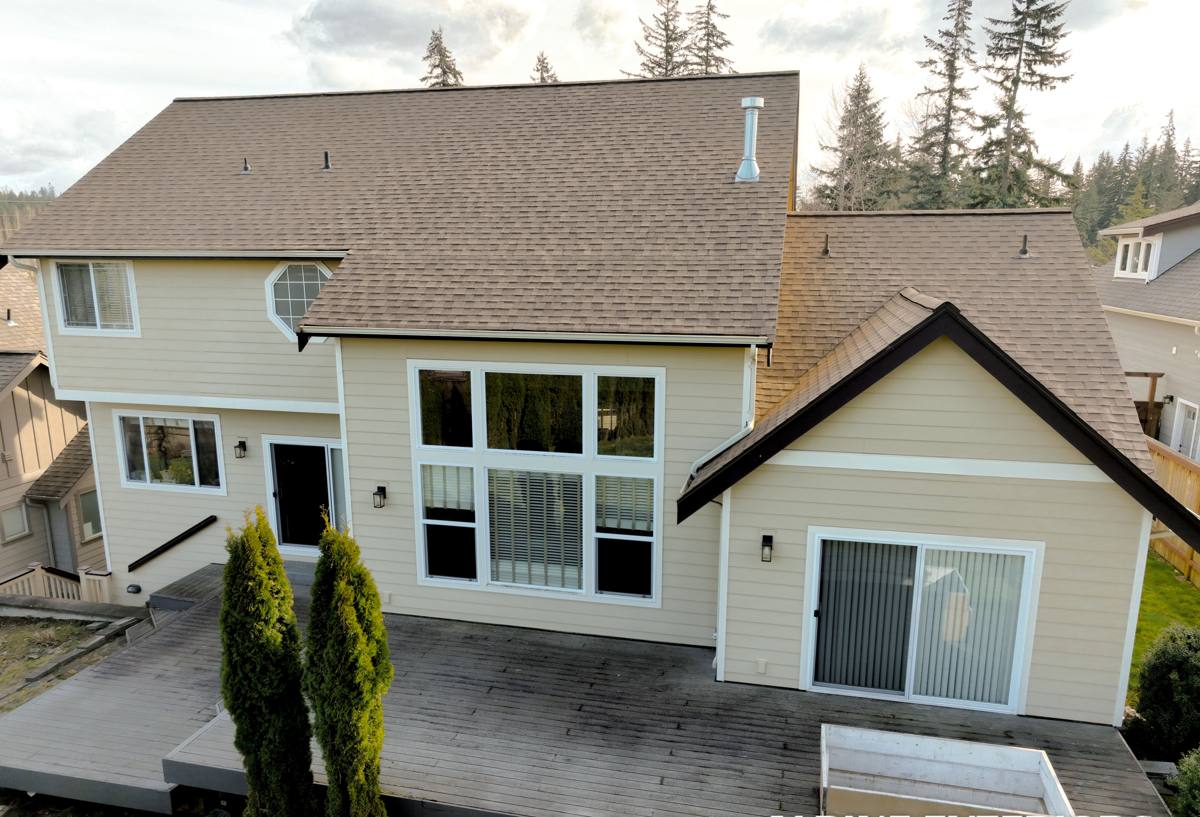
What Whatcom County's Climate Actually Does to This Style
Salt Air
Homes in and around Barkley aren't right on the water, but Whatcom County as a whole sits close enough to Bellingham Bay and the Salish Sea that airborne salt is a real factor, especially on west- and south-facing walls that catch prevailing weather. Salt accelerates corrosion on fasteners and metal trim, and it degrades cheap paint films faster than inland exposure would. On a board & batten wall, the battens themselves are fastened directly through the panel and into the framing or furring — every one of those fastener penetrations is a spot where salt-laden moisture can find a weak point over time if the wrong fastener or coating was used.
Driving Rain
Whatcom County doesn't just get a lot of rain — it gets wind-driven rain, which behaves very differently against a wall than a straight-down shower. Wind pressure can force water sideways and upward under laps, trim edges, and batten joints that would stay dry in calmer weather. Board & batten has more vertical seams per square foot of wall than most other siding profiles, which means more opportunities for wind-driven rain to find a gap if those seams weren't caulked, flashed, or backed correctly.
Moss Season
Whatcom County's moss season is long — shaded north walls, tree-covered lots, and the steady damp of fall through spring all favor moss and algae growth. Board & batten's vertical battens create horizontal ledges at the base of trim and at window and door heads where organic growth likes to establish. Moss holds moisture against the wall surface far longer than bare siding would, which is exactly the condition that breaks down paint films and, eventually, the substrate underneath.
What a Correct Board & Batten Job Involves
Board & batten looks simple from the street — vertical boards over flat panels — but a correct installation involves several layers most homeowners never see:
- A drainage plane behind the panel: a weather-resistant barrier, properly lapped and taped at every seam, so any water that does get past the cladding has somewhere to go besides your framing.
- A rainscreen gap where conditions call for it, so the wall assembly can dry rather than trap moisture against the sheathing — a bigger factor here than in drier climates.
- Correct fastening — stainless or hot-dip galvanized fasteners at the right spacing, driven into structural framing or properly installed furring, not just into the panel itself.
- Flashed and sealed penetrations at every window, door, hose bib, and light fixture, since board & batten's flat panel faces make poor flashing easy to hide and easy to regret later.
- A ventilated, kicked-out base detail at the bottom of the wall so water sheds away from the foundation instead of wicking up into the lowest course.
Skip any one of these and the siding can still look right for a season or two. The failures that show up later — soft trim, staining at the battens, paint peeling from the inside out — almost always trace back to one of these details being rushed or skipped.
Why We Install James Hardie for Board & Batten — and Not the Alternatives
Board & batten is sold in several materials — vinyl, engineered wood like LP SmartSide, primed cedar or spruce, and fiber cement. We install James Hardie fiber cement exclusively, and board & batten is actually one of the profiles where that choice matters most, because the flat panel faces have nowhere to hide a material that swells, cups, or fades unevenly.
| Material | How It Handles Whatcom County's Climate |
|---|---|
| Vinyl board & batten | Can look convincing from a distance, but the panels expand and contract with temperature swings, seams can show, and long-term UV exposure fades color unevenly — with no real refinishing option. |
| Engineered wood (LP SmartSide) | Wood-based core is vulnerable at cut edges and fastener points if moisture gets in; in a climate with this much sustained damp and moss pressure, edge sealing has to be flawless and stay that way for decades. |
| Primed cedar or spruce | Real wood needs a maintenance commitment — repainting, caulk inspection, and prompt repair of any moisture intrusion — that most homeowners underestimate until the first callback. |
| James Hardie fiber cement | Non-combustible, dimensionally stable cement-based panel that doesn't swell or rot from moisture the way wood-based products can, with a factory-applied ColorPlus finish engineered to hold up under UV and moisture cycling. |
James Hardie's HZ5 product line is engineered specifically for wetter, harsher climates like ours in the Pacific Northwest, and the ColorPlus factory finish process gives a more consistent, better-adhered coat than field-applied paint — which matters directly for moss and mildew resistance, since a tighter finish gives organic growth less to hold onto. Hardie also backs its siding with a strong transferable warranty, which carries real weight in a market like Barkley where homes change hands.
We won't put vinyl, LP SmartSide, Cemplank, Allura, or unfinished wood siding on a home, not because those products have no legitimate use anywhere, but because we've standardized our crews, our fastening schedules, and our warranty backing around one system we trust to perform in this specific climate, and mixing materials undermines that.
Our Process for a Barkley Board & Batten Project
- On-site assessment — we look at your home's specific exposure: which walls take the worst weather, where moss and staining already show, and what the current siding and trim tell us about past water intrusion.
- Scope and material plan — panel sizes, batten spacing and reveal, trim details, and where the drainage plane and rainscreen assembly need reinforcement given your lot's shade and wind exposure.
- Removal and inspection — old siding comes off and the sheathing gets inspected before anything new goes up; hidden rot or soft framing gets addressed, not covered over.
- Weather barrier and flashing — house wrap or equivalent barrier installed and taped, with flashing set at every window, door, and penetration before the first panel goes on.
- Panel and batten installation — Hardie panels and battens installed to manufacturer fastening schedules, with attention to seams, corners, and the base detail.
- Caulking, touch-up, and final inspection — factory-matched caulk at seams and trim, ColorPlus touch-up where needed, and a final walk-through before we call it done.
Maintenance in a Moss-Prone Climate
Correctly installed James Hardie board & batten is low-maintenance, not no-maintenance. In Whatcom County, a periodic soft wash to clear moss and algae before it establishes, along with an annual look at caulk lines and trim joints, goes a long way toward keeping a board & batten exterior looking and performing the way it should for decades.
Signs Your Board & Batten Siding Needs a Look
- Moss or dark streaking concentrated at batten bases or trim ledges
- Caulk that has cracked, shrunk, or pulled away from a seam
- Soft or spongy trim at window and door casings
- Paint or finish peeling from the inside out rather than just weathering
- Staining below hose bibs, light fixtures, or other wall penetrations
- Visible gaps or warping at panel-to-batten joints
Any one of these is worth a quick inspection before it turns into a bigger repair — moisture problems on a board & batten wall tend to hide behind the battens until they've already done damage.
What Drives the Cost of a Board & Batten Project
| Factor | Why It Matters Here |
|---|---|
| Wall exposure and existing damage | Walls with heavier moss staining or past water intrusion often need sheathing repair, not just new siding. |
| Trim complexity | Barkley homes with more windows, dormers, or architectural detail need more precise flashing and cutting. |
| Rainscreen requirements | Shaded, damp-prone walls may call for a full rainscreen assembly rather than a standard drainage plane. |
| Panel and batten spacing | Reveal width and batten spacing affect material quantities and labor time. |
| Access and site conditions | Tight lots, slopes, or landscaping close to the foundation can add setup and staging time. |
Why a Local Crew Matters for This Job
Board & batten rewards a crew that already knows how Whatcom County weather behaves against a wall — which elevations in a given neighborhood take the worst wind-driven rain, where moss tends to establish first, and how salt-tinged air affects fastener and finish choices over a home's lifetime. A crew that has already worked in and around Barkley has seen how board & batten performs on homes with similar lot conditions, shade patterns, and exposure, and that experience shows up in the details — flashing choices, fastener selection, and where extra attention to the drainage plane actually pays off.
If you're considering board & batten siding for a home in Barkley, we're happy to take a look and talk through what your specific walls need. There's a free, no-pressure estimate form below — reach out and we'll walk the property with you before you decide on anything.