 Whatcom County
 Roofing Built for Columbia's Specific Climate
Columbia sits close enough to Bellingham Bay that salt-laden air is a daily fact of life on this roof, not an occasional nuisance. Add in Whatcom County's long wet season, driving rain that comes in sideways off Pacific storms, and shaded, tree-lined lots that stay damp for months at a stretch, and you get a set of conditions that are genuinely tougher on a roof than what a generic asphalt shingle installation guide assumes. We've worked enough roofs in this neighborhood to know which parts of a standard install need to be upgraded, reinforced, or done differently to hold up here, and which shortcuts that pass inspection in a drier climate will cause callbacks in Columbia within a few winters.
This page is about one thing: asphalt shingle roofing, done right, for homes in this specific area. Not a general overview of roofing types, not a sales pitch — a straight explanation of what your roof is up against, what a correct job looks like, and how we approach it.
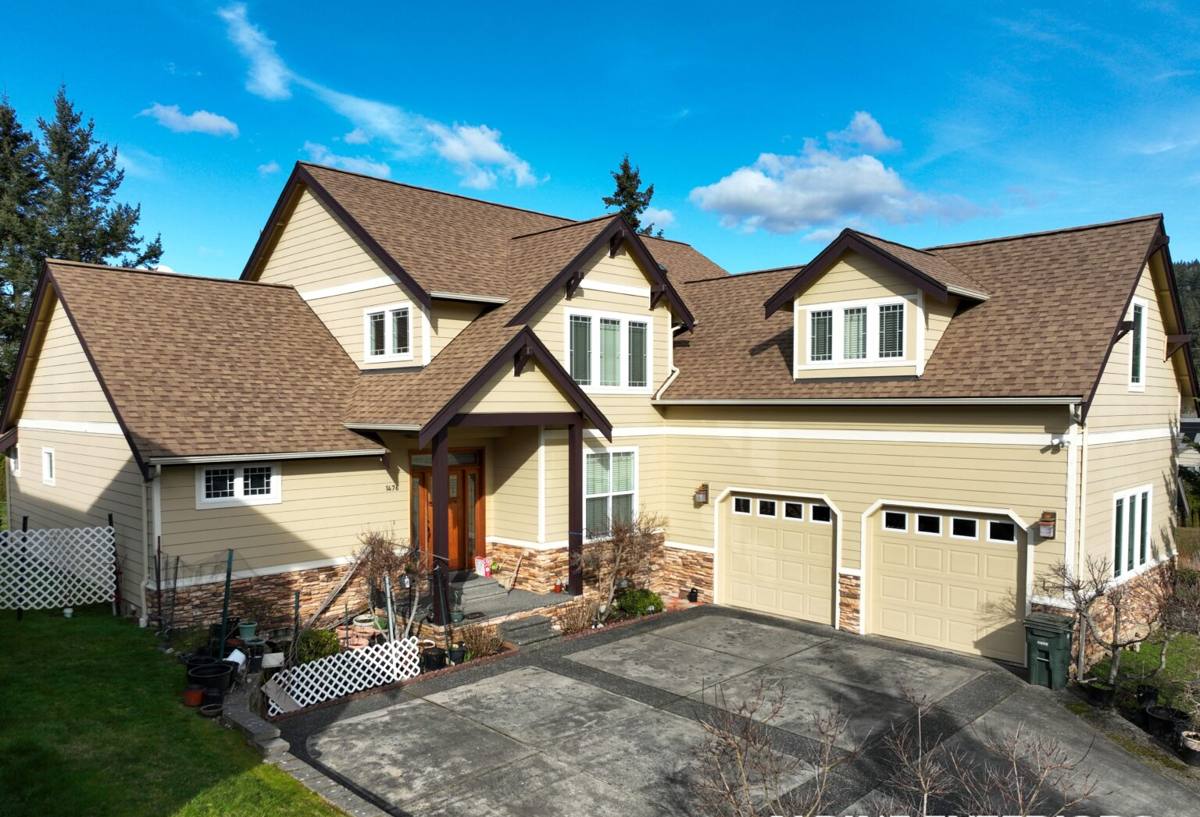
What Whatcom County's Climate Actually Does to a Shingle Roof
Salt Air and Corrosion
Proximity to the bay means airborne salt settles on every exposed surface, including roofing. Salt accelerates corrosion on any unprotected metal — nail heads, flashing edges, vent stacks, and fastener caps. On a roof built with standard-grade fasteners and thin flashing, that corrosion shows up as rust streaks, weakened nail holds, and pinhole leaks at flashing seams years before the shingles themselves are worn out. The fix isn't exotic; it's using corrosion-resistant fasteners and properly coated flashing from the start, and not treating that as an optional upgrade in a coastal-influenced neighborhood like this one.
Driving Rain and Wind-Driven Water
Whatcom County storms don't just drop rain straight down — wind pushes it sideways and up under shingle tabs, especially at eaves, valleys, and any place the roof plane changes direction. A roof that's only "watertight" when water falls vertically will leak here. That's why underlayment coverage, valley treatment, and shingle sealing matter more in Columbia than they would in a calmer, drier climate.
Moss, Shade, and a Long Wet Season
Many lots in this area carry mature tree cover, which is great for shade and curb appeal and terrible for roof moisture retention. Shaded, north-facing slopes stay damp long after the rest of the roof has dried, and that's exactly where moss and algae take hold first. Once moss establishes itself under shingle tabs, it lifts them, traps water against the roof deck, and turns a cosmetic issue into a structural one if it's left unaddressed for a few seasons.
What a Correct Asphalt Shingle Roof Install Actually Involves
A lot of roofing problems in this area trace back to installs that looked complete but skipped steps that don't show up until the roof is tested by a real Whatcom County winter. Here's what we consider non-negotiable for a shingle roof in Columbia:
Deck Inspection and Repair
Every tear-off starts with an honest look at the roof deck. Soft spots, delaminated plywood, and water-stained sheathing get replaced before a single shingle goes down — covering a compromised deck with new shingles just hides the problem and shortens the life of the new roof.
Ice and Water Shield at Vulnerable Areas
Valleys, eaves, and roof-to-wall transitions get self-adhering waterproof membrane, not just felt or synthetic underlayment. This is the layer that stops wind-driven rain from finding its way under the shingles at the spots where water naturally concentrates.
Proper Underlayment Coverage
Full synthetic underlayment coverage across the whole roof, correctly lapped, gives you a second line of defense if wind ever gets under a shingle tab — which, in this climate, it eventually will during at least a few storms a year.
Flashing That's Built for Salt Exposure
Step flashing, counter-flashing, and vent flashing all need to be corrosion-resistant material, properly integrated with the underlayment (not just caulked on top of it). Caulk-dependent flashing is one of the most common failure points we find on older Columbia roofs.
Correct Nailing Pattern and Fastener Choice
Shingles fail wind tests not because of the shingle itself but because of how they're fastened. Correct nail placement, nail count per shingle, and corrosion-resistant fasteners all affect how well the roof holds up to the wind gusts that come with Pacific storms.
Ventilation That Matches the Home
Balanced intake and exhaust ventilation keeps the attic dry and temperature-stable, which matters for shingle lifespan and for preventing condensation-driven rot in a climate where the air itself carries a lot of moisture for much of the year.
Our Process for a Columbia Roofing Job
- Inspection and honest assessment. We walk the roof (or use a lift where pitch or access requires it) and tell you plainly whether you need a full replacement, a repair, or nothing at all.
- Written scope and material selection. You'll know exactly what shingle line, underlayment system, and flashing approach we're proposing, and why, before any work starts.
- Tear-off and deck check. Old roofing comes off, the deck gets inspected, and any needed sheathing repairs are done before underlayment goes down.
- Waterproofing and underlayment. Ice and water shield at valleys and eaves, full synthetic underlayment across the field.
- Flashing and shingle installation. Flashing goes in correctly integrated with the underlayment, then shingles are installed to manufacturer spec and correct nailing pattern.
- Ventilation check. We confirm intake and exhaust venting is balanced for the home, adding or adjusting as needed.
- Cleanup and final walk-through. Magnetic sweep for stray fasteners, debris hauled off, and a walk-through so you can see the finished work and ask questions.
Choosing a Shingle for a Columbia Home
Not every shingle product is a good match for salt air and heavy moss exposure. Here's how the common options compare for this specific setting:
| Shingle Type | Typical Lifespan | How It Handles This Climate |
|---|---|---|
| 3-Tab Asphalt | 15–20 years | Lower upfront cost; less wind resistance and shorter algae/moss resistance than architectural options |
| Architectural (Laminate) Asphalt | 25–30 years | Better wind rating and thicker profile; a solid default choice for most Columbia homes |
| Algae-Resistant (Copper/Zinc-Granule) Shingles | 25–30+ years | Granules resist algae and moss growth longer, which matters on shaded, damp roof sections common here |
| Impact-Rated Shingles | 25–30+ years | Added durability against debris and hail; can also support insurance premium discounts depending on your carrier |
For most Columbia homes with any tree cover or shaded roof sections, we lean toward algae-resistant architectural shingles — the small cost difference over standard architectural shingles usually pays for itself in reduced moss treatment and fewer premature tab lift issues.
Cost Factors for a Columbia Roofing Project
We won't quote a number without seeing your roof, but here's what actually moves the price up or down:
| Factor | Effect on Cost |
|---|---|
| Roof size and number of planes | More square footage and more valleys/hips mean more material and labor |
| Deck condition | Rotted or delaminated sheathing found during tear-off adds repair cost |
| Pitch and access | Steep or hard-to-access roofs require more safety setup and labor time |
| Shingle grade selected | 3-tab is least expensive; algae-resistant and impact-rated options cost more upfront |
| Number of layers to remove | Tear-off of multiple existing layers adds labor and disposal cost |
| Flashing and ventilation work needed | Extensive flashing replacement or new venting adds to scope |
Living With Your Roof: Moss and Maintenance Reality
A correctly installed roof still needs occasional attention in this climate. Here's a practical maintenance checklist for Columbia homeowners:
- Have moss and debris cleared from shaded roof sections before it builds up thick enough to lift shingle tabs
- Keep gutters clear so water isn't backing up under the eave edge during heavy rain events
- Trim back overhanging branches to reduce shade and debris buildup on north-facing slopes
- Get a visual inspection after major windstorms to catch lifted or missing shingles early
- Watch for granule buildup in gutters, which signals accelerated shingle wear
- Have flashing checked every few years, especially around chimneys and vent penetrations, since that's where corrosion-related leaks tend to start
None of this requires obsessive attention — it's a once-or-twice-a-year check plus prompt action after big storms. Roofs in this climate that get neglected for five-plus years are the ones we typically see with real structural damage, not roofs that get looked at occasionally.
Why a Crew That Already Works Columbia Matters
A roofing crew that mostly works drier inland climates will often spec materials and details that are technically fine on paper but undersized for what this neighborhood's salt air and moss season actually put a roof through. We work in Whatcom County day to day, which means we're not guessing about which flashing grade holds up near the bay, how aggressive moss growth gets on a shaded north slope here, or how wind-driven rain behaves on this area's typical roof pitches. That local pattern recognition shows up in fewer callbacks and a roof that's still performing well a decade in, not just on install day.
Signs Your Columbia Roof Needs Attention Now
- Visible moss or dark streaking, especially on shaded or north-facing sections
- Curling, cracking, or missing shingle tabs after a windstorm
- Granules collecting in gutters or at downspout outlets
- Rust staining around flashing, vent stacks, or chimney bases
- Water stains on interior ceilings or in the attic after heavy rain
- Soft or spongy spots felt when walking the roof (professional inspection only)
If any of these look familiar, it's worth getting a straightforward inspection rather than waiting for a leak to force the issue.
If you're dealing with an aging roof, storm damage, or just want an honest read on what shape yours is in, we're happy to take a look. Reach out for a free, no-pressure estimate using the form below — we'll tell you plainly what we see and what we'd recommend, no obligation attached.