 Whatcom County
 Windows Built for South Hill's Weather, Not Just the Showroom
South Hill homes take a different kind of beating than houses further inland. You've got salt-laden air working on metal hardware, wind-driven rain that finds every gap in a bad seal, and a moss season that runs longer here than almost anywhere else in the state. Add in the wide temperature and humidity swings between our wet winters and dry, sun-exposed summers, and a window that was installed "fine" five or ten years ago is often the reason a room is drafty, foggy, or growing mildew on the sill today.
We install energy-efficient windows on South Hill homes as a regular part of our work in Whatcom County, and the questions homeowners bring us are usually the same: why does this room never feel warm, why is there water staining under the sill, why does the glass fog up between the panes. Almost every one of those problems traces back to either the window unit itself failing, or the installation around it not accounting for how much moisture this climate throws at a wall.
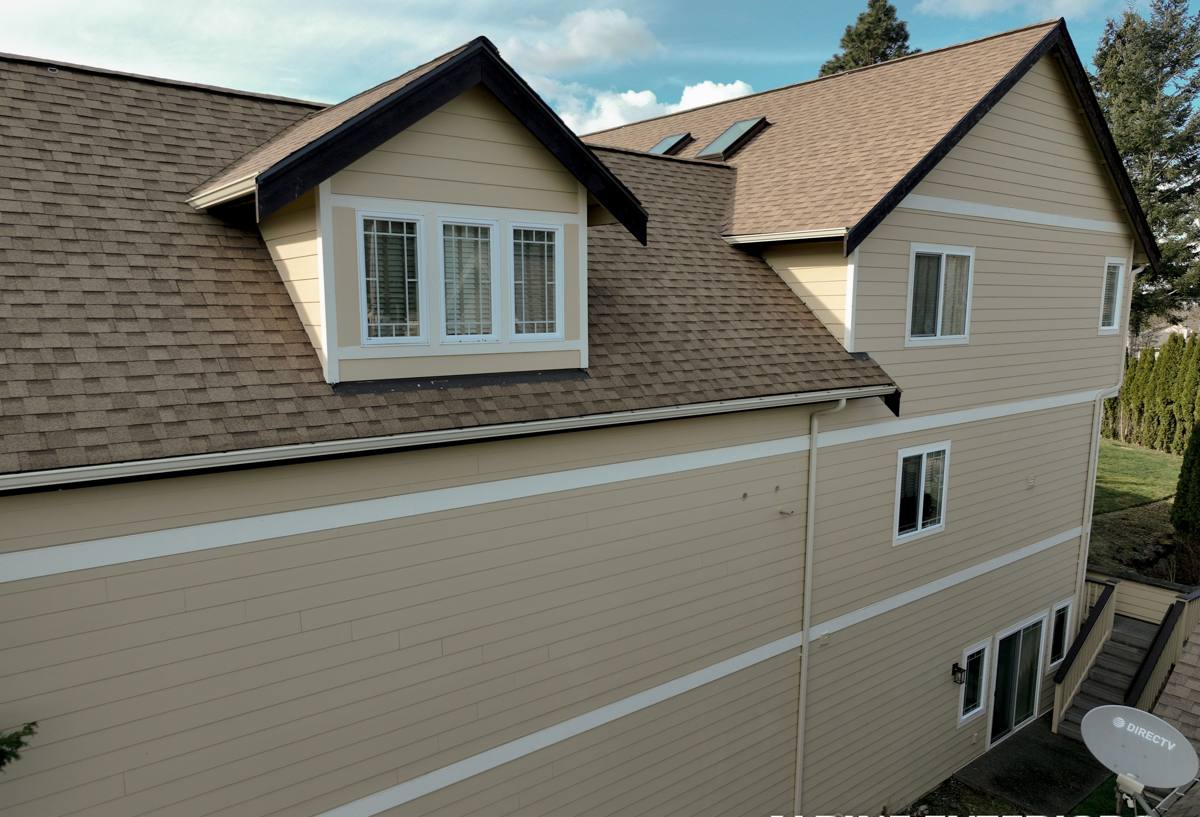
What "Energy-Efficient" Actually Means Here
Energy-efficient is a real, measurable standard, not a marketing word. For our climate, the numbers that matter most are:
- U-factor — how well the window resists heat loss. Lower is better. This is the number that matters most for our mild-but-damp winters, where the bigger cost driver is heat escaping, not heat coming in.
- Solar Heat Gain Coefficient (SHGC) — how much solar heat passes through the glass. On south- and west-facing rooms that get direct sun, this affects summer comfort and AC load.
- Condensation Resistance — how well the window resists interior fogging and moisture buildup on the frame. This matters a lot here, given how often indoor and outdoor humidity levels are both high at once.
A window can be marketed as "energy-efficient" and still be a poor fit if the glass package or frame material wasn't chosen for a wet, salt-influenced coastal climate. We pick specs based on orientation, exposure, and how much weather that particular wall of the house actually takes.
Glass Packages
Double-pane with a low-E coating and argon gas fill is the standard, reliable choice for most South Hill homes and covers the majority of our installs. Triple-pane adds another layer of insulation and a real bump in sound dampening, which some homeowners want on rooms facing a busy road, but it adds cost and weight, and on a lot of home styles the return doesn't justify it unless comfort or noise is a specific concern.
Frame Material
Vinyl and fiberglass frames handle our climate the best. Both resist rot and don't corrode from salt air the way some hardware and cladding can. Wood-frame windows, even clad ones, need more diligence here — any gap in the cladding or finish becomes an entry point for moisture, and once wood starts absorbing water in a climate this wet, it doesn't dry out fast. We'll walk you through the honest trade-offs for your specific home rather than pushing one material across the board.
Where We See Windows Fail on South Hill Homes
The failure patterns we run into locally are pretty consistent:
- Seal failure in double-pane units — fogging between the panes, usually from age plus repeated wet/dry cycling
- Soft or stained sills and trim from water that got behind the frame instead of being shed away from it
- Moss and algae buildup in tracks, weep holes, and on north-facing sills that stay shaded and damp for weeks at a stretch
- Corroded hinges, locks, and cranks on older hardware exposed to salt-carrying air
- Drafts around the frame from failed or improperly installed sealant and flashing, not from the glass itself
Most of these aren't glass problems — they're installation and drainage problems. That's why swapping in a better window without fixing how it's flashed and sealed just buys you a nicer-looking version of the same issue a few years down the road.
What a Correct Installation Actually Involves
A window install that's done right for this climate goes well beyond fitting a new unit into the old opening. Here's what we consider non-negotiable:
- Remove the old unit and inspect the rough opening for hidden rot, soft framing, or prior water damage before anything new goes in
- Install or verify a proper sill pan so any water that does get past the window drains back outside instead of into the wall cavity
- Apply flashing tape and housewrap integration in the correct shingle-lap order — head flashing over the wrap, side and sill flashing under it — so water is always directed downward and outward
- Set the window level, plumb, and square, then shim and fasten per the manufacturer's specs, not just "close enough"
- Seal the interior and exterior perimeter with the right sealant for the surface, leaving weep holes clear and functional
- Insulate the gap between the frame and rough opening without overpacking it, which can bow the frame and cause operational issues
- Confirm the sash operates smoothly and locks fully before we call the job done
Skipping the sill pan or flashing sequence is the single most common shortcut that causes trouble later — it's invisible once trim goes back on, which is exactly why it needs to be done right the first time.
Our Process, Start to Finish
- On-site assessment — we look at each window's exposure, current condition, and what's driving the problem (draft, fog, rot, noise, or just age)
- Straightforward quote — clear pricing by window, with material and glass options explained in plain terms, no pressure to upgrade past what your home actually needs
- Scheduling around weather — we plan install days to avoid opening up walls during heavy rain windows whenever the forecast allows it
- Removal and opening inspection — old units come out, and we flag anything we find behind them before proceeding
- Flashing, sealing, and setting the new unit — done to the sequence above, every time, not just on the windows that are easy to see
- Interior and exterior finish work — trim, caulking, and touch-up so the install looks finished, not patched
- Walkthrough — we operate every window with you and confirm it locks, seals, and looks right before we consider the job complete
Frame Material Comparison
| Frame Material | Moisture/Salt Resistance | Maintenance | Typical Fit for South Hill |
|---|---|---|---|
| Vinyl | Very good — won't rot or corrode | Low — occasional cleaning | Strong default choice for most homes |
| Fiberglass | Excellent — very stable in wet/dry cycling | Low | Good for larger units or higher-exposure walls |
| Wood-clad | Depends entirely on cladding integrity | Higher — finish and seals need monitoring | Best when appearance is a priority and upkeep is planned for |
| Aluminum | Poor in salt air unless specially coated | Moderate to high | We generally steer away from this for coastal-influenced homes |
What Drives the Cost
| Factor | Why It Matters |
|---|---|
| Number and size of windows | Larger units and full-house replacements naturally scale cost, but often get better per-window pricing |
| Glass package | Double-pane low-E/argon is the standard cost; triple-pane and specialty coatings add to it |
| Frame material | Vinyl is typically the most budget-friendly; fiberglass and wood-clad run higher |
| Condition of the rough opening | Hidden rot or framing repair found during removal adds labor that can't always be predicted upfront |
| Access and exposure | Upper-story or hard-to-reach windows take more time to flash and finish correctly |
We give real ranges once we've actually looked at your windows — anyone quoting a whole-house number sight unseen is guessing, and that guess usually changes once the crew shows up.
Why It Matters That We Already Work South Hill
A crew that installs windows across Whatcom County regularly knows which walls in this area take the worst of the driving rain, which exposures grow moss fastest, and where salt-air corrosion tends to show up first on hardware. That's not something you get from a manufacturer's install manual — it comes from doing this work here, repeatedly, and seeing which shortcuts come back to bite a homeowner two winters later.
We also know the local permitting and energy code requirements that apply to window replacements in this area, so your install meets code without extra back-and-forth or delays.
Living With Windows in a Moss-Prone, Salty Climate
Even a correctly installed, high-quality window needs some upkeep here. A short seasonal routine goes a long way:
- Clear moss and debris from sills, tracks, and weep holes before it builds up and holds moisture against the frame
- Rinse salt residue off frames and hardware periodically, especially on windows facing open exposure
- Check that caulking around the exterior perimeter stays intact — cracked or peeling sealant is your earliest warning sign
- Operate each window a few times a season so hinges, locks, and cranks don't seize from disuse plus corrosion
None of this is heavy maintenance, but skipping it is how a well-installed window ends up looking neglected well before its time.
If you're dealing with drafty, foggy, or aging windows on your South Hill home, we're happy to take a look and give you a straightforward, no-pressure estimate — just fill out the form below and we'll get in touch.