 Whatcom County
 Samish Roofs Face a Different Kind of Wear
If you live in the Samish area, you already know the roof over your head works harder than roofs in drier parts of the country. You're close enough to the water to get salt-laden air rolling through, tucked among enough tree cover to deal with heavy shade and constant organic debris, and squarely in the path of the wind-driven rain that moves through Whatcom County for months at a stretch. None of that is unusual for this part of Washington — but it does mean roofs here fail in specific, predictable ways, and repairs that ignore those patterns tend to come back.
This page is about roof repair specifically for Samish homes — not a general "we fix roofs" pitch. The goal is to explain what actually goes wrong with roofs in this area, what a repair should include to hold up, and how we approach the work when we're called out here.
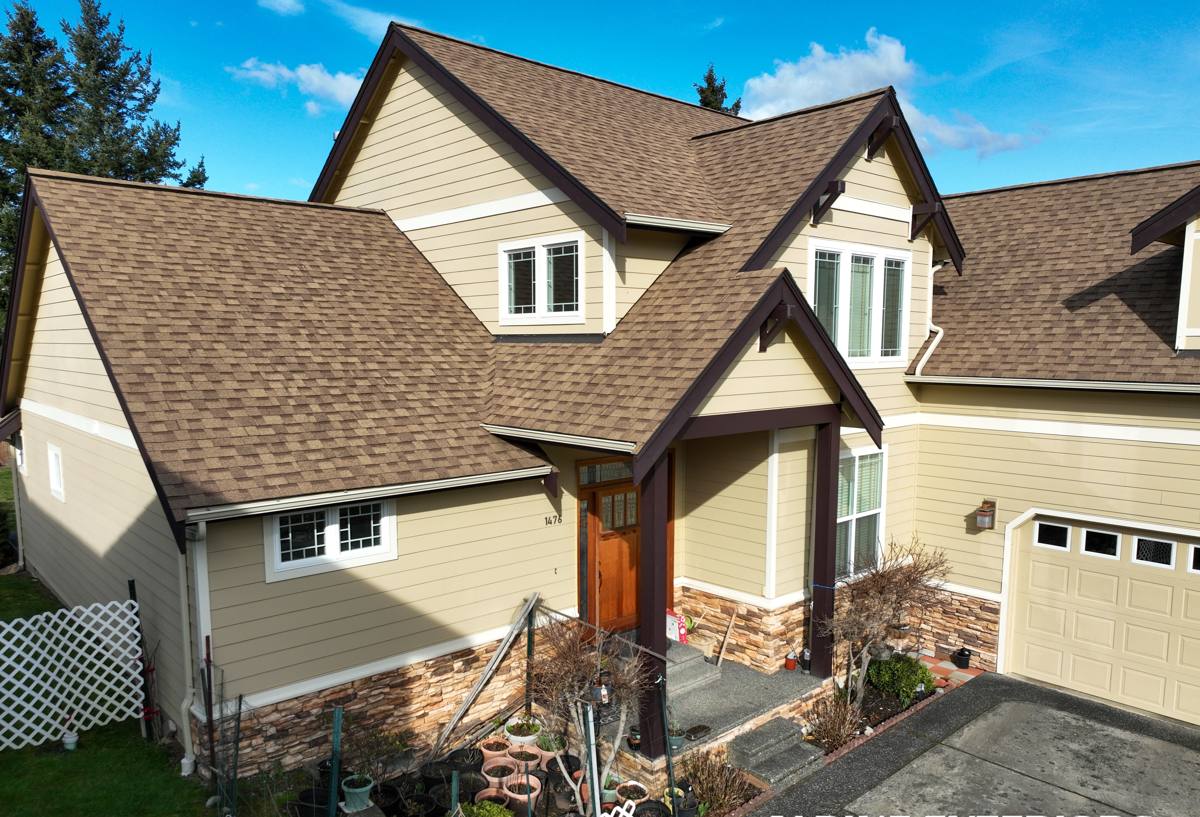
Why Moss, Rain, and Salt Air Matter More Than You'd Think
Moss Season Is Long, and It's Not Just Cosmetic
In a lot of the country, moss on a roof is treated as an eyesore. In Whatcom County, it's a structural concern. Moss holds moisture directly against roofing material for months at a time, especially on north-facing slopes and shaded sections under tree canopy — common in Samish. Under composition shingles, that trapped moisture accelerates granule loss and softens the mat underneath. Under wood or cedar-style roofing, it feeds rot at a much faster rate than dry conditions ever would. By the time moss is visible in thick mats, it's usually already lifted shingle edges or worked into seams, which is exactly where leaks start.
Driving Rain Finds the Gaps, Not Just the Open Holes
A lot of homeowners assume a roof leak means there's a hole somewhere. More often, in this climate, it means wind is pushing rain sideways or upward under flashing, ridge caps, and shingle laps that would be fine in calmer weather. Samish gets its share of storms rolling in off the water, and that wind-driven rain exploits any repair, fastener, or flashing detail that was done a little loose or a little short. A repair that only addresses the visible symptom — a stain on the ceiling — without correcting the underlying flashing or lap detail will leak again in the next real storm.
Salt Air Shortens the Life of Metal Components
Being near the water means metal roofing components — flashing, fasteners, vent boots, gutter hardware — corrode faster than they would inland. Galvanized fasteners can start rusting years before you'd expect in a drier, inland county. That corrosion weakens the hold on shingles and flashing long before the shingles themselves are worn out, which is a common reason a roof "looks fine" from the ground but is actively leaking at the details.
Signs a Samish Roof Needs Repair Now
- Water stains on interior ceilings or upper walls, especially after a windy storm rather than steady rain
- Granules collecting in gutters or at downspout outlets — a sign shingles are wearing thin
- Visible moss mats, especially on shaded or north-facing slopes
- Curling, cupping, or lifted shingle edges, particularly near valleys and eaves
- Rusted or corroded flashing around chimneys, vents, or skylights
- Daylight visible through the attic roof deck
- Sagging sections, which usually point to deck rot underneath and need prompt attention
- Missing or damaged ridge cap shingles after a wind event
Any one of these on its own might be minor. Several at once, or any sign paired with an active interior leak, means it's time to have someone look before the next storm cycle.
What a Correct Repair Actually Involves
A quick patch over a stain is not the same as a repair that holds. Here's what we check and address on a typical Samish roof repair call:
1. Find the Real Source, Not Just the Symptom
Water travels. A stain on a ceiling can be feet away from where the water actually enters the roof. We trace the path from the interior damage back through the attic and roof deck to the actual entry point before doing any repair work — patching drywall location instead of the real leak source is the most common reason repairs fail.
2. Address Flashing and Transitions First
Given how much wind-driven rain matters here, flashing around chimneys, skylights, valleys, and wall-to-roof transitions gets close attention. If flashing is corroded, undersized, or improperly lapped, that gets corrected as part of the repair — not left in place just because the shingles nearby look fine.
3. Remove Moss the Right Way
Moss removal on an active roof needs care — aggressive scraping or pressure washing can do more damage to shingles than the moss itself. We remove moss using methods that don't strip granules or lift shingle tabs, then address the underlying cause (usually shade and debris buildup) so it doesn't come back at the same pace.
4. Replace, Don't Just Reseal, Compromised Material
Sealant has a place, but it's not a substitute for replacing shingles or underlayment that's actually failed. Where the roof deck itself has soft spots from prolonged moisture exposure, that gets repaired or replaced — sealing over a weak deck just hides the problem for a season.
5. Check Fasteners and Metal Hardware
Because salt air corrodes fasteners and metal components faster here, we check the condition of nails, screws, and flashing hardware in the repair area and replace anything that's corroding rather than reusing compromised material.
Repair or Replace? How We Help You Decide
Not every roof problem in Samish needs a full replacement, and not every roof is a good candidate for another round of patching. The honest answer depends on the roof's age, how widespread the damage is, and what's underneath.
| Situation | Repair Usually Makes Sense | Replacement Worth Considering |
|---|---|---|
| Roof age | Under roughly 15 years, isolated wear | Nearing or past expected lifespan for the material |
| Damage extent | Localized to one slope, valley, or penetration | Multiple slopes affected, or damage found in several separate areas |
| Deck condition | Solid, dry decking under the damaged section | Widespread soft or rotted decking |
| Leak history | First or isolated leak event | Recurring leaks in different spots year after year |
| Moss/algae staining | Surface growth, shingles still structurally sound | Long-term moss damage has degraded the shingle mat itself |
We'll always tell you honestly which side of that line your roof falls on. A repair that's likely to fail again within a year or two isn't a good use of your money, and we'll say so rather than sell a patch we don't believe in.
Our Process on a Samish Repair Call
- Inspection. We walk the roof (or use appropriate access for steep or fragile sections) and the attic to trace leaks and assess overall condition, not just the reported problem area.
- Honest diagnosis. You get a plain-English explanation of what's actually wrong, what caused it, and whether repair or replacement is the right call — with photos where they're useful for explaining the issue, not as a sales tool.
- Written scope and estimate. You know exactly what's being repaired and why before any work starts.
- The repair itself. Flashing, decking, shingles, and fasteners addressed as needed — not just the visible surface.
- Cleanup and debris removal. Old material, moss debris, and fasteners cleared from the roof and gutters, not left to wash into downspouts later.
Why a Crew That Already Works Samish Makes a Difference
Roof repair isn't generic work. A crew that regularly works Whatcom County, including areas like Samish, already knows which failure patterns to expect — moss buildup on shaded slopes, flashing corrosion from salt air, wind-driven rain finding weak laps — instead of treating every call as a mystery to diagnose from scratch. That familiarity shows up in faster, more accurate diagnosis and repairs that account for what this specific climate does to a roof over time, not just what a roof looks like on the day of the visit.
It also matters for timing. Storm season and moss season both bring a rush of repair calls to this area at predictable times of year. A crew that's already local can usually respond faster than one traveling in from farther away, which matters when there's active water intrusion.
After the Repair: Keeping It From Coming Back
A good repair should last, but a little upkeep goes a long way in a climate like this one:
- Clear overhanging branches where practical to reduce shade and debris buildup that feeds moss
- Keep gutters and downspouts clear so water isn't backing up under roof edges
- Have the roof checked after major wind or storm events, even if there's no visible leak yet
- Don't ignore small granule buildup in gutters — it's often the earliest visible warning sign
- Schedule a periodic roof check every couple of years, especially once a roof passes the ten-year mark
Get a Straight Answer on Your Samish Roof
If you're dealing with a leak, visible moss damage, or storm damage on a roof in the Samish area, we're glad to take a look and give you a straightforward assessment — repair or replace, with our reasoning explained plainly. There's a form below for a free, no-pressure estimate whenever you're ready.