 Whatcom County
 Why Samish Roofs Wear Differently Than Roofs Inland
Samish sits close enough to open water that homes here deal with a mix most inland Whatcom County properties don't have to think about as much: salt-tinged air moving off the water, heavy tree cover that keeps roofs shaded and damp, and a rainy season that can stretch for months without much of a break. None of that is a problem for a properly built asphalt shingle roof. It becomes a problem when a roof was built for a drier climate, installed in a hurry, or left to age without any attention.
Salt air is slow but steady in how it works on a roof. It accelerates corrosion on exposed metal — nail heads, flashing edges, drip edge seams — long before the shingles themselves are due for replacement. Combine that with the shade from surrounding trees and the moisture that never fully evaporates off north-facing slopes, and you get the two biggest local killers of an asphalt roof: moss and granule loss. Add Whatcom County's driving winter rain, often blown sideways by wind off the water, and you also need a roof that's sealed correctly at every penetration, not just shingled well on the open field.
None of this means asphalt shingles are the wrong choice for Samish. They're still the most practical, cost-effective roofing material for most homes here — but only when the installation accounts for what this specific climate actually does to a roof over ten, fifteen, twenty years.
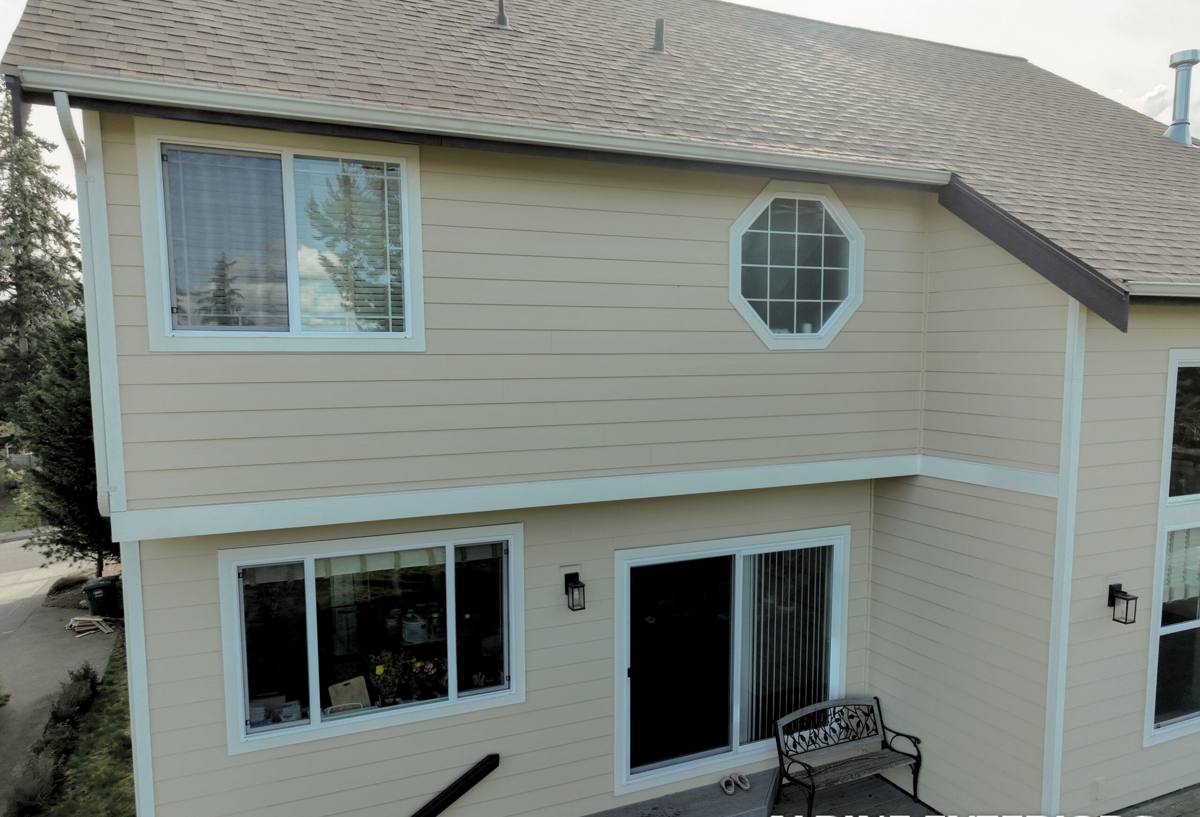
What a Correct Installation Looks Like in This Climate
Underlayment and Ice-and-Water Protection
A synthetic underlayment rated for high-moisture climates is the baseline here, not an upgrade. At eaves, valleys, and anywhere water tends to pool or back up — including around any low-slope sections common on ranch-style and rambler homes in this area — a self-adhered ice-and-water membrane gives you a second line of defense if wind-driven rain gets under a shingle tab.
Ventilation That Actually Balances
Attics that don't breathe correctly trap moisture, and trapped moisture is what turns a roof deck soft and encourages mold long before the shingles show visible wear. A correct system balances intake at the soffits with exhaust at the ridge — not one without the other. We check this on every job, because it's one of the most common shortcuts we find on older Samish roofs.
Flashing and Fasteners That Resist Corrosion
Given the salt air, we use corrosion-resistant flashing and fastener materials rather than the cheapest available option. This matters most around chimneys, skylights, and wall-to-roof transitions — the spots where a roof actually fails first, long before the field shingles wear out.
Shingle Selection for Moss and Algae Resistance
Most major shingle lines now offer algae-resistant granules (sometimes marketed as "moss-resistant" or "streak-resistant"). In a shaded, damp area like Samish, this is worth specifying rather than treating as optional — it doesn't stop moss from ever forming, but it slows the growth cycle significantly compared to standard granules.
Signs Your Samish Roof Needs Attention
Because moss and moisture damage build slowly, a lot of homeowners don't notice a problem until it's already affecting the roof deck. Here's what we tell Samish homeowners to watch for between inspections:
- Moss visible on north-facing slopes or anywhere shaded by trees, especially where it's thick enough to lift shingle edges
- Dark streaking that doesn't wash off with rain (this is usually algae, not just dirt)
- Granules collecting in gutters or at the base of downspouts
- Shingle edges that look curled, cupped, or brittle
- Soft spots or noticeable sagging anywhere on the roof plane
- Daylight visible through the roof deck from inside the attic
- Rusty streaking around flashing, vents, or nail heads
- Interior ceiling stains, especially after a heavy wind-driven rain event
One or two of these on their own aren't usually urgent. Several at once, or anything involving the roof deck itself, is worth a proper inspection sooner rather than later.
How We Approach an Asphalt Shingle Roofing Project
Inspection and Honest Assessment
We start by getting on the roof, not just looking at it from the ground. That means checking the deck condition, the state of the existing ventilation, flashing at every penetration, and how much of the roof's remaining life is actually left versus what a quick patch would buy you. We'll tell you plainly if repair makes more sense than replacement, or the reverse.
Tear-Off and Deck Inspection
A full tear-off lets us see the deck itself, which a roof-over never does. Any soft, water-damaged, or delaminated sheathing gets identified and replaced before anything new goes down — this is where moisture problems from a poorly ventilated attic usually show up first.
Underlayment, Flashing, and Ventilation Correction
This is the stage most people never see, and it's the one that determines how the roof performs in Samish's rain and salt air over the long run. We install ice-and-water membrane at vulnerable areas, run a full synthetic underlayment, and correct any ventilation imbalance we found during inspection rather than just reinstalling what was already there.
Shingle Installation
Shingles go down to manufacturer spec for nailing pattern, exposure, and sealant activation — details that affect wind resistance and how well the roof holds up to driving rain. We don't cut nailing patterns short to save time; it's the single most common cause of blow-offs in coastal wind events.
Cleanup and Final Walkthrough
We magnet-sweep for stray fasteners, clear debris, and walk the finished roof with you so you know exactly what was done and what to watch for going forward.
Choosing a Shingle Type for a Samish Home
There isn't one "best" shingle for every house — it depends on your roof's exposure, how much shade it gets, and your budget. Here's how the common options compare for this climate specifically:
| Shingle Type | Typical Lifespan | Best For | Trade-Off |
|---|---|---|---|
| 3-Tab (standard) | 15–20 years | Budget-conscious re-roofs, secondary structures | Lower wind rating, less algae resistance in base lines |
| Architectural / Dimensional | 25–30 years | Most Samish homes — best balance of cost, durability, and appearance | Higher upfront cost than 3-tab |
| Premium / Designer | 30+ years | Homes wanting a heavier, dimensional look with top-tier warranties | Highest material cost; benefit is mostly cosmetic and warranty length |
For most homes in this area, we lean toward architectural shingles with an algae-resistant rating — they hold up better against moss and streaking than base-line 3-tab products, without the added cost of a designer line most homeowners don't need functionally.
Repair, Partial Re-Roof, or Full Replacement?
Not every roof problem means a full replacement. The right call depends on the roof's age, how localized the damage is, and what's happening underneath the shingles.
| Situation | Usually Points To |
|---|---|
| Isolated leak, roof under 10 years old, deck sound | Targeted repair |
| One slope heavily mossed or damaged, rest of roof healthy | Partial re-roof of that section |
| Widespread granule loss, curling, or roof near/past rated lifespan | Full replacement |
| Soft or damaged decking found during inspection | Full replacement (deck repair required regardless) |
We'll always tell you honestly which category your roof falls into rather than defaulting to the most expensive option.
Living With Moss and Algae Long-Term
Even a well-built roof in Samish will see some moss and algae activity over its life — the climate here practically guarantees it. Zinc or copper strips installed near the ridge can help slow regrowth by letting rain carry trace metal ions down the roof surface, though tree cover and slope angle still matter more than any single treatment. Regular gentle cleaning — never pressure washing, which strips granules and shortens shingle life — combined with keeping overhanging branches trimmed back to let more light and air onto the roof, does more for long-term roof health than most products marketed for moss control.
We'd rather set honest expectations upfront: moss maintenance in this climate is ongoing, not a one-time fix, and any contractor who tells you otherwise is overselling.
Why It Matters to Hire a Crew That Already Works in Samish
A roof built to a generic spec sheet and a roof built for this specific stretch of Whatcom County aren't the same thing, even if the shingle brand is identical. Knowing how far to run ice-and-water membrane given the local rain patterns, how to size ventilation for homes shaded by heavy tree cover, and which fastener and flashing materials actually hold up against the salt air here comes from doing this work locally, roof after roof — not from a manual.
We're also familiar with Whatcom County permitting and inspection requirements, so that part of the project doesn't become your problem to manage. And because we're local, warranty follow-up or a post-storm check isn't a multi-hour drive for us — it's a normal part of doing business in this area.
If your Samish home needs a roof inspection, a repair, or a full asphalt shingle replacement, we're happy to take a look and give you a straightforward, no-pressure estimate — just fill out the form below.