 Whatcom County
 Why Window Installation Works Differently in Happy Valley
Happy Valley sits close enough to Bellingham Bay to catch salt-laden air off the water, and like the rest of Whatcom County it gets long stretches of driving rain followed by damp, low-light stretches where moss and algae take hold on anything that stays wet. Windows in this neighborhood aren't just letting in light — they're the single biggest set of penetrations in your exterior wall, and every one of them is a potential path for water, salt, and moisture to get behind your siding and trim. A window installed correctly here can go decades without a callback. A window installed by someone used to a drier climate, or someone cutting corners on flashing and sealant, can start failing in a handful of years even if the window itself was a good product.
This page is about one job, done right, in one place: replacing or installing windows on homes in Happy Valley. Not a general overview of window brands, not a countywide sales pitch — just what actually matters for a window job on a home dealing with this specific stretch of Whatcom County weather.
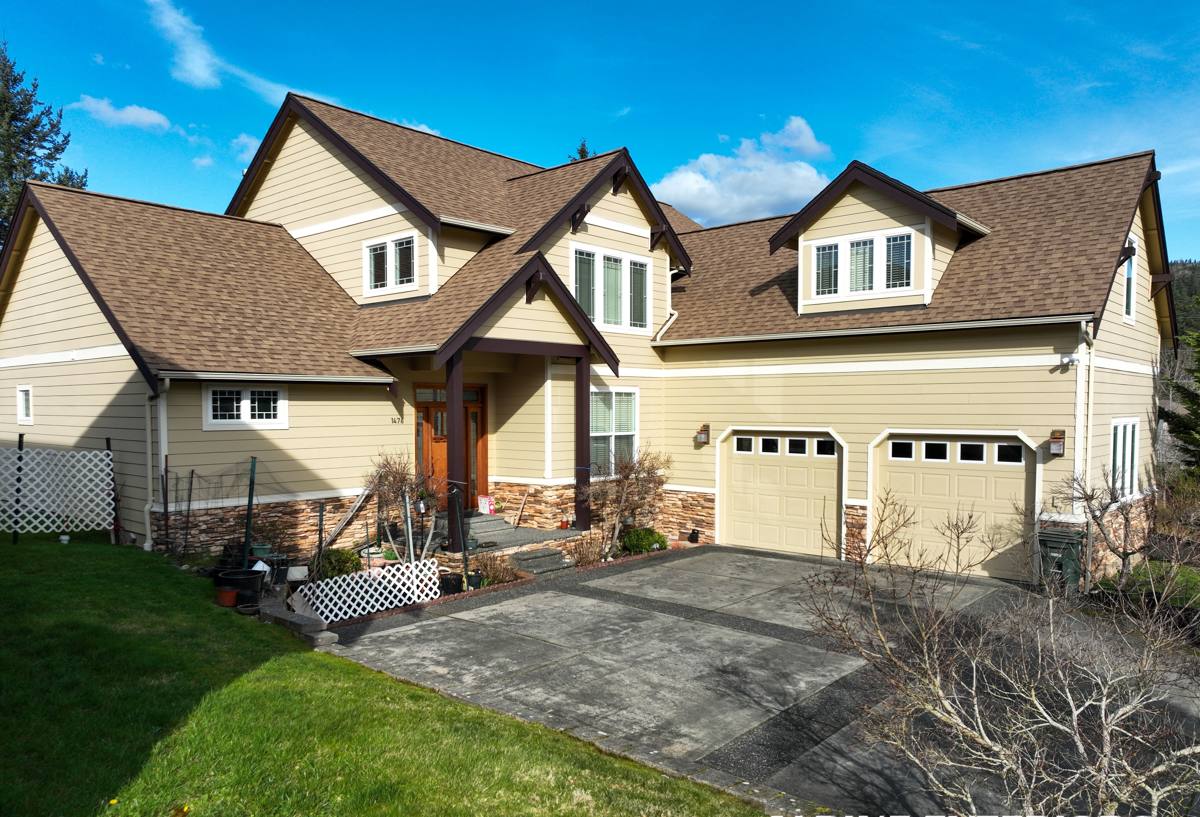
What Whatcom County Weather Does to Windows Over Time
Salt Air and Hardware Corrosion
Salt in the air accelerates corrosion on anything metal — window hardware, screws, flashing, and especially aluminum components that weren't specified for coastal exposure. Cheap fasteners and unprotected metal flashing can start showing rust or pitting well before the window itself is due for replacement. It's a slow process, which is exactly why it gets overlooked until a window starts sticking, a lock stops aligning, or staining shows up on the sill.
Driving Rain and Water Intrusion
Whatcom County rain doesn't always fall straight down — wind-driven rain gets pushed sideways into wall assemblies, and window openings are where that pressure concentrates. If the flashing details around a window aren't layered correctly (so water sheds outward and downward at every step), wind-driven rain will find the gap. That's how you end up with rot in the framing around a window that looks fine from the outside for years before the damage becomes visible.
Moss Season and Trapped Moisture
The long stretch of overcast, damp weather that lets moss take over roofs and north-facing siding does the same thing to window sills, tracks, and trim if water isn't shedding away properly. Moisture that gets trapped instead of drained doesn't just look bad — it keeps wood trim and sheathing wet for weeks at a time, which is exactly the condition rot and mold need to get started.
Signs a Happy Valley Home Needs New Windows
Some of these show up gradually, and homeowners often assume they're normal wear rather than a sign the window's seal or installation has failed. Worth walking your home's exterior and checking for:
- Condensation building up between panes on double- or triple-pane windows (a sign the seal has failed)
- Soft or discolored trim, sills, or siding immediately around a window frame
- Windows that are hard to open, close, or lock — often a sign the frame has shifted or swollen
- Visible gaps, cracked caulking, or daylight showing around the frame from inside
- A noticeable draft near the window even when it's fully closed
- Musty smell or soft drywall on the interior wall below or beside a window
- Moss or dark streaking building up on the sill or the siding just below the window
Any one of these on its own might be minor. Two or three together, especially moisture and a hard-to-operate sash, usually means water has already gotten past the window's seal and is doing damage you can't see yet.
What a Correct Installation Actually Involves
Tear-Out and Inspection
Pulling the old window out is also the only chance to see what's happening in the wall around it — the sheathing, the framing, and any flashing that's already there. On a home that's had water intrusion, this is where soft or rotted framing gets found and repaired before a new window ever goes in. Skipping this step and just swapping the window in the existing opening is how problems get sealed up and hidden rather than fixed.
Flashing and Weatherproofing
Flashing has to be layered so every piece overlaps the one below it, directing water down and out rather than letting it pool or back up behind the siding. This includes sill pan flashing at the bottom of the opening (so any water that does get past the window has somewhere to drain instead of sitting on bare wood), plus proper integration with the house wrap or building paper above and to the sides.
Sealing and Insulation
The gap between the window frame and the rough opening needs to be insulated and air-sealed correctly — not overpacked with expanding foam, which can bow the frame and cause operating problems, and not left with gaps that let air and moisture through. Exterior caulking is the last line of defense, not the main one; a window that relies on caulk alone to stay dry is a window that will eventually leak once that caulk ages and cracks.
Trim and Finish
Exterior trim gets reinstalled or replaced with attention to how it sheds water, and interior trim gets finished cleanly. This is also where small details matter for this climate specifically — back-priming trim before installation, for example, so it isn't absorbing moisture from the unpainted back side even if the front is well protected.
Choosing Frame Materials for This Climate
There's no single "best" window material — it depends on budget, maintenance tolerance, and how exposed a particular wall is to weather. Here's how the common options hold up against salt air, driving rain, and a damp climate:
| Frame Material | Moisture & Salt Air Resistance | Maintenance | Typical Lifespan |
|---|---|---|---|
| Vinyl | Good — won't rust or rot, handles salt air well | Low — occasional cleaning | 20-30 years |
| Fiberglass | Very good — dimensionally stable, resists moisture and salt exposure | Low | 30-40+ years |
| Wood (unclad) | Poor without diligent upkeep — most vulnerable to rot in a wet climate | High — regular painting/sealing required | Varies widely with maintenance |
| Wood with aluminum or vinyl cladding | Good on the exterior face, but cladding must be detailed correctly to avoid trapping moisture against the wood core | Moderate | 25-35 years |
| Aluminum | Fair — needs marine-grade or coated hardware near salt air, prone to condensation without a thermal break | Low | 20-30 years |
For a lot of Happy Valley homes, vinyl or fiberglass end up being the practical choice precisely because they don't give salt air or standing moisture anything to work on. Wood and clad-wood windows can still be the right call for matching an older home's look, but they need more attention to detail during installation and more upkeep afterward — that's a genuine trade-off, not a knock on the product.
Our Installation Process, Start to Finish
- On-site assessment — we look at your existing windows, the condition of the framing where visible, and how exposed each opening is to wind-driven rain before recommending anything.
- Product selection — we walk through frame material, glass package, and style options based on your home, your budget, and how that wall performs in weather.
- Tear-out and framing check — old windows come out, and we inspect and repair any damaged framing before a new window goes in.
- Flashing and sill pan installation — layered flashing and a sloped sill pan go in first, before the window itself.
- Window installation and leveling — the window is set, shimmed level and plumb, and fastened per manufacturer specification.
- Insulation and air sealing — the gap around the frame is properly insulated and sealed.
- Exterior and interior trim — trim is installed or reinstalled and finished.
- Final walkthrough — every window is opened, closed, and checked before we consider the job done.
Why Hiring a Crew That Already Works Happy Valley Matters
A window installer who mostly works inland or in a drier region isn't necessarily doing anything wrong by their own standards — they just haven't had to think as hard about salt air corrosion, sill pan drainage, or moss-season moisture buildup, because their homes don't fight those conditions year-round. A crew that regularly works Happy Valley and the rest of Whatcom County has already seen what happens when those details get skipped: the rotted sill, the corroded hardware, the trim that looked fine at handoff and failed within a couple of winters. That experience shows up in the small decisions during installation — which flashing sequence to use, where to add extra sealant, which fasteners hold up near salt air — that don't show up on an estimate but absolutely show up ten years later.
It also matters for something more basic: knowing what's normal for this neighborhood's housing stock and what's a sign of a bigger problem. A crew that's worked a lot of homes in this area can generally tell early on whether a window job is straightforward or whether it's going to uncover water damage that needs to be dealt with before the new window goes in.
Maintaining New Windows After Installation
Even a correctly installed window benefits from basic upkeep in this climate. A short annual routine goes a long way:
- Clear debris and moss buildup from sills and tracks before it holds moisture against the frame
- Check exterior caulking each fall for cracking or gaps and touch up as needed
- Make sure weep holes on the exterior of the frame (where applicable) are clear so water can drain
- Wipe down hardware periodically, especially on windows facing prevailing wind and rain
- Look for condensation between panes, which signals a failed seal rather than something to just wipe away
- Repaint or reseal wood or wood-clad trim on the schedule the manufacturer recommends — don't let it slide a season or two, since that's when moisture gets a foothold
If you're not sure whether your current windows are worth repairing versus replacing, or you want a straightforward look at what a correct installation would cost for your home, we're happy to come take a look. Reach out for a free, no-pressure estimate using the form below.