 Whatcom County
 Building New in Edgemoor? Your Windows Take the Brunt of the Weather
Edgemoor sits close to the water, and that shoreline exposure shapes almost every decision that goes into a new home's window package. Salt-laden air corrodes hardware and finishes faster than it does further inland. Driving rain off the water tests every seam in the flashing and sealant. And Whatcom County's long, wet moss season keeps north- and shade-facing surfaces damp for months at a stretch, which is hard on anything installed without the right drainage plan. None of this means new-construction windows here need to be exotic or expensive — it means they need to be installed correctly the first time, with materials and details chosen for this specific exposure rather than a generic spec sheet.
We install new-construction windows for builders and homeowners throughout Whatcom County, and Edgemoor jobs get the same attention: the right frame material, the right flashing sequence, and glass specified for how much weather the house actually sees.
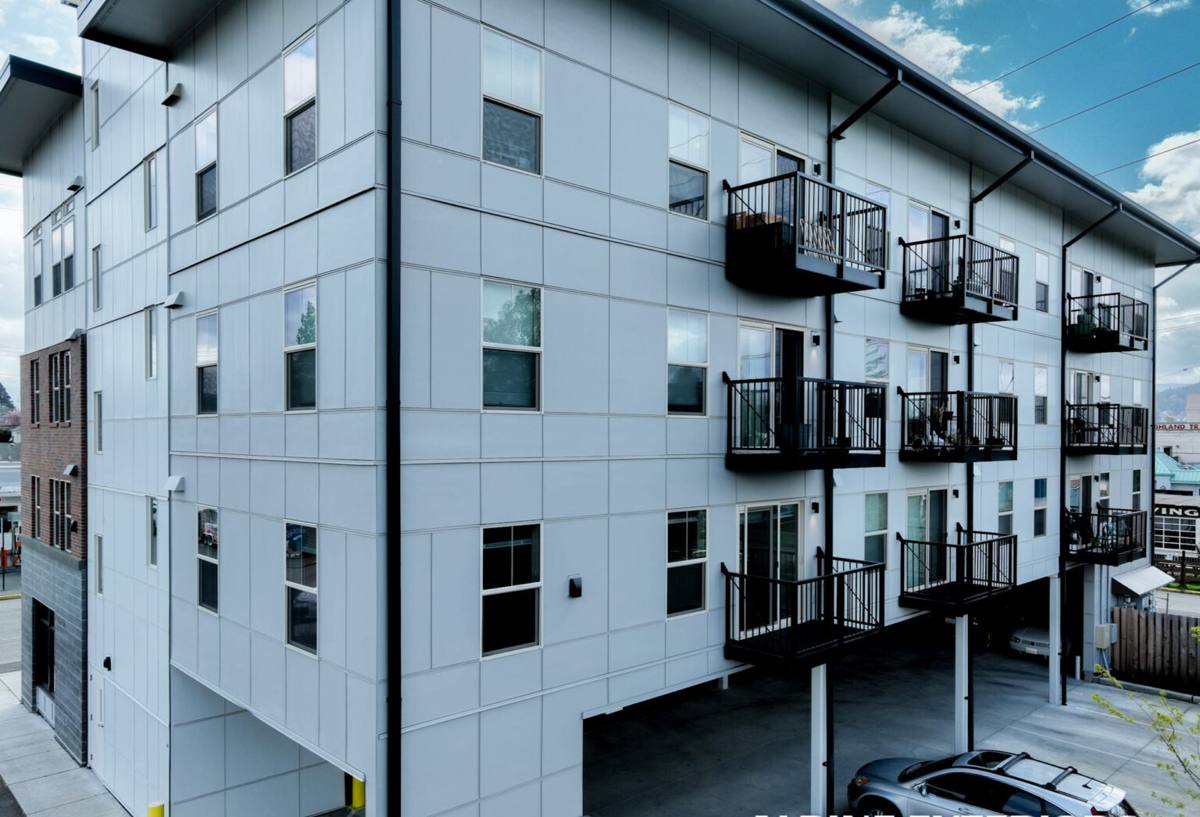
New-Construction Windows Are a Different Job Than Replacements
New-construction windows have a nailing fin (or flange) around the perimeter of the frame that fastens directly to the wall sheathing before siding goes on. That's different from a replacement or "pocket" window, which is inserted into an existing frame after the fact. The nail-fin approach gives us access to the rough opening, the weather-resistive barrier, and the sheathing itself — which means the flashing and drainage plane can be built correctly from scratch instead of worked around.
That access is an advantage, but it also raises the stakes. On a replacement job, a lot of the wall assembly is already hidden and untouched. On new construction, every layer — sheathing, house wrap, flashing tape, sill pan, window, and siding — has to integrate in the right order. Get that sequence wrong on a house exposed to wind-driven rain off the water, and the problem won't show up until there's already damage behind the wall.
What a Correct New-Construction Install Actually Involves
Flashing and the Weather-Resistive Barrier
Every rough opening gets flashed so that water is directed out and down, never trapped behind the window or diverted into the wall cavity. The house wrap or weather-resistive barrier has to be lapped correctly with the flashing at the head, jambs, and sill — shingle-style, so water always sheds to the outside. On a home taking regular driving rain, this layering matters more than the window itself.
Sill Pan Flashing
A sloped or pre-formed sill pan under the window gives any water that does get past the exterior seal somewhere safe to go, instead of sitting on bare sheathing. This is one of the most commonly skipped steps on production builds, and it's one we don't skip, especially on elevations that face prevailing wind and rain.
Nail-Fin Fastening and Shimming
The window has to be set plumb, level, and square before it's fastened — a frame installed slightly out of square will bind, won't seal evenly, and puts stress on the glass unit over time. Shims go at the manufacturer's specified points, fasteners go through the fin into solid framing at the correct spacing, and the frame is never fastened in a way that bows it to force it into an opening that isn't quite right.
Sealant and Backer Rod
Interior and exterior sealant joints use backer rod where the gap calls for it, so the sealant forms the right bead shape and can flex with the building instead of cracking. Cheap or misapplied sealant is a common failure point in coastal climates where the joint is wet more often than it's dry.
Choosing Frame Material and Glass for This Climate
There's no single "best" window for every Edgemoor build — the right choice depends on exposure, budget, and how the house is finished. Here's how the common options compare for salt air, moisture, and upkeep:
| Frame Material | Salt Air / Moisture Behavior | Maintenance | Typical Fit |
|---|---|---|---|
| Vinyl | Won't corrode or rot; performs well in salt air | Low — occasional cleaning | Cost-conscious builds, strong overall value |
| Fiberglass | Very stable in wet, salty, temperature-swinging conditions | Low | Higher-end new builds wanting long-term dimensional stability |
| Wood-clad | Exterior clad protects the wood, but any breach in the cladding invites rot near the water | Higher — finish and seams need periodic checking | Homeowners set on a wood interior look who accept the upkeep trade-off |
| Bare wood | Poor fit for this exposure without constant upkeep | High | We generally steer new-construction clients away from it on water-facing elevations |
On glass, we spec double-pane with a Low-E coating and argon fill as the baseline for new builds here — it cuts heat loss and condensation risk in our damp winters. For homes with more direct wind and rain exposure, or larger window openings, triple-pane or upgraded spacer systems are worth pricing out; they add cost but reduce both energy loss and interior condensation on cold, humid days, which is when moss-season dampness causes the most trouble.
How We Work With Your Builder or GC
Most of our new-construction window work happens as a coordinated step in someone else's build schedule, so timing matters. We typically get involved once framing and sheathing are complete and the weather-resistive barrier is ready, then install windows before siding closes everything in. We'll walk the rough openings first to confirm sizing and squareness, flag anything that needs a framing fix before we set glass, and coordinate directly with the general contractor or builder on schedule so windows aren't holding up siding, trim, or interior work.
If you're an owner-builder or working directly with us on material selection, we'll go over frame material, glass package, and hardware finish up front, with pricing that reflects your actual exposure — a shaded, wind-protected elevation doesn't need the same spec as one facing open water.
Mistakes We See on New Builds in Whatcom County
Most window failures we get called to fix on newer homes trace back to a handful of repeatable errors — not bad windows, but bad installation sequencing. Before signing off on any new-construction window package, it's worth confirming:
- Sill pans are installed under every window, not just the ones facing the worst weather
- House wrap is lapped over the top flashing, not tucked under it, at the head of each opening
- Fasteners are set at the spacing and location the window manufacturer specifies, not "close enough"
- Shims support the frame at load-bearing points without bowing it out of square
- Sealant joints use backer rod where the gap is wide enough to need it
- Rough openings were checked for square before the window went in, not after
- The frame material and glass package match the wall's actual sun, wind, and rain exposure
Any one of these skipped on a house exposed to driving rain and salt air tends to show up as staining, soft trim, or interior condensation within a few years — right when it's expensive to fix instead of nearly free to do right the first time.
Why an Edgemoor-Familiar Crew Matters
A crew that already works in this part of Whatcom County has seen how these homes actually weather — which elevations take the worst of the wind-driven rain, how fast moss and algae build up on shaded siding and trim, and where salt air tends to attack hardware and fasteners first. That experience shapes real decisions on your job: which openings get extra flashing attention, which hardware finish holds up without pitting, and where a slightly heavier glass or frame spec is worth the cost versus where it isn't. It also means we're familiar with local permitting expectations and the pace of area builders, so windows go in on schedule without becoming the bottleneck on your project.
After Move-In: Keeping New Windows Performing
New-construction windows installed correctly need very little attention, but a few habits keep them performing through Whatcom County's wet season. Rinse salt residue off frames and glass periodically if you're close to the water — it's mostly cosmetic, but it can accelerate wear on hardware over years. Keep gutters and downspouts clear so runoff isn't sheeting down over window heads. And during moss season, keep an eye on shaded trim and sills; a quick wash before growth takes hold is far easier than dealing with buildup later. None of this replaces a correct install — it's just upkeep on top of a job that was done right.
If you're planning a new build in Edgemoor or elsewhere in Whatcom County, we're happy to walk through frame and glass options for your specific site and give you a straightforward, no-pressure estimate. Use the form below to get started.