 Whatcom County
 Decks in Fairhaven Wear Differently Than Decks Inland
Fairhaven sits close enough to Bellingham Bay that salt-laden air is a daily fact of life, not an occasional weather event. Add in Whatcom County's long stretch of driving rain from fall through spring and the moss season that follows it, and you've got a set of conditions that ages a deck faster than almost anywhere else in the region. Fasteners corrode sooner. Framing lumber that isn't properly rated stays wet longer between dry spells. Flat or poorly pitched surfaces collect standing water, and standing water is exactly what moss, algae, and rot need to get established.
If your deck is graying unevenly, feels soft in spots, has fasteners bleeding rust streaks into the boards, or has visible moss creeping in on the shaded side, those aren't cosmetic problems. They're early signs that the structure underneath is losing its fight with the climate. A deck replacement done right in this neighborhood accounts for all of that from the framing up, not just the decking surface.
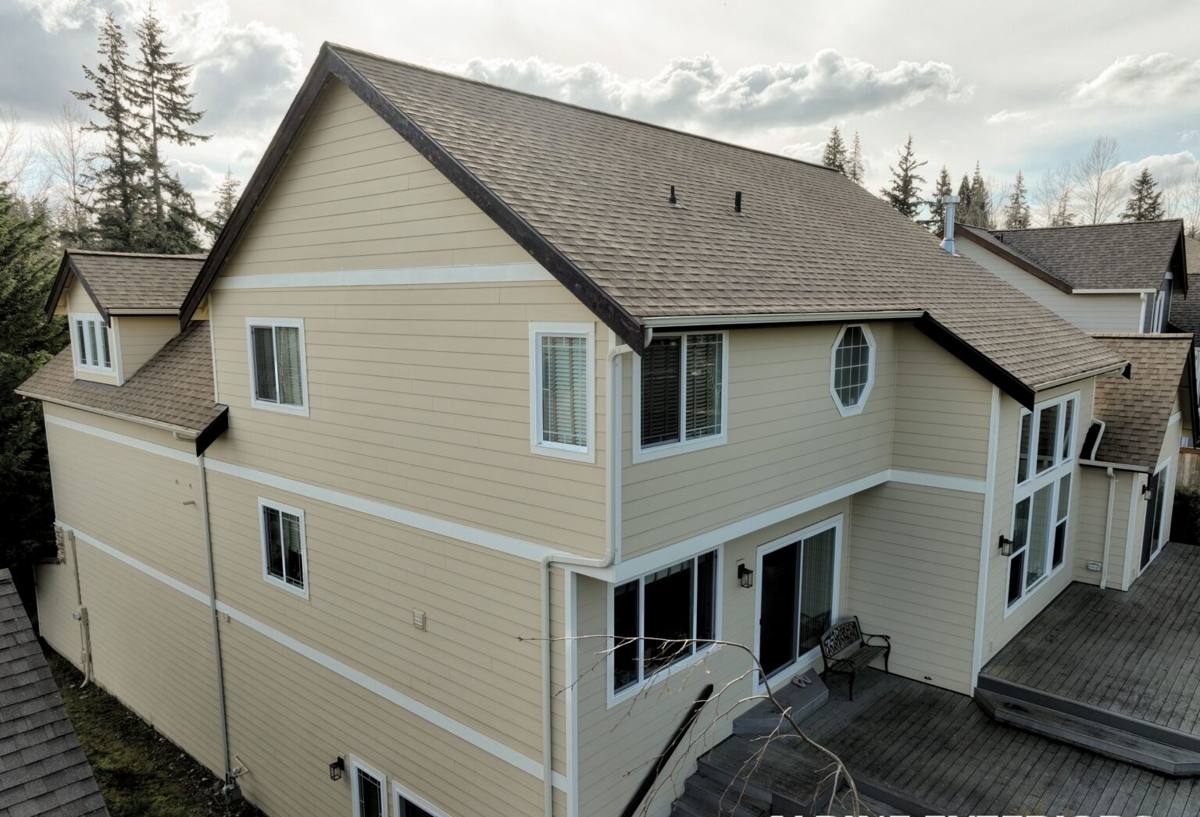
What "Done Right" Means in a Salt Air, High Rain Environment
Fasteners and Hardware
Standard hot-dip galvanized hardware can hold up fine inland, but in a coastal-influenced area like Fairhaven it corrodes noticeably faster. We spec stainless steel or high-grade coated fasteners and structural connectors rated for coastal exposure on every deck rebuild in this area. It costs more up front. It's also the single biggest factor in whether your ledger board, joist hangers, and post bases are still sound in fifteen years instead of ten.
Framing Lumber and Ground Contact
Any framing member touching or close to grade needs ground-contact-rated pressure-treated lumber, not the standard above-ground grade. We also pay close attention to airflow underneath the deck — a low, tight deck with poor ventilation traps moisture against the joists and never fully dries between rain events, which is exactly the environment rot and moss thrive in.
Decking Material
Homeowners in Fairhaven generally choose between a few paths:
| Material | How it handles this climate | Maintenance reality |
|---|---|---|
| Pressure-treated wood | Affordable, familiar, but needs consistent sealing to resist moss and moisture cupping | Annual cleaning and re-sealing recommended |
| Cedar | Naturally rot-resistant and handles moisture well when maintained, but softer surface shows wear | Periodic oiling/sealing to hold color and resist moss |
| Composite/PVC decking | Doesn't absorb moisture the way wood does, resists moss buildup on the surface, holds up well to salt air | Occasional washing; no sealing or staining needed |
We don't push one product on every homeowner. Composite costs more upfront but removes the sealing cycle entirely, which matters if you don't want to be out there every spring scrubbing moss off the boards. Wood costs less upfront but only performs as advertised if the maintenance actually happens. We'll walk you through the honest trade-offs for your specific deck, budget, and how much upkeep you actually want to do.
Pitch and Drainage
A deck surface that's dead flat holds water. We build in a slight pitch away from the house on every replacement so rain sheds instead of pooling, which directly reduces moss growth and slows the wood-cupping cycle that ruins boards prematurely.
Signs Your Fairhaven Deck Needs Replacing, Not Just Repairing
- Soft or spongy spots when you walk across the boards, especially near the ledger board or stair stringers
- Fastener heads that have rusted, popped up, or left dark streaking down the board
- Persistent moss or algae that comes back within weeks of cleaning, even on treated wood
- Visible gaps opening between boards from repeated wet-dry cycling
- A ledger board connection that looks separated, caulked over repeatedly, or shows staining on the siding above it
- Support posts or footings that feel loose or have visible cracking
- A deck older than 15-20 years that's never had the substructure inspected
A few loose boards or a squeaky spot can often be repaired. Rot at the ledger connection, failing joists, or compromised footings mean repair is a temporary patch on a structural problem — replacement is the honest recommendation at that point.
Our Deck Replacement Process
1. On-Site Assessment
We come out, walk the existing deck, and check the framing, ledger connection, footings, and any moisture or moss patterns specific to how your property sits relative to sun, shade, and prevailing weather. Fairhaven lots vary a lot in exposure — a deck tucked under tree cover holds moisture differently than one that's open to the bay winds.
2. Removal and Structural Inspection
Once the old decking and, where needed, framing comes off, we get a clear look at the ledger board attachment to the house and the condition of the posts and footings. This is often where we find the real story — surface boards can look fine while the structure underneath has been quietly failing.
3. Framing and Waterproofing
We rebuild or reinforce the substructure with coastal-rated hardware and ground-contact lumber where appropriate, and install proper ledger flashing so water is directed away from the house rather than behind the siding. This flashing detail is one of the most commonly skipped steps in budget deck work, and it's directly responsible for a lot of the rot we find on older decks.
4. Decking Installation
Boards go down with the pitch and fastening pattern appropriate to the material — hidden fasteners for composite, properly spaced and sealed connections for wood — and we make sure gaps are set correctly for seasonal expansion and drainage.
5. Final Walkthrough
We go over the finished deck with you, explain any maintenance the material needs (or doesn't), and make sure railings, stairs, and every connection point are solid before we call it done.
Cost Factors for a Fairhaven Deck Replacement
| Factor | Why it moves the price |
|---|---|
| Deck size and layout | Square footage, multiple levels, or built-in features add material and labor |
| Substructure condition | Rotted framing, footings, or ledger issues found during removal add scope beyond a surface swap |
| Decking material chosen | Composite/PVC costs more per board than pressure-treated wood but needs no ongoing sealing |
| Height and stairs | Elevated decks with stairs and railings require more structural work than a low ground-level deck |
| Site access | Tight lots or limited equipment access in some Fairhaven properties can affect labor time |
We won't quote a number without seeing the deck and the substructure condition first — anyone who gives you a firm price over the phone is guessing. What we can tell you honestly: budget decks that skip coastal-rated hardware and proper ledger flashing tend to need major work again within a decade in this climate, so the cheapest bid isn't always the cheapest outcome.
Why Hire a Crew That Already Works in This Neighborhood
Whatcom County covers a lot of different microclimates, and Fairhaven's proximity to the bay puts it in a category of its own — the salt exposure and moisture patterns here aren't the same as what a deck faces further inland. A crew that regularly works Fairhaven properties knows to spec coastal-rated fasteners as standard, not an upsell, and knows what moss and rot patterns to look for based on where a house sits relative to the water and tree cover. That's local knowledge that shows up in how long the deck actually lasts, not just how it looks the day it's finished.
We're a Whatcom County contractor, and Fairhaven decks are part of our regular work, not a one-off job we're learning on. That matters when the structural decisions made during installation are the ones that determine whether you're dealing with rot again in eight years or thirty.
Maintaining Your New Deck Through Moss Season
- Sweep leaves and debris off the surface regularly in fall — trapped organic matter holds moisture and feeds moss growth
- Rinse or gently pressure-wash the surface at the start and end of moss season to keep spores from establishing
- Check that gaps between boards stay clear so water can drain through rather than pooling on top
- For wood decking, keep to a sealing schedule rather than waiting until graying or cupping is visible
- Trim back overhanging branches where practical to reduce shade and speed drying time after rain
- Inspect the ledger board connection and any flashing once a year for staining or gaps
If your Fairhaven deck is showing its age or you're planning a rebuild, we're happy to come take a look and give you a straightforward, no-pressure estimate. Fill out the form below and we'll get you scheduled.